
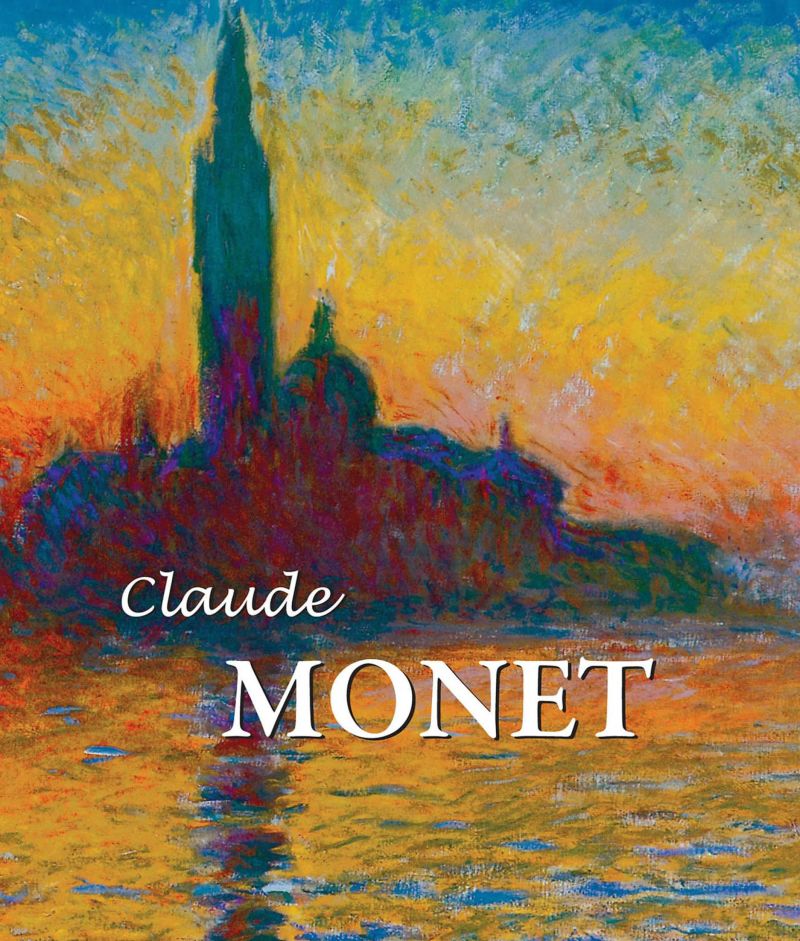


Length3h 36m
About this audiobook
For Claude Monet the designation 'impressionist' always remained a source of pride. In spite of all the things critics have written about his work, Monet continued to be a true impressionist to the end of his very long life. He was so by deep conviction, and for his Impressionism he may have sacrificed many other opportunities that his enormous talent held out to him. Monet did not paint classical compositions with figures, and he did not become a portraitist, although his professional training included those skills. He chose a single genre for himself, landscape painting, and in that he achieved a degree of perfection none of his contemporaries managed to attain. Yet the little boy began by drawing caricatures. Boudin advised Monet to stop doing caricatures and to take up landscapes instead. The sea, the sky, animals, people, and trees are beautiful in the exact state in which nature created them – surrounded by air and light. Indeed, it was Boudin who passed on to Monet his conviction of the importance of working in the open air, which Monet would in turn transmit to his impressionist friends. Monet did not want to enrol at the Ecole des Beaux-Arts. He chose to attend a private school, L'Académie Suisse, established by an ex-model on the Quai d'Orfèvres near the Pont Saint-Michel. One could draw and paint from a live model there for a modest fee. This was where Monet met the future impressionist Camille Pissarro. Later in Gleyre's studio, Monet met Auguste Renoir Alfred Sisley, and Frédéric Bazille. Monet considered it very important that Boudin be introduced to his new friends. He also told his friends of another painter he had found in Normandy. This was the remarkable Dutchman Jongkind. His landscapes were saturated with colour, and their sincerity, at times even their naïveté, was combined with subtle observation of the Normandy shore's variable nature. At this time Monet's landscapes were not yet characterized by great richness of colour. Rather, they recalled the tonalities of paintings by the Barbizon artists, and Boudin's seascapes. He composed a range of colour based on yellow-brown or blue-grey. At the Third Impressionist Exhibition in 1877 Monet presented a series of paintings for the first time: seven views of the Saint-Lazare train station. He selected them from among twelve he had painted at the station. This motif in Monet's work is in line not only with Manet's Chemin de fer (The Railway) and with his own landscapes featuring trains and stations at Argenteuil, but also with a trend that surfaced after the railways first began to appear. In 1883, Monet had bought a house in the village of Giverny, near the little town of Vernon. At Giverny, series painting became one of his chief working procedures. Meadows became his permanent workplace. When a journalist, who had come from Vétheuil to interview Monet, asked him where his studio was, the painter answered, "My studio! I've never had a studio, and I can't see why one would lock oneself up in a room. To draw, yes – to paint, no". Then, broadly gesturing towards the Seine, the hills, and the silhouette of the little town, he declared, "There's my real studio."Monet began to go to London in the last decade of the nineteenth century. He began all his London paintings working directly from nature, but completed many of them afterwards, at Giverny. The series formed an indivisible whole, and the painter had to work on all his canvases at one time. A friend of Monet's, the writer Octave Mirbeau, wrote that he had accomplished a miracle. With the help of colours he had succeeded in recreating on the canvas something almost impossible to capture: he was reproducing sunlight, enriching it with an infinite number of reflections. Alone among the impressionists, Claude Monet took an almost scientific study of the possibilities of colour to its limits; it is unlikely that one could have gone any further in that direction.
Audiobook details
GenreOther
Length3 hrs 36 mins
Narrated byListen with 1,000+ voices
FormateBook with Audio
Publish dateJan 17, 2012
LanguageEnglish
Table of contents
1Claude Claude
2The Beginnings of Impressionism
3Claude Monet – The Person
4Early Life
5Formative Years
Show all chaptersShow less
6From Figure Painting to Landscape Painting
7The First Impressionist Exhibition
8the Salon
9jury
10Peaches, 1883. Oil on canvas, 50.5 x 37 cm. Private collection.
11Branch of a Lemon Tree, 1884. Private collection.
12The Argenteuil Period
13landscape painter
14treatment of
15the creators of
16From the Single Painting to the Series
17Temps Perdu [A Remembrance of Things Past], Moscow, 1970, p. 177).
18Monet’s Reception in Russia
19Exhibitions
201955, Moscow
211973, Washington, New York, Chicago
221973, Warsaw
231986-1987, Naples, Milan
2414 March – 16 June. Österreichische Galerie. “Claude Monet”.
25Katia Granoff”.
2622 September – 24 January. Grand Palais. “Monet 2010”.
27Biography
281840 November 14, Oscar Claude Monet is born in Paris.
291845 The Monet family moves to Le Havre.
301864 Works at Honfleur with Bazille, Boudin and Jongkind.
311868 Works at Étretat and Fécamp.
321870 In September, goes to London.
331878 Settles at Vétheuil.
341880 His one-man show at the premises of the newspaper
351881 Works at Vétheuil, Fécamp and, in December, at Poissy.
361887 Shows two paintings at the Exhibition of the Royal
371889 In July, exhibition of works by Monet and Rosin
381890 Begins the Haystacks and Poplars series. Moves
391893 Continues his work on the Rouen Cathedralseries.
401894 Cézanne visits Giverny.
411896 In February and March, works at Pourville.
421897 From January to March, stays at Pourville.
431901 In February and April, stays in London.
441902 Spends February and March in Brittany.
451906 Works on the Water Liliesseries.
461908 From September to December, stays in Venice.
471916 Begins work on the decorative panels the Water Lilies.
481922 Suffers from eye disease.
491926 December 5, dies at Giverny.
50Moscow, 1913.
More from Nina Kalitina, Nathalia Brodskaya
Claude MonetNina Kalitina3h 26m4.4 (54)$13 · $0.00
Claude MonetNina Kalitina3h 25m4.2 (53)$13 · $0.00
Claude MonetNina Kalitina, Nathalia Brodskaya3h 40m4.4 (36)$15 · $0.00
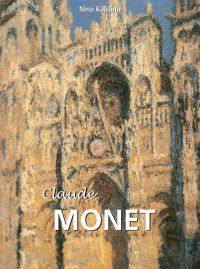
Claude MonetNina Kalitina3h 20m4.4 (52)$13 · $0.00
Claude MonetNina Kalitina, Nathalia Brodskaya3h 24m4.4 (131)$16 · $0.00
Claude MonetNina Kalitina, Nathalia Brodskaya4h 1m$16 · $0.00

Mere ChristianityC. S. Lewis7h 7m4.4 (519.7K)$24 · $0.00

Her Daily BreadKate Wood12h 57m4.6 (153)$33 · $0.00

The Holy Bible - 1 SamuelKing James2h 13m4.8 (1.6K)$3 · $0.00

The American Standard Bible — The Gospel of MatthewMatthew3h 56m4.7 (3K)$2 · $0.00

Bad Fat Black GirlSesali Bowen6h 32m4.7 (2.8K)$24 · $0.00

The King James Audio Bible New Testament CompleteChristopher Glyn20h 2m4.7 (2.6K)$12 · $0.00

Faiths CheckbookCharles Spurgeon12h 44m4.7 (3.2K)$11 · $0.00

Ten Things I Wish You Knew About Your Child's Mental HealthDr. Billy Garvey4h 53m4.7 (2.4K)$20 · $0.00

Designing Terry Pratchett’s DiscworldPaul Kidby3h 52m4.7 (343)$20 · $0.00
The Chosen Book OneAmanda Jenkins, Kristen Hendricks, Dallas Jenkins3h 8m4.6 (4.9K)$10 · $0.00

The Lives of BrianBrian Johnson9h 45m4.6 (3.5K)$29 · $0.00

Expository Thoughts on the Gospel of LukeJ.C. Ryle27h 13m4.7 (536)$18 · $0.00

CrossroadsKaleb Dahlgren7h 56m4.6 (4.9K)$26 · $0.00

Across the RiverKent Babb11h 40m4.6 (927)$29 · $0.00

Brain Training for RidersAndrea Monsarrat Waldo5h 56m4.7 (550)$19 · $0.00

My Effin' LifeGeddy Lee17h 11m4.6 (13.1K)$40 · $0.00

Kings and PawnsHoward Bryant10h 9m4.6 (678)$29 · $0.00

The Elementia Chronicles #2: The New OrderSean Fay Wolfe11h 17m4.6 (841)$29 · $0.00

The ActsLuke2h 55m4.6 (19.7K)$12 · $0.00

New Testament - Easy NavigationWorld English Bible19h 35m4.6 (1.3K)$1.30 · $0.00
You may also like
ImpressionismNathalia Brodskaïa8h 44m4.1 (253)$18 · $0.00

Walden, and On The Duty Of Civil DisobedienceHenry David Thoreau11h 54m3.9 (39.6K)$1.20 · $0.00
Walden, Walking & Civil Disobedience (Including The Life of Henry David Thoreau)Henry David Thoreau15h 8m4.2 (2.9K)$1.99 · $0.00

Walden and On the Duty of Civil DisobedienceHenry David Thoreau13h 51m4.1 (58.2K)$25

Walden, Slavery in Massachusetts & Civil DisobedienceHenry David Thoreau13h 47m4.3 (2.4K)$1.99 · $0.00
ImpressionismNathalia Brodskaïa8h 39m4.1 (253)$18 · $0.00
Leonardo da Vinci: Thoughts on Art & LifeLeonardo da Vinci6h 48m4.1 (1.5K)$1.99 · $0.00

WaldenHenry David Thoreau11h4.0 (239.9K)$4 · $0.00

WaldenHenry David Thoreau10h 26m3.9 (241.4K)$17 · $0.00
O'KeeffeJanet Souter1h 33m4.3 (1.4K)$13.50 · $0.00
Claude MonetNathalia Brodskaya3h 49m4.2 (270)$10 · $0.00
Impressionism and Post-ImpressionismNathalia Brodskaïa16h 7m4.5 (14)$19 · $0.00
A deep dive into ImpressionismNathalia Brodskaïa1h 19m4.1 (151)$13 · $0.00
Pre-Raphaelites 120 illustrationsRobert de la Sizeranne1h 42m3.6 (75)$15 · $0.00
MonetNathalia Brodskaya1h 23m4.2 (79)$13.50 · $0.00
Impressionism 120 illustrationsNathalia Brodskaya1h 20m3.9 (82)$15 · $0.00
MonetNathalia Brodskaya1h 7m4.3 (117)$8 · $0.00

The Nature Books of Henry David Thoreau – 6 Titles in One Volume (Illustrated Edition)Henry David Thoreau49h 54m4.5 (33)$2 · $0.00

Examining Time - A Conversation with Lee SmolinHoward Burton2h 1m$3 · $0.00
The Complete Works of Margaret FullerMargaret Fuller, Ralph Waldo Emerson, James Freeman Clarke, Julia Ward Howe, W. H. Channing61h 44m4.3 (20)$2 · $0.00