
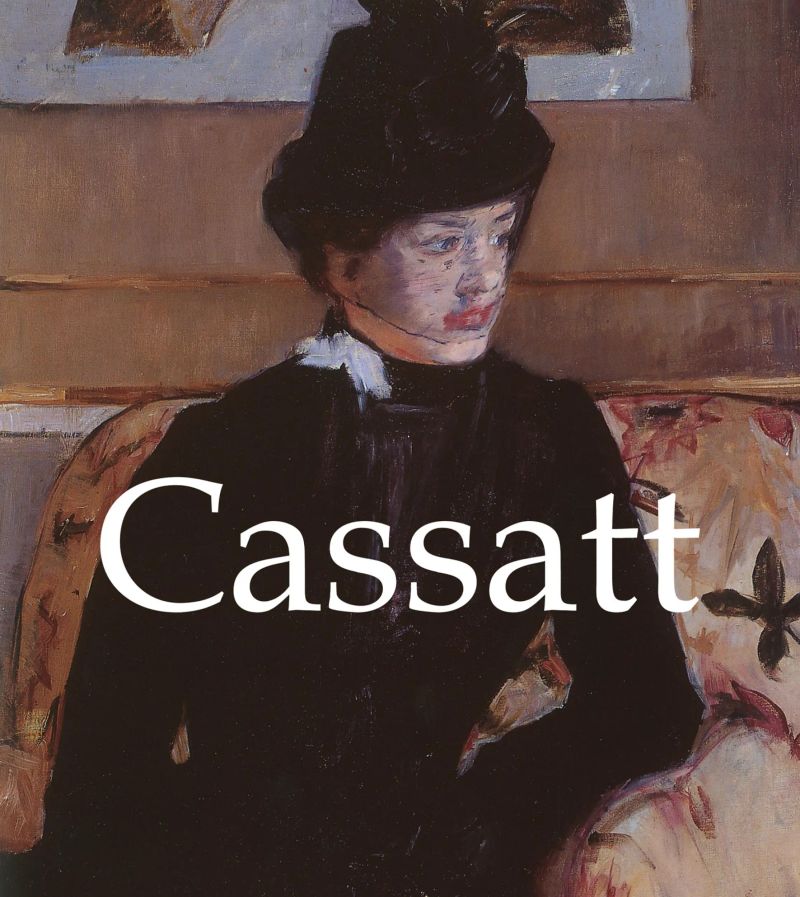


Length2h
About this audiobook
Mary was born in Pittsburgh. Her father was a banker of liberal educational ideas and the entire family appears to have been sympathetic to French culture. Mary was no more than five or six years old when she first saw Paris, and she was still in her teens when she decided to become a painter. She went to Italy, on to Antwerp, then to Rome, andfinally returned to Paris where in 1874, she permanently settled. In 1872, Cassatt sent her first work to the Salon, others followed in the succeeding years until 1875, when a portrait of her sister was rejected. She divined that the jury had not been satisfied with the background, so she re-painted it several times until, in the next Salon, the same portrait was accepted. At this moment Degas asked her to exhibit with him and his friends, the Impressionist Group, then rising into view, and she accepted with joy. She admired Manet, Courbet and Degas, and hated conventional art. Cassatt's biographer stressed the intellectuality and sentiment apparent in her work, as well as the emotion and distinction with which she has painted her favourite models: babies and their mothers. He then speaks of her predominant interest in draughtsmanship and her gift for linear pattern, a gift greatly strengthened by her study of Japanese art and her emulation of its style in the colour prints she made. While her style may partake of the style of others, her draughtsmanship, her composition, her light, and her colour are, indeed, her own. There are qualities of tenderness in her work which could have been put there, perhaps, only by a woman. The qualities which make her work of lasting value are those put there by an outstanding painter.
Audiobook details
Rating★★★★ 4.3 (19)
Includes Amazon, Goodreads
GenreOther
Length2 hrs
Narrated byListen with 1,000+ voices
FormateBook with Audio
Publish dateJul 1, 2011
LanguageEnglish
Table of contents
1Cassatt
2© Confidential Concepts, worldwide, USA
3Biography
4European capitals.
5objections.
Show all chaptersShow less
6travels throughout Europe: Italy, Spain, France etc.
7paintings especially for her brother, Alexander.
8Her style evolves and she no longer identifies herself with any movement.
91872 Oil on canvas, 63.5 x 54.6 cm Private Collection
10masterfully in oil and pastel, as well as the
11difficult and laborious graphic techniques. Her
12twentieth century. When young artists from
13Russia, Italy, Poland, Spain and Mexico began
14the year of her birth, and her tombstone in Le
15Pennsylvania. As she proudly
16Pennsylvania for a long time and particularly in
17After the Bullfight
18The Young Bride
19‘’Well before the Revocation of the Edict of
20Mrs Duffee Seated on a Striped Sofa, Reading
21father but the mother, Katherine Kelso Johnston
22Portrait of Madame X Dressed for the Matinée
23Madame Campan, an institution where there
24Portrait of the Artist
25Children in the Garden
26Pittsburgh to Philadelphia, where the children
27Pennsylvania Academy of Art, which she
28Little Girl in a Blue Armchair
29Academy. Indeed, in mid-nineteenth-century
30America, opportunities for artistic education
31Woman Reading
32paintings of old European masters since there
33World with their dubious works of art. ” Young
34Woman with a Pearl Necklace in a Loge
35Paris. In the mid-nineteenth century, many
36At the Theatre
37France better. The diversity of the landscape
38However, at the beginning of her artistic
39Lydia Leaning on Her Arms Seated in a Loge
40years in Philadelphia and Chicago and then
411879 Oil on canvas, 43.8 x 62.2 cm Private Collection
42a teacher. The education of museums alone
43The great masters of Italian Renaissance
44Interior Scene
45“The works of Rubens at Museo Del Prado
46and Antwerp, the city of Rubens, where his
47A Woman and a Girl Driving
48Lydia Crocheting in the Garden at Marly
49Courances and Écouen, together with her
50Haldeman. Thomas Couture, a professor of
Paul CézanneNathalia Brodskaya57m4.2 (48)$8 · $0.00
Paul Cézanne și opere de artăNathalia Brodskaya1h 16m$15 · $0.00
DegasNathalia Brodskaya1h 2m4.3 (32)$8 · $0.00
PissarroNathalia Brodskaya1h 23m$8 · $0.00
Édouard Manet et œuvres d'artNathalia Brodskaya1h 32m$15 · $0.00

PissarroNathalia Brodskaya1h 26m4.4 (17)$8 · $0.00

SisleyNathalia Brodskaya1h 17m4.6 (11)$8 · $0.00

Paul Cézanne et œuvres d'artNathalia Brodskaya1h 37m4.3 (34)$15 · $0.00
ImpresionismoNathalia Brodskaya9h 43m4.1 (240)$18 · $0.00
Claude Monet et œuvres d'artNathalia Brodskaya1h 17m4.3 (36)$15 · $0.00
Claude MonetNathalia Brodskaya58m4.2 (250)$8 · $0.00

CézanneNathalia Brodskaya1h4.3 (25)$8 · $0.00
RenoirNathalia Brodskaya1h 3m4.3 (22)$8 · $0.00
Pierre-Auguste Renoir et œuvres d'artNathalia Brodskaya1h 24m4.2 (45)$15 · $0.00
GauguinNathalia Brodskaya1h 12m4.3 (31)$8 · $0.00
Impressionism 120 illustrationsNathalia Brodskaya1h 20m3.9 (82)$15 · $0.00
Monet 1840-1926Nathalia Brodskaya41m4.3 (228)$15 · $0.00
ManetNathalia Brodskaya2h 26m$13.50 · $0.00

CézanneNathalia Brodskaya1h 29m4.3 (34)$13.50 · $0.00
Claude MonetNathalia Brodskaya3h 39m4.3 (25)$10 · $0.00
Mere ChristianityC. S. Lewis7h 7m4.4 (519.7K)$24 · $0.00

Her Daily BreadKate Wood12h 57m4.6 (153)$33 · $0.00
The Holy Bible - 1 SamuelKing James2h 13m4.8 (1.6K)$3 · $0.00
The American Standard Bible — The Gospel of MatthewMatthew3h 56m4.7 (3K)$2 · $0.00

Bad Fat Black GirlSesali Bowen6h 32m4.7 (2.8K)$24 · $0.00

The King James Audio Bible New Testament CompleteChristopher Glyn20h 2m4.7 (2.6K)$12 · $0.00

Faiths CheckbookCharles Spurgeon12h 44m4.7 (3.2K)$11 · $0.00

Ten Things I Wish You Knew About Your Child's Mental HealthDr. Billy Garvey4h 53m4.7 (2.4K)$20 · $0.00

Designing Terry Pratchett’s DiscworldPaul Kidby3h 52m4.7 (343)$20 · $0.00
The Chosen Book OneAmanda Jenkins, Kristen Hendricks, Dallas Jenkins3h 8m4.6 (4.9K)$10 · $0.00

The Lives of BrianBrian Johnson9h 45m4.6 (3.5K)$29 · $0.00
Expository Thoughts on the Gospel of LukeJ.C. Ryle27h 13m4.7 (536)$18 · $0.00

CrossroadsKaleb Dahlgren7h 56m4.6 (4.9K)$26 · $0.00

Across the RiverKent Babb11h 40m4.6 (927)$29 · $0.00

Brain Training for RidersAndrea Monsarrat Waldo5h 56m4.7 (550)$19 · $0.00

My Effin' LifeGeddy Lee17h 11m4.6 (13.1K)$40 · $0.00

Kings and PawnsHoward Bryant10h 9m4.6 (678)$29 · $0.00

The Elementia Chronicles #2: The New OrderSean Fay Wolfe11h 17m4.6 (841)$29 · $0.00

The ActsLuke2h 55m4.6 (19.7K)$12 · $0.00

New Testament - Easy NavigationWorld English Bible19h 35m4.6 (1.3K)$1.30 · $0.00
You may also like

Don't Trust Your GutSeth Stephens-Davidowitz6h 11m3.9 (3.4K)$24 · $0.00

The CommitmentDan Savage9h 51m4.0 (7.9K)$20

Setting the TableDanny Meyer5h 37m4.2 (26.8K)$24 · $0.00

We Are Our Mothers' DaughtersCokie Roberts7h 44m4.0 (1.3K)$26 · $0.00

Australia DayStan Grant8h 32m4.2 (2.1K)$26 · $0.00
Pasta, Pane, VinoMatt Goulding9h 9m4.3 (985)$29 · $0.00

Book of BluesJack Kerouac2h 55m4.1 (1.4K)$15

HokusaiEdmond de Goncourt5h 33m4.1 (122)$18 · $0.00

The Rise of Dadpreneurs: Balancing Fatherhood and EntrepreneurshipAurora Brooks59m$3.50 · $0.00
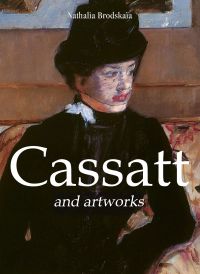
CassattNathalia Brodskaïa1h 46m4.1 (36)$15 · $0.00
ManetNathalia Brodskaya2h 26m$13.50 · $0.00
ManetNathalia Brodskaya2h 11m4.2 (59)$15 · $0.00

Room for DessertLynn Townsend25m$1 · $0.00

Breaking the Stereotypes: Working Dads Redefining FatherhoodAurora Brooks53m$3.50 · $0.00

How Women May Earn a LivingMercy Grogan2h 47m$2 · $0.00
The Oscar Micheaux Omnibus (Annotated)Oscar Micheaux43h 57m$2 · $0.00
Burning Down the HouseJonathan Gould17h 45m3.7 (749)$40 · $0.00

Mama in CongressRashida Tlaib, Miranda Paul, Adam Tlaib12m4.4 (147)$4 · $0.00
The Time of Their LivesAl Silverman13h 33m3.9 (118)$23 · $0.00

The Darwin MythBenjamin Wiker PhD4h 32m3.7 (249)$12 · $0.00