

CAPITAL (All 3 Books)
Unveiling the Inner Workings of Capitalism: A Detailed Marxist AnalysisBy Karl Marx


Length98h 2m
About this audiobook
In "Capital," Karl Marx presents a profound critique of political economy, articulating the intricate workings of capitalism through a meticulous analysis of labor, value, and commodity production. Comprised of three volumes, this magnum opus employs a dialectical method, interweaving economic theory with philosophical inquiry, and draws upon historical materialism to contextualize social relations within capitalist societies. Marx's literary style is both rigorous and accessible, delivering a challenging yet rewarding reading experience that remains pivotal in contemporary debates surrounding economic systems and social inequalities. Karl Marx, a philosopher, economist, and revolutionary, drew inspiration from the tumultuous socio-economic changes of the 19th century, particularly the Industrial Revolution and its profound impact on labor and capital. His background in Hegelian philosophy and his collaboration with Friedrich Engels informed his analytical approach, allowing him to dissect the capitalist mode of production systematically. Marx's commitment to social justice and advocacy for the working class undoubtedly fueled his desire to reveal capitalism's inherent contradictions and its implications for human society. "Capital" is essential reading for anyone seeking to understand the roots of modern economic systems and the socio-political conflicts they engender. By engaging with this foundational text, readers will gain critical insights into the dynamics of capitalism, enriching their perspectives on contemporary social struggles and economic inequalities. It is a compelling invitation to reflect critically on the structures that shape our lives.
Audiobook details
Rating★★★★ 4.5 (3.3K)
Includes Goodreads, Amazon, LibraryThing, StoryGraph
GenreBusiness and Economics
Length98 hrs 2 mins
Narrated byListen with 1,000+ voices
FormateBook with Audio
Publish dateDec 1, 2023
LanguageEnglish
Table of contents
1CAPITAL (All 3 Books)
2Author’s Preface: First German Edition
3Editor’s Preface: First English Translation
4I. The Two Factors of a Commodity: Use-Value and Value
5II. The Two-fold Character of the Labour Embodied in Commodities
Show all chaptersShow less
6III. The Form of Value or Exchange-Value
7IV. The Fetishism of Commodities and the Secret Thereof
82. Exchange
9I. The Measure of Values
10II. The Medium of Circulation
11III. Money
124. The General Formula for Capital
135. Contradictions in the General Formula of Capital
146. The Buying and Selling of Labour-Power
15I. The Labour-Process or the Production of Use-Values
16II. The Production of Surplus-Value
178. Constant Capital and Variable Capital
18I. The Degree of Exploitation of Labour-Power
19II. The Representation of the Components of the Value of the Product
20III. Senior’s “Last Hour”
21IV. Surplus-Produce
22I. The Limits of the Working day
23II. The Greed for Surplus-Labor, Manufacturer and Boyard
24III. Branches of English Industry without Legal Limits to Exploitation
25IV. Day and Night Work. The Relay System
26V. Compulsory Laws for the Extension of the Working Day (Mid 14th- End 17th Century)
27VI. Compulsory Limitation by Law of the Working-Time
28VII. Reaction of the English Factory Acts on Other Countries
2911. Rate and Mass of Surplus-Value
3012. The Concept of Relative Surplus-Value
3113. Co-operation
32I. Two-Fold Origin of Manufacture
33II. The Detail Labourer and his Implements
34III. The Two Fundamental Forms of Manufacture
35IV. Division of Labour in Manufacture, and Division of Labour in Society
36V. The Capitalistic Character of Manufacture
37I. The Development of Machinery
38II. The Value Transferred by Machinery to the Product
39III. The Proximate Effects of Machinery on the Workman
40IV. The Factory
41V. The Strife between Workman and Machine
42VI. The Theory of Compensation as Regards the Workpeople Displaced by Machinery
43VII. Repulsion and Attraction of Workpeople by the Factory System
44VIII. Revolution Effected in Manufacture, Handicrafts, and Domestic Industry
45IX. The Factory Acts
46X. Modern Industry and Agriculture
4716. Absolute and Relative Surplus-Value
48I. Length of the Working day and Intensity of Labour Constant
49II. Working Day Constant
50III. Productiveness and Intensity of Labour Constant
The Communist ManifestoKarl Marx3h 25m3.9 (262.2K)$1.99 · $0.00

Die heilige FamilieKarl Marx10h 50m3.8 (1.9K)$2 · $0.00
The XVIII Brumaire of Louis BonaparteKarl Marx6h 21m4.4 (12.9K)$1.99 · $0.00

Karl Marx: Der achtzehnte Brumaire des Louis NapoleonKarl Marx6h 36m4.3 (16.1K)$1 · $0.00

Differenz der demokritischen und epikureischen NaturphilosophieKarl Marx2h 38m4.0 (1.2K)$2 · $0.00

Zur JudenfrageKarl Marx1h 48m3.5 (1.5K)$1 · $0.00

Lohn, Preis und ProfitKarl Marx4h 10m4.4 (4.4K)$1 · $0.00
THE COMMUNIST MANIFESTO & CAPITALKarl Marx98h 8m4.3 (29)$1.99 · $0.00
Das Kapital: Band 1-3Karl Marx91h 36m4.5 (3K)$2 · $0.00

Zweites KaiserreichKarl Marx15h 27m$1 · $0.00
Das Kapital (Alle 3 Bände)Karl Marx91h 37m4.2 (15.4K)$2 · $0.00
The Process of Capitalist ProductionKarl Marx30h 4m4.4 (44.3K)$1.99 · $0.00
Lohnarbeit und KapitalKarl Marx1h 49m4.3 (5.6K)$1 · $0.00
CAPITAL (All 3 Books)Karl Marx92h 37m4.5 (16.5K)$2.99 · $0.00

Karl Marx: Zur Kritik der Hegelschen RechtsphilosophieKarl Marx9h 22m4.2 (1.2K)$1 · $0.00
The Process of Capitalist Production as a Whole (Capital Vol. III)Karl Marx41h 1m4.4 (2.2K)$1.99 · $0.00
Manifiesto ComunistaKarl Marx, Friederich Engels1h 57m3.9 (266.6K)$15 · $0.00
The Communist ManifestoKarl Marx1h 13m3.9 (240.6K)$3 · $0.00
Manifiesto comunistaKarl Marx, Friedrich Engels6h 9m3.9 (276.8K)$6
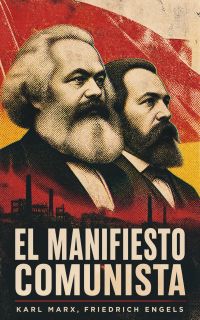
El Manifiesto ComunistaKarl Marx, Friedrich Engels2h 8m3.9 (273.3K)$0.99 · $0.00

Never Split the DifferenceChris Voss, Tahl Raz8h 7m4.4 (277.7K)$26 · $0.00
The Intelligent Investor Rev Ed.Benjamin Graham17h 48m4.3 (191.5K)$40 · $0.00
The Hard Thing About Hard ThingsBen Horowitz7h 57m4.2 (134.3K)$26 · $0.00
Boundaries for LeadersHenry Cloud7h 36m4.3 (3.6K)$26 · $0.00
BuildTony Fadell11h 5m4.5 (14.3K)$8 · $0.00
The Joys Of CompoundingGautam Baid17h 34m4.5 (2.5K)$18 · $0.00
Basic EconomicsThomas Sowell18h 32m4.5 (29.3K)$28 · $0.00

Poor Charlie’s AlmanackGrover Gardener, Charles T. Munger13h 9m4.5 (24.7K)$18 · $0.00

The Ambuja StoryNarotam Sekhsaria13h 59m4.5 (830)$33 · $0.00

The Secret Door to SuccessFlorence Scovel Shinn2h 25m4.5 (2.1K)$1.20 · $0.00

This Is Going to HurtAdam Kay5h 47m4.4 (444.7K)$24 · $0.00

Big TrustShadé Zahrai, Fayçal Sekkouah8h 36m4.6 (406)$26 · $0.00
The Intelligent Investor Third EditionBenjamin Graham, Jason Zweig20h4.4 (156.6K)$46 · $0.00

Bottle of LiesKatherine Eban14h 25m4.4 (12K)$33 · $0.00

The Antiracist Business BookTrudi Lebrón6h 10m4.6 (275)$17 · $0.00

The FormulaJoshua Robinson, Jonathan Clegg10h 41m4.4 (6.9K)$29 · $0.00

Let Them LeadJohn U. Bacon7h 10m4.5 (1.4K)$24 · $0.00

Secrets of the Millionaire MindT. Harv Eker5h 11m4.4 (301.4K)$24 · $0.00

The Person You Mean to BeDolly Chugh9h 6m4.4 (7.2K)$29 · $0.00
BoundlessNick Kostov, Sean McLain9h 17m4.5 (1.1K)$29 · $0.00
You may also like
CAPITAL (Complete 3 Volume Edition)Karl Marx98h 7m4.5 (3.2K)$1.99 · $0.00
The DIM HypothesisLeonard Peikoff17h 34m4.4 (508)$23 · $0.00

Revolution and Other EssaysJack London6h 8m4.2 (262)$2.30

BehemothJoshua B. Freeman13h 43m4.0 (1.4K)$23
Critique of the Gotha Programme (Annotated)Karl Marx2h 44m4.3 (12.1K)$0.99 · $0.00

AnthemAyn Rand2h 26m3.8 (277.8K)$10 · $0.00

Sceptical Essays (Annotated)Bertrand Russell9h 16m4.6 (1K)$2 · $0.00

The Cotton KingdomFrederick Law Olmsted24h 29m4.2 (526)$30
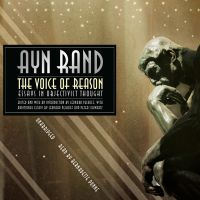
The Voice of ReasonAyn Rand15h 57m4.2 (1.4K)$25

The Secret Life of GroceriesBenjamin Lorr8h 57m4.1 (21.2K)$20
Our Dollar, Your ProblemKenneth Rogoff12h 57m4.2 (984)$25

All It Takes Is GutsWalter E. Williams5h 53m4.3 (282)$14 · $0.00

Reap the Dark Tide (Annotated)Cyril M. Kornbluth2h 20m$2 · $0.00
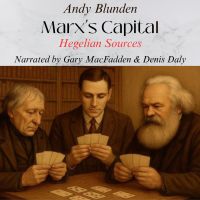
Marx’s Capital - Hegelian SourcesAndy Blunden6h 30m$23

Meccania the Super-StateOwen Gregory8h 4m$2 · $0.00

The Jigsaw ManLarry Niven27m3.9 (270)$2 · $0.00
The Value of Voice - A Conversation with Nick CouldryHoward Burton1h 59m$3 · $0.00

CAPITAL (Annotated)Karl Marx105h 33m$2 · $0.00
Ludwig von MisesDr. Eamonn Butler10h 15m4.1 (137)$20 · $0.00

War of the ClassesJack London3h 43m3.6 (152)$2 · $0.00