
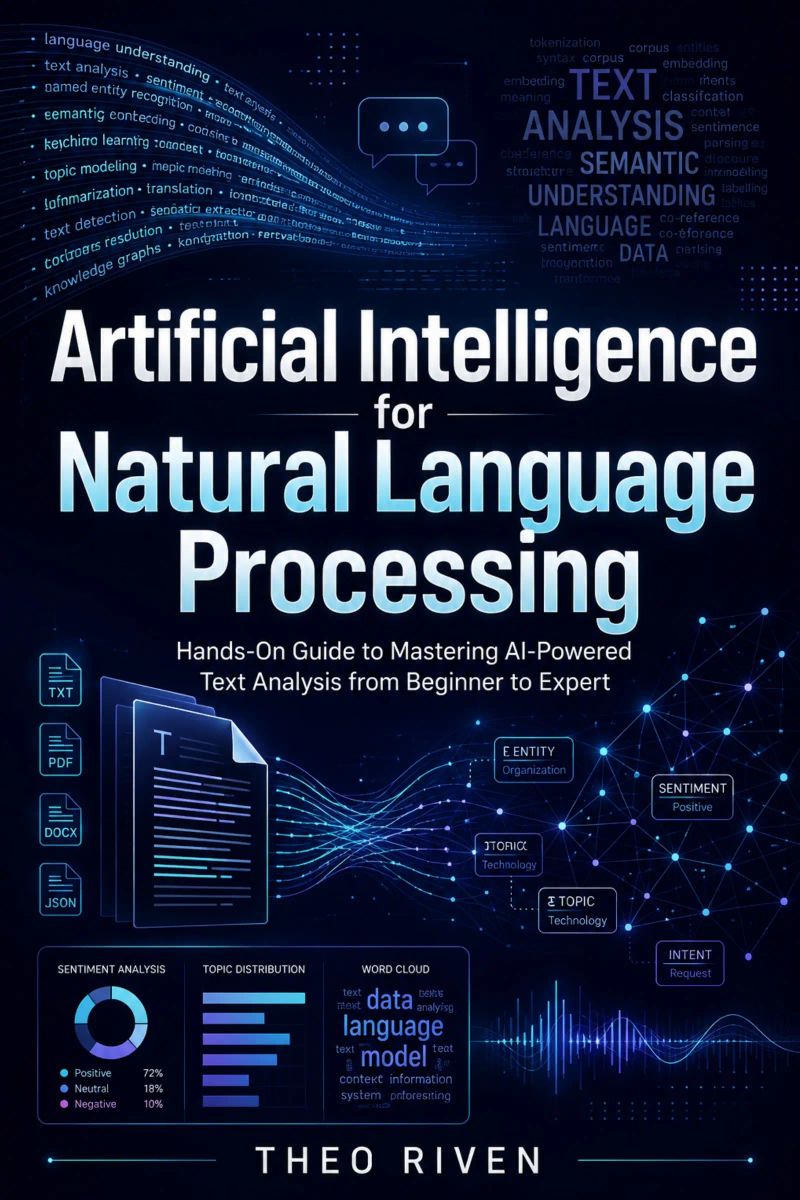
Artificial Intelligence for Natural Language Processing
By Theo Riven


Length3h 32m
About this audiobook
Learn how artificial intelligence helps computers understand, process, and generate human language.
Artificial Intelligence for Natural Language Processing is a practical guide for beginners, students, developers, data learners, and professionals who want to master AI-powered text analysis. The book introduces natural language processing in clear terms, explaining how machines analyze words, sentences, meaning, sentiment, patterns, and context.
Readers will explore Python for NLP, text cleaning, tokenization, sentiment analysis, chatbots, language models, text classification, entity recognition, and real-world NLP applications. With hands-on guidance and accessible explanations, this book helps readers move from basic concepts to practical AI language projects.
Whether you want to build smarter chatbots, analyze customer feedback, process documents, or understand modern language AI, this guide provides the foundation and confidence to begin.
Audiobook details
GenreTechnology
Length3 hrs 32 mins
Narrated byListen with 1,000+ voices
FormateBook with Audio
Publish dateJun 12, 2026
LanguageEnglish
Table of contents
1Chapter 1: Introduction to AI and Natural Language Processing
2Understanding the Basics: What Is NLP and Why AI Matters
3The Evolution of NLP: From Rule-Based Systems to Machine Learning
4Real-World Applications: Chatbots, Sentiment Analysis, and Beyond
5Setting Up Your Development Environment: Tools, Libraries, and First Steps
Show all chaptersShow less
6Hardware and Software Basics
7Key Libraries and Installation
8First Steps: A Hands-On Text Processor
9Summary of Key Takeaways
10Exercises and Challenges
11Chapter 2: Foundations of Python Programming for NLP
12Python Essentials: Data Types, Loops, and Functions Tailored for Text Data
13Key Libraries: Installing and Exploring NLTK, spaCy, and Pandas
14Handling Text Data: Reading, Writing, and Basic Manipulation
15Hands-On Exercise: Building Your First Simple Text Processor
16Summary of Key Takeaways
17Exercises and Challenges
18Chapter 3: Text Preprocessing and Cleaning Techniques
19Tokenization, Stemming, and Lemmatization: Cleaning Noisy Text
20Removing Stop Words, Punctuation, and Handling Special Characters
21Dealing with Multilingual Text and Encoding Issues
22Practical Project: Preprocessing a Dataset of Customer Reviews
23Summary of Key Takeaways
24Exercises and Challenges
25Chapter 4: Feature Engineering for NLP Models
26Bag-of-Words and TF-IDF: Converting Text to Numerical Features
27Word Embeddings: From One-Hot Encoding to Word2Vec
28N-grams and Sequence Features for Contextual Understanding
29Exercise: Engineering Features for a Basic Text Classifier
30Summary of Key Takeaways
31Exercises and Challenges
32Chapter 5: Traditional Machine Learning Algorithms in NLP
33Supervised Learning: Classification with Naive Bayes and SVM
34Unsupervised Learning: Clustering with K-Means and Topic Modeling with LDA
35Evaluation Metrics: Accuracy, Precision, Recall, and F1-Score for NLP Tasks
36Case Study: Building a Spam Detector Using Scikit-Learn
37Summary of Key Takeaways
38Exercises and Challenges
39Chapter 6: Introduction to Deep Learning for Text
40Neural Networks Basics: Perceptrons, Activation Functions, and Backpropagation
41Recurrent Neural Networks (RNNs): Handling Sequential Data
42Long Short-Term Memory (LSTM) and Gated Recurrent Units (GRUs)
43Hands-On: Training Your First RNN for Sentiment Analysis
44Summary of Key Takeaways
45Exercises and Challenges
46Chapter 7: Advanced Neural Architectures for NLP
47Convolutional Neural Networks (CNNs) for Text: Capturing Local Patterns
48Sequence-to-Sequence Models: Encoder-Decoder Frameworks
49Attention Mechanisms: Why They Revolutionize NLP
50Project: Implementing a Simple Machine Translation Model
More from Theo Riven


Operation PedestalMax Hastings12h 29m4.4 (5.2K)$29 · $0.00

When the Heavens Went on SaleAshlee Vance18h 20m4.4 (3K)$40 · $0.00

Everybody Has a Podcast (Except You)Justin McElroy, Travis McElroy, Griffin McElroy5h 9m4.3 (2.3K)$24 · $0.00

Hands of TimeRebecca Struthers8h 8m4.4 (1.3K)$26 · $0.00
Never Lost AgainBill Kilday10h 1m4.4 (805)$29 · $0.00

How the Internet HappenedBrian McCullough13h 28m4.3 (2.7K)$23 · $0.00
Collected Writings of Nikola TeslaNikola Tesla, Thomas Commerford Martin21h 50m4.3 (1.7K)$1 · $0.00

Just AspireAjai Chowdhry9h 13m4.4 (260)$29 · $0.00

The Little Book of AliensAdam Frank8h 20m4.3 (1.3K)$26 · $0.00
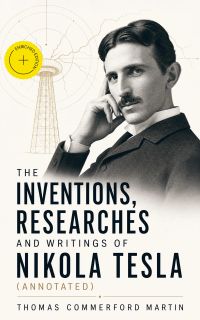
The inventions, researches and writings of Nikola Tesla (Annotated)Thomas Commerford Martin16h 59m4.3 (1.3K)$2 · $0.00

KargilV.P. Malik15h 18m4.3 (2K)$24 · $0.00
Experiments with Alternating CurrentsNikola Tesla9h 16m4.3 (874)$1.99 · $0.00

Fire on the HorizonTom Shroder, John Konrad8h 23m4.3 (858)$26 · $0.00

The Smell of Kerosene (Annotated)National Aeronautics and Space Administration, Donald L. Mallick, Peter W. Merlin11h 32m4.3 (523)$2 · $0.00

The Boy Who Harnessed the WindWilliam Kamkwamba, Bryan Mealer10h 5m4.2 (78.9K)$29 · $0.00

Across the Airless WildsEarl Swift10h 8m4.3 (1.3K)$29 · $0.00

Console WarsBlake J. Harris20h 41m4.2 (13.7K)$46 · $0.00

Improvised Munitions HandbookU.S. Department of Defense4h 49m4.3 (1.6K)$1.99 · $0.00
Escaping GravityLori Garver10h 54m4.2 (2.2K)$20 · $0.00

Wireless WarsJonathan Pelson8h 2m4.3 (418)$20 · $0.00
You may also like

Knowing What We KnowSimon Winchester14h 19m3.9 (2.5K)$33 · $0.00
A Brief History of IntelligenceMax S. Bennett12h 18m4.6 (6.6K)$29 · $0.00
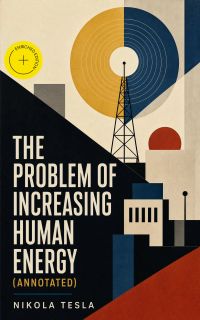
The Problem of Increasing Human Energy (Annotated)Nikola Tesla6h 44m4.2 (3.2K)$2 · $0.00
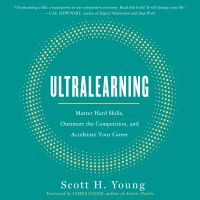
UltralearningScott H. Young7h 46m4.0 (29K)$26 · $0.00
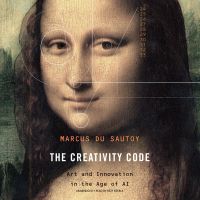
The Creativity CodeMarcus du Sautoy9h 54m4.0 (2.2K)$20 · $0.00

12 BytesJeanette Winterson9h4.0 (2.5K)$20
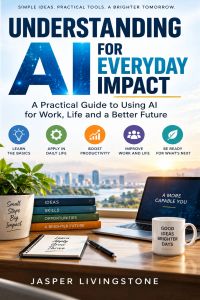
Understanding AI For Everyday ImpactJasper Livingstone4h 7m$9

Leading in the Age of Artificial IntelligenceJasper Livingstone9h 37m$14.50 · $0.00

Unlock Your Intelligent EdgeJasper Livingstone4h 20m$10

The Golden BitcoinMichael A. Duniec6h 43m5.0 (1)$14.99 · $0.00
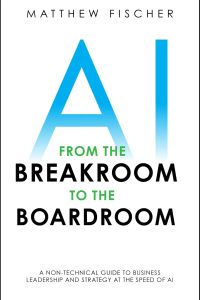
AI: From the Breakroom to the BoardroomMatthew Fischer3h 8m4.5 (132)$14.99
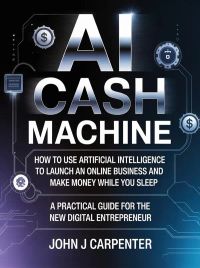
Ai cash machineJOHN J CARPENTER1h 49m$5.80 · $0.00
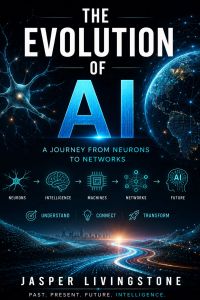
The Evolution Of AIJasper Livingstone10h 56m$9

Code to ScreenTheo Vantage3h 49m$9

The Hidden Power of AI for Financial GrowthNora V. Halden3h 33m5.0 (1)$2.30 · $0.00
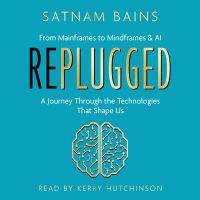
RepluggedSatnam Bains13h 47m$14 · $0.00
Leads MachineFrancis Rodino6h 30m4.9 (39)$27 · $0.00

CLAUDE CODE MASTERY 2026Smart Alden6h 5m$8.50 · $0.00

Master AiHenrique Xavier Oliveira2h 5m$6 · $0.00
PYTHON UNLOCKEDTheo Vantage3h 20m$10