
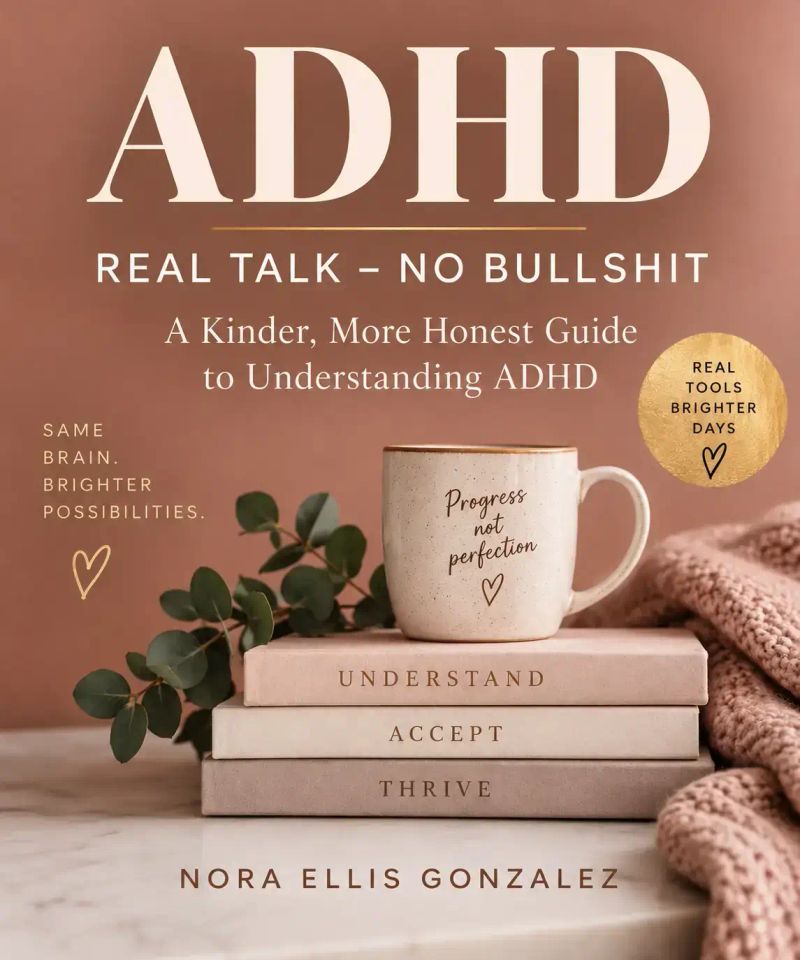
ADHD — REAL TALK – NO BULLSHIT
A Kinder, More Honest Guide to Understanding ADHDBy Nora Ellis GonzalezRecorded TrackLength1h 53m
About this audiobook
ADHD is often reduced to a list of symptoms. But ADHD is more than a checklist.
ADHD — REAL TALK – NO BULLSHIT is a clear, honest and human guide to understanding ADHD across childhood, adolescence and adulthood. It explains what ADHD is, how it can affect attention, motivation, emotions, relationships, school, work and everyday life and why someone can know exactly what they need to do yet still struggle to do it.
Based on established knowledge and current research, this book separates facts from myths while acknowledging what we are still learning about ADHD. It is written for people with ADHD and for the parents, partners, teachers, friends and colleagues who want to understand them better.
Less judgment. Better understanding. A clearer picture of the person behind the diagnosis.
Audiobook details
GenreHealth and Wellness, Education and Learning
Length1 hr 53 mins
Narrated byRecorded Track
FormatAudiobook
Publish dateSep 11, 2026
LanguageEnglish
Table of contents
1Foreword
2Introduction — Understanding ADHD ADHD is often discussed as if the label explains everything. It does not. ADHD is a neurodevelopmental disorder that can affect attention, activity level and impulse control. It can also influence organization, time management, task initiation, motivation and everyday functioning. But ADHD does not look identical in every person. Age matters. Environment matters. Expectations matter. Sleep, stress and individual differences matter too. A child may struggle in a classroom but function very differently at home. A teenager may appear capable while spending enormous amounts of energy trying to keep up. An adult may have developed years of strategies to compensate for difficulties that other people never see. This is one reason ADHD can be misunderstood. From the outside, a behavior can look like laziness, carelessness, lack of motivation or not caring. From the inside, the experience may be very different. Someone may know exactly what they need to do and still struggle to start. They may genuinely intend to reply to a message and then forget. They may care deeply about something and still have difficulty following through. Understanding this difference is one of the central ideas in this book. ADHD is not simply about attention. It can affect the systems that help people manage attention, impulses, time, tasks and everyday demands. Some people experience more difficulties with inattention. Others experience more hyperactivity and impulsivity. Some experience a combination of both. Symptoms can also change with age. The way ADHD appears in a young child may look very different from the way it appears in a teenager or an adult. That does not mean the ADHD has disappeared. It may mean that the demands of life have changed and that the symptoms are showing up differently. This book is not about turning ADHD into a list of excuses. It is also not about turning ADHD into a list of superpowers. Both approaches can miss the person behind the diagnosis. Some people with ADHD describe strengths such as creativity, curiosity, energy or rapid problem-solving. These experiences are real for some people but they are not guaranteed features of ADHD. At the same time, the difficulties can be very real. ADHD can affect school, work, relationships, sleep, routines, finances and everyday life. The goal of this book is to make those patterns easier to understand. We will look at what ADHD is, how it can affect the brain and executive functions, why motivation and reward can matter, how ADHD can appear in children, teenagers, adults and women and how it can influence relationships, emotions, social life, work and everyday responsibilities. We will also look at treatment, support and some of the most common myths about ADHD. Some popular ADHD terms describe experiences that many people report but are not official diagnostic criteria. Hyperfocus and rejection sensitive dysphoria are examples. Research continues to develop in several areas so this book distinguishes between established knowledge, common experiences and areas where scientists are still learning. Most importantly, this book is about people. A diagnosis can help explain patterns. It does not define a person's intelligence, personality, value or potential. ADHD is part of the story. It is not the whole story. The more accurately we understand ADHD, the easier it becomes to replace assumptions with better questions. And sometimes a better question is the beginning of better understanding
3Chapter 1 — What Is ADHD?
4Chapter 2 — The ADHD Brain
5Chapter 3 — What Does ADHD Actually Look Like?
Show all chaptersShow less
6Chapter 4 — ADHD in Children
7Chapter 5 — ADHD in Teenagers
8Chapter 6 — ADHD in Adults
9Chapter 7 — ADHD in Women and Girls
10Chapter 8 — Executive Functions and ADHD
11Chapter 9 — ADHD, Motivation and the Reward System
12Chapter 10 — ADHD, Sleep, Stress and Overwhelm
13Chapter 11 — ADHD Treatment and Support
14Chapter 12 — ADHD, School and Learning
15Chapter 13 — ADHD and Relationships
16Chapter 14 — ADHD and Emotions
17Chapter 15 — ADHD and Social Life
18Chapter 16 — ADHD and Work
19Chapter 17 — ADHD and Everyday Life
20Chapter 18 — ADHD Myths, Misconceptions and Facts
21Chapter 19 — Living With ADHD
22Chapter 20 — ADHD: What We Know, What We Are Still Learning and What Matters Most
23Final Note - ADHD Is Part of the Story. It Is Not the Whole Story
24Bonus 1 — ADHD Quick Reference
25Bonus 2 — ADHD Glossary
26Bonus 3 — Questions to Ask a Healthcare Professional
27Bonus 4 — ADHD Strategies That Make Everyday Life Easier
28Bonus 5 — ADHD and Parenting
29Bonus 6 — ADHD and Partners, Friends and Family

Consent Laid BareChanel Contos7h 11m4.5 (1.7K)$24 · $0.00
How to Make Disease DisappearRangan Chatterjee5h 26m4.5 (3.5K)$24 · $0.00

The Complete Herbal (Annotated)Nicholas Culpeper29h 8m4.5 (1.4K)$2 · $0.00

A Plague Upon Our HouseScott W. Atlas MD10h 37m4.5 (3.4K)$20 · $0.00

The Cancer CodeDr. Jason Fung10h 48m4.5 (5.3K)$29 · $0.00

The Gift of TherapyIrvin Yalom7h 39m4.5 (38.8K)$26 · $0.00

EarlySarah DiGregorio9h 47m4.5 (1.3K)$29 · $0.00
Bottle of LiesKatherine Eban14h 25m4.4 (12K)$33 · $0.00
The 36-Hour DayNancy L. Mace, Peter V. Rabins17h 13m4.4 (9.2K)$28 · $0.00

FlooredSara Reardon10h 36m4.5 (1K)$29 · $0.00
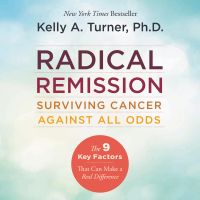
Radical RemissionKelly A. Turner9h 26m4.4 (8.1K)$29 · $0.00
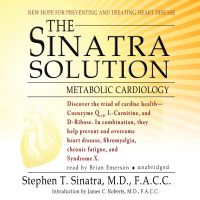
The Sinatra SolutionStephen T. Sinatra MD9h4.5 (899)$20 · $0.00

The Songaminute ManSimon McDermott6h 12m4.5 (280)$24 · $0.00
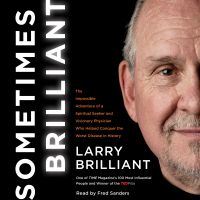
Sometimes BrilliantLarry Brilliant12h 27m4.5 (954)$29 · $0.00

Live Your LifeAmanda Kloots, Anna Kloots10h 54m4.4 (13.7K)$29 · $0.00

All in Her HeadElizabeth Comen13h 25m4.4 (18.2K)$33 · $0.00
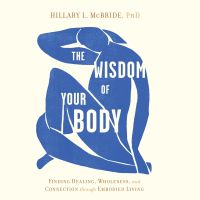
The Wisdom of Your BodyHillary McBride9h 14m4.4 (6.7K)$29 · $0.00
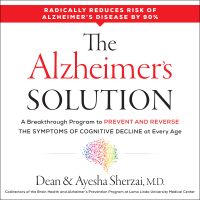
The Alzheimer's SolutionDean Sherzai, Ayesha Sherzai9h 47m4.4 (1.9K)$29 · $0.00
Rewire Your MindsetBrian Keane6h 49m4.5 (896)$23 · $0.00

Tuning The Human Biofield: Healing With Vibrational MedicineCENTER FOR SOUND THERAPY13h 28m4.4 (2.5K)$35 · $0.00

A Brief History of IntelligenceMax S. Bennett12h 18m4.6 (6.6K)$29 · $0.00

HomeschooledStefan Merrill Block7h 10m3.6 (18.5K)$28 · $0.00

The Call of the Wild and FreeAinsley Arment9h 7m4.4 (21.2K)$29 · $0.00
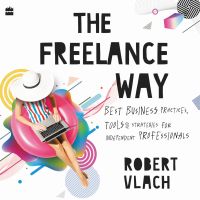
The Freelance WayRobert Vlach19h 48m4.5 (528)$40 · $0.00

Race to the BottomLuke Rosiak9h 20m4.5 (600)$29 · $0.00

They Came for the SchoolsMike Hixenbaugh9h 5m4.5 (2.6K)$8 · $0.00

Find Me UnafraidKennedy Odede, Jessica Posner11h 11m4.5 (2.7K)$29 · $0.00

Asking for ItKate Harding8h 55m4.4 (5.3K)$20 · $0.00
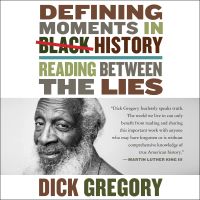
Defining Moments in Black HistoryDick Gregory7h 37m4.4 (6K)$26 · $0.00

The Emerald Tablets of Thoth the AtlanteanMaurice Doreal3h 4m4.4 (8.8K)$6 · $0.00

Learning AmericaLuma Mufleh6h 37m4.4 (564)$24 · $0.00
Math-ishJo Boaler7h 21m4.4 (588)$24 · $0.00
It Worked For MeColin Powell7h 42m4.3 (9.8K)$26 · $0.00

Little SoldiersLenora Chu11h 30m4.3 (3.1K)$29 · $0.00

Financial FeministTori Dunlap8h 3m4.2 (22.2K)$8 · $0.00

Grammar-land; Or, Grammar in Fun for the Children of Schoolroom-shireM. L. Nesbitt2h 36m4.4 (487)$1 · $0.00

DarkwaterWilliam Edward Burghardt Du Bois6h 40m4.3 (1.4K)$11 · $0.00

The Highway Code UKDepartment for Transport3h 33m4.2 (36.6K)$11 · $0.00

He'll Be OKCelia Lashlie6h 32m4.3 (1.1K)$24 · $0.00

Dr. Montessori's Own HandbookMaria Montessori3h 33m4.3 (1.3K)$1 · $0.00
You may also like

I Live a Life Like YoursJan Grue5h 7m4.1 (1.9K)$20

How To Tell Stories To ChildrenJoseph Sarosy, Silke Rose West3h 46m4.3 (1.8K)$20 · $0.00

Incidental InventionsElena Ferrante3h 6m3.9 (5.7K)$15 · $0.00

The Hospital Always WinsIssa Ibrahim10h 2m4.3 (436)$20

Confident Parents, Confident KidsJennifer S. Miller M.Ed5h 49m4.2 (329)$17 · $0.00

Rare ObjectsKathleen Tessaro13h 29m3.9 (8.6K)$33 · $0.00

ShockedPatricia Volk5h 31m3.6 (1.2K)$20

Out Came the SunMariel Hemingway9h 6m3.8 (2.8K)$20
The Mother DanceHarriet Lerner9h 39m4.0 (3.2K)$29 · $0.00

Three Essays on the Theory of SexualitySigmund Freud3h 37m3.9 (9.3K)$3.50 · $0.00
The Gift of FailureJessica Lahey7h 47m4.2 (11.6K)$26 · $0.00

Hints on Child-trainingH. Clay Trumbull6h 8m4.6 (682)$2 · $0.00

The Power of Play in Reaching Baby MilestonesAurora Brooks1h 21m$3.50 · $0.00

ParentingTessa L. Quinn2h 52m$4.10 · $0.00
Baby Milestones- How to Stay Calm During the Developmental Roller CoasterAurora Brooks1h 9m$3.50 · $0.00

Boost Your Self-EsteemAnthony Ekanem1h 34m$5 · $0.00

The Life You WantAdam Phillips4h 17m3.6 (164)$20

How to Teach Your Child Emotional IntelligenceAurora Brooks1h 19m$3.50 · $0.00

The Power of Baby Milestones- How They Shape Your Child's FutureAurora Brooks1h 33m$3.50 · $0.00

Are Baby Milestones a Cause for Concern What You Need to KnowAurora Brooks1h 11m$3.50 · $0.00