
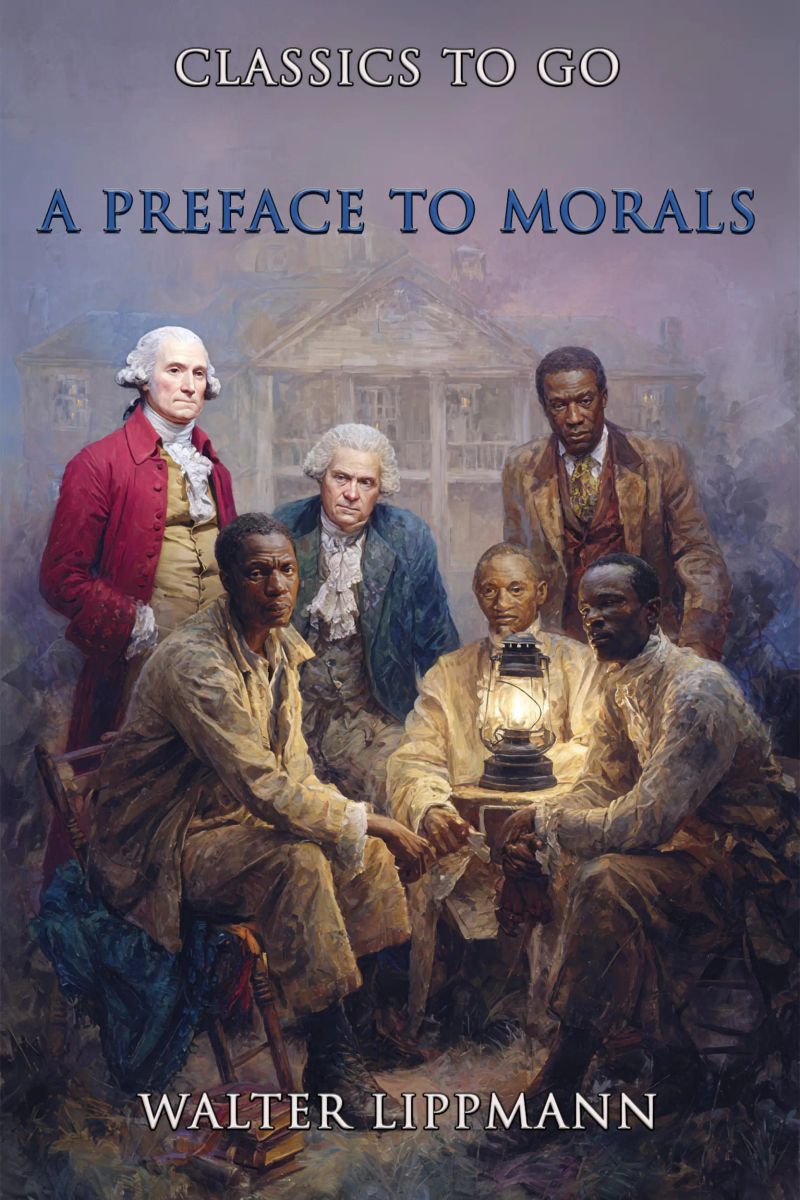
A Preface To Morals
Restored Classics to Go EditionBy Walter Lippmann


Length9h 58m
About this audiobook
This edition has been fully restored with modern typesetting, custom cover design. Walter Lippmann's "A Preface to Morals" delves into the crisis of belief in modern society, exploring how the erosion of traditional religious values has left individuals grappling with a profound sense of vacancy and existential uncertainty. Lippmann examines the impact of modernity on personal morality and societal norms, highlighting the disconnection that arises when ancestral values dissolve. In "Golden Memories," Lippmann contrasts the approaches of freedom and restraint, emphasizing the challenge of achieving a balanced life amidst moral dilemmas. This section underscores the importance of maturity and self-reflection in the quest for meaning, suggesting that high religion can guide individuals through the complexities of modern life. Lippmann reflects on the failure of liberalism to deliver true freedom and happiness, noting historical tendencies to seek refuge in idealized pasts. He critiques the paradox of modern freedom, where liberation from traditional constraints often results in feelings of emptiness and confusion. Despite the promise of self-determination, many struggle to forge meaningful lives, highlighting the persistent human need for meaning and belonging. The book addresses the plight of modern individuals caught between the absence of authoritative belief and societal pressures. It explores the futility of seeking a new, stable orthodoxy amid the breakdown of established beliefs, leaving individuals in existential uncertainty. Lippmann critiques rebellion against authority, illustrating how it can lead to disillusionment and emptiness once traditional idols are destroyed. Lippmann also critiques oversimplified moral judgments, advocating for a nuanced understanding of human behavior. He emphasizes the value of combining intuitive insight with scientific psychology to navigate the complexities of human nature. By focusing on psychological development, Lippmann suggests that humanism, grounded in individual progress, can offer a meaningful alternative to traditional beliefs, providing a foundation for understanding human nature and the art of living.
Audiobook details
Rating★★★★ 4.1 (584)
Includes LibraryThing, Goodreads, Amazon
GenrePhilosophy
Length9 hrs 58 mins
Narrated byListen with 1,000+ voices
FormateBook with Audio
Publish dateNov 14, 2025
LanguageEnglish
Table of contents
1A PREFACE TO MORALS
2PART I THE DISSOLUTION OF THE ANCESTRAL ORDER
3CHAPTER I THE PROBLEM OF UNBELIEF
41. Whirl is King
52. False Prophecies
Show all chaptersShow less
63. Sorties and Retreats
74. Deep Dissolution
8CHAPTER II GOD IN THE MODERN WORLD
91. Imago Dei
102. An Indefinite God
113. God in More Senses Than One
124. The Protest of the Fundamentalists
135. In Man’s Image
14CHAPTER III THE LOSS OF CERTAINTY
151. Ways of Reading the Bible
162. Modernism: Immortality as an Example
173. What Modernism Leaves Out
18CHAPTER IV THE ACIDS OF MODERNITY
191. The Kingly Pattern
202. Landmarks
213. Barren Ground
224. Sophisticated Violence
235. Rulers
24CHAPTER V THE BREAKDOWN OF AUTHORITY
251. God’s Government
262. The Doctrine of the Keys
273. The Logic of Toleration
284. A Working Compromise
295. The Effect of Patriotism
306. The Dissolution of a Sovereignty
31CHAPTER VI LOST PROVINCES
321. Business
332. The Family
343. Art
35CHAPTER VII THE DRAMA OF DESTINY
361. The Soul in the Modern World
372. The Great Scenario
383. Earmarks of Truth
394. On Reconciling Religion and Science
405. Gospels of Science
416. The Deeper Conflict
427. Theocracy and Humanism
43PART II THE FOUNDATIONS OF HUMANISM
44INTRODUCTION
45CHAPTER VIII GOLDEN MEMORIES
46CHAPTER IX THE INSIGHT OF HUMANISM
471. The Two Approaches to Life
482. Freedom and Restraint
493. The Ascetic Principle
504. Oscillation between Two Principles
More from Walter Lippmann


Lessons in TruthH. Emilie Cady3h 50m4.5 (2.4K)$20 · $0.00
The Discourses of EpictetusP. E. MATHESOM12h 47m4.4 (17.7K)$1.20 · $0.00

IlluminationsWalter Benjamin10h 12m4.4 (16.2K)$20 · $0.00

That Bird Has My WingsJarvis Jay Masters9h 49m4.4 (13.7K)$29 · $0.00

Tâo Teh KingLaozi2h 34m4.4 (230.9K)$2 · $0.00

SymposiumPlato3h 26m4.4 (97.9K)$1.20 · $0.00

Buddhist Boot CampTimber Hawkeye2h 39m4.4 (8.4K)$18 · $0.00
Enchiridion & The Discourses of Epictetus (Annotated)Arrian Epictetus18h 9m4.4 (3.5K)$2 · $0.00

The Meditations of the Emperor Marcus Aurelius AntoninusEmperor of Rome Marcus Aurelius5h 41m4.4 (1.8M)$1 · $0.00

Crime and PunishmentFyodor Dostoevsky23h 11m4.4 (1.3M)$12 · $0.00

MeditationsMarcus Aurelius5h 52m4.4 (433.7K)$1 · $0.00

Everyday DharmaSuneel Gupta5h 2m4.5 (761)$20 · $0.00

The Joyful Wisdom ("La Gaya Scienza")Friedrich Wilhelm Nietzsche11h 37m4.4 (26.6K)$1 · $0.00
The Art of LivingEpictetus, Sharon Lebell3h 16m4.4 (50.1K)$18 · $0.00
MeditationsEmperor Of Rome Marcus Aurelius7h 23m4.3 (477.5K)$1.20 · $0.00

The Imitation of ChristThomas à Kempis6h 27m4.3 (84.6K)$21 · $0.00

Sadhana: the realisation of lifeRabindranath Tagore3h 49m4.4 (8.6K)$6 · $0.00
SapiensYuval Noah Harari15h 18m4.3 (1.4M) · 1210$33 · $0.00

You BelongSebene Selassie8h 35m4.4 (2.7K)$26 · $0.00

The Song Celestial; Or, Bhagavad-Gîtâ (from the Mahâbhârata)Anonymous2h 18m4.4 (3.2K)$2 · $0.00
You may also like

ReligionArthur Schopenhauer3h 11m4.1 (1.2K)$3.50 · $0.00

All Things are Possible (Annotated)Lev Shestov5h 48m4.1 (325)$2 · $0.00

The Sacred Wood, Essays on Poetry and CriticismT. S. Eliot4h 47m4.1 (708)$2.30

EssaysGeorge Orwell26h 38m4.5 (8.4K)$4 · $0.00

The Great GatsbyF. Scott Fitzgerald7h4.0 (6.4M)$1 · $0.00

POOR FOLK & OTHER TALESFyodor Dostoyevsky22h 24m4.0 (1.6K)$2 · $0.00
The Ethics of Aristotle (Annotated)Aristotle10h 22m4.2 (2.6K)$1.99 · $0.00

The Architecture of HappinessAlain de Botton4h 41m4.0 (18.1K)$12

The Wealth of NationsAdam Smith45h 12m4.1 (138K)$40 · $0.00

The Imp Of The PerverseEdgar Allan Poe16m3.9 (3.1K)$2.30
LachesPlato1h 20m4.0 (2.2K)$2.30
How to Analyze People on Sight Through the Science of Human AnalysisElsie Lincoln Benedict6h 45m3.6 (2.7K)$16 · $0.00

The HypochondriacsBrian Dillon9h 23m3.4 (222)$20 · $0.00

History of Christian ApologeticsJohn Warwick Montgomery14h 56m4.0 (48)$49 · $0.00

The Collected Works of Charlotte Perkins Gilman: Short Stories, Novels, Poems and Essays (Annotated)Charlotte Perkins Gilman69h 3m4.4 (25)$2 · $0.00

From Hide-and-Seek to HashtagsJasper D. Merrick3h 24m$4.10 · $0.00

The Warfare Collection - Complete Historiographical Military Works of Rudyard Kipling (Annotated)Rudyard Kipling42h 6m$1.99 · $0.00

Emerson and Other EssaysJohn Jay Chapman3h 36m3.9 (66)$2 · $0.00

The Heavenly Father: Lectures on Modern AtheismErnest Naville4h 35m$2 · $0.00

Greek WomenMitchell Carroll9h 14m$2 · $0.00