

My Child Says “No” Before Hearing the Question - How to Reduce Everyday Power Struggles, Offer Meaningful Choices, and Build Cooperation Without Forty-Minute Negotiations About Putting on Shoes
By Max Paradox


Length5h 16m
About this audiobook
You ask your child to put on their shoes.
“No.”
You have not yet explained which shoes, where you are going, or whether footwear is even the main point of the sentence.
If that feels suspiciously familiar, this book was written for your household.
My Child Says “No” Before Hearing the Question is a practical, funny guide for parents who are tired of ordinary requests turning into exhausting power struggles. It is not a manual for producing a child who happily agrees with everything. That would be convenient for approximately fifteen minutes and slightly alarming after that. The goal is something much more useful: clearer boundaries, shorter arguments, meaningful choices, better cooperation, and fewer situations where getting out of the house requires the negotiating stamina of an international summit.
Max Paradox explores what children’s “no” can actually mean and why the same response does not work in every situation. You will learn how to recognize the difference between ordinary resistance, difficulty stopping an activity, a need for control, overload, repeated boundary testing, and family patterns that accidentally teach children to ignore the first request.
The book shows how to stop repeating yourself endlessly, avoid fake choices, reduce unnecessary instructions, prepare children for transitions, set rules before the argument begins, and use consequences without turning family life into an escalating system of threats and rewards. It also explains how to handle emotionally intense moments when another logical argument is the last thing anyone needs.
You will find practical ways to solve recurring conflicts with your child instead of replaying them every evening, teach a child to disagree more constructively, share responsibility between adults, repair the relationship after a bad argument, and recognize when ordinary strategies are no longer enough. The later chapters focus on maintaining progress, noticing early signs that old patterns are returning, and gradually transferring more responsibility to the child so the parent does not remain the household’s full-time reminder service forever.
This is a book for real parents living in real homes, where people get tired, schedules collapse, children complain, adults occasionally say the wrong thing, and one missing shoe can somehow delay an entire family.
You will not learn how to eliminate “no.”
You will learn how to stop treating every “no” as the opening statement in a forty-minute debate.
This publication was prepared using tools that support the creative process, including artificial intelligence solutions. The final concept, structure and editing are the responsibility of the author.
Audiobook details
GenreSelf-Help
Length5 hrs 16 mins
Narrated byListen with 1,000+ voices
FormateBook with Audio
Publish dateOct 12, 2026
LanguageEnglish
Table of contents
1INTRO
2Chapter 1 - “No” Is Not One Problem
3Chapter 2 - Why the First Request Stops Counting
4Chapter 3 - When Every Small Thing Turns Into a Power Struggle
5Chapter 4 - Why Bribes, Threats, and Endless Negotiations Work Until They Don’t
Mostrar todos os capítulosVer menos
6Chapter 5 - Too Many Instructions, Too Little Room to Cooperate
7Chapter 6 - The Hard Part Is Often Stopping, Not Starting the Next Thing
8Chapter 7 - Give Choices That Actually Mean Something
9Chapter 8 - When Your Child Does Not Need Another Argument, but a Way Back to Calm
10Chapter 9 - “First This, Then That” - A Simple Sequence Instead of a Negotiation
11Chapter 10 - Make the Rule Before the Argument Starts
12Chapter 11 - Stop Having the Same Argument and Solve the Problem Together
13Chapter 12 - Teach Your Child to Say “No” Better, Not to Stop Saying It
14Chapter 13 - Build Cooperation Before Resistance Has a Chance to Take Over
15Chapter 14 - Sometimes the Conflict Needs Repair, Not Another Consequence
16Chapter 15 - When “No” Shows Up Everywhere at Once
17Chapter 16 - Two Adults, Three Sets of Rules, and a Child Who Knows Every Difference
18Chapter 17 - When the Usual Strategies Stop Working
19Chapter 18 - Catch the Old Pattern Before It Becomes the New Normal
20Chapter 19 - Less Reminding, More Responsibility
21Chapter 20 - The Goal Is Not a Child Who Always Says Yes

My Parents Believe Everything They See on Facebook - How to Talk About Fakes, AI, and “A Friend Sent It” Without Starting a Family WarMax Paradox7h 49m$7.70 · $0.00

They Live Among Us - Aliens, Humans, and the Beautiful Disaster of Planet EarthMax Paradox2h 45m$7.70 · $0.00

How to Help Your Teen Quit VapingMax Paradox6h 49m$7.70 · $0.00

Nie umiem być sam - Jak polubić własne towarzystwo bez prowadzenia ze sobą dziwnych rozmówMax Paradox5h 9m$7.70 · $0.00
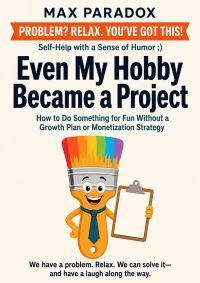
Even My Hobby Became a Project - How to Do Something for Fun Without a Growth Plan or Monetization StrategyMax Paradox6h 9m$7.70 · $0.00

Jest sobota, a ja już boję się poniedziałku: Jak odzyskać weekend od własnej pracyMax Paradox5h 33m$7.70 · $0.00

Everyone Is an Expert Now - How the Internet Replaced Knowledge with ConfidenceMax Paradox1h 46m$7.70 · $0.00

Zarabiam więcej, a i tak czuję się biedniejszy: Jak odnaleźć się w świecie, w którym wszystko kosztuje absurdalne pieniądzeMax Paradox5h 46m$7.70 · $0.00

I'm Trying to Optimize My Entire Life - How to Stop Measuring Your Sleep, Steps, Water, Productivity, and Self-WorthMax Paradox7h 26m$7.70 · $0.00

How to Avoid Online Scams and Protect Your MoneyMax Paradox8h 20m$7.70 · $0.00

How to Cope with Loneliness and Reconnect with PeopleMax Paradox7h 27m$7.70 · $0.00

I Can't Get Along with My Coworkers - How to Survive Eight Hours a Day with People You Would Never Have ChosenMax Paradox6h 37m$7.70 · $0.00

I Argue with People I'll Never Meet - How to Stop Donating Your Evenings to Internet CommentsMax Paradox6h 40m$7.70 · $0.00

Teściowie wchodzą nam na głowę - Jak postawić granice rodzinie, zanim zacznie wybierać wam zasłonyMax Paradox5h 49m$7.70 · $0.00

Brutalna prawda o LinkedIn Platforma, która mówi, kim jesteś, zanim zdążysz to zrobić samMax Paradox3h 54m$7.70 · $0.00

How to Move Through Grief and Find Life After LossMax Paradox7h 17m$7.70 · $0.00

Rodzice wciąż traktują mnie jak dziecko - Jak dorosnąć również podczas rodzinnego obiaduMax Paradox6h 10m$7.70 · $0.00

How to Get Your Energy and Motivation BackMax Paradox7h 45m$7.70 · $0.00

I'm Afraid I've Wasted My Life - How to Stop Taking Stock of Your Losses Before HalftimeMax Paradox7h 9m$7.70 · $0.00

Wszyscy mają lepiej ode mnie - Jak przestać porównywać swoje życie z cudzym highlightemMax Paradox4h 45m$7.70 · $0.00
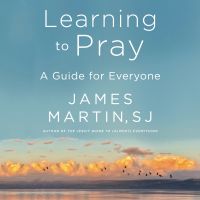
Learning to PrayJames Martin13h 24m4.5 (3.4K)$33 · $0.00

Swayam Ki AwaazPrem Rawat8h 34m4.7 (1.1K)$26 · $0.00

Forever BoyKate Swenson9h 27m4.7 (5K)$29 · $0.00

You Are Worth ItKyle Carpenter, Don Yaeger8h 53m4.7 (4.8K)$29 · $0.00

The Happiest Man on EarthEddie Jaku3h 48m4.6 (178K)$7 · $0.00

Finding MeViola Davis9h 15m4.6 (256.4K)$29 · $0.00

Spiritual AnatomyDaaji Kamlesh D. Patel9h 47m4.7 (319)$29 · $0.00

The Dangerous Truth about Today’s MarijuanaLaura Stack CSP, MBA9h 57m4.7 (385)$20 · $0.00

The Gospel according to Spiritualism (Translated)Allan Kardec14h 39m4.6 (3.9K)$5.70 · $0.00

Birdie & HarlowTaylor Wolfe7h 50m4.6 (6.5K)$26 · $0.00

CrossroadsKaleb Dahlgren7h 56m4.6 (4.9K)$26 · $0.00

Life on the BridgeKaelynn Partlow5h 40m4.6 (1.1K)$24 · $0.00

Keep Your Love OnDanny Silk9h 4m4.6 (8.1K)$10 · $0.00

The Tao of Joy Every DayDerek Lin10h 24m4.6 (762)$20 · $0.00

UndividedVicky Beeching9h 2m4.6 (1.3K)$29 · $0.00

HE CAN WHO THINKS HE CAN & OTHER BOOKS ON SUCCESSOrison Swett Marden5h 54m4.6 (1.2K)$1.99 · $0.00
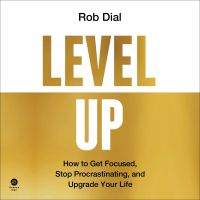
Level UpRob Dial7h 42m4.6 (3.3K)$26 · $0.00

Burn the HaystackJennie Young, PhD9h 30m4.6 (543)$29 · $0.00

ACRES OF DIAMONDS: Our Every-day Opportunities (Wisdom & Empowerment Series) (Annotated)Russell Conwell2h 26m4.6 (1K)$2 · $0.00

Good InsideBecky Kennedy9h 55m4.5 (59.3K)$29 · $0.00
You may also like

Mating in CaptivityEsther Perel8h 35m4.2 (62.9K)$29 · $0.00

The Dance of IntimacyHarriet Lerner6h 9m4.2 (14K)$24 · $0.00

The Attachment Parenting BookWilliam Sears MD, Martha Sears RN10h 1m4.3 (5K)$20
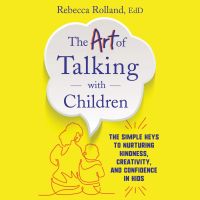
The Art of Talking with ChildrenRebecca Rolland12h 29m4.1 (442)$29 · $0.00

I'm So Effing HungryAmy Shah, MD6h 16m3.8 (1.7K)$8 · $0.00

Money and LoveMyra Strober, Abby Davisson8h 46m4.1 (368)$29 · $0.00

Ignore It!Catherine Pearlman PhD, LCSW5h 51m3.9 (1.4K)$20 · $0.00

How to Analyze People on SightElsie Benedict7h 10m3.6 (2.7K)$1.20 · $0.00

Get MarriedBrad Wilcox9h 15m4.3 (688)$29 · $0.00

Dog Body Language DecoderImad Muratspahic3h 21m$12 · $0.00

Toddler Discipline: Strategies To Educate Your Children Well (The Most Effective Parenting Tools, the Complete Guide to Help Children Develop Self-discipline, Responsibility and Respect)Jeffrey Broach4h 4m$3.50 · $0.00

Good DaughteringAllison M. Alford, PhD8h3.5 (185)$26 · $0.00

Toddler Screen Time Without GuiltImad Muratspahic3h 22m$12 · $0.00

Sane Sex Life and Sane Sex LivingHarland William Long3h 53m3.8 (120)$1 · $0.00

Good Mom on PaperStacey May Fowles6h 32m4.2 (156)$29 · $0.00

Push BackAmy Tuteur10h 38m3.9 (517)$29 · $0.00

The Minimalist ParentSienna P. Beckett1h 48m$2.30 · $0.00

The House in Good TasteElsie De Wolfe5h 46m3.9 (397)$1 · $0.00

Career Tips for Ambitious Working MomsAurora Brooks1h 18m$3.50 · $0.00

The Newborn Communication GuideZoe R. Blaire1h 43m$2.30 · $0.00