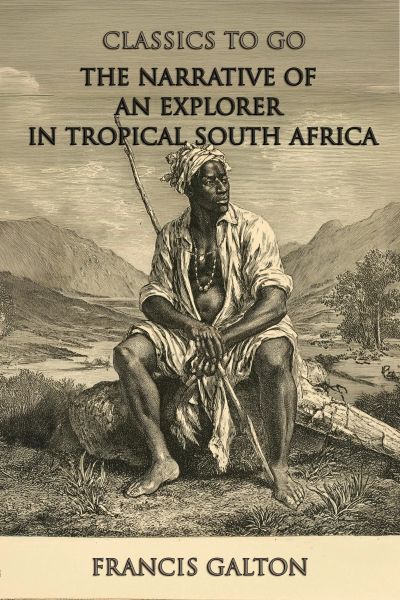
Francis Galton, a Victorian-era thinker born into a wealthy English family in 1822, gained early fame through his daring expedition across what was then little-known terrain in southern Africa, an experience he vividly captured in "The Narrative of an Explorer in Tropical South Africa." Though originally trained in medicine, Galton found his true calling in observation, measurement, and an obsessive quest to classify the natural and human worlds. His journey through present-day Namibia not only marked him as a notable explorer of his time but also sparked a lifelong fascination with patterns of heredity, intelligence, and human difference, leading to his later and much-debated role in the development of eugenics and statistical science. Galton's accounts blend detailed geographical and ethnographic reporting with the colonial mindset of his era, offering both a rich document of 19th-century exploration and a revealing portrait of the imperial ideologies that shaped it. Today, his narrative stands as a complex historical artifact—part adventure, part scientific inquiry, and part reminder of the ways exploration was often entwined with systems of control and classification. Readers interested in the history of science, imperialism, and how travel narratives have shaped Western perceptions of Africa will find Galton's work both illuminating and troubling in equal measure.