
Audio only
Length44m
About this audiobook
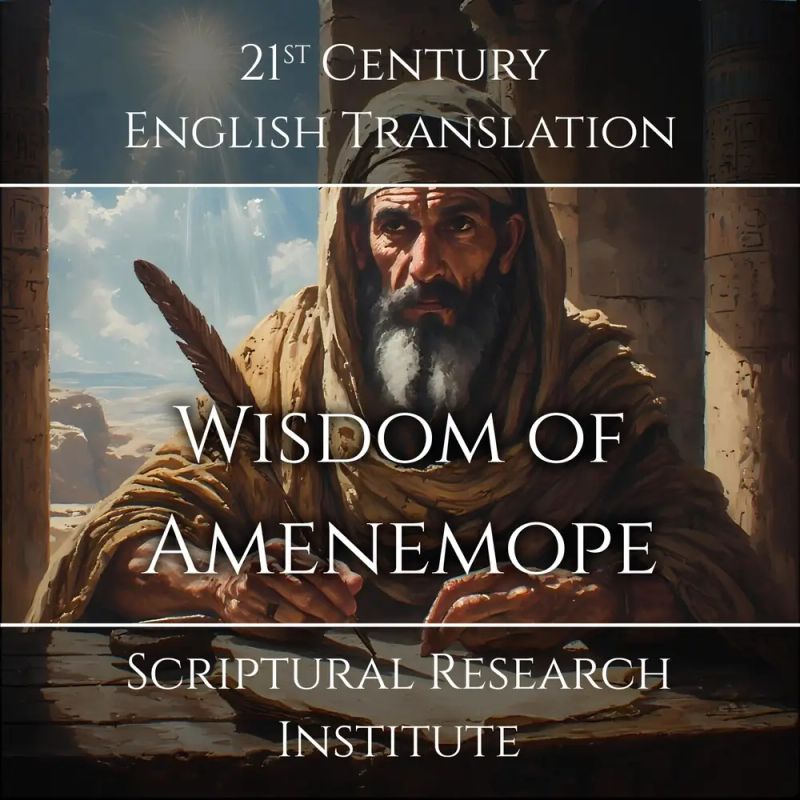
The Wisdom of Amenemope is an ancient Egyptian text that has mostly survived to the present, dating to sometime between 1550 and 1350 BCE. It is also called the Wisdom (or Instructions) of Amenemopet, depending on how the Egyptian name Amen-em-ope (transliterated hieroglyphs: jmn-m-jpả.t) is rendered. It served as an inspiration for several ancient Israelite books, including the Deuteronomy, Psalms, Proverbs, and the Wisdom of Joshua ben Sira. The most significant influence of Amenemope on the Israelite texts is found in the book of Proverbs, which copies some of Amenemope verbatim. The Wisdom of Amenemope was lost for over 2000 years, however, in the late 1800s, several copies were found by Egyptologists both on papyrus and tablets. The various copies all dated to the 21st through 27th dynasties of Egypt, circa 1170 to 500 BCE, meaning the Wisdom of Amenemope was in circulation for over 600 years before being lost. It is not clear when exactly it was lost, but it was no longer in circulation by the time the Septuagint was translated at the Library of Alexandria circa 250 BC, and there is no evidence the Library ever acquired a copy of it.
Its date of origin is equally obscure, and a wide variety of dates have been proposed. The text refers repeatedly to Aten along with Ra, which strongly implies a pre-Akhenaten origin. During the 18th dynasty, circa 1350 to 1335 BCE, Pharaoh Amenhotep IV changed his name to Akhenaten and mandated that everyone in Egypt had to worship Aten (transliterated hieroglyphs: jtn), the solar disk. Before this, Aten was worshiped as one of many gods, and viewed as one aspect of Ra (transliterated hieroglyphs: rỏ), the sun god, specifically the dawn. Once Atenism became the state religion, the other gods were first demoted to secondary status, and then banned outright. This was not a popular decision, and after he died the order imposing Atenism on Egypt was rescinded, and in the following dynasty, virtually all trace of Akenaten was purged from Egypt.
The purge of Akenhaten was so thorough that even the Late Period Egyptians and Greeks that occupied Egypt did not know he had existed. His existence and the nature of his existence were rediscovered in the early 1900s when the tomb of his son Tutankhamun was discovered. Tutankhamun had originally been named Tutankhaten, but changed his name to Tutankhamun after his father died, replacing the name of the god Aten with Amen (transliterated hieroglyphs: ỉmn). This signified that the royal family had reverted to the worship of Amen and had abandoned Aten. Aten continued to be worshiped for a few years into Tutankhamun’s reign but seems to have been completely abandoned by the Egyptians within a decade, and then disappeared from the Egyptian pantheon. The disappearance of Aten after the time of Tutankhamun means that Amenemope could not have written his text after Tutankhamun.
Audiobook details
Rating★★★★ 4.3 (22)
Includes Goodreads, Amazon
GenrePhilosophy
Length44 mins
Narrated byGoogle's Archie
FormatAudiobook
Publish dateApr 17, 2026
LanguageEnglish
Table of contents
1section-0001
18section-0018
2section-0002
19section-0019
3section-0003
20section-0020
4section-0004
21section-0021
5section-0005
22section-0022
Show all chaptersShow less
6section-0006
23section-0023
7section-0007
24section-0024
8section-0008
25section-0025
9section-0009
26section-0026
10section-0010
27section-0027
11section-0011
28section-0028
12section-0012
29section-0029
13section-0013
30section-0030
14section-0014
31section-0031
15section-0015
32section-0032
16section-0016
33section-0033
17section-0017
34section-0034
Tale of SinuheScriptural Research Institute1h 18m$4.10 · $0.00
Septuagint - ObadiahScriptural Research Institute24m$3.50 · $0.00
Septuagint - DeuteronomyScriptural Research Institute3h 19m4.8 (11)$5.80 · $0.00
Septuagint - AmosScriptural Research Institute1h 48m$3.50 · $0.00

Greek Apocalypse of EzraScriptural Research Institute27m4.6 (11)$3.50 · $0.00
Septuagint - JoelScriptural Research Institute45m$3.50 · $0.00
Septuagint - NahumScriptural Research Institute51m$3.50 · $0.00
Septuagint - ZakharianScriptural Research Institute1h 21m$3.50 · $0.00
Septuagint - DodekaScriptural Research Institute10h 14m$29 · $0.00
Septuagint - ZephaniahScriptural Research Institute1h 6m$3.50 · $0.00
Judahite Apocalypse of EzraScriptural Research Institute2h 52m$4.10 · $0.00
Ge'ez 1st MaccabeesScriptural Research Institute4h 28m$4.70 · $0.00
Septuagint - NahumScriptural Research Institute34m$4.10 · $0.00

Words of AhikarScriptural Research Institute2h 21m$5.80 · $0.00

The Life of WeniScriptural Research Institute29m$4.10 · $0.00
Septuagint - ShadrachScriptural Research Institute1h 4m$3.50 · $0.00
Septuagint - HoseaScriptural Research Institute1h 53m$3.50 · $0.00

Tale of the Shipwrecked SailorScriptural Research Institute26m4.3 (12)$3.50 · $0.00

Septuagint - ZakharianScriptural Research Institute56m$4.10 · $0.00

Septuagint - JoelScriptural Research Institute33m$4.10 · $0.00

Lessons in TruthH. Emilie Cady3h 50m4.5 (2.4K)$20 · $0.00
Letters from a StoicSeneca6h 5m4.4 (80.4K)$6 · $0.00
The Discourses of EpictetusP. E. MATHESOM12h 47m4.4 (17.7K)$1.20 · $0.00

IlluminationsWalter Benjamin10h 12m4.4 (16.2K)$20 · $0.00

That Bird Has My WingsJarvis Jay Masters9h 49m4.4 (13.7K)$29 · $0.00

Tâo Teh KingLaozi2h 34m4.4 (230.9K)$2 · $0.00

SymposiumPlato3h 26m4.4 (97.9K)$1.20 · $0.00

Buddhist Boot CampTimber Hawkeye2h 39m4.4 (8.4K)$18 · $0.00
Enchiridion & The Discourses of Epictetus (Annotated)Arrian Epictetus18h 9m4.4 (3.5K)$2 · $0.00

The Meditations of the Emperor Marcus Aurelius AntoninusEmperor of Rome Marcus Aurelius5h 41m4.4 (1.8M)$1 · $0.00

Crime and PunishmentFyodor Dostoevsky23h 11m4.4 (1.3M)$12 · $0.00

MeditationsMarcus Aurelius5h 52m4.4 (433.7K)$1 · $0.00

Everyday DharmaSuneel Gupta5h 2m4.5 (761)$20 · $0.00

The Joyful Wisdom ("La Gaya Scienza")Friedrich Wilhelm Nietzsche11h 37m4.4 (26.6K)$1 · $0.00
The Art of LivingEpictetus, Sharon Lebell3h 16m4.4 (50.1K)$18 · $0.00
MeditationsEmperor Of Rome Marcus Aurelius7h 23m4.3 (477.5K)$1.20 · $0.00

The Imitation of ChristThomas à Kempis6h 27m4.3 (84.6K)$21 · $0.00

Sadhana: the realisation of lifeRabindranath Tagore3h 49m4.4 (8.6K)$6 · $0.00

SapiensYuval Noah Harari15h 18m4.3 (1.4M) · 1330$33 · $0.00

You BelongSebene Selassie8h 35m4.4 (2.7K)$26 · $0.00
You may also like

History of European Morals From Augustus to CharlemagneWilliam Edward Hartpole Lecky31h 49m4.2 (817)$1 · $0.00
Codex HammurabiHammurabi2h 34m3.9 (2.5K)$1 · $0.00

TILL WE HAVE FACES (Cupid & Psyche – The Story Behind the Myth)C. S. Lewis9h 51m4.3 (104.5K)$1 · $0.00
The Code of Hammurabi, King of BabylonHammurabi2h 19m3.8 (3.1K)$1 · $0.00

Japan: An Attempt at InterpretationLafcadio Hearn12h 38m4.1 (1.6K)$2.30

ElectraEuripides1h 46m4.1 (10.5K)$2.30

Bullies and SaintsJohn Dickson14h 37m4.4 (2.5K)$34 · $0.00
The Holy Bible - LeviticusKing James2h 7m4.2 (3.1K)$3 · $0.00
History of the Decline and Fall of the Roman Empire — Volume 2Edward Gibbon21h 44m4.5 (1.7K)Free
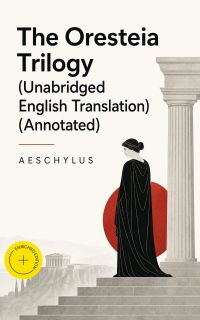
The Oresteia Trilogy (Unabridged English Translation) (Annotated)Aeschylus4h 47m4.3 (110.2K)$2 · $0.00

Shepherd of HermasAnonymous4h 5m4.0 (3.7K)$0.99 · $0.00
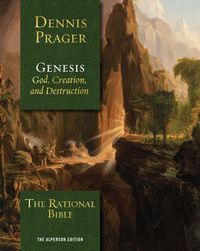
The Rational Bible: GenesisPrager, Dennis15h 35m4.7 (8K)Free
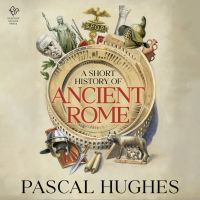
A Short History of Ancient RomePascal Hughes9h 10m4.4 (324)$29 · $0.00

The Shinto CultMilton Spenser Terry1h 52m$1.20 · $0.00

The Pharaohs and Their PeopleE. Berkley6h 12m$1 · $0.00
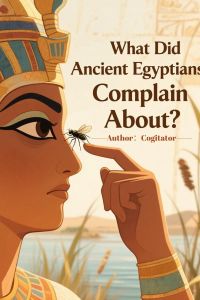
Boring History For Sleep | What Did Ancient Egyptians Complain About? Cogitator1h 21m4.2 (4) Only with Ultra

The Nightlight - 16Melvin Vallomparambil24m$4 · $0.00

Dharma Artha Kama MokshaDevdutt Pattanaik4h 32m4.1 (239)$13 · $0.00

Virgin PortraitsKlaus Carl1h 37m$13.50 · $0.00

RaphaelEstelle M. Hurll2h 1m4.5 (47)$2 · $0.00