


Length1h 26m
About this audiobook
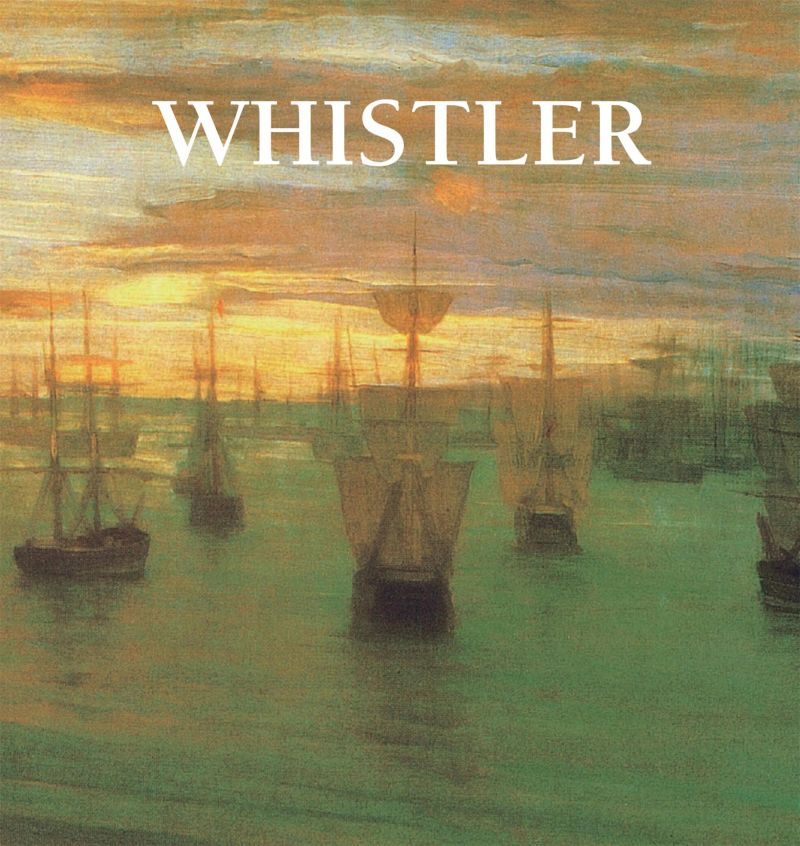
Whistler suddenly shot to fame like a meteor at a crucial moment in the history of art, a field in which he was a pioneer. Like the impressionists, with whom he sided, he wanted to impose his own ideas. Whistler's work can be divided into four periods. The first may be called a period of research in which he was influenced by the Realism of Gustave Courbet and by Japanese art. Whistler then discovered his own originality in the Nocturnes and the Cremorne Gardens series, thereby coming into conflict with the academics who wanted a work of art to tell a story. When he painted the portrait of his mother, Whistler entitled it Arrangement in Grey and Black and this is symbolic of his aesthetic theories. When painting the Cremorne Pleasure Gardens it was not to depict identifiable figures, as did Renoir in his work on similar themes, but to capture an atmosphere. He loved the mists that hovered over the banks of the Thames, the pale light, and the factory chimneys which at night turned into magical minarets. Night redrew landscapes, effacing the details. This was the period in which he became an adventurer in art; his work, which verged on abstraction, shocked his contemporaries. The third period is dominated by the full-length portraits that brought him his fame. He was able to imbue this traditional genre with his profound originality. He tried to capture part of the souls of his models and placed the characters in their natural habitats. This gave his models a strange presence so that they seem about to walk out of the picture to physically encounter the viewer. By extracting the poetic substance from individuals he created portraits described as "mediums" by his contemporaries, and which were the inspiration for Oscar Wilde's The Picture of Dorian Gray. Towards the end of his life, the artist began painting landscapes and portraits in the classical tradition, strongly influenced by Velázquez. Whistler proved to be extremely rigorous in ensuring his paintings coincided with his theories. He never hesitated in crossing swords with the most famous art theoreticians of his day. His personality, his outbursts, and his elegance were a perfect focus for curiosity and admiration. He was a close friend of Stéphane Mallarmé, and admired by Marcel Proust, who rendered homage to him in A La Recherche du Temps Perdu. He was also a provocative dandy, a prickly socialite, a demanding artist, and a daring innovator.
Audiobook details
Rating★★★★★ 4.6 (12)
Includes Amazon
GenreOther
Length1 hr 26 mins
Narrated byListen with 1,000+ voices
FormateBook with Audio
Publish dateDec 22, 2011
LanguageEnglish
Table of contents
1WHISTLER
26Tate Gallery, London.
2© Confidential Concepts, worldwide, USA © Sirrocco, London, (English version)
27Boston.
3Whistler
28The Portraits
4after a drypoint by
29Grey: Portrait of Lady
5Cincinnati, Ohio.
30Marriage, Honors, The Gentle Art of Making Enemies (1888-1890)
Show all chaptersShow less
6Born Under a Wandering Star (1834-1863)
31Rose. John Singer Sargent, 1885.
7and Rose: The Music
32Harvard University.
8Wave, Biarritz. 1862.
33Washington.
9Connecticut.
34Théodore Duret.
10No. 1: The White Girl.
35New York.
11Washington.
36Glasgow.
12No. 2: The Little
37Silver: The Andalusian.
13Museum of Art.
38Lyme Regis. 1895. 20 x 12 in.
14Gold: The Golden
39Glasgow.
15Washington.
40Private Collection.
16Smithsonian
41Glasgow.
17Gold: Valparaiso Bay.
42Lizzie Willis.
18Washington.
43Glasgow.
19Chicago.
44Freer Gallery of Art, Smithsonian
20The Barber Institute
45W. Vanderbilt.
21Etienne Carjat, Paris.
46BIOGRAPHY
22and Silver: Battersea
47Major Whistler, James's father, settles in St. Petersburg, Russia.
23The Metropolitan
48In June, Whistler enters the Académie Gleyre.
24Harmony of Gold and Anger, The Peacock Room, The Ruskin Trial (1872-1880)
49France with Courbet and Jo.
25and Gold: The
50Museum, New York.
Edgar Degas et œuvres d'artJp. A. Calosse1h 17m$15 · $0.00
Pablo Picasso 1881 - 1914Jp. A. Calosse1h 23m4.6 (11)$8 · $0.00
Paul Gauguin und KunstwerkeJp. A. Calosse2h 1m$15 · $0.00
Van GoghJp. A. Calosse1h 10m$8 · $0.00
Nudes 120 illustrationsJp. A. Calosse1h 27m3.4 (17)$15 · $0.00
Paul Gauguin et œuvres d'artJp. A. Calosse3h 30m$15 · $0.00
Goya et œuvres d'artJp. A. Calosse1h 43m4.2 (23)$15 · $0.00
Goya 1746-1828Jp. A. Calosse39m3.7 (13)$15 · $0.00
LoveJp. A. Calosse1h 24m4.4 (12)$15 · $0.00
Love 120 illustrationsJp. A. Calosse1h 43m$15 · $0.00
The Origin of the WorldJp. A. Calosse, Hans-Jürgen Döpp1h 26m3.8 (30)$15 · $0.00
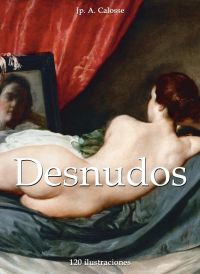
Desnudos 120 ilustracionesJp. A. Calosse1h 35m4.3 (10)$15 · $0.00

Der Ursprung der WeltJp. A. Calosse, Hans-Jürgen Döpp1h 44m3.4 (14)$15 · $0.00
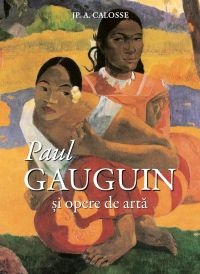
Paul Gauguin și opere de artăJp. A. Calosse1h 32m3.8 (37)$15 · $0.00
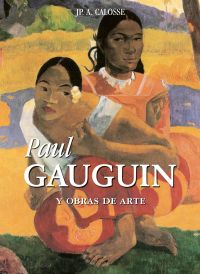
Paul Gauguin y obras de arteJp. A. Calosse1h 30m4.1 (18)$15 · $0.00
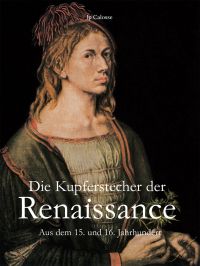
Die Kupferstecher der RenaissanceJp. A. Calosse5h 7m$18 · $0.00
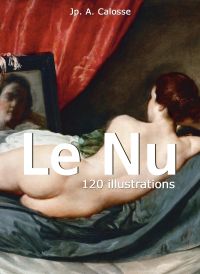
Le Nu 120 illustrationsJp. A. Calosse1h 35m$15 · $0.00
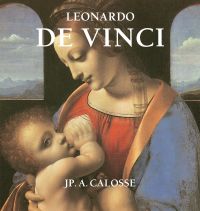
Leonardo da VinciJp. A. Calosse1h 34m4.0 (49)$8 · $0.00
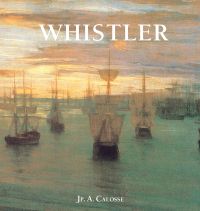
James McNeill WhistlerJp. A. Calosse1h 27m4.1 (17)$8 · $0.00
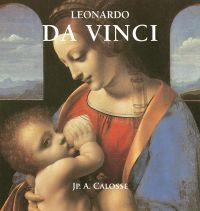
Leonard Da VinciJp. A. Calosse1h 40m4.2 (46)$8 · $0.00
Mere ChristianityC. S. Lewis7h 7m4.4 (519.7K)$24 · $0.00

Her Daily BreadKate Wood12h 57m4.6 (153)$33 · $0.00
The Holy Bible - 1 SamuelKing James2h 13m4.8 (1.6K)$3 · $0.00

The American Standard Bible — The Gospel of MatthewMatthew3h 56m4.7 (3K)$2 · $0.00

Bad Fat Black GirlSesali Bowen6h 32m4.7 (2.8K)$24 · $0.00
The King James Audio Bible New Testament CompleteChristopher Glyn20h 2m4.7 (2.6K)$12 · $0.00
Faiths CheckbookCharles Spurgeon12h 44m4.7 (3.2K)$11 · $0.00

Ten Things I Wish You Knew About Your Child's Mental HealthDr. Billy Garvey4h 53m4.7 (2.4K)$20 · $0.00

Designing Terry Pratchett’s DiscworldPaul Kidby3h 52m4.7 (343)$20 · $0.00
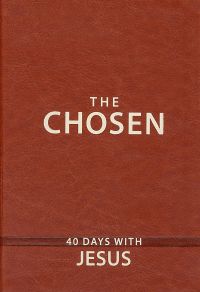
The Chosen Book OneAmanda Jenkins, Kristen Hendricks, Dallas Jenkins3h 8m4.6 (4.9K)$10 · $0.00
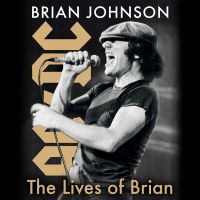
The Lives of BrianBrian Johnson9h 45m4.6 (3.5K)$29 · $0.00
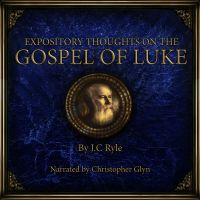
Expository Thoughts on the Gospel of LukeJ.C. Ryle27h 13m4.7 (536)$18 · $0.00

CrossroadsKaleb Dahlgren7h 56m4.6 (4.9K)$26 · $0.00

Across the RiverKent Babb11h 40m4.6 (927)$29 · $0.00

Brain Training for RidersAndrea Monsarrat Waldo5h 56m4.7 (550)$19 · $0.00
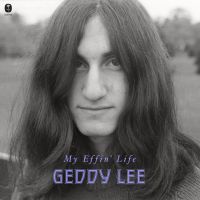
My Effin' LifeGeddy Lee17h 11m4.6 (13.1K)$40 · $0.00
Kings and PawnsHoward Bryant10h 9m4.6 (678)$29 · $0.00

The Elementia Chronicles #2: The New OrderSean Fay Wolfe11h 17m4.6 (841)$29 · $0.00
The ActsLuke2h 55m4.6 (19.7K)$12 · $0.00

New Testament - Easy NavigationWorld English Bible19h 35m4.6 (1.3K)$1.30 · $0.00
You may also like
Beyond Good and EvilFriedrich Nietzsche8h 10m4.2 (136.2K)$17

The Genealogy of MoralsFriedrich Nietzsche5h 43m4.3 (84.3K)$12
After BuddhismStephen Batchelor17h 39m4.3 (1.5K)$23
Groundwork of the Metaphysics of MoralsImmanuel Kant4h 28m4.0 (28.5K)$1 · $0.00

SiddharthaHermann Hesse4h 12m4.2 (1M)$1.20 · $0.00

EXPERIENCE AND EDUCATION – Premium Edition (Including Democracy & Education) (Annotated)John Dewey19h 17m4.6 (1K)$2 · $0.00

Styles of Radical WillSusan Sontag10h4.1 (4.8K)$20 · $0.00

Mr. Bennett and Mrs. BrownVirginia Woolf50m4.2 (850)$2 · $0.00
Fascinate, Revised and UpdatedSally Hogshead7h 40m4.1 (1.1K)$26 · $0.00
The Mystique of Enlightenment (Summarized Edition)U. G. Krishnamurti3h 11m4.4 (349)$2
Pretty BoysDavid Yi9h 16m4.3 (310)$29 · $0.00

THE GENEALOGY OF MORALS - Including Ecce Homo Autobiography & Nietzsche's Personal Letters (Annotated)Friedrich Nietzsche18h 19m$2 · $0.00
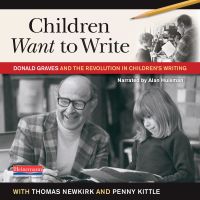
Children Want to WriteThomas Newkirk, Penny Kittle8h 14m4.5 (141)$23
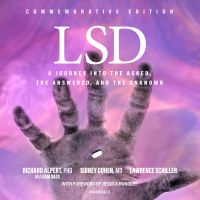
LSDRichard Alpert, PhD, a.k.a. Ram Dass, Sidney Cohen MD, Lawrence Schiller5h 22m4.1 (165)$17 · $0.00
The Foundations of Science: Science and Hypothesis, The Value of Science, Science and MethodHenri Poincaré23h 25m4.3 (81)$2 · $0.00
Some Diversions of a Man of LettersEdmund Gosse5h 28m$2 · $0.00
Rules for the Direction of the MindRené Descartes1h 15m3.9 (904)$1 · $0.00

The Essential Works of U. G. KrishnamurtiU. G. Krishnamurti37h 7m$2 · $0.00

Duality of VoiceEmil Sutro6h 2m$2 · $0.00
Mr. Bennett and Mrs. BrownVirginia Woolf50m3.9 (615)$2.30