
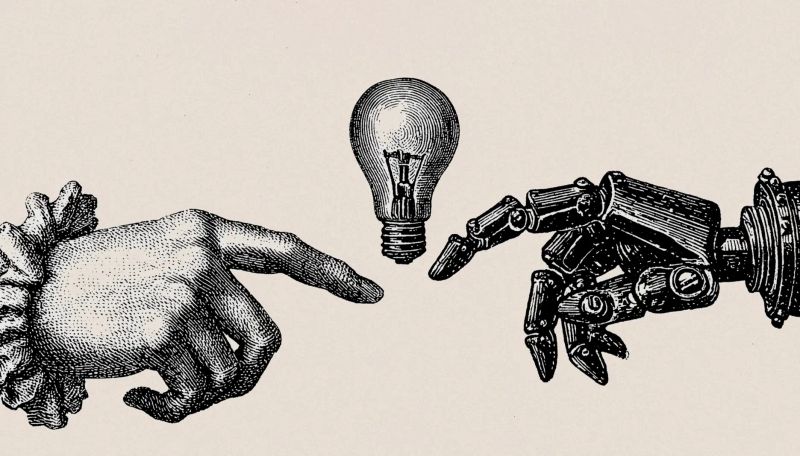
When AI Gets It Wrong—And How to Know
By Michael Taylor / Also True for Humans


Length11m
About this audiobook
AI can weigh in on virtually every business decision we make—but when should we listen to the machines, and when should we trust ourinstincts? In his latest piece, columnistMichael Taylorexplores three scenarios where AI often gets things wrong and offers practical solutions for each limitation. So you’ll be in a better position to know when to follow the algorithm's advice and when it’s best to go with your gut.—Kate LeeWas this newsletter forwarded to you?Sign upto get it in your inbox.Business owners have to make thousands of small decisions every day, and AI can help with each one. But that doesn’t mean you have to—or should—always follow its advice.I recently talked to a venture capitalist who used my AI market research toolAsk Rallyfor feedback on what to call a featured section of his firm’s website. The majority of Ask Rally’s100 AI personas, which act as a virtual focus group,voted for a featured section of the site (“companies/spotlight”), rather than a filterable list of all the firms’s investments (“companies/all”)—but he felt that the latter would get more search traffic. "I think we're right with our approach though the robots disagree," he told me.No matter how good AI gets, there will always be times when you need to go with your gut. How do you know when to trust AI feedback, and when to override it?After analyzing thousands of AI persona responses against real-world outcomes, I've identified three scenarios where AI consistently gets it wrong. Understanding these failure modes won’t only improve AI research; it also provides a framework for deciding when to listen to what AI is telling you, and when you can safely ignore it.Models are operating with outdated informationAI models’ knowledge of the world is frozen in time at their training cutoff date—the last time they were updated with new information. For ChatGPT, that’s October 2023. Unless models do a web search to get the latest information, they’re giving you advice based on an outdated version of reality.What they get wrong:Since AI models are unaware of events that happened since their cutoff date, they may express confusion or skepticism, potentially even denying such events occurred. Claude, for instance,flagged the newsthat the U.S. had bombed Iranian nuclear facilities as misinformation, presumably since major American military action against Iran appeared unlikely as of its January 2025 training cutoff.A model's understanding of geopolitical events or industry trends is anchored in historical patterns that may no longer apply. Significant regime changes, policy shifts, or black swan events create discontinuities that training data can't anticipate.How to correct it:Ina paperpublished earlier this year, University of California San Diego researchersCameron JonesandBenjamin Bergenshowed that providing contemporary news through careful prompting can be used to update models’ understanding of current events. In an experiment, they used the technique to improve AI’s ability to pretend to be human. Their study included recent verified events in model prompts, ensuring that AI models could talk about news that human participants would naturally know. Here’s an example of what that looked like, passed into a model via a system prompt (the custom instructions that tell a model how to behave):Source: “Large Language Models Pass the Turing Test”/Arxiv.In Ask Rally, the memories feature solves this problem. It lets anyone add information into the prompt as context for the AI personas so they aren’t caught off-guard by recent events. Because you can be selective with what memories you add, you can shape the narrative in different ways and test how that changes the responses from your target audience.Source: Ask Rally, using OpenAI’s GPT-4o-mini. Screenshot provided by the author.Become apaid subscriber to Everyto unlock this piece and learn about the two other scenarios in which AI gets it wrong—and how to correct for them.Upgrade to paidClick hereto read the full postWant the full text of all articles in RSS?Become a subscriber, orlearn more.
Audiobook details
GenreBusiness and Economics
Length11 mins
Narrated byListen with 1,000+ voices
FormateBook with Audio
Publish dateJul 28, 2025
LanguageEnglish
Never Split the DifferenceChris Voss, Tahl Raz8h 7m4.4 (277.7K)$26 · $0.00
The Intelligent Investor Rev Ed.Benjamin Graham17h 48m4.3 (191.5K)$40 · $0.00
The Hard Thing About Hard ThingsBen Horowitz7h 57m4.2 (134.3K)$26 · $0.00
Boundaries for LeadersHenry Cloud7h 36m4.3 (3.6K)$26 · $0.00
Basic EconomicsThomas Sowell18h 32m4.5 (29.3K)$28 · $0.00

Poor Charlie’s AlmanackGrover Gardener, Charles T. Munger13h 9m4.5 (24.7K)$18 · $0.00

The Ambuja StoryNarotam Sekhsaria13h 59m4.5 (830)$33 · $0.00

The Secret Door to SuccessFlorence Scovel Shinn2h 25m4.5 (2.1K)$1.20 · $0.00

This Is Going to HurtAdam Kay5h 47m4.4 (444.7K)$24 · $0.00

Big TrustShadé Zahrai, Fayçal Sekkouah8h 36m4.6 (406)$26 · $0.00
The Intelligent Investor Third EditionBenjamin Graham, Jason Zweig20h4.4 (156.6K)$46 · $0.00

Bottle of LiesKatherine Eban14h 25m4.4 (12K)$33 · $0.00
The Antiracist Business BookTrudi Lebrón6h 10m4.6 (275)$17 · $0.00
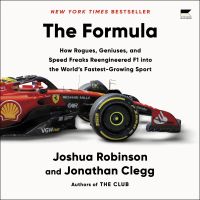
The FormulaJoshua Robinson, Jonathan Clegg10h 41m4.4 (6.9K)$29 · $0.00

Let Them LeadJohn U. Bacon7h 10m4.5 (1.4K)$24 · $0.00

Secrets of the Millionaire MindT. Harv Eker5h 11m4.4 (301.4K)$24 · $0.00
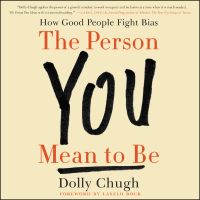
The Person You Mean to BeDolly Chugh9h 6m4.4 (7.2K)$29 · $0.00
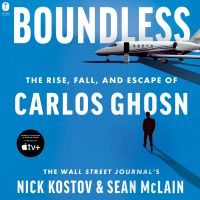
BoundlessNick Kostov, Sean McLain9h 17m4.5 (1.1K)$29 · $0.00

Everyday DharmaSuneel Gupta5h 2m4.5 (761)$20 · $0.00
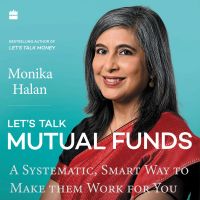
Let's Talk Mutual FundsMonika Halan7h 5m4.4 (2.4K)$16 · $0.00
You may also like
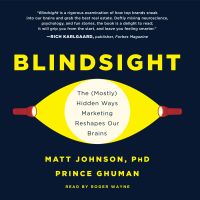
BlindsightMatt Johnson PhD, Prince Ghuman9h4.3 (791)$20 · $0.00
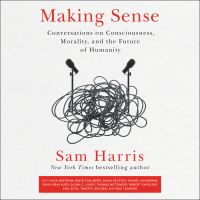
Making SenseSam Harris22h 27m4.1 (3K)$46 · $0.00
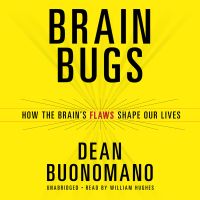
Brain BugsDean Buonomano8h 38m3.9 (3.5K)$20
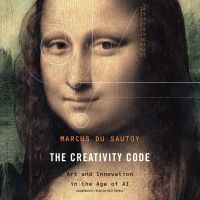
The Creativity CodeMarcus du Sautoy9h 54m4.0 (2.2K)$20 · $0.00

Knowing What We KnowSimon Winchester14h 19m3.9 (2.5K)$33 · $0.00

Global BrainHoward Bloom10h 51m4.1 (1K)$20

We Have Been HarmonizedKai Strittmatter10h 29m4.3 (4.3K)$29 · $0.00
The NumeratiStephen Baker7h 55m3.6 (2K)$17 · $0.00
A Brief History of IntelligenceMax S. Bennett12h 18m4.6 (6.6K)$29 · $0.00
The Minority Report and Other StoriesPhilip K. Dick5h 33m4.0 (27.5K)$24 · $0.00
Understanding AI For Everyday ImpactJasper Livingstone4h 7m$9
The Evolution Of AIJasper Livingstone10h 56m$9

Smart Thermostat Made SimpleWalter Hemsley4h 18m$8
AI, Consciousness, and the SelfSaraban K. K. 50m4.9 (12) Only with Ultra
The Reverse Centaur's Guide to ThinkingKyle Patterson2h 37m$14 · $0.00

Apple TV Made SimpleWalter Hemsley4h 23m$5

Technology vs. TruthScientific American4h 33m$15

Digital HumanitiesUnknown Author15h 31m3.7 (170)$8 · $0.00
Words and Electricity: On the Fading Edge of LanguageTz47m4.4 (60)Free
Accelerated Learning: Learn Speed Reading and Advanced Memorization (Improve Memory, Productivity and Sharpen Your Focus to Learn Any Skill Quicker)Brian Jackson1h 13m$3.50 · $0.00