
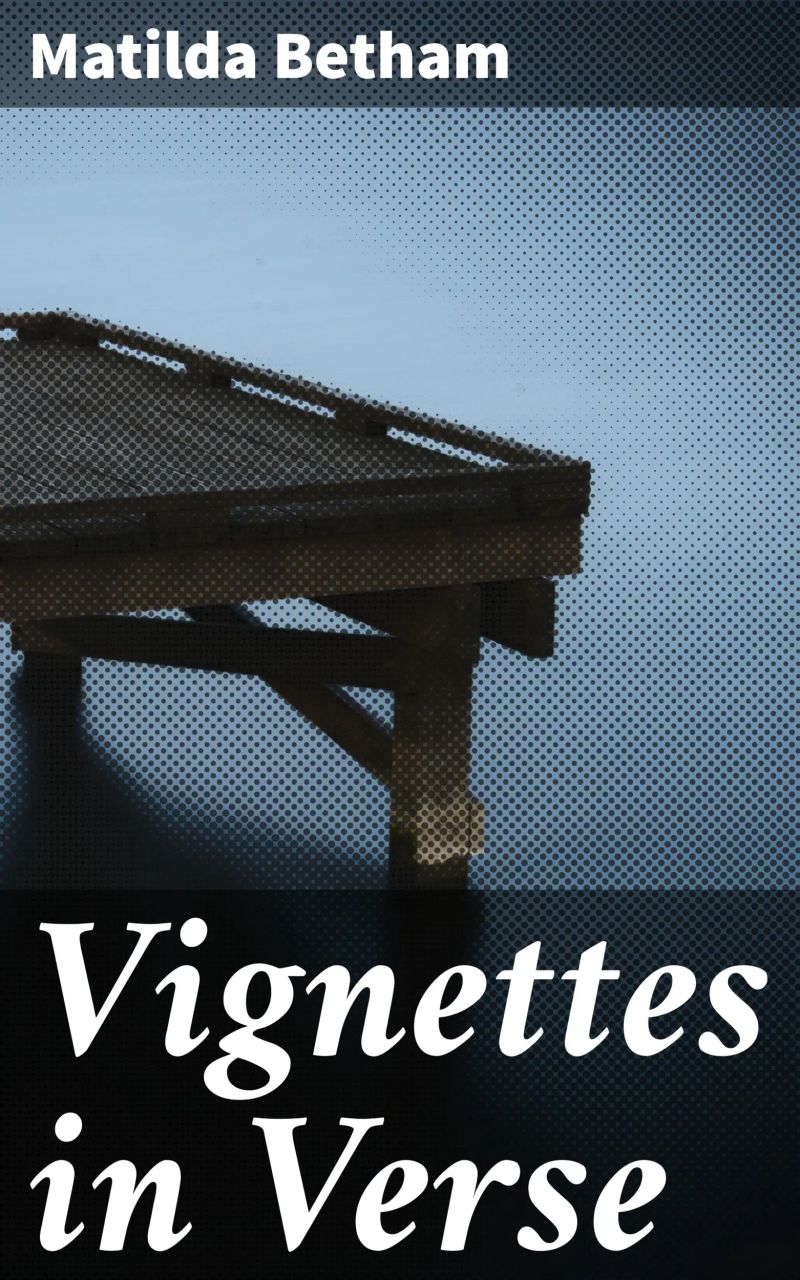
Vignettes in Verse
Exploring Emotions Through Romantic PoetryBy Matilda Betham

Length59m
About this audiobook
In "Vignettes in Verse," Matilda Betham employs a lyrical and evocative style to explore the complexities of emotion and human experience through a series of tightly woven poetic narratives. The collection features a blend of personal reflection and broader social commentary, marked by vivid imagery and intricate meter. Contextually, Betham's work emerges from the early 19th-century Romantic period, drawing inspiration from the natural world and the inner workings of the mind while engaging with the social mores of her time. Her verses reflect the transformative power of nature and the individual, capturing fleeting moments of beauty, loss, and introspection in an accessible yet profound manner, establishing her as a noteworthy voice among her contemporaries. Matilda Betham, an influential figure in her era, navigated the constraints placed on women in the literary world, using her poetry as a means of self-expression and social critique. Her upbringing in a literate family and her exposure to literary circles fueled her desire to write and engage with the themes of identity and social justice. These formative experiences are palpable in her work, imbuing it with a sense of urgency and authenticity that resonates with readers. I highly recommend "Vignettes in Verse" for those seeking a deeply reflective and beautifully crafted collection that encapsulates the essence of human emotion. Betham's ability to combine personal insight with universal themes makes this collection a compelling read for both fans of poetry and those interested in women's literary contributions. This work is not only a testament to her skill as a poet but also an invitation to consider the nuanced interplay between self and society.
Audiobook details
GenrePoetry
Length59 mins
Narrated byListen with 1,000+ voices
FormateBook with Audio
Publish dateDec 9, 2019
LanguageEnglish
Table of contents
1Introduction
2Vignettes.
3I.
4II.
5III.: THE ARTISAN.
Show all chaptersShow less
6IV.
7V.
8VALENTINE
9FROM A YOUNG LADY TO HER MOTHER.
10It is a custom, in some parts of Norfolk and Suffolk, to send little presents with verses on Valentine's Day, to relatives and friends.
11VI.: THE LOVER'S APOLOGY.
12VII.
13VIII.: The Spanish Lady's Farewell, 1809.
14IX.: SONNET.
15X.: ALL' AMICA.
16XI.: TO THE SAME.
17XII.: To the late Lady Rouse Boughton.
18XIII.
19XIV.
20TO MR. AND MRS. EVERARD,: On their only Son's being in the Navy, 1811.
21XV.
22TO THE HON. LADY J——,: With the Picture of her Grand-daughter, the present Lady Petre.
23XVI.: To MRS. A.
24XVII.
25LINES
26Sent to a Brother on his leaving England.
27May 2, 1816.
28FANCIFUL BOUQUET.
29XVIII.: Written jointly with a particular Friend, after a conversation similar to the subject, with the Damon of the Story.
30XIX.
31ABSENCE.: Written in Derbyshire, by the same Friend.
32XX.: On reading in Savary's Travels the death of Ali Bey, who, it is there represented, in the midst of enlightened and benevolent efforts to benefit his country, was repeatedly betrayed, and at length taken captive by his brother-in-law, whom he had advanced and loved, and who, till the very last, he could not believe to be his enemy.
33XXI.
34LINES.: Written for a Young Gentleman to speak at the Audit at St. Saviour's School, Southwark, after the Battle of Trafalgar.
35XXII.: TO THE HETMAN, PLATOFF.
36XXIII.: On the Death of Master Frederic Thomson.
37XXIV.: On the Death of Herbert Southey: addressed to his Father.
38XXV.
39XXVI.
40ELEGY ON EDWARD BETHAM,: Lost in the Duchess of Gordon East Indiaman, off the Cape of Good Hope.
More from Matilda Betham
Dickinson: The Complete Works (Annotated)Emily Dickinson16h 56m4.6 (2.3K)$0.99 · $0.00

TerraformPropaganda5h 39m4.7 (594)$24 · $0.00

Maybe You Never Cry AgainBernie Mac4h 25m4.6 (3K)$20 · $0.00
Inquire WithinIn-Q2h 18m4.6 (993)$16 · $0.00
The Complete Poetry (The Classic Illustrated Edition)Samuel Taylor Coleridge26h 23m4.6 (1.3K)$0.99 · $0.00
The Weary Blues (Annotated)Langston Hughes2h 13m4.5 (4.6K)$2 · $0.00
The Complete Poetical Works of Edgar Allan Poe (Illustrated)Edgar Allan Poe18h 27m4.5 (4.2K)$2 · $0.00
The Complete Poetry (Annotated)Oscar Wilde6h 44m4.5 (15.5K)$2 · $0.00
Saundarya LahariUnknown Author3h 16m4.6 (256)$18 · $0.00
The Mesnevi (Annotated)Maulana Jalal al-Din Rumi18h 41m4.5 (4.2K)$2 · $0.00
Songs of a SourdoughRobert W. Service2h 13m4.5 (13.6K)$1 · $0.00
Little Flower of Jesus (Annotated)Thérèse of Lisieux5h 4m4.5 (1.4K)$0.99 · $0.00

The Poems of LeopardiGiacomo Leopardi3h 9m4.5 (3.6K)$2 · $0.00

Nikki Giovanni: Love Poems & A Good CryNikki Giovanni2h 44m4.6 (405)$18 · $0.00
The Complete Poetry of Walt Whitman (Annotated)Walt Whitman19h 58m4.5 (4.2K)$0.99 · $0.00
A Year with RumiColeman Barks5h 56m4.5 (2.6K)$24 · $0.00
Complete Poetry of Rudyard Kipling (Annotated)Rudyard Kipling22h 50m4.5 (2.6K)$1.99 · $0.00
The Complete PoemsPaul Laurence Dunbar12h 40m4.5 (1.5K)$21 · $0.00
The Odes of John Keats - Complete CollectionJohn Keats22h 16m4.5 (1.3K)$1 · $0.00
SonnetsWilliam Shakespeare2h 39m4.4 (128.3K)$3 · $0.00
You may also like
Collected Short StoriesD. H. Lawrence12h 39m4.2 (2K)$2 · $0.00
BETWEEN THE ACTSVirginia Woolf6h 47m3.8 (14K)$1.99 · $0.00
To the LighthouseVirginia Woolf7h 16m4.0 (270.4K)$21 · $0.00
The RainbowLawrence, D. H. (David Herbert), 1885-193019h 12m3.6 (26.5K)Free
How to Fly (In Ten Thousand Easy Lessons)Barbara Kingsolver2h 14m4.1 (350)$16 · $0.00
Stray BirdsRabindranath Tagore40m4.3 (3.4K)$3.50 · $0.00

HeartstringAngerry Feliciano42m4.3 (1.6K)$2.99
The Complete Works of Rabindranath TagoreRabindranath Tagore67h 15m4.5 (410)$2 · $0.00
Katherine Mansfield: Complete WorksKatherine Mansfield85h 31m4.3 (306)$1 · $0.00
Little Pilgrimages Among the Men Who Have Written Famous BooksE. F. Harkins3h 52m$1 · $0.00
AftermathJames Lane Allen2h 6m3.6 (10)$2 · $0.00
Life and Genius of Nathaniel Hawthorne: Diaries, Letters, Reminiscences and Extensive Biographies (Unabridged)Nathaniel Hawthorne, Herman Melville, Julian Hawthorne, F. P. Stearns, G. P. Lathrop139h 6m$0.99 · $0.00
Poets of the SouthF. V. N. Painter4h 44m$2 · $0.00
The Circus, and Other Essays and Fugitive PiecesJoyce Kilmer6h 56m2.9 (10)$2 · $0.00
The Mirror of the GracesActive 19th century Lady of distinction4h 36m3.6 (100)$1 · $0.00

footlightsPearl Pirie1h 6m$24
The Seasons — WinterJames Thomson1h 33m3.8 (74)$1 · $0.00
Radicle, or When the World Lived Inside UsStephanie Catudal47m4.4 (31)$11 · $0.00
Hurst & Blackett's Standard Library (1895)Various1h 3m$2 · $0.00
Homes and Haunts of the Most Eminent British PoetsWilliam Howitt40h 54m4.0 (44)$1.99 · $0.00