
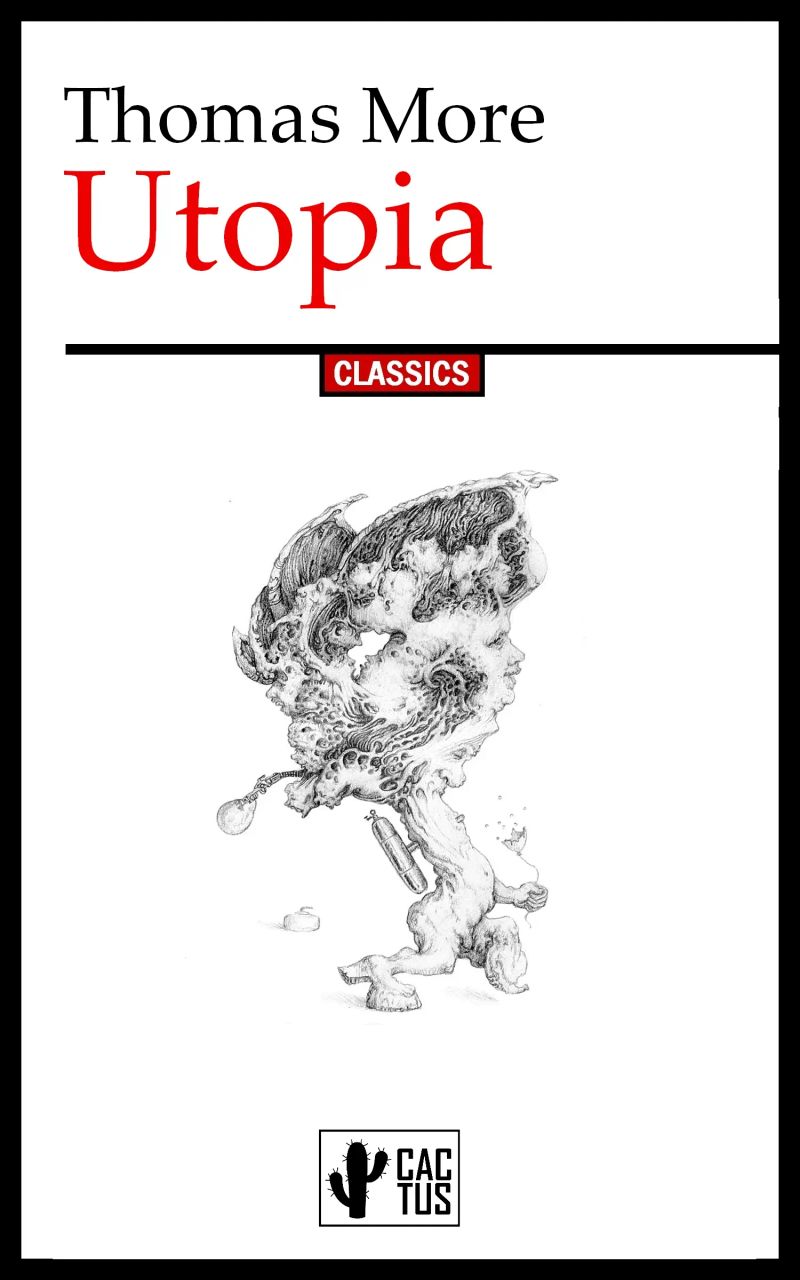


Length4h 25m
About this audiobook
In 1516, a brilliant English lawyer and humanist named Thomas More invented a word. He called it Utopia—a pun crafted from Greek that means both “Good Place” (eutopia) and “No Place” (outopia). More than five centuries later, we still use that word. But the book that gave it to us is far stranger, funnier, and darker than its legacy suggests.
It begins with fact. More, a real historical figure, travels to Flanders on royal business. In Antwerp, he meets his friend Peter Giles and a weathered, sun-bronzed sailor named Raphael Hythloday—whose surname, for those paying attention, translates wryly as “skilled in nonsense.” Hythloday claims to have sailed with Amerigo Vespucci and been left behind on the far edge of the New World. There, he discovered an island: Utopia.
Here, there is no private property. Gold is used for chamber pots. Atheists are tolerated, though not permitted to argue in public. Divorce is legal. Euthanasia is compassionate. Priests may marry. War is outsourced to mercenaries. And every household, in this most perfect of commonwealths, owns two slaves.
Utopia unfolds as a literary hall of mirrors. Is this the blueprint for an ideal society—or a satire so subtle that for four hundred years, half its readers have missed the joke? Is Raphael a philosopher, or a fool? Did More endorse this vision, or was he exposing the impossibility of human perfection?
Audiobook details
Rating★★★★ 3.7 (103.5K)
Includes Goodreads, LibraryThing, Amazon, StoryGraph
GenrePolitics and Government, Philosophy, Psychology
Length4 hrs 25 mins
Narrated byListen with 1,000+ voices
FormateBook with Audio
LanguageEnglish
Table of contents
1INTRODUCTION
2DISCOURSES OF RAPHAEL HYTHLODAY, OF THE BEST STATE OF A COMMONWEALTH
3OF THEIR TOWNS, PARTICULARLY OF AMAUROT
4OF THEIR MAGISTRATES
5OF THEIR TRADES, AND MANNER OF LIFE
Show all chaptersShow less
6OF THEIR TRAFFIC
7OF THE TRAVELLING OF THE UTOPIANS
8OF THEIR SLAVES, AND OF THEIR MARRIAGES
9OF THEIR MILITARY DISCIPLINE
10OF THE RELIGIONS OF THE UTOPIANS

RiggedMollie Hemingway12h 48m4.6 (4.2K)$23 · $0.00

SledgehammerDavid Friedman8h 21m4.7 (589)$26 · $0.00

Citizenship in a Republic (Annotated)Theodore Roosevelt2h 44m4.6 (1.4K)$2 · $0.00

No EscapeNury Turkel9h 30m4.6 (809)$28 · $0.00

Always FaithfulThomas Schueman, Zainullah Zaki12h 12m4.6 (977)$29 · $0.00

UnthinkableJamie Raskin15h 8m4.5 (9.3K)$8 · $0.00

My Fourth Time, We DrownedSally Hayden13h 59m4.6 (2.9K)$23 · $0.00

A Revolution of Common SenseScott Jennings9h 29m4.6 (528)$29 · $0.00

Statement From the Dock at the Rivonia TrialNelson Mandela2h 18m4.6 (1.3K)$1 · $0.00

Lessons from the EdgeMarie Yovanovitch17h 11m4.5 (5.9K)$40 · $0.00

To Rescue the American SpiritBret Baier10h 12m4.5 (2.7K)$8 · $0.00

StonewalledSharyl Attkisson15h 19m4.5 (4.3K)$33 · $0.00
The World According to Orwell: 1984 & Animal FarmGeorge Orwell15h 42m4.6 (1.1K)$1 · $0.00
Basic EconomicsThomas Sowell18h 32m4.5 (29.3K)$28 · $0.00

To Rescue the RepublicBret Baier, Catherine Whitney11h 42m4.5 (8.6K)$29 · $0.00

Modern WarriorsPete Hegseth7h 10m4.5 (4.7K)$24 · $0.00

Philosophy and Opinions of Marcus Garvey (Annotated)Marcus Mosiah Garvey4h 42m4.5 (1.7K)$1.99 · $0.00

A Plague Upon Our HouseScott W. Atlas MD10h 37m4.5 (3.4K)$20 · $0.00

One Bright MoonAndrew Kwong12h 21m4.5 (813)$29 · $0.00

CredibleDeborah Tuerkheimer8h 5m4.6 (551)$26 · $0.00

That Bird Has My WingsJarvis Jay Masters9h 49m4.4 (13.7K)$29 · $0.00

Tâo Teh KingLaozi2h 34m4.4 (230.9K)$2 · $0.00

SymposiumPlato3h 26m4.4 (97.9K)$1.20 · $0.00

Buddhist Boot CampTimber Hawkeye2h 39m4.4 (8.4K)$18 · $0.00
Enchiridion & The Discourses of Epictetus (Annotated)Arrian Epictetus18h 9m4.4 (3.5K)$2 · $0.00

The Meditations of the Emperor Marcus Aurelius AntoninusEmperor of Rome Marcus Aurelius5h 41m4.4 (1.8M)$1 · $0.00
Crime and PunishmentFyodor Dostoevsky23h 11m4.4 (1.3M)$12 · $0.00

MeditationsMarcus Aurelius5h 52m4.4 (433.7K)$1 · $0.00

Everyday DharmaSuneel Gupta5h 2m4.5 (761)$20 · $0.00

The Joyful Wisdom ("La Gaya Scienza")Friedrich Wilhelm Nietzsche11h 37m4.4 (26.6K)$1 · $0.00
The Art of LivingEpictetus, Sharon Lebell3h 16m4.4 (50.1K)$18 · $0.00
MeditationsEmperor Of Rome Marcus Aurelius7h 23m4.3 (477.5K)$1.20 · $0.00

The Imitation of ChristThomas à Kempis6h 27m4.3 (84.6K)$21 · $0.00

Sadhana: the realisation of lifeRabindranath Tagore3h 49m4.4 (8.6K)$6 · $0.00
SapiensYuval Noah Harari15h 18m4.3 (1.4M) · 1215$33 · $0.00
You BelongSebene Selassie8h 35m4.4 (2.7K)$26 · $0.00

The Song Celestial; Or, Bhagavad-Gîtâ (from the Mahâbhârata)Anonymous2h 18m4.4 (3.2K)$2 · $0.00

The KybalionThe Three Initiates3h 47m4.3 (58.7K)$20 · $0.00

Chuang Tzu: Mystic, Moralist, and Social ReformerZhuangzi14h 42m4.4 (1.2K)$1 · $0.00

High-RisersBen Austen13h 33m4.4 (2.8K)$33 · $0.00
What to Make of a LifeJim Collins13h 31m4.4 (794)$33 · $0.00

Invisible StormJason Kander6h 48m4.7 (3.2K)$24 · $0.00

I Am The StormJanice Dean9h4.6 (1.5K)$8 · $0.00

On Democracies and Death CultsDouglas Murray10h 38m4.6 (6.5K)$29 · $0.00

TerraformPropaganda5h 39m4.7 (594)$24 · $0.00

Southern Horrors: Lynch Law in All Its Phases (Annotated)Ida B. Wells-Barnett2h 44m4.6 (1.3K)$2 · $0.00
Hour of the HeartIrvin D. Yalom, Benjamin Yalom8h 19m4.6 (2.3K)$26 · $0.00

Braving the TruthRachel Held Evans11h 31m4.7 (359)$29 · $0.00
Level UpRob Dial7h 42m4.6 (3.3K)$26 · $0.00

As a JewSarah Hurwitz8h 36m4.6 (1.2K)$26 · $0.00

Saint Joan (Annotated)George Bernard Shaw6h 20m4.6 (1.2K)$1.20 · $0.00

Burn the HaystackJennie Young, PhD9h 30m4.6 (543)$29 · $0.00

Woman and the New Race (Annotated)Margaret Sanger6h 30m4.6 (1K)$1.99 · $0.00

Good InsideBecky Kennedy9h 55m4.5 (59.3K)$29 · $0.00

The Mis-Education of the NegroCarter Godwin Woodson5h 4m4.5 (29.4K)$1.20 · $0.00

Du Bois: EssaysW.E.B. Du Bois6h 22m4.6 (1.5K)$1 · $0.00

The North American Indian (Illustrated Edition)Edward S. Curtis, Frederick Webb Hodge5h 59m4.6 (1.4K)$2 · $0.00

Valley of the BirdtailAndrew Stobo Sniderman, Douglas Sanderson10h 1m4.6 (2.4K)$29 · $0.00

Lies My Therapist Told MeGreg E. Gifford9h 3m4.6 (503)$29 · $0.00

Disturbed in Their NestsAlephonsion Deng, Judy A. Bernstein11h 22m4.6 (595)$23 · $0.00
You may also like

UtopiaTHOMAS MORE4h 26m3.8 (103.7K)$3.50 · $0.00

UtopiaThomas More4h 26m3.9 (88.1K)$4.70 · $0.00
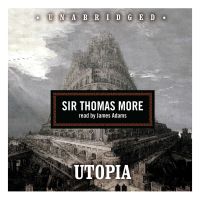
UtopiaSir Thomas More4h 10m3.7 (93.3K)$12
A Modern UtopiaH. G. Wells9h 48m3.6 (3.3K)$2.30
Men like GodsH. G. Wells8h 46m3.7 (1.8K)$17
FLATLAND: A Romance of Many DimensionsEdwin A. Abbott3h 23m4.0 (109.6K)Free
FLATLAND: A Romance of Many Dimensions Edwin A. Abbott3h 23m4.0 (251.5K)Free
Gulliver’s TravelsJonathan Swift11h 53m3.8 (350.5K)$23

Micromegas: A Philosophical HistoryVoltaire45m3.9 (9K)$4 · $0.00
FlatlandEdwin A. Abbott3h 44m4.1 (251.3K)$4.50 · $0.00
Answers to Questions You’ve Never AskedJoesph Pisente5h 40m3.9 (910)$17 · $0.00

Social Life in England 1750-1850F. J. Foakes-Jackson5h 57m$23 · $0.00

New Amazonia - The Tale of Feminist UtopiaElizabeth Burgoyne Corbett5h 55m3.5 (141)$1.99 · $0.00

The Complete Travel Books of William Dean Howells (Illustrated) (Annotated)William Dean Howells66h 43m4.6 (11)$2 · $0.00

Personal Recollections of Birmingham and Birmingham MenEliezer Edwards6h 58m$1 · $0.00

The Post Office and Its StoryEdward Bennett11h 16m$2 · $0.00

Rambles in Dickens' LandRobert Allbut4h 57m$2 · $0.00

Brazil and the River Plate in 1868William Hadfield8h 59m$2 · $0.00

In An Unknown Prison LandGeorge Chetwynd Griffith6h 52m$2.30

Viva Mexico!Charles Macomb Flandrau6h 46m3.7 (30)$2.40