
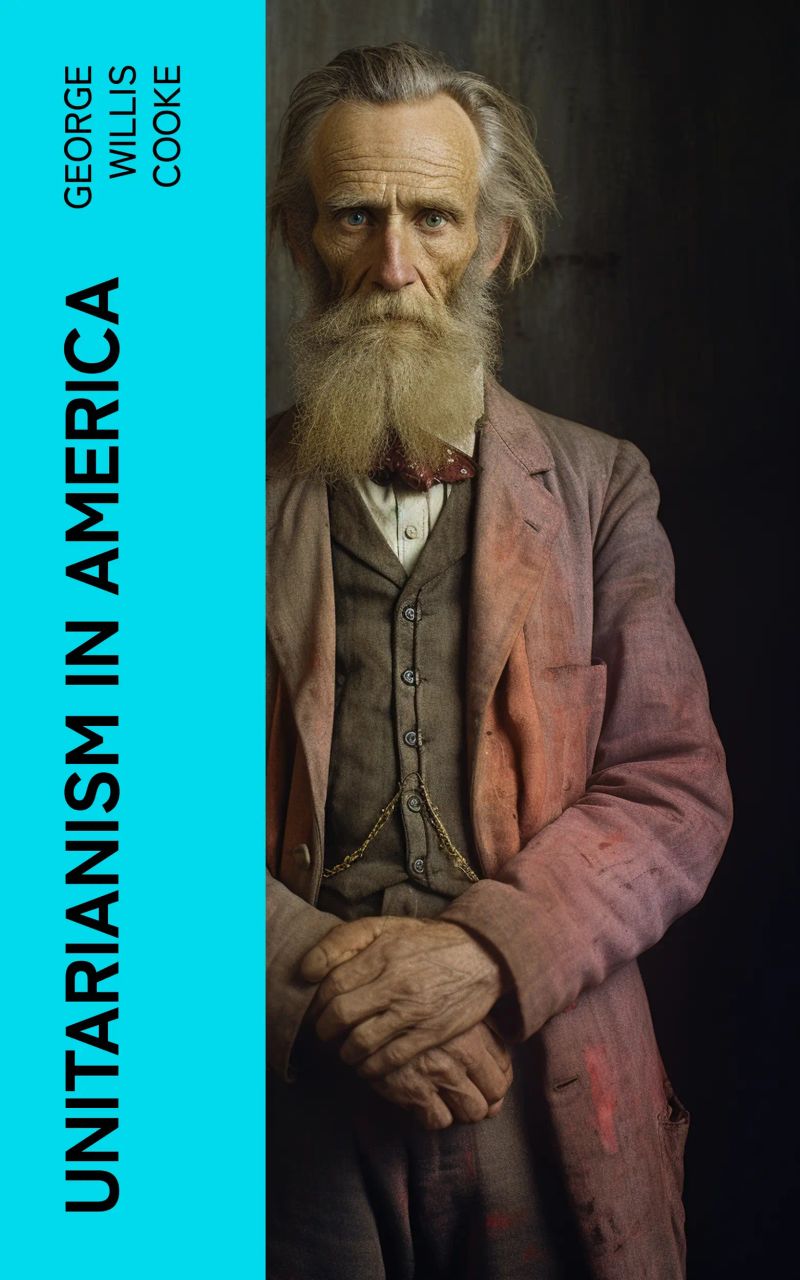
Unitarianism in America
A History of its Origin and DevelopmentBy George Willis Cooke


Length13h 3m
About this audiobook
"Unitarianism in America" by George Willis Cooke. Published by e-artnow. e-artnow publishes a wide range of titles that encompasses every genre. From well-known classics & literary fiction and non-fiction to forgotten−or yet undiscovered gems−of world literature, we issue the books that need to be read. Each e-artnow edition has been meticulously edited and formatted to boost readability for all e-readers and devices. Our goal is to produce eBooks that are user-friendly and accessible to everyone in a high-quality digital format.
Audiobook details
GenreSpirituality and Religion
Length13 hrs 3 mins
Narrated byListen with 1,000+ voices
FormateBook with Audio
Publish dateNov 23, 2023
LanguageEnglish
Table of contents
1Seventeenth-century Liberals.
67The Unitarian Building in Boston.
2Growth of Liberty in Church Methods.
68Growth of the Devotional Spirit.
3A Puritan Rationalist.
69The Seventy-fifth Anniversary.
4Harvard College.
70Association of Young Men.
5Arminianism.
71Preaching to the Poor.
Show all chaptersShow less
6The Growth of Arminianism.
72Tuckerman as Minister to the Poor.
7Robert Breck.
73Tuckerman's Methods.
8Books Read by Liberal Men.
74Organization of Charities.
9The Great Awakening.
75Benevolent Fraternity of Churches.
10Cardinal Beliefs of the Liberals.
76Other Ministers at Large.
11Publications defining the Liberal Beliefs.
77Ministry at Large in Other Cities.
12Phases of Religious Progress.
78Boston Sunday School Society.
13Subordinate Nature of Christ.
79Unitarian Sunday School Society.
14Some of the Liberal Leaders.
80Western Unitarian Sunday School Society.
15The First Unitarian.
81Unity Clubs.
16A Pronounced Universalist.
82The Ladies' Commission on Sunday-school Books.
17Other Men of Mark.
83Women's Western Unitarian Conference.
18The Second Period of Revivals.
84Women's Auxiliary Conference.
19King's Chapel becomes Unitarian.
85The National Alliance.
20Other Unitarian Movements.
86Cheerful Letter and Post-office Missions.
21Growth of Toleration.
87Associate Alliances.
22The Monthly Anthology.
88Alliance Methods.
23Society for Promoting Christian Knowledge, Piety, and Charity.
89Society respecting the State of Religion in India.
24General Repository.
90Dall's Work in India.
25The Christian Disciple.
91Recent Work in India.
26Dr. Morse and American Unitarianism.
92The Beginnings in Japan.
27Evangelical Missionary Society.
93The Beginnings in Meadville.
28The Berry Street Conference.
94The Growth of the School.
29The Publishing Fund Society.
95Unitarian Charities.
30Harvard Divinity School.
96Education of the Blind.
31The Unitarian Miscellany.
97Care of the Insane.
32The Christian Register.
98Child-saving Missions.
33Results of the Division in Congregationalism.
99Care of the Poor.
34Final Separation of State and Church.
100Humane Treatment of Animals.
35Initial Meetings.
101Young Men's Christian Unions.
36Work of the First Year.
102Educational Work in the South.
37Work of the First Quarter of a Century.
103Educational Work for the Indians.
38Publication of Tracts and Books.
104Peace Movement.
39Domestic Missions.
105Temperance Reform.
40Depression in Denominational Activities.
106Anti-slavery.
41Publications.
107The Enfranchisement of Women.
42A Firm of Publishers.
108Civil Service Reform.
43The Brooks Fund.
109Eminent Statesmen.
44Missionary Efforts.
110Some Representative Unitarians.
45The Western Unitarian Conference.
111Judges and Legislators.
46The Autumnal Conventions.
112Boston Unitarianism.
47Influence of the Civil War.
113Pioneers of the Higher Criticism.
48The Sanitary Commission.
114The Catholic Influence of Harvard University.
49Results of Fifteen Years.
115The Work of Horace Mann.
50The New York Convention of 1865.
116Elizabeth Peabody and the Kindergarten.
51New Life in the Unitarian Association.
117Work of Unitarian Women for Education.
52The New Theological Position.
118Popular Education and Public Libraries.
53Organization of the Free Religious Association.
119Mayo's Southern Ministry of Education.
54Unsuccessful Attempts at Reconciliation.
120Influence of Unitarian Environment.
55The Year Book Controversy.
121Literary Tendencies.
56Missionary Activities.
122Literary Tastes of Unitarian Ministers.
57College Town Missions.
123Unitarians as Historians.
58Theatre Preaching.
124Scientific Unitarians.
59Organization of Local Conferences.
125Unitarian Essayists.
60Fellowship and Fraternity.
126Unitarian Novelists.
61Results of the Denominational Awakening.
127Unitarian Artists and Poets.
62"The Western Issue."
128XX. THE FUTURE OF UNITARIANISM.
63Fellowship with Universalists.
129APPENDIX.
64Officers of the American Unitarian Association.
130A. FORMATION OF THE LOCAL CONFERENCES.
65The American Unitarian Association as a Representative Body.
131B. UNITARIAN NEWSPAPERS AND MAGAZINES.
66The Church Building Loan Fund.
132INDEX.

Proud Police WifeRebecca Lynn4h 52m$10 · $0.00

I Hear His Whisper 365 Daily Devotions (Gift Edition)Brian Simmons, Gretchen Rodriguez9h 23m5 (1)$10 · $0.00
A Little God Time for Women Morning & Evening DevotionalBroadStreet Publishing Group LLC15h 15m$10 · $0.00
The Chosen Presents: A Blended Harmony of the GospelsSteve Laube, Amanda Jenkins, Dallas Jenkins7h 8m$10 · $0.00
The Gospel of Luke: NASB 2020New American Standard Bible2h 41m$15
Morning & EveningC.H. Spurgeon35h 32m$30
Prayers from the Throne RoomBrian Simmons8h 55m$10 · $0.00
31 Decrees of Blessing for Your LifePatricia King2h 38m$10 · $0.00

Walk With Me JesusMarie Chapian6h 4m$10 · $0.00
Prayers on Fire for WomenBrian Simmons, Candice Simmons8h 24m$10 · $0.00

Strong's Bible ConcordanceJames Strong136h 23m$2 · $0.00

365 Days of Hope and Healing for Your Body, Mind, and SoulJoan Hunter8h 48m$10 · $0.00

Rewrite the Mother CodeDr. Gertrude Lyons10h 55m$25

Loved BabySarah Philpott4h 51m$10 · $0.00

The QuranAllah23h 12m$1 · $0.00

The Holy Qur-an: Text, Translation and CommentaryAbdullah Yusuf Ali21h 14m$3 · $0.00

The Secret of the RosaryLouis de Montfort6h 7m$2 · $0.00

Jesus the ChristJames E. Talmage30h 50m$2 · $0.00

Defying JihadEsther Ahmad8h 50m$20
PsalmsKing James Bible4h 2m$10
You may also like

HereticAyaan Hirsi Ali8h 56m$29 · $0.00

Tolstoy: What is Art? & Wherein is Truth in Art (Essays on Aesthetics and Literature)Leo Tolstoy20h 52m$2 · $0.00
The Dream of EnlightenmentAnthony Gottlieb10h 38m$20 · $0.00
A New Kind of ChristianityBrian D. McLaren11h 10m$29 · $0.00
The Conservative HeartArthur C. Brooks8h 9m$20

UnitarianismW. G. Tarrant2h$1 · $0.00

Eve Bites BackAnna Beer11h 32m$20 · $0.00

The higher education of womenEmily Davies3h 10m$1 · $0.00

Constitution of the Republic of ChinaThe Government of the Republic of China1h 46m$1 · $0.00

The Journal of John WoolmanJohn Woolman8h 33m$2 · $0.00
Jesus outside the LinesScott Sauls6h 49m$17

The Kingdom of God is Within You / Christianity and Patriotism / MiscellaniesLeo graf Tolstoy16h 52m$1 · $0.00

Fair PayDavid Buckmaster9h 11m$29 · $0.00
We Got ThisCornelius Minor6h 28m$23
If the Church Were ChristianPhilip Gulley4h 57m$20 · $0.00

The factoryJonathan Thayer Lincoln1h 52m$1 · $0.00

History of the United States DemocracyU.S. Supreme Court, U.S. Government, U.S. Congress46h 51m$2 · $0.00
Transforming LeadershipJames MacGregor Burns10h 31m$21 · $0.00

Steps Toward Inner PeacePeace Pilgrim1h 52m$1 · $0.00

WordslutAmanda Montell6h 56m$24 · $0.00