
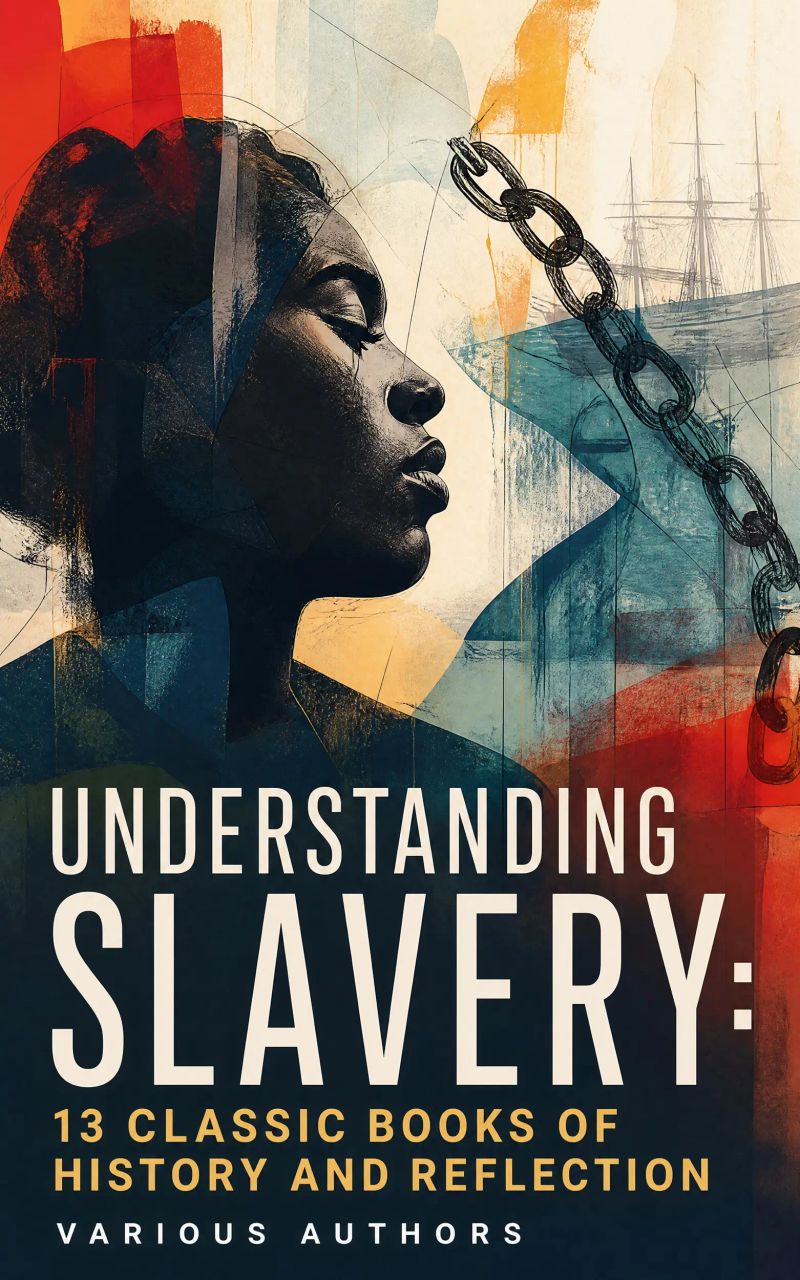
Understanding Slavery: 13 Classic Books of History and Reflection
Testimony, Abolition, Ideology, and Memory in the History of EnslavementBy Annie L. Burton, William Wells Brown, George Thompson, Robert J. Breckinridge, John H. Van Evrie, Beverley B. Munford, William Wilberforce, James Bronterre O'Brien, Timothy Williston, A. C. Baldwin, R. B. Thurston, United States. Work Projects Administration, T. W. Hoit, Moses Grandy, Isaac Allen


Length65h 40m
About this audiobook
Understanding Slavery: 13 Classic Books of History and Reflection gathers testimony, polemic, history, political economy, and moral argument into a searching archive of slavery's lived realities and ideological contests. Its range moves from firsthand narratives of enslavement and escape to abolitionist appeals, proslavery apologetics, legal and social commentary, and later documentary recovery. Such juxtapositions make the volume more than a record of suffering: it exposes the language through which slavery was defended, resisted, remembered, and studied. Accounts grounded in personal experience stand in especially revealing tension with works that sought to naturalize racial domination. The contributors include formerly enslaved writers, antislavery activists, reformers, political commentators, and defenders of slavery, alongside materials associated with the United States Work Projects Administration. Collectively, these voices illuminate the transatlantic abolitionist movement, nineteenth-century debates over citizenship and racial hierarchy, and the enduring labor of historical preservation. British humanitarian argument intersects with American slave narratives and sectional controversy, while later federal documentation signals how memory of bondage entered public history. This volume is recommended for students and general readers seeking a capacious introduction to slavery's histories and representations. Its multiple genres and antagonistic viewpoints encourage careful comparative reading, ethical reflection, and attention to evidence. By placing testimony beside propaganda and historical interpretation, the collection offers an invaluable education in how slavery shaped literature, politics, and collective memory.
Audiobook details
GenreHistory, Literary Classics
Length65 hrs 40 mins
Narrated byListen with 1,000+ voices
FormateBook with Audio
Publish dateMar 4, 2025
LanguageEnglish
Table of contents
1Narrative of William W. Brown
2Narrative of William W. Brown
3TO WELLS BROWN, OF OHIO
4CHAPTER VII
5CHAPTER XIV
Show all chaptersShow less
6Discussion on American Slavery
7DISCUSSION.
8SECOND NIGHT—TUESDAY, JUNE 14.
9THIRD NIGHT—WEDNESDAY, JUNE 15.
10FOURTH NIGHT—THURSDAY, JUNE 16.
11FIFTH NIGHT—FRIDAY, JUNE 17. (pt. 1)
12FIFTH NIGHT—FRIDAY, JUNE 17. (pt. 2)
13APPENDIX.
14Negroes and Negro "Slavery:" the first an inferior race: the latter its normal condition
15PREFACE.
16CHAPTER I. CAUSES OF POPULAR DELUSION.
17CHAPTER II. GENERAL LAWS OF ORGANIZATION.
18CHAPTER III. THE HUMAN CREATION.
19CHAPTER IV. HISTORICAL SUMMARY.
20CHAPTER V. COLOR.
21CHAPTER VI. FIGURE.
22CHAPTER VII. THE HAIR.
23CHAPTER VIII. THE FEATURES.
24CHAPTER IX. LANGUAGE.
25CHAPTER X. THE SENSES.
26CHAPTER XI. THE BRAIN.
27CHAPTER XII. GENERAL SUMMARY.
28CHAPTER XIII. MULATTOISM AND MONGRELISM.
29CHAPTER XIV. THE “SLAVE TRADE,” OR THE IMPORTATION OF NEGROES.
30CHAPTER XV. NATURAL RELATIONS AND NORMAL CONDITION OF THE NEGRO.
31CHAPTER XVI. CHATTELISM.
32CHAPTER XVII. EDUCATION OF NEGROES.
33CHAPTER XVIII. THE DOMESTIC AFFECTIONS.
34CHAPTER XIX. MARRIAGE.
35CHAPTER XX. CLIMATIC AND INDUSTRIAL ADAPTATION.
36CHAPTER XXI. NORTH AND SOUTH.—ORIGIN OF THE AMERICAN IDEA OF GOVERNMENT.
37CHAPTER XXII. THE ALLIANCE OF NORTHERN AND SOUTHERN PRODUCERS.
38CHAPTER XXIII. THE FUTURE OF THE NEGRO.
39CHAPTER XXIV. CONCLUSION.
40Virginia's Attitude Toward Slavery and Secession
41PART I
42I
43II
44PART II
45III
46IV
47V
48VI
49VII
50VIII
More from Annie L. Burton, William Wells Brown, George Thompson, Robert J. Breckinridge, John H. Van Evrie, Beverley B. Munford, William Wilberforce, James Bronterre O'Brien, Timothy Williston, A. C. Baldwin, R. B. Thurston, United States. Work Projects Administration, T. W. Hoit, Moses Grandy, Isaac Allen



A Brief History of IntelligenceMax S. Bennett12h 18m4.6 (6.6K)$29 · $0.00

RevolutionariesSanjeev Sanyal11h 23m4.6 (2.6K)$29 · $0.00

We Crossed a Bridge and It TrembledWendy Pearlman6h4.6 (5.2K)$24 · $0.00

Unbroken Bonds of BattleJohnny Joey Jones8h 31m4.6 (2.6K)$8 · $0.00

The Daughter of AuschwitzTova Friedman, Malcolm Brabant7h 54m4.6 (16.7K)$26 · $0.00
Lily's PromiseLily Ebert, Dov Forman8h 54m4.6 (16.1K)$29 · $0.00
On Democracies and Death CultsDouglas Murray10h 38m4.6 (6.5K)$29 · $0.00

Across the RiverKent Babb11h 40m4.6 (927)$29 · $0.00

Balcony Over Jerusalem: A Middle East Memoir - Israel, Palestine and BeyondJohn Lyons12h 37m4.6 (1.4K)$33 · $0.00
BeyondStephen Walker15h 39m4.6 (3.2K)$33 · $0.00
Kings and PawnsHoward Bryant10h 9m4.6 (678)$29 · $0.00

No EscapeNury Turkel9h 30m4.6 (809)$28 · $0.00

Jubal Stone: U.S. Marshal: Blood Trail To Hell: A Western Adventure NovelCasey Nash3h 42m4.6 (3.2K)$18 · $0.00

Fall and RiseMitchell Zuckoff17h 23m4.6 (9.8K)$40 · $0.00

The SurvivorJosef Lewkowicz, Michael Calvin9h 22m4.6 (2.5K)$29 · $0.00

Always FaithfulThomas Schueman, Zainullah Zaki12h 12m4.6 (977)$29 · $0.00

The State of Society in France Before the Revolution of 1789 (Annotated)Alexis de Tocqueville17h 25m4.6 (1.2K)$2 · $0.00

All the Gallant MenDonald Stratton, Ken Gire5h 55m4.6 (11.8K)$24 · $0.00
Saint Joan (Annotated)George Bernard Shaw6h 20m4.6 (1.2K)$1.20 · $0.00
Medgar and MyrlieJoy-Ann Reid10h 52m4.5 (27.8K)$29 · $0.00

To Kill a MockingbirdHarper Lee12h 18m4.5 (7.4M)$29 · $0.00

These Precious DaysAnn Patchett11h 14m4.5 (45.2K)$29 · $0.00

The Complete Histories / History Plays of William Shakespeare (Annotated)William Shakespeare29h 42m4.6 (2.3K)$0.99 · $0.00
Braving the TruthRachel Held Evans11h 31m4.7 (359)$29 · $0.00

The Old Man and the Sea (Annotated)Ernest Hemingway4h 27m4.6 (1.4K)$2 · $0.00
Henry V (The Play, Historical Background and Analysis of the Character in the Play)William Shakespeare, William Hazlitt8h 50m4.6 (1.3K)$1.99 · $0.00
H. P. LOVECRAFT Ultimate Collection: Novellas, Short Stories, Poetry & Essays (Annotated)H. P. Lovecraft12h 28m4.6 (2.3K)$2 · $0.00
Time RegainedMarcel Proust16h 8m4.5 (10.6K)$1.99 · $0.00
The Mis-Education of the NegroCarter Goodwin Woodson4h 32m4.5 (28.4K)$10 · $0.00

TORAH - Bilingual Edition: English/Hebrew (Annotated)Max Margolis, JPS28h 26m4.6 (1K)$2 · $0.00

Betty Crocker picture cooky bookBetty Crocker, Inc. General Mills2h 13m4.5 (6.5K)$1 · $0.00

The Complete Tales of Beatrix PotterBeatrix Potter3h 36m4.5 (75K)$3 · $0.00

Anne of Green GablesL. M. Montgomery11h 1m4.5 (1.2M)$2.30 · $0.00

Crime and Punishment (The Unabridged Garnett Translation) (Annotated)Fyodor Dostoevsky24h 25m4.5 (15.4K)$0.99 · $0.00

The North American IndianEdward S. Curtis, Frederick Webb Hodge6h4.5 (1.2K)$2 · $0.00

The Picture of Dorian Gray: The Uncensored 13 Chapter Version + The Revised 20 Chapter Version (Annotated)Oscar Wilde16h 12m4.5 (2.8K)$0.99 · $0.00

Grimoire Of The Everyday WitchIsadora Lys / Virginia Santos5h 35m4.5 (3.9K)$9 · $0.00

Winnie-the-PoohAlan Alexander Milne2h 52m4.5 (401.1K)$3 · $0.00

Sitting PrettyRebekah Taussig7h 33m4.5 (18.9K)$26 · $0.00

The Poetic Edda & The Prose EddaSnorri Sturluson, Saemund Sigfusson9h 34m4.5 (4K)$1 · $0.00
You may also like
Albert EinsteinKathleen Krull2h 35m4.1 (334)$15
Bad FeministRoxane Gay11h 47m4.0 (127.1K)$29 · $0.00

Habits of the Heart, Updated EditionRobert N. Bellah, Richard Madsen, William M. Sullivan, Ann Swidler, Steven M. Tipton16h 36m4.0 (1.3K)$25

The Woman's BibleElizabeth Cady Stanton15h 3m4.0 (3.2K)$9.30 · $0.00
Here I StandRoland H. Bainton11h 16m4.2 (7.5K)$21
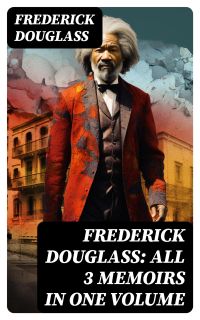
Frederick Douglass: All 3 Memoirs in One VolumeFrederick Douglass42h 37m4.7 (2.6K)$1 · $0.00
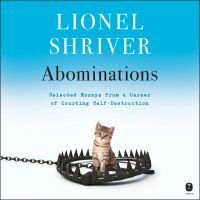
AbominationsLionel Shriver11h 36m4.0 (737)$29 · $0.00
Anti-Racist AllySophie Williams1h 25m4.5 (4.6K)$16 · $0.00
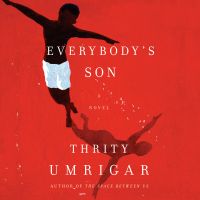
Everybody's SonThrity Umrigar10h 38m4.0 (11.3K)$29 · $0.00

DrinkAnn Dowsett Johnston8h 47m3.9 (5.1K)$29 · $0.00
Walk in the Light While There is Light (Annotated)Leo Tolstoy2h 32m4.3 (1.4K)$0.99 · $0.00

The Lyre of OrpheusRobertson Davies14h 43m4.2 (3.8K)$25
BuddenbrooksThomas Mann24h 56m4.3 (128.1K)$0.99 · $0.00

A HAZARD OF NEW FORTUNESWilliam Dean Howells19h 24m3.7 (1.6K)$1.99 · $0.00

Why Religion?Elaine Pagels7h 7m4.0 (3.8K)$24 · $0.00
Inverse CowgirlAlicia Roth Weigel6h 31m4.1 (1.7K)$24 · $0.00
Thoughts & PrayersBryan Bliss9h 29m4.2 (1.5K)$29 · $0.00
The Politically Incorrect Guide to CatholicismJohn Zmirak13h 8m4.1 (333)$23

Democracy in America (Annotated)Alexis de Toqueville36h 35m4.3 (1.3K)$2 · $0.00
Compassionate ConservatismDr. Marvin Olasky2h 56m3.5 (85)$14 · $0.00