
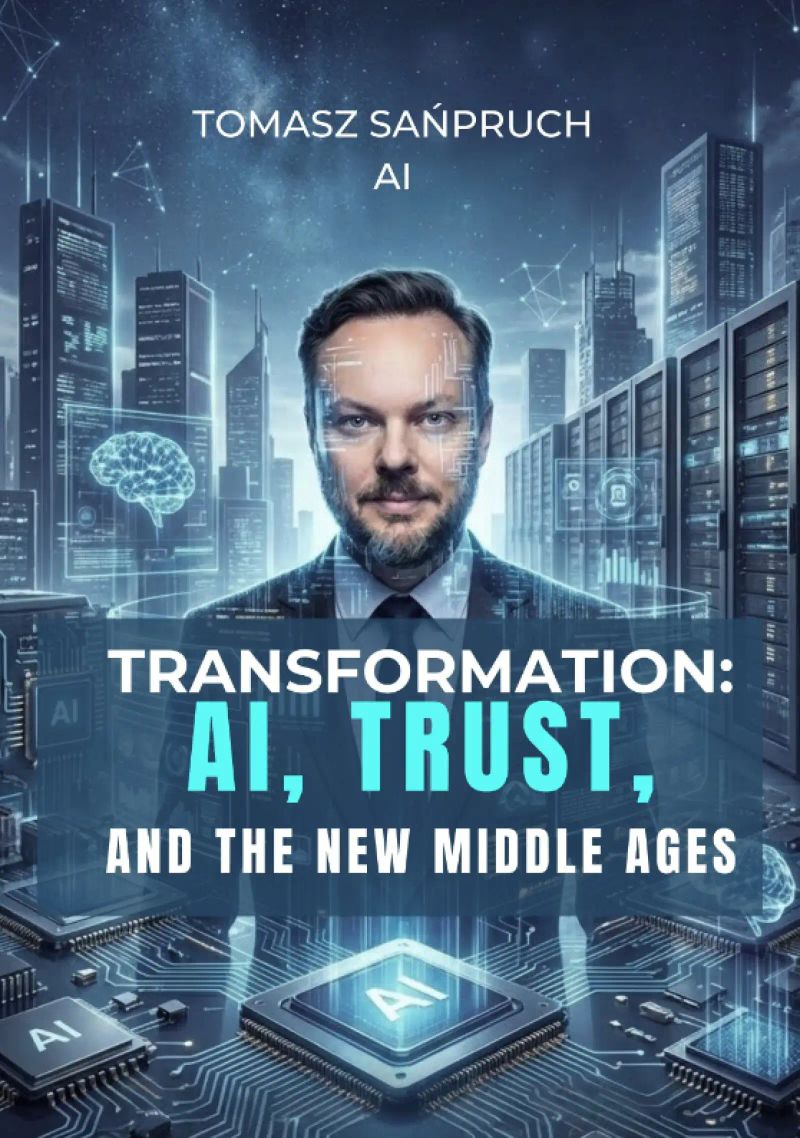
Transformation: AI, Trust and, the New Middle Ages
By Tomasz Sanpruch

Length5h 31m
About this audiobook
Transformation explores a world in which artificial intelligence has moved beyond being a supportive tool and become a full executor of work, decisions, and communication. Written at the moment this shift becomes irreversible, the book examines how generative AI is reshaping labor, power, trust, and authorship faster than institutions can adapt.
The book itself reflects this change. Tomasz Sańpruch presents himself not as a traditional author, but as a prompter—initiating ideas while AI interprets and structures them. Drawing on economic data and real-world examples, Transformation challenges comforting assumptions about “new jobs,” showing how productivity gains fail to translate into stable employment and why societies may be drifting toward a new “Middle Ages” defined by concentrated power and scarce trust.
Audiobook details
Rating★★★★★ 5.0 (2)
GenreBusiness and Economics
Length5 hrs 31 mins
Narrated byListen with 1,000+ voices
FormateBook with Audio
Publish dateDec 20, 2025
LanguageEnglish
Table of contents
1Introduction
2Methodological Note
3Megatrend 1
41.1.2. Autonomous Decision-Making Systems
51.1.3. Scaling Compute Power and Falling Inference Costs: Economics as the “Hidden Engine” of Change
Show all chaptersShow less
61.1.4. Why Human Control Is an Illusion
71.2. The Dynamics of Automation: Pace, Forecasts, and Historical Comparisons
81.3. Why AI Creates Fewer Jobs Than Earlier Technologies
91.3.1. The Social Consequences of the “Elevator Effect”: Inequality, Education, and Generational Frustration
101.3.2. Frustration as Political Fuel: Populism, Institutional Delegitimation, and the New Power of Big Tech
111.4. Sectoral Analysis
121.4.1. Marketing and Communication: A Pilot Sector for the Automation of Cognitive Work
131.4.1.1. Replacing Creators with AI
141.4.2. Public Administration: Automating the State and the Erosion of Responsibility
151.4.3. Finance and Banking: Algorithmic Exclusion, Scoring, and Credit as an Instrument of Power
161.4.4. Healthcare: Algorithmic Triage, Access to Treatment, and the Limits of Responsibility
171.4.5. Education: Algorithmic Teaching, Talent Selection, and the Reproduction of Inequality
181.4.6. IT and Software Engineering: The End of the Competency Monopoly and the Erosion of a “Privileged” Profession
191.5. Case Study: Communication and Marketing
201.5.1. The Newsroom That Is No Longer a Newsroom
211.5.2. The Renaissance of the “Walking Reporter”
221.5.3. The Wealthy Build Their Own Media: “Informational Courts of a New Middle Ages”
231.5.4. The Daily Battle for Human Attention
241.5.5. The Paradox of the AI Age: The More Information We Have, the More We Want People
251.6. AI as a Structural Force, Not a Tool
26Megatrend 2
272.1. The Crisis of Trust in the Age of Deepfakes and Generative AIWhen evidence stops being evidence
282.1.1. Political Deepfakes: From Manipulation to the Delegitimization of Democracy
292.2. Gen Z and the Shift in Communication PreferencesData, not intuition: how a generation raised online responds to the crisis of trust
302.2.1. Deepfakes, Elections, and Geopolitics: When the Crisis of Trust Becomes an Instrument of Power
312.2.2. Geopolitics in the Age of SimulationWars Without Gunfire, Power Without Truth
322.3. The Renaissance of Face-to-Face Meetings
332.4. Authenticity as a Competitive Advantage
342.4.1. The Impact on Employer Branding
352.5.3. Anti-Deepfake PoliciesFrom Crisis Response to an Architecture of Resilience
36Megatrend 3
373.1. Polarisation of the Information Market
383.2. Trends: Trust, Newsletters, Subscriptions
393.3. Disinformation and Automated Content FactoriesWhen information overproduction becomes a political and economic risk
403.5. The Future of the Journalistic Profession
41Megatrend 4
424.1. The Concept of the “New Middle Ages”From Intellectual Metaphor to a Diagnosis of an Era (Eco, Bull, Harari, Maçães, Turchin)
434.2. Feudalization 2.0
444.3. A Plurality of Truths and Parallel Realities
454.5.1. Yuval Noah Harari: Power Over Narrative and Mind
464.5.2. Thomas Friedman: A World Too Fast for States
474.5.3. Bruno Maçães: The Fragmentation of Geopolitics into Parallel Worlds
484.5.4. Peter Turchin: Cyclical Crisis and Elite Overproduction
494.6. Implications for Firms and IndividualsReputation, the “Credibility Shield,” and Survival in a World of Fragmented Narratives
50Strategic Recommendations
More from Tomasz Sanpruch

Siła przywództwa. Kobiety biznesu 2026Tomasz Sańpruch; Rita Schultz6h 8m$4.99 · $0.00

O mundo em transformaçãoTomasz Sańpruch6h 35m$4.99 · $0.00

التحوّل الذكاء الاصطناعي والثقة والعصور الوسطى الجديدةTomasz Sanpruch5h 3m$14.99 · $0.00
2078: WARTomasz Sanpruch7h 3m$4.99 · $0.00

Transformación: IA, confianza y la nueva Edad MediaTomasz Sańpruch6h 29m$9.99 · $0.00
2078: THE BEGINNINGTomasz Sańpruch6h 38m$9.99 · $0.00

2078: Tom 2. WojnaTomasz Sanpruch6h 48m5.0 (3) Only with Ultra

"2078" Tom 1. PoczątekTomasz Sańpruch6h 23m4.2 (32) Only with Ultra

Świat w transformacji. AI, zaufanie i nowe średniowieczeTomasz Sanpruch, AI5h 43m4.8 (5)$0.00 · $0.00

Never Split the DifferenceChris Voss, Tahl Raz8h 7m4.4 (277.7K)$26 · $0.00
The Intelligent Investor Rev Ed.Benjamin Graham17h 48m4.3 (191.5K)$40 · $0.00
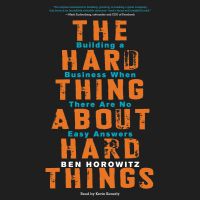
The Hard Thing About Hard ThingsBen Horowitz7h 57m4.2 (134.3K)$26 · $0.00
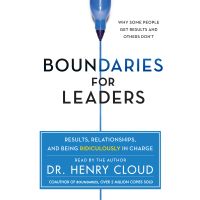
Boundaries for LeadersHenry Cloud7h 36m4.3 (3.6K)$26 · $0.00
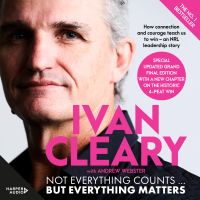
Not Everything Counts but Everything Matters: The powerful and inspirational new book about leadership and achieving success from the visionary multi-premiership winning Panthers coachIvan Cleary6h 1m4.6 (680)$24 · $0.00

BuildTony Fadell11h 5m4.5 (14.3K)$8 · $0.00
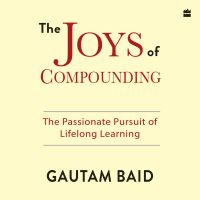
The Joys Of CompoundingGautam Baid17h 34m4.5 (2.5K)$18 · $0.00
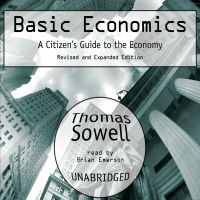
Basic EconomicsThomas Sowell18h 32m4.5 (29.3K)$28 · $0.00

Poor Charlie’s AlmanackGrover Gardener, Charles T. Munger13h 9m4.5 (24.7K)$18 · $0.00

The Ambuja StoryNarotam Sekhsaria13h 59m4.5 (830)$33 · $0.00

The Secret Door to SuccessFlorence Scovel Shinn2h 25m4.5 (2.1K)$1.20 · $0.00

This Is Going to HurtAdam Kay5h 47m4.4 (444.7K)$24 · $0.00

Big TrustShadé Zahrai, Fayçal Sekkouah8h 36m4.6 (406)$26 · $0.00
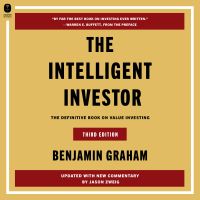
The Intelligent Investor Third EditionBenjamin Graham, Jason Zweig20h4.4 (156.6K)$46 · $0.00

Bottle of LiesKatherine Eban14h 25m4.4 (12K)$33 · $0.00

The Antiracist Business BookTrudi Lebrón6h 10m4.6 (275)$17 · $0.00
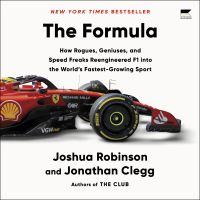
The FormulaJoshua Robinson, Jonathan Clegg10h 41m4.4 (6.9K)$29 · $0.00

Let Them LeadJohn U. Bacon7h 10m4.5 (1.4K)$24 · $0.00

Secrets of the Millionaire MindT. Harv Eker5h 11m4.4 (301.4K)$24 · $0.00

The Person You Mean to BeDolly Chugh9h 6m4.4 (7.2K)$29 · $0.00
You may also like
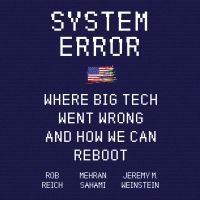
System ErrorRob Reich, Mehran Sahami, Jeremy M. Weinstein11h 29m4.0 (1.6K)$29 · $0.00

We Have Been HarmonizedKai Strittmatter10h 29m4.3 (4.3K)$29 · $0.00
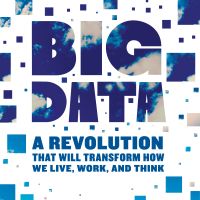
Big DataViktor Mayer-Schönberger, Kenneth Cukier9h 41m4.0 (27.3K)$29 · $0.00

Machines of Loving GraceJohn Markoff11h 53m3.8 (1.4K)$29 · $0.00

The Hour of the PredatorGiuliano da Empoli3h 9m4.2 (5.6K)$5 · $0.00

The Art Of Conjuring Alternate RealitiesShivam Shankar Singh, Anand Venkatanarayanan9h 50m4.3 (371)$29 · $0.00
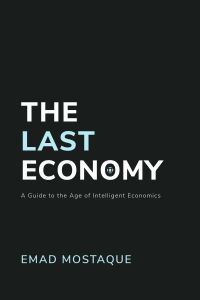
The Last Economy: A Guide to the Age of Intelligent EconomicsEmad Mostaque3h 54m4.3 (345)Free
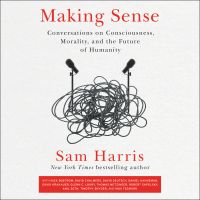
Making SenseSam Harris22h 27m4.1 (3K)$46 · $0.00

You Will Own NothingCarol Roth11h 1m4.1 (2.4K)$29 · $0.00
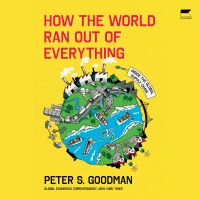
How the World Ran Out of EverythingPeter S. Goodman12h 18m4.2 (1.5K)$29 · $0.00

The Greatest Works of Philip K. DickPhilip K. Dick29h 39m4.1 (514)$2 · $0.00

Ignorance Is Strengthvarious authors, John Joseph Adams, Hugh Howey, Christie Yant11h 32m4.2 (301)$20

Agenda 2030Dawid Snowden27m$4 · $0.00

Beyond the ValleyRamesh Srinivasan12h 34m4.0 (186)$23 · $0.00
MuskismQuinn Slobodian, Ben Tarnoff5h 59m3.9 (186)$24 · $0.00
Think Like a HumanDavid Weitzner8h 36m4.1 (16)$26 · $0.00
Pay AttentionDavid Pakman9h 27m$29 · $0.00
The Artificial Intelligence ContagionDavid Barnhizer, Daniel Barnhizer12h3.9 (272)$20
Code RedWynton Hall8h 21m4.3 (72)$24 · $0.00
ReplacedDisrupt.co.nz4h 4m$1.20 · $0.00