
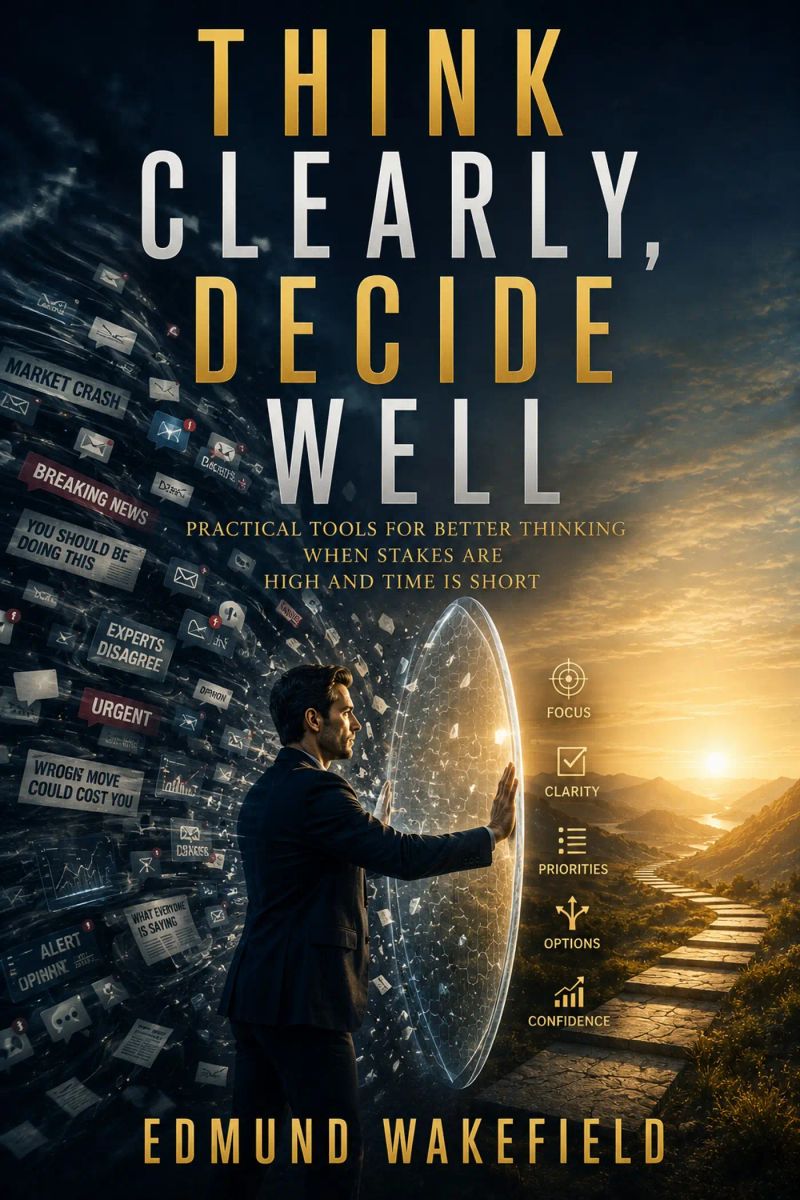
Think Clearly, Decide Well
Better Decisions When the Stakes Are High and Time Is ShortBy Edmund Wakefield


Length9h 30m
About this audiobook
Decision-making skills for smart professionals: how to make better decisions under pressure, fix the biases that trip you up at work, and decide well when stakes are high and time is short — from a former intelligence analyst turned CEO advisor.
A defense-contractor CEO once sat across from Edmund Wakefield about to bet a quarter of his company's annual revenue on a single foreign contract. He had a deck, spreadsheets, and the backing of two vice presidents. What he did not have was anyone in the room who had ever lost money on a deal like it, and he had never asked, in writing, what failure would look like. They sat for ninety minutes. He changed one termination clause. Two years later that clause saved the company. He didn't need a new mental model. He needed someone to make him slow down.
Most decision-making books teach you to admire cognitive biases and name them in alphabetical order. This one teaches you to work around them. Drawing on twelve years as an intelligence analyst and two decades advising founders, CEOs, and agency directors, Wakefield delivers a working kit for better thinking under pressure: a few diagnostics for what kind of decision you face, a few exercises that pull you out of your own head, and a few habits that compound over a career. You will learn the difference between reversible and irreversible decisions, when to decide fast and when to slow down, and why "producing" documents is not "deciding." Every chapter ends with a three-minute exercise you can run this week.
Inside this decision-making book:
• The two mental modes you already misuse — When to trust the quick read and when the slow walk-through should override it, illustrated by a bank president whose gut caught a bad loan the numbers approved
• The premortem — How to imagine failure before it happens, the exact move that saved the defense contractor a quarter of his revenue
• Reversible vs. irreversible decisions — Why speed is a virtue for cheap-to-reverse calls and a disaster for the ones you cannot undo
• The biases most likely to trip you up at work — Plus the outside view, decision journals that compound over years, and deciding under uncertainty with probabilities you do not have
• The hardest people decisions — Hiring, firing, and promoting, and how to stop laundering a decision through a committee that exists only to share the blame
• Recovering from a bad decision — How to stop doubling down, plus building decision hygiene into your week and teaching others to decide well
• Decisions under time pressure — The five-minute discipline for when the information will always be bad and the question itself is unclear
This is not a survey of behavioral economics and it does not promise transformation. It is the small set of moves that separates a competent decision-maker from one who just sounds competent: the pause before, the structure during, the accounting after. Practiced over a career, these habits give you steadier hands when the stakes are real and better judgment when time is short.
For readers of Annie Duke's Thinking in Bets and Chip and Dan Heath's Decisive.
Audiobook details
GenreBusiness and Economics, Self-Help
Length9 hrs 30 mins
Narrated byListen with 1,000+ voices
FormateBook with Audio
LanguageEnglish
Table of contents
1Introduction
2Chapter 1 — The Decision Problem Most Smart People Have
3Chapter 2 — The Two Mental Modes You Already Use (and Misuse)
4Chapter 3 — Speed vs. Quality: When to Decide Fast, When to Slow Down
5Chapter 4 — The Decision Inventory: What You Actually Decide Each Day
Show all chaptersShow less
6Chapter 5 — Reversible vs. Irreversible Decisions
7Chapter 6 — Big Decisions That Look Small (and Vice Versa)
8Chapter 7 — The Biases Most Likely to Trip You Up at Work
9Chapter 8 — The Outside View: How to Get Out of Your Own Head
10Chapter 9 — The Premortem: Imagining Failure Before It Happens
11Chapter 10 — Decision Journals: The Tool That Compounds Over Years
12Chapter 11 — Decisions Under Uncertainty: Working With Probabilities You Don’t Have
13Chapter 12 — Decisions With Asymmetric Payoffs
14Chapter 13 — Decision-Making in Groups Without the Group Pathologies
15Chapter 14 — Saying No as a Decision Practice
16Chapter 15 — Reading Other People’s Decisions
17Chapter 16 — Hiring, Firing, Promoting: The Hardest People Decisions
18Chapter 17 — Money Decisions Without the Spreadsheet Theater
19Chapter 18 — Strategic Decisions With Five-Year Horizons
20Chapter 19 — Recovering From a Bad Decision (Without Doubling Down)
21Chapter 20 — Building Decision Hygiene Into Your Week
22Chapter 21 — Teaching Others to Decide Well
23Chapter 22 — The Long Practice: Decisions Over a Career
24Chapter 23 — Decisions Under Time Pressure: The Five-Minute Discipline
25Chapter 24 — Decisions in Ambiguity: When the Question Itself Is Unclear
26Chapter 25 — Decisions That Affect Many People
27Chapter 26 — Decisions That Involve Money You Didn’t Earn
28Chapter 27 — Decisions That Conflict With Your Own Self- Image
29Chapter 28 — Decisions About When to Stop Deciding
30Chapter 29 — Decisions When the Information Will Always Be Bad
31Chapter 30 — The Decisions You Make Without Knowing You’re Making Them
32Chapter 31 — Decisions About Trust
33Chapter 32 — Decisions About How to Spend a Career
34Conclusion
35Appendix A — Twenty Decision Case Studies
36Appendix B — A Working Glossary of Decision Concepts
37Appendix C — Frequently Asked Questions
38Appendix D — A Year of Decision Practice: A Sample Calendar
39Appendix E — Templates You Can Steal
40Appendix F — Notes From the Field
41Afterword
42About the Author
More from Edmund Wakefield

Never Split the DifferenceChris Voss, Tahl Raz8h 7m4.4 (277.7K)$26 · $0.00
The Intelligent Investor Rev Ed.Benjamin Graham17h 48m4.3 (191.5K)$40 · $0.00
The Hard Thing About Hard ThingsBen Horowitz7h 57m4.2 (134.3K)$26 · $0.00
Boundaries for LeadersHenry Cloud7h 36m4.3 (3.6K)$26 · $0.00

The Secret Door to SuccessFlorence Scovel Shinn2h 25m4.5 (2.1K)$1.20 · $0.00

This Is Going to HurtAdam Kay5h 47m4.4 (444.7K)$24 · $0.00

Big TrustShadé Zahrai, Fayçal Sekkouah8h 36m4.6 (406)$26 · $0.00
The Intelligent Investor Third EditionBenjamin Graham, Jason Zweig20h4.4 (156.6K)$46 · $0.00

Bottle of LiesKatherine Eban14h 25m4.4 (12K)$33 · $0.00
The Antiracist Business BookTrudi Lebrón6h 10m4.6 (275)$17 · $0.00
The FormulaJoshua Robinson, Jonathan Clegg10h 41m4.4 (6.9K)$29 · $0.00
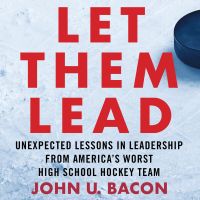
Let Them LeadJohn U. Bacon7h 10m4.5 (1.4K)$24 · $0.00

Secrets of the Millionaire MindT. Harv Eker5h 11m4.4 (301.4K)$24 · $0.00
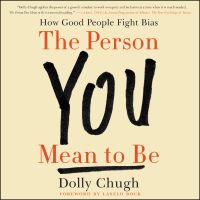
The Person You Mean to BeDolly Chugh9h 6m4.4 (7.2K)$29 · $0.00
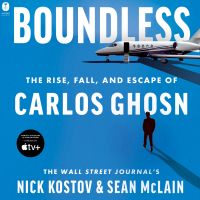
BoundlessNick Kostov, Sean McLain9h 17m4.5 (1.1K)$29 · $0.00
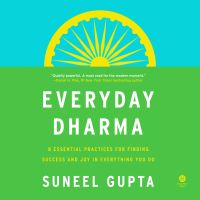
Everyday DharmaSuneel Gupta5h 2m4.5 (761)$20 · $0.00
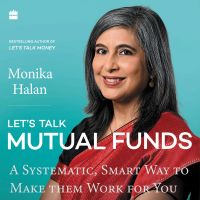
Let's Talk Mutual FundsMonika Halan7h 5m4.4 (2.4K)$16 · $0.00

Secret PowerDwight Lyman Moody3h 7m4.4 (1.4K)$1.20 · $0.00
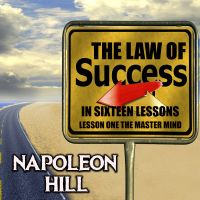
The Law of Success in Sixteen LessonsNapoleon Hill2h 39m4.4 (17.2K)$2 · $0.00
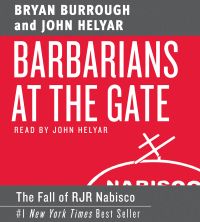
Barbarians at the GateBryan Burrough, John Helyar3h 3m4.4 (52.7K)$18 · $0.00
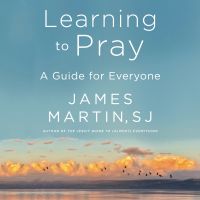
Learning to PrayJames Martin13h 24m4.5 (3.4K)$33 · $0.00

The Dangerous Truth about Today’s MarijuanaLaura Stack CSP, MBA9h 57m4.7 (385)$20 · $0.00
The Gospel according to Spiritualism (Translated)Allan Kardec14h 39m4.6 (3.9K)$5.70 · $0.00

Birdie & HarlowTaylor Wolfe7h 50m4.6 (6.5K)$26 · $0.00

CrossroadsKaleb Dahlgren7h 56m4.6 (4.9K)$26 · $0.00

Life on the BridgeKaelynn Partlow5h 40m4.6 (1.1K)$24 · $0.00

Keep Your Love OnDanny Silk9h 4m4.6 (8.1K)$10 · $0.00
The Tao of Joy Every DayDerek Lin10h 24m4.6 (762)$20 · $0.00
UndividedVicky Beeching9h 2m4.6 (1.3K)$29 · $0.00

HE CAN WHO THINKS HE CAN & OTHER BOOKS ON SUCCESSOrison Swett Marden5h 54m4.6 (1.2K)$1.99 · $0.00
Level UpRob Dial7h 42m4.6 (3.3K)$26 · $0.00
Burn the HaystackJennie Young, PhD9h 30m4.6 (543)$29 · $0.00

ACRES OF DIAMONDS: Our Every-day Opportunities (Wisdom & Empowerment Series) (Annotated)Russell Conwell2h 26m4.6 (1K)$2 · $0.00

Good InsideBecky Kennedy9h 55m4.5 (59.3K)$29 · $0.00

The Lost VoiceGreta Morgan8h 30m4.7 (285)$26 · $0.00

Stripped DownBunnie Xo8h 25m4.5 (32.9K)$26 · $0.00
UnthinkableJamie Raskin15h 8m4.5 (9.3K)$8 · $0.00

Wallace D. Wattles Ultimate Collection Wallace D. Wattles16h 53m4.6 (1.3K)$1 · $0.00

Inquire WithinIn-Q2h 18m4.6 (993)$16 · $0.00

Under His WingsEmily Compagno7h 16m4.6 (848)$22 · $0.00
You may also like
THE THEORY OF THE LEISURE CLASS: An Economic Study of American Institutions and a Social Critique of Conspicuous Consumption (Annotated)Thorstein Veblen12h 58m4.4 (1K)$1.99 · $0.00
The World as Will and Idea (Vol. 1 of 3)Arthur Schopenhauer20h 17m4.4 (519)$2.30
An Enquiry Concerning Human UnderstandingDavid Hume5h 59m4.1 (29.2K)$2.30

An Enquiry Concerning Human UnderstandingDavid Hume7h 23m4.1 (24.2K)$1 · $0.00
Democracy and Education An Introduction to the Philosophy of EducationJohn Dewey15h 33m4.1 (4K)$2.30
The Art of Logical Thinking, or, The Laws of ReasoningWilliam Walker Atkinson3h 50m4.0 (287)$2.30

Blackboard DrawingFrederick Whitney25m4.2 (51)$2 · $0.00

Ultimate Customer ServiceMade for Success8h 9m4.2 (46)$20

Business & Economics Collection: Thorstein Veblen Edition (30+ Works in One Volume)Thorstein Veblen91h 26m4.5 (11)$2 · $0.00

Sell to Anyone!Zig Ziglar, Brian Tracy3h 13m4.2 (20)$20

A Book of PrefacesH. L. Mencken7h 33m3.8 (67)$2 · $0.00

Leibniz's New Essays Concerning the Human Understanding: A Critical ExpositionJohn Dewey8h 57m3.9 (24)$1 · $0.00

How to Write a Novel: A Practical Guide to the Art of FictionAnonymous3h 5m3.6 (65)$2 · $0.00
Public Speaking SuperstarMade for Success7h 25m3.6 (72)$30

CEO Communication SkillsMade for Success8h 59m3.8 (28)$20

Why Women BuyDawn Jones3h 54m3.5 (62)$20

The Return-to-Office PlaybookImad Muratspahic4h 6m$13 · $0.00
Profits, Prophets, Coaches, and KingsJared Diamond9h 59m$29 · $0.00
Navigating Towards Professional SuccessEdivaldo Ascaneo34m$6 · $0.00

Mediation in state courtsFlávia Maria Aires Freire Allemão5h 20m$12 · $0.00