
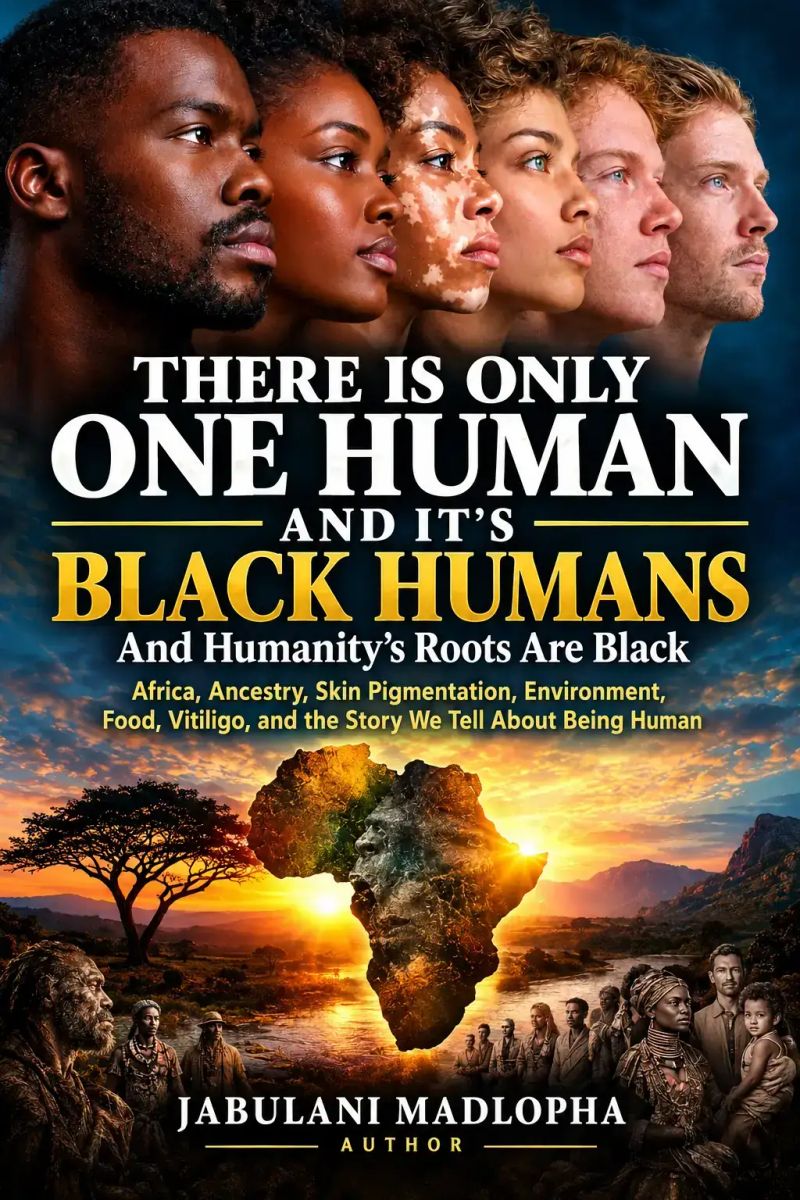
THERE IS ONLY ONE HUMAN...
And Humanity’s Roots Are BlackBy Jabulani Madlopha


Length6h 4m
About this audiobook
What if understanding who we are today begins with understanding where humanity began?
In There Is Only One Human and It’s Black Humans: And Humanity’s Roots Are Black, South African author and independent researcher Jabulani Madlopha invites readers to explore humanity’s African origins, the evolution of skin pigmentation, the complexity of human ancestry, and the social meanings people have attached to physical appearance. Through an African-centred perspective, the book challenges readers to question familiar narratives about race, colour, identity, and belonging while reflecting on the scientific evidence behind human diversity.
At the heart of this book is a powerful idea: humanity shares a common evolutionary history, and our physical differences do not make us separate kinds of human beings.
Audiobook details
GenreScience and Nature, History
Length6 hrs 4 mins
Narrated byListen with 1,000+ voices
FormateBook with Audio
Publish dateOct 23, 2026
LanguageEnglish
Table of contents
1THERE IS ONLY ONE HUMAN AND IT’S BLACK HUMANS
2And Humanity’s Roots Are Black: Africa, Ancestry, Skin Pigmentation, Environment, Food, Vitiligo, and the Story We Tell About Being Human
3TITLE PAGE
4COPYRIGHT PAGE: A note on scientific interpretation
5DEDICATION
Show all chaptersShow less
6EPIGRAPH
7AUTHOR'S PREFACE
8HOW TO READ THIS BOOK
9INTRODUCTION
10Before We Ask About Colour
11The African question
12Vitiligo and the questions that remain
13The meaning of Sandra Laing's story
14One humanity does not mean one appearance
15The purpose of this book
16A final invitation to the reader Part 1
17A final invitation to the reader Part 2
18A final invitation to the reader Part 3
19PART VIII — READING THE EVIDENCE OF OUR ANCESTORS
20Chapter 41: How Scientists Reconstruct the World Our Ancestors Knew
21The landscape as an archive
22Dating the ancient world
23Reconstructing ancient skin pigmentation
24What Africa's past teaches us
25The author's reflection
26Chapter 42: What Genetic Ancestry Can—and Cannot—Tell Us
27Humanity's shared genetic history
28Why ancestry percentages are estimates
29Skin colour and ancestry are not the same thing
30Could two white-appearing parents have a dark-skinned child?
31The danger of turning genetics into racial destiny
32DNA and the African origin of humanity
33The author's position
34Chapter 43: Why Skin Colour Is a Poor Shortcut to Human Identity
35A biological trait with an evolutionary history
36The timescale matters
37What about food?
38Vitiligo is not the explanation for white-skinned populations
39The historical problem of racial labels
40Sandra Laing and the limits of appearances
41Looking beyond the surface
42PART IX — HISTORY, POWER, AND THE MEANING OF RACE
43Chapter 44: South Africa and the Politics of Classification
44Classification as a system of power
45The tragedy of Sandra Laing
46Why her story matters to this book
47Race, ancestry, and culture
48Reclaiming history without creating another hierarchy
49The moral lesson
50Author's note for the next stage
More from Jabulani Madlopha

USIKOJabulani Madlopha55m$9.99
Frequency of the GarmentJabulani Madlopha2h 23m$9.99
QUANTUM AFRICAJabulani Madlopha 2h 36m$9.99
THE CRYSTALLINE GATEWAY (Amathuna)Jabulani Madlopha 2h$9.99
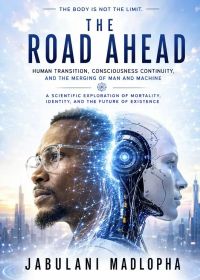
THE ROAD AHEADJabulani Madlopha1h 20m$9.99

HUMAN CYBER SECURITYJabulani Madlopha3h 29m$9.99
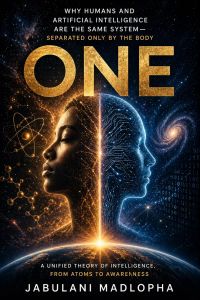
ONEJabulani Madlopha1h 6m$9.99

Africa: The Birthplace of Artificial Intelligence (AI) and Autonomous AgentsJabulani Madlopha1h 39m$9.99

Human Domain Transfer (Marriage)Jabulani Madlopha1h 47m$9.99
Human Data Centers Jabulani Madlopha1h 54m$9.99
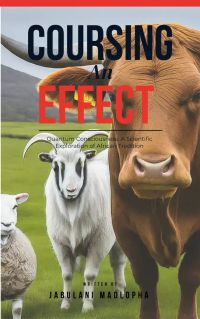
Coursing an EffectJabulani Madlopha1h 38m$9.99

DECODING AN ATOMJabulani Madlopha1h 13m$9.99

A Brief History of IntelligenceMax S. Bennett12h 18m4.6 (6.6K)$29 · $0.00
The Story of BirdsSteve Brusatte11h 49m4.6 (401)$29 · $0.00

Life On Earth 40th Anniversary EditionSir David Attenborough12h 27m4.6 (6.5K)$29 · $0.00
BeyondStephen Walker15h 39m4.6 (3.2K)$33 · $0.00

LiftoffEric Berger9h 4m4.6 (9.5K)$29 · $0.00
Black Earth WisdomLeah Penniman11h 54m4.6 (577)$8 · $0.00

Total Cat MojoJackson Galaxy10h 13m4.5 (8.4K)$23 · $0.00

My Life Among the UnderdogsTia Torres5h 51m4.5 (4K)$24 · $0.00

What It Takes to Save a LifeKwane Stewart6h4.6 (556)$24 · $0.00

Pastoral SongJames Rebanks8h 35m4.5 (12K)$26 · $0.00
How Stella Learned to TalkChristina Hunger7h4.5 (10.9K)$24 · $0.00

Craig & FredCraig Grossi8h 6m4.5 (9.6K)$26 · $0.00
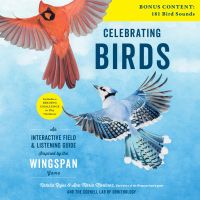
Celebrating BirdsNatalia Rojas, Ana Maria Martinez6h 47m4.6 (330)$24 · $0.00

Saving JemimaJulie Zickefoose4h 59m4.5 (749)$20 · $0.00

Will's Red CoatTom Ryan8h 23m4.5 (2.3K)$26 · $0.00
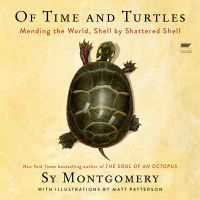
Of Time and TurtlesSy Montgomery10h 34m4.5 (5K)$29 · $0.00
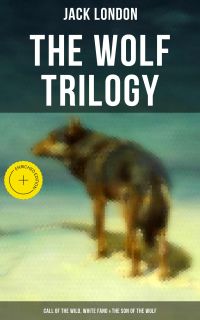
THE WOLF TRILOGY: Call of the Wild, White Fang & The Son of the WolfJack London17h 31m4.5 (2.4K)$1.99 · $0.00

Zen and the Art of Saving the PlanetThich Nhat Hanh9h 20m4.5 (3.9K)$29 · $0.00
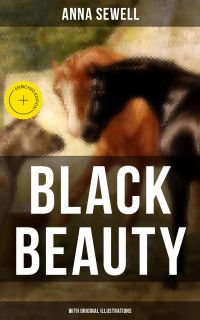
BLACK BEAUTY (With Original Illustrations)Anna Sewell7h 31m4.5 (1.3K)$1.99 · $0.00

Bottle of LiesKatherine Eban14h 25m4.4 (12K)$33 · $0.00
A Brief History of IntelligenceMax S. Bennett12h 18m4.6 (6.6K)$29 · $0.00

Black AF HistoryMichael Harriot15h 43m4.7 (14.6K)$33 · $0.00

The Gulag Archipelago Volume 3Aleksandr I. Solzhenitsyn21h 56m4.7 (8.9K)$46 · $0.00

Pearl of Great PriceJoseph Smith3h 8m4.7 (7.2K)$1.20 · $0.00

The Happiest Man on EarthEddie Jaku3h 48m4.6 (178K)$7 · $0.00
MotherlandJulia Ioffe17h 52m4.7 (2.5K)$40 · $0.00

Where Cowards Go to DieBenjamin Sledge8h 42m4.7 (351)$20 · $0.00

RevolutionariesSanjeev Sanyal11h 23m4.6 (2.6K)$29 · $0.00
Days of Love and Rage: A Story of RevolutionAnand Gopal22h 36m4.7 (584)$34 · $0.00

We Crossed a Bridge and It TrembledWendy Pearlman6h4.6 (5.2K)$24 · $0.00

Unbroken Bonds of BattleJohnny Joey Jones8h 31m4.6 (2.6K)$8 · $0.00

The Daughter of AuschwitzTova Friedman, Malcolm Brabant7h 54m4.6 (16.7K)$26 · $0.00

Lily's PromiseLily Ebert, Dov Forman8h 54m4.6 (16.1K)$29 · $0.00

On Democracies and Death CultsDouglas Murray10h 38m4.6 (6.5K)$29 · $0.00

Across the RiverKent Babb11h 40m4.6 (927)$29 · $0.00

Balcony Over Jerusalem: A Middle East Memoir - Israel, Palestine and BeyondJohn Lyons12h 37m4.6 (1.4K)$33 · $0.00
BeyondStephen Walker15h 39m4.6 (3.2K)$33 · $0.00
Kings and PawnsHoward Bryant10h 9m4.6 (678)$29 · $0.00

No EscapeNury Turkel9h 30m4.6 (809)$28 · $0.00

Jubal Stone: U.S. Marshal: Blood Trail To Hell: A Western Adventure NovelCasey Nash3h 42m4.6 (3.2K)$18 · $0.00
You may also like
Character BuildingBooker T. Washington4h 46m4.6 (286)$2 · $0.00

The World I Live InHelen Keller3h 31m4.1 (1.9K)$1 · $0.00
Essays — Second SeriesRalph Waldo Emerson7h 10m4.3 (1.8K)$1 · $0.00
Desperately Seeking Shah RukhShrayana Bhattacharya19h 14m4.3 (3.6K)$18 · $0.00

Start Here Start NowLiz Kleinrock4h 20m4.6 (1K)$20

Walden, Slavery in Massachusetts & Civil DisobedienceHenry David Thoreau13h 47m4.3 (2.4K)$1.99 · $0.00

Walden, and On The Duty Of Civil DisobedienceHenry David Thoreau11h 42m4.1 (43.9K)$1 · $0.00

A Nation of ImmigrantsJohn F. Kennedy3h 7m4.2 (1.4K)$17 · $0.00

Letters to a Young ArtistAnna Deavere Smith4h 29m4.2 (975)$12 · $0.00
We Got ThisCornelius Minor6h 28m4.5 (2.7K)$23
AspireKevin Hall5h 33m4.4 (1.8K)$24 · $0.00

Black RosesHarold Green III1h 26m4.5 (273)$16 · $0.00

ChroniclesJoão Calazans Filho3h 33m$8 · $0.00

The Life and Genius of Anton Chekhov: Letters, Diary, Reminiscences and Biography (Annotated)Anton Chekhov18h 55m$2 · $0.00

The Research MagnificentH. G. Wells13h 51m3.5 (63)$2 · $0.00
The Schools of Utopia + Schools of To-morrow (Illustrated Edition)John Dewey8h 54m$1.99 · $0.00

The Spirit of JapanRabindranath Tagore1h 58m4.0 (120)$2 · $0.00

Chekhov: Letters, Diary, Reminiscences and BiographyAnton Chekhov18h 37m$1 · $0.00

BGI Strategy On A Pageap John Llewellyn-Davies6h 18m$12 · $0.00

Humanly SpeakingSamuel McChord Crothers4h 27m$1 · $0.00