
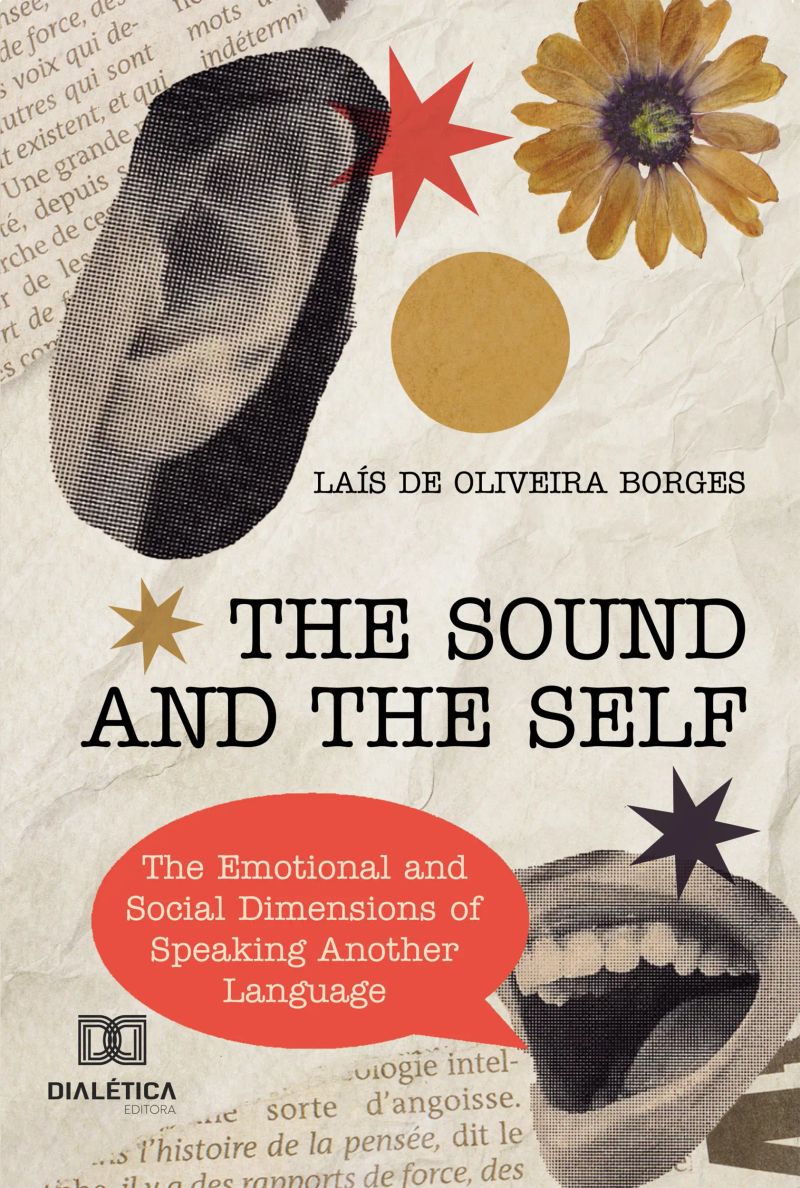
The Sound and the Self
The Emotional and Social Dimensions of Speaking Another LanguageBy Laís de Oliveira Borges


Length4h 23m
About this audiobook
Mainstream Second Language Acquisition research on socio-affective factors has largely relied on self-reported psychological variables, often overlooking the complexity of learners' affective experiences. This book addresses this gap by examining how socio-affective factors shape English as an Additional Language (EAL) speech performance in a Brazilian context. Drawing on learners' autobiographies, instructor evaluations, and classroom observations, the study investigates how personal narratives inform learners' affective regimes and relate to speech attainment. Grounded in McAdams and Pals' New Big Five framework, the research develops an integrative model of socio-affective factors in EAL learning. Findings suggest that learners with higher speech attainment share positive cultural beliefs, enjoyment of language learning, satisfaction with instruction, and similar individual difference profiles, including high willingness to communicate. The study also reveals that high-performing learners tend to underestimate their oral proficiency. By offering a nuanced understanding of the relationship between affect and speech achievement, this book provides valuable insights for researchers and language educators seeking to better understand learner success and performance variation.
Audiobook details
GenreOther
Length4 hrs 23 mins
Narrated byListen with 1,000+ voices
FormateBook with Audio
Publish dateMay 29, 2026
LanguageEnglish
Table of contents
1ACKNOWLEDGEMENTS
2PREFACE
3PRELUDE: RESEARCH PARADIGMS IN PERSPECTIVE
4CHAPTER 1 INITIAL REMARKS
51.1 SPEECH PERCEPTION AND PRODUCTION
Show all chaptersShow less
61.2 THE NATIVE VS. NON-NATIVE DICHOTOMY
71.3 RATIONALE
81.4 OBJECTIVES AND RESEARCH QUESTIONS
91.4.1 Main objective
101.4.2 Specific objectives
111.4.3 Research Questions
12CHAPTER 2 THE PSYCHOLINGUISTIC DOMAIN
132.1 PSYCHOLINGUISTICS AND SLA RESEARCH
142.2 INDIVIDUAL DIFFERENCE RESEARCH
152.2.1 Socio-psychological individual differences in SLA Research
162.2.2 The New Big Five Model: An Integrative Framework
17CHAPTER 3 THE SOCIOLINGUISTIC DOMAIN
183.1 Interactional Sociolinguistics
193.1.1 Contextualization Cues
203.1.2 Frame Theory
213.1.3 Linguistic Ideologies
22INTERLUDE: WHY SPEECH ATTAINMENT?
23CHAPTER 4 METHODOLOGY
244.1 RESEARCH METHODOLOGY
254.1.1 Qualitative Research
264.1.2 Grounded Theory
274.2 RESEARCH METHODS
284.2.1 Semi-structured interviews
294.2.2 Stimulated Recalls
304.2.3 Classroom Observations
314.3 INSTRUMENTS
324.3.1 Interview Guide
334.3.2 Field Notes during Classroom Observations
344.3.3 Stimulated Recall Protocol
354.4 DESIGN
364.5 PARTICIPANTS
374.6 DATA ANALYSIS
384.7 PILOT STUDY
394.7.1 Purposes
404.7.2 Procedures
414.7.3 Pilot Study: Classroom Observation
424.7.4 Pilot Study: Interview and Stimulated Recall
43POSTLUDE: THE SOCIO-AFFECTIVE DOMAIN
44CHAPTER 5 A GROUNDED THEORY FOR SOCIO-AFFECTIVE FACTORS
455.1 Purposes
465.2 Procedures
475.3 Main Study: Classroom Observation
485.4 Main Study: Interviews and Stimulated Recalls
495.4.1 Students with lower levels of EAL speaking skills according to their language instructor
505.4.1.1 Student 1, Pedro

Mere ChristianityC. S. Lewis7h 7m4.4 (519.7K)$24 · $0.00

Her Daily BreadKate Wood12h 57m4.6 (153)$33 · $0.00

The Holy Bible - 1 SamuelKing James2h 13m4.8 (1.6K)$3 · $0.00

The American Standard Bible — The Gospel of MatthewMatthew3h 56m4.7 (3K)$2 · $0.00

Bad Fat Black GirlSesali Bowen6h 32m4.7 (2.8K)$24 · $0.00

The King James Audio Bible New Testament CompleteChristopher Glyn20h 2m4.7 (2.6K)$12 · $0.00

Faiths CheckbookCharles Spurgeon12h 44m4.7 (3.2K)$11 · $0.00

Ten Things I Wish You Knew About Your Child's Mental HealthDr. Billy Garvey4h 53m4.7 (2.4K)$20 · $0.00

Designing Terry Pratchett’s DiscworldPaul Kidby3h 52m4.7 (343)$20 · $0.00

The Chosen Book OneAmanda Jenkins, Kristen Hendricks, Dallas Jenkins3h 8m4.6 (4.9K)$10 · $0.00
The Lives of BrianBrian Johnson9h 45m4.6 (3.5K)$29 · $0.00

Expository Thoughts on the Gospel of LukeJ.C. Ryle27h 13m4.7 (536)$18 · $0.00

CrossroadsKaleb Dahlgren7h 56m4.6 (4.9K)$26 · $0.00

Across the RiverKent Babb11h 40m4.6 (927)$29 · $0.00
Brain Training for RidersAndrea Monsarrat Waldo5h 56m4.7 (550)$19 · $0.00

My Effin' LifeGeddy Lee17h 11m4.6 (13.1K)$40 · $0.00
Kings and PawnsHoward Bryant10h 9m4.6 (678)$29 · $0.00

The Elementia Chronicles #2: The New OrderSean Fay Wolfe11h 17m4.6 (841)$29 · $0.00

The ActsLuke2h 55m4.6 (19.7K)$12 · $0.00

New Testament - Easy NavigationWorld English Bible19h 35m4.6 (1.3K)$1.30 · $0.00
You may also like

The Invisible Hand of the Market: The Theory of Moral Sentiments + The Wealth of NationsAdam Smith59h 8m4.2 (1.6K)$2 · $0.00

The Wealth of NationsAdam Smith45h 12m4.1 (138K)$40 · $0.00

Self-RelianceRalph Waldo Emerson1h 13m4.2 (30.3K)$1 · $0.00

ANNA KARENINA – Two Unabridged Translations in One Premium Edition (World Classics Series) (Annotated)Leo Tolstoy86h 35m4.2 (779.7K)$2 · $0.00

As a Man ThinkethJames Allen52m4.3 (151.5K)$4.10 · $0.00

MediationsMarcus Aurelius14m4.4 (461.5K)$14 · $0.00

Warrior MindsetMichael J. Asken1h 16m4.4 (1K)$6 · $0.00

Human Nature and ConductJohn Dewey9h 22m4.2 (1.5K)$0.60 · $0.00

How To Get What You WantWallace D. Wattles31m4.0 (285)$2 · $0.00

Fundamental Principles of the Metaphysic of MoralsImmanuel Kant3h 22m4.0 (29K)$1.80 · $0.00

A Buddhist BibleDwight Goddard7h 59m4.0 (663)$2 · $0.00

Mere ChristianityC. S. Lewis46m4.4 (546.2K)$17

The Wisdom Of LifeArthur Schopenhauer4h 3m4.2 (20.2K)$2.30 · $0.00

7 Body Language SecretsJasper Livingstone7h 50m$10.50 · $0.00

The LinkedIn AdvantageSasha Vance5h 18m$10 · $0.00

Organizational BehaviorKnowledge Flow2h 3m$4.10 · $0.00

Salary Negotiation MasteryOctavia Marsh7h 38m$8

The Remote Work HandbookDominic Aldrich7h 23m$10

Manhood of Humanity (Annotated)Alfred Korzybski8h 15m4.0 (139)$2 · $0.00

The 1% Daily CompoundLucy Merrick5h 13m$6