
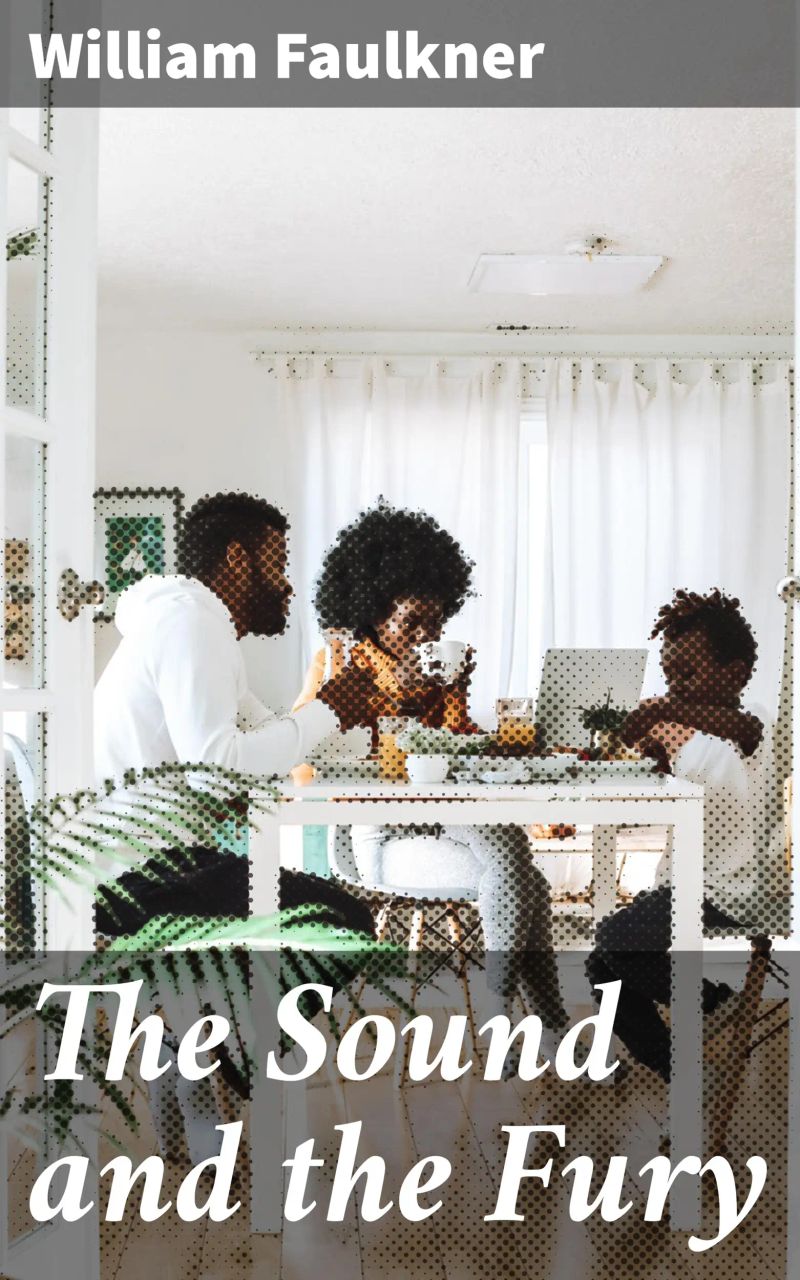
The Sound and the Fury
Exploring Time, Memory, and Family in the Deep South: A Modernist Masterpiece of American LiteratureBy William Faulkner


Length10h 29m
About this audiobook
William Faulkner's "The Sound and the Fury" is a groundbreaking exploration of the decline of an aristocratic Southern family through the lens of time, memory, and subjective consciousness. Employing his signature stream-of-consciousness technique, Faulkner weaves a narrative rich in symbolism and intricate characters, delving deep into the psyche of the Compson family. The novel is structurally complex, featuring four distinct sections narrated by different characters, including Benjy, a mentally disabled man, whose fragmented perceptions challenge conventional narrative forms and reflect the disintegration of Southern identity in the post-Civil War era. Faulkner, born in Mississippi in 1897, was heavily influenced by the complexities of Southern life and history, shaping his literary voice. His experiences during World War I and the socio-political upheaval of the early 20th century ignited his fascination with themes of decay, race, and the passage of time. "The Sound and the Fury," published in 1929, stands as a culmination of his early literary experiments, marking his emergence as one of America's greatest modernist writers and redefining the Southern Gothic genre. For readers seeking a profound and challenging literary experience, Faulkner's work offers profound insights into the human condition. "The Sound and the Fury" is not merely a novel; it is a testament to the complexity of memory, time, and identity, inviting readers to engage in a deep reflection on the universality of suffering and the workings of the mind.
Audiobook details
Rating★★★★ 4.0 (231.2K)
Includes Goodreads, LibraryThing, StoryGraph, Amazon
GenreLiterary Classics, General Fiction
Length10 hrs 29 mins
Narrated byListen with 1,000+ voices
FormateBook with Audio
Publish dateAug 31, 2021
LanguageEnglish
Table of contents
1Introduction
5APRIL SIXTH, 1928 (pt. 1)
2APRIL SEVENTH, 1928
6APRIL SIXTH, 1928 (pt. 2)
3JUNE SECOND, 1910 (pt. 1)
7APRIL EIGHTH, 1928
4JUNE SECOND, 1910 (pt. 2)
More from William Faulkner
As I Lay Dying (Annotated)William Faulkner7h 39m$2 · $0.00

Mosquitoes (Annotated)William Faulkner13h 18m3.5 (6K)$2 · $0.00
As I Lay DyingWilliam Faulkner7h 11m4.0 (230.1K)$2 · $0.00
Requiem for a NunWilliam Faulkner6h 40m3.8 (3K)$2 · $0.00

The Faulkner ReaderWilliam Faulkner31h 41m4.4 (1.7K)$1 · $0.00
Absalom, Absalom!William Faulkner15h4.1 (64.5K)$2 · $0.00
The Sound and the FuryWilliam Faulkner11h 55m4.0 (230.4K)$2 · $0.00

The Wild PalmsWilliam Faulkner10h 53m4.0 (11.9K)$2 · $0.00

Mientras agonizoWilliam Faulkner6h 13m3.9 (219.7K)$2 · $0.00
As I Lay Dying (Annotated)William Faulkner7h 38m4.2 (1.6K)$0.99 · $0.00

Soldiers' Pay (Annotated)William Faulkner12h 10m4.1 (149)$0.99 · $0.00
The Sound and the Fury (Annotated)William Faulkner12h 9m4.1 (202.4K)$0.99 · $0.00
To Kill a MockingbirdHarper Lee12h 18m4.5 (7.4M)$29 · $0.00

These Precious DaysAnn Patchett11h 14m4.5 (45.2K)$29 · $0.00
Pride & Prejudice (Annotated)Jane Austen15h 10m4.7 (13.3K)$2 · $0.00
The Jeeves and Wooster Stories: The Complete Collection (33 Books)P. G. Wodehouse21h 57m4.7 (2.8K)$15 · $0.00
The Gulag Archipelago Volume 3Aleksandr I. Solzhenitsyn21h 56m4.7 (8.9K)$46 · $0.00

This Side of Paradise - The Original 1920 Edition (Annotated)F. Scott Fitzgerald11h 30m4.6 (1.6K)$2 · $0.00
The Great Gatsby: Original 1925 Edition (An F. Scott Fitzgerald Classic NovelFrancis Scott Fitzgerald4h 45m4.6 (9.3K)$18 · $0.00
TWELFTH NIGHTWilliam Shakespeare, Sidney Lee16h 38m4.6 (2.8K)$1.99 · $0.00

The Complete Histories / History Plays of William Shakespeare (Annotated)William Shakespeare29h 42m4.6 (2.3K)$0.99 · $0.00

Braving the TruthRachel Held Evans11h 31m4.7 (359)$29 · $0.00

The Old Man and the Sea (Annotated)Ernest Hemingway4h 27m4.6 (1.4K)$2 · $0.00

Henry V (The Play, Historical Background and Analysis of the Character in the Play)William Shakespeare, William Hazlitt8h 50m4.6 (1.3K)$1.99 · $0.00
H. P. LOVECRAFT Ultimate Collection: Novellas, Short Stories, Poetry & Essays (Annotated)H. P. Lovecraft12h 28m4.6 (2.3K)$2 · $0.00
Time RegainedMarcel Proust16h 8m4.5 (10.6K)$1.99 · $0.00
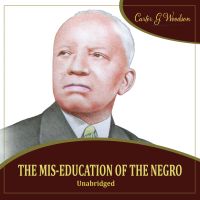
The Mis-Education of the NegroCarter Goodwin Woodson4h 32m4.5 (28.4K)$10 · $0.00

TORAH - Bilingual Edition: English/Hebrew (Annotated)Max Margolis, JPS28h 26m4.6 (1K)$2 · $0.00

Betty Crocker picture cooky bookBetty Crocker, Inc. General Mills2h 13m4.5 (6.5K)$1 · $0.00

The Complete Tales of Beatrix PotterBeatrix Potter3h 36m4.5 (75K)$3 · $0.00
Anne of Green GablesL. M. Montgomery11h 1m4.5 (1.2M)$2.30 · $0.00

Crime and Punishment (The Unabridged Garnett Translation) (Annotated)Fyodor Dostoevsky24h 25m4.5 (15.4K)$0.99 · $0.00

WhistlerAnn Patchett10h 45m4.6 (4.6K)$29 · $0.00
Demon CopperheadBarbara Kingsolver21h 3m4.5 (949.4K)$46 · $0.00
To Kill a MockingbirdHarper Lee12h 18m4.5 (7.4M)$29 · $0.00

Remarkably Bright CreaturesShelby Van Pelt11h 17m4.4 (1.7M)$29 · $0.00
Desperate MeasuresBrenda Jackson8h 59m4.7 (670)$28 · $0.00
This Side of Paradise - The Original 1920 Edition (Annotated)F. Scott Fitzgerald11h 30m4.6 (1.6K)$2 · $0.00

War LordBernard Cornwell13h 21m4.6 (33.1K)$33 · $0.00
The Great Gatsby: Original 1925 Edition (An F. Scott Fitzgerald Classic NovelFrancis Scott Fitzgerald4h 45m4.6 (9.3K)$18 · $0.00
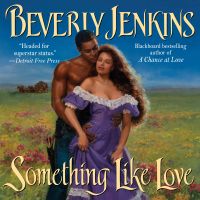
Something Like LoveBeverly Jenkins10h 21m4.6 (2.7K)$29 · $0.00
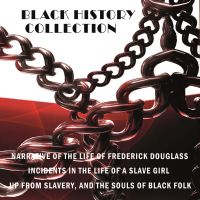
Black History CollectionFrederick Douglass, Harriet Ann Jacobs, Booker T. Washington, W.E.B. Du Bois27h 9m4.6 (2.6K)$18 · $0.00
The Old Man and the Sea (Annotated)Ernest Hemingway4h 27m4.6 (1.4K)$2 · $0.00

White HotIlona Andrews13h 18m4.5 (136.9K)$5 · $0.00

The Ghost by the Billabong (The Matilda Saga, #5)Jackie French14h 58m4.6 (773)$33 · $0.00
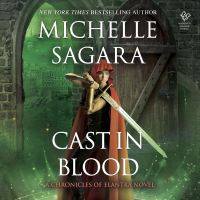
Cast in BloodMichelle Sagara16h 35m4.6 (607)$33 · $0.00
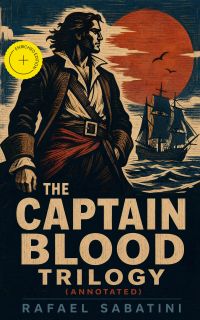
The Captain Blood Trilogy (Annotated)Rafael Sabatini29h 20m4.6 (1K)$3 · $0.00
Ship of the Line (Annotated)Cecil Louis Troughton Smith11h 13m4.6 (1K)$2 · $0.00
The George Orwell CollectionGeorge Orwell24h 46m4.5 (14.4K)$12 · $0.00

ShivajiRanjit Desai25h 13m4.6 (3.1K)$24 · $0.00
Time RegainedMarcel Proust15h 38m4.5 (9.2K)$2 · $0.00

Driving ForceElle James4h 58m4.6 (407)$20 · $0.00
You may also like

Three SistersAnton Chekhov2h 36m4.2 (28.7K)$1.20 · $0.00

MathildaMary Wollstonecraft Shelley4h 59m3.7 (9.2K)$2.30

Remembering LaughterWallace Stegner3h 10m4.0 (2.5K)$12
My Mortal EnemyWilla Cather3h 15m3.7 (12.9K)$2 · $0.00

Lament XIIIJan Kochanowski (tłum. Dorothea Prall)1m4.3 (634)Free
The Forsyte SagaJohn Galsworthy42h 40m4.2 (36.8K)$40

Almayer's FollyJoseph Conrad6h 15m3.6 (3.8K)$12 · $0.00

Love in the Time of CholeraGabriel García Márquez15h 40m4.1 (592.4K)$25

Lament VIIJan Kochanowski (tłum. Dorothea Prall)1m4.2 (1.3K)Free
Inventing the AbbottsSue Miller5h 48m3.7 (1.2K)$24 · $0.00
The Matisse StoriesA. S. Byatt2h 36m3.9 (4.2K)$12 · $0.00
Mrs. DallowayVirginia Woolf6h 56m4.0 (421.8K)$2.40

Birds of AmericaLorrie Moore10h 10m4.1 (21.1K)$20

The CaptiveMarcel Proust18h 11m4.4 (15.3K)$0.60 · $0.00
The Secret ScriptureSebastian Barry9h 45m4.1 (31.4K)$20
THE SWEET CHEAT GONE (Unabridged) (Annotated)Marcel Proust13h 52m4.4 (5.9K)$2 · $0.00

Swann’s WayMarcel Proust20h 28m4.2 (159.7K)$1.20 · $0.00
Washington SquareHenry James7h 11m3.9 (35.5K)$2.30 · $0.00

SWANN'S WAY (Modern Classics Series) (Annotated)Marcel Proust22h 5m4.3 (70.8K)$0.99 · $0.00
PierreHerman Melville17h 19m3.7 (3.4K)$4 · $0.00