
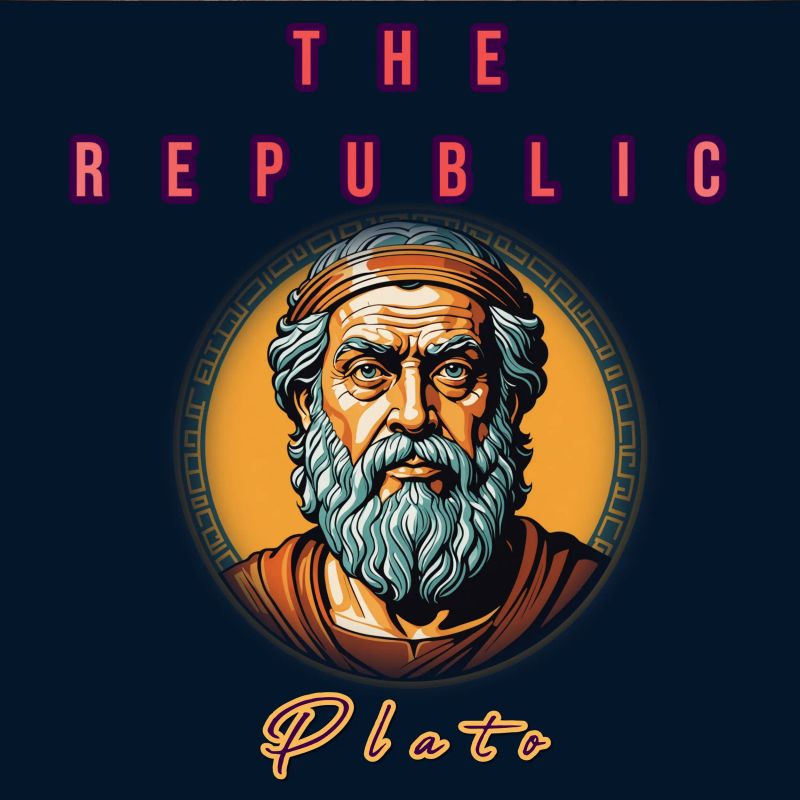
Length12h 21m
About this audiobook
The Republic (Greek: Politeia) is a Socratic dialogue, written by Plato around 380 BC, concerning the definition of (justice), the order and character of the just city-state and the just man, reason by which ancient readers used the name On Justice as an alternative title (not to be confused with the spurious dialogue also titled On Justice). The dramatic date of the dialogue has been much debated and though it must take place some time during the Peloponnesian War, "there would be jarring anachronisms if any of the candidate specific dates between 432 and 404 were assigned". It is Plato's best-known work and has proven to be one of the most intellectually and historically influential works of philosophy and political theory. In it, Socrates along with various Athenians and foreigners discuss the meaning of justice and examine whether or not the just man is happier than the unjust man by considering a series of different cities coming into existence "in speech", culminating in a city (Kallipolis) ruled by philosopher-kings; and by examining the nature of existing regimes. The participants also discuss the theory of forms, the immortality of the soul, and the roles of the philosopher and of poetry in society. Short Summary (Epilogue): X.1—X.8. 595a—608b. Rejection of Mimetic Art X.9—X.11. 608c—612a. Immortality of the Soul X.12. 612a—613e. Rewards of Justice in Life X.13—X.16. 613e—621d. Judgment of the Dead The paradigm of the city — the idea of the Good, the Agathon — has manifold historical embodiments, undertaken by those who have seen the Agathon, and are ordered via the vision. The centre piece of the Republic, Part II, nos. 2–3, discusses the rule of the philosopher, and the vision of the Agathon with the allegory of the cave, which is clarified in the theory of forms. The centre piece is preceded and followed by the discussion of the means that will secure a well-ordered polis (City). Part II, no. 1, concerns marriage, the community of people and goods for the Guardians, and the restraints on warfare among the Hellenes. It describes a partially communistic polis. Part II, no. 4, deals with the philosophical education of the rulers who will preserve the order and character of the city-state. In Part II, the Embodiment of the Idea, is preceded by the establishment of the economic and social orders of a polis (Part I), followed by an analysis (Part III) of the decline the order must traverse. The three parts compose the main body of the dialogues, with their discussions of the "paradigm", its embodiment, its genesis, and its decline. The Introduction and the Conclusion are the frame for the body of the Republic. The discussion of right order is occasioned by the questions: "Is Justice better than Injustice?" and "Will an Unjust man fare better than a Just man?" The introductory question is balanced by the concluding answer: "Justice is preferable to Injustice". In turn, the foregoing are framed with the Prologue (Book I) and the Epilogue (Book X). The prologue is a short dialogue about the common public doxai (opinions) about "Justice". Based upon faith, and not reason, the Epilogue describes the new arts and the immortality of the soul.
Audiobook details
Rating★★★★ 4.1 (269.3K)
Includes Goodreads, LibraryThing, Amazon, StoryGraph
GenrePhilosophy
Length12 hrs 21 mins
Narrated byXYZ Voices
FormatAudiobook
Publish dateAug 15, 2025
LanguageEnglish
Table of contents
1Book 1, Pt. 1
12Book 6, Pt. 1
2Book 1, Pt. 2
13Book 6, Pt. 2
3Book 2, Pt. 1
14Book 7, Pt. 1
4Book 2, Pt. 2
15Book 7, Pt. 2
5Book 3, Pt. 1
16Book 8, Pt. 1
Show all chaptersShow less
6Book 3, Pt. 2
17Book 8, Pt. 2
7Book 4, Pt. 1
18Book 9, Pt. 1
8Book 4, Pt. 2
19Book 9, Pt. 2
9Book 5, Pt. 1
20Book 10, Pt. 1
10Book 5, Pt. 2
21Book 10, Pt. 2
11Book 5, Pt. 3
ApologyPlato1h 16m4.3 (125.2K)$10 · $0.00
The Real Socrates (Annotated)Plato, Xenophon, Samuel Griswold Goodrich16h 22m$2 · $0.00
The Complete Works of Plato (Annotated)Plato141h 48m4.5 (3.1K)$2 · $0.00
The Complete Works of PlatoPlato140h 35m4.5 (13.4K)$1 · $0.00
SymposiumPlato4h 52m4.2 (110.7K)$1 · $0.00
MenexenusPlato2h 20m3.5 (895)$2 · $0.00
Platoons Phaidoon : Uit het Grieksch overgebrachtPlato3h 13m$1 · $0.00
GorgiasPlato7h 47m4.2 (29.3K)$2 · $0.00
THE COMPLETE WORKS OF PLATOPlato141h 25m4.5 (15.3K)$1 · $0.00
MenoPlato1h 29m4.1 (12.5K)$2 · $0.00
LachesPlato2h 30m3.8 (1.6K)$2 · $0.00
PhilebusPlato5h 19m4.1 (1.4K)$1 · $0.00
CritoPlato1h 58m4.1 (17.6K)$1 · $0.00
Lesser HippiasPlato1h 5m3.7 (1.1K)$2 · $0.00

The Ultimate Atlantis Collection (Six-Book Edition)Plato, Francis Bacon, Ignatius Donnelly, C. J. Cutcliffe Hyne, William Scott-Elliot39h 20m3.6 (19)$1.99 · $0.00

The Ultimate Atlantis Collection (Six-Book Edition)Plato, Francis Bacon, Ignatius Donnelly, C. J. Cutcliffe Hyne, William Scott-Elliot39h 8m$1 · $0.00
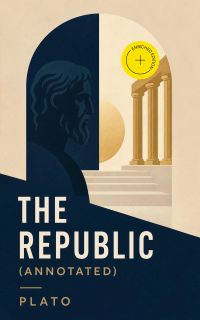
The Republic (Annotated)Plato25h 27m4.1 (261K)$2 · $0.00

Alcibiades IIPlato0m3.6 (296)$1 · $0.00
SymposiumPlato2h 16m4.2 (73.1K)$2 · $0.00
ParmenidesPlato5h 33m4.1 (5.5K)$2 · $0.00
That Bird Has My WingsJarvis Jay Masters9h 49m4.4 (13.7K)$29 · $0.00

Tâo Teh KingLaozi2h 34m4.4 (230.9K)$2 · $0.00
SymposiumPlato3h 26m4.4 (97.9K)$1.20 · $0.00

Buddhist Boot CampTimber Hawkeye2h 39m4.4 (8.4K)$18 · $0.00
Enchiridion & The Discourses of Epictetus (Annotated)Arrian Epictetus18h 9m4.4 (3.5K)$2 · $0.00
The Meditations of the Emperor Marcus Aurelius AntoninusEmperor of Rome Marcus Aurelius5h 41m4.4 (1.8M)$1 · $0.00
Crime and PunishmentFyodor Dostoevsky23h 11m4.4 (1.3M)$12 · $0.00
MeditationsMarcus Aurelius5h 52m4.4 (433.7K)$1 · $0.00
Everyday DharmaSuneel Gupta5h 2m4.5 (761)$20 · $0.00

The Joyful Wisdom ("La Gaya Scienza")Friedrich Wilhelm Nietzsche11h 37m4.4 (26.6K)$1 · $0.00
The Art of LivingEpictetus, Sharon Lebell3h 16m4.4 (50.1K)$18 · $0.00
MeditationsEmperor Of Rome Marcus Aurelius7h 23m4.3 (477.5K)$1.20 · $0.00
The Imitation of ChristThomas à Kempis6h 27m4.3 (84.6K)$21 · $0.00

Sadhana: the realisation of lifeRabindranath Tagore3h 49m4.4 (8.6K)$6 · $0.00
SapiensYuval Noah Harari15h 18m4.3 (1.4M) · 1205$33 · $0.00
You BelongSebene Selassie8h 35m4.4 (2.7K)$26 · $0.00
The Song Celestial; Or, Bhagavad-Gîtâ (from the Mahâbhârata)Anonymous2h 18m4.4 (3.2K)$2 · $0.00
The KybalionThe Three Initiates3h 47m4.3 (58.7K)$20 · $0.00

Chuang Tzu: Mystic, Moralist, and Social ReformerZhuangzi14h 42m4.4 (1.2K)$1 · $0.00
High-RisersBen Austen13h 33m4.4 (2.8K)$33 · $0.00
You may also like
REPUCLICPLATO15h 49m4.1 (260.6K)Free
The RepublicPlato12h 38m4.2 (255.2K)$23
The Children’s StoryJames Clavell36m4.4 (3.6K)$4

The Price You Pay for CollegeRon Lieber12h 3m4.2 (5.5K)$29 · $0.00
Knowledge and DecisionsThomas Sowell20h 53m4.5 (2.8K)$30
The RepublicPlato13h 29m4.1 (283K)$4 · $0.00
TimaeusPlato3h 25m4.0 (4.3K)$1.80 · $0.00

History of European Morals From Augustus to Charlemagne (Vol. 1&2)William Edward Hartpole Lecky31h 49m4.3 (339)$2 · $0.00
The ethics of rhetoricRichard M. Weaver9h 30m4.3 (277)$1 · $0.00
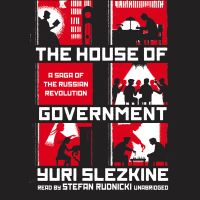
The House of GovernmentYuri Slezkine45h 5m4.3 (1.6K)$30
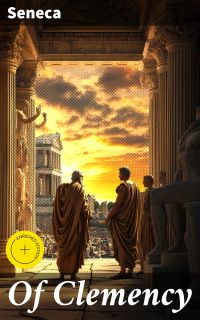
Of ClemencySeneca2h 46m4.1 (369)$2 · $0.00
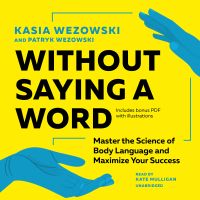
Without Saying a WordKasia Wezowski, Patryk Wezowski4h 44m3.9 (1K)$20

The Beast of Buckingham PalaceDavid Walliams5h 22m4.3 (31.3K)$24 · $0.00

Reflections on the Revolution in FranceEdmund Burke12h 18m4.0 (17.2K)$1 · $0.00
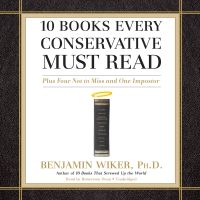
10 Books Every Conservative Must ReadBenjamin Wiker PhD10h 34m4.2 (827)$20 · $0.00
The Abolition of ManC. S. Lewis1h 36m4.3 (56.3K)$16 · $0.00
The RepublicPlato21h 23m4.2 (260K)$1.80 · $0.00
The RepublicPlato23h 51m4.1 (263K)$2.30

The Big SortBill Bishop12h 31m3.8 (2.4K)$33 · $0.00

The Conquest of Plassans (La Conquête de Plassans)Émile Zola16h 37m4.0 (3.1K)$2 · $0.00