
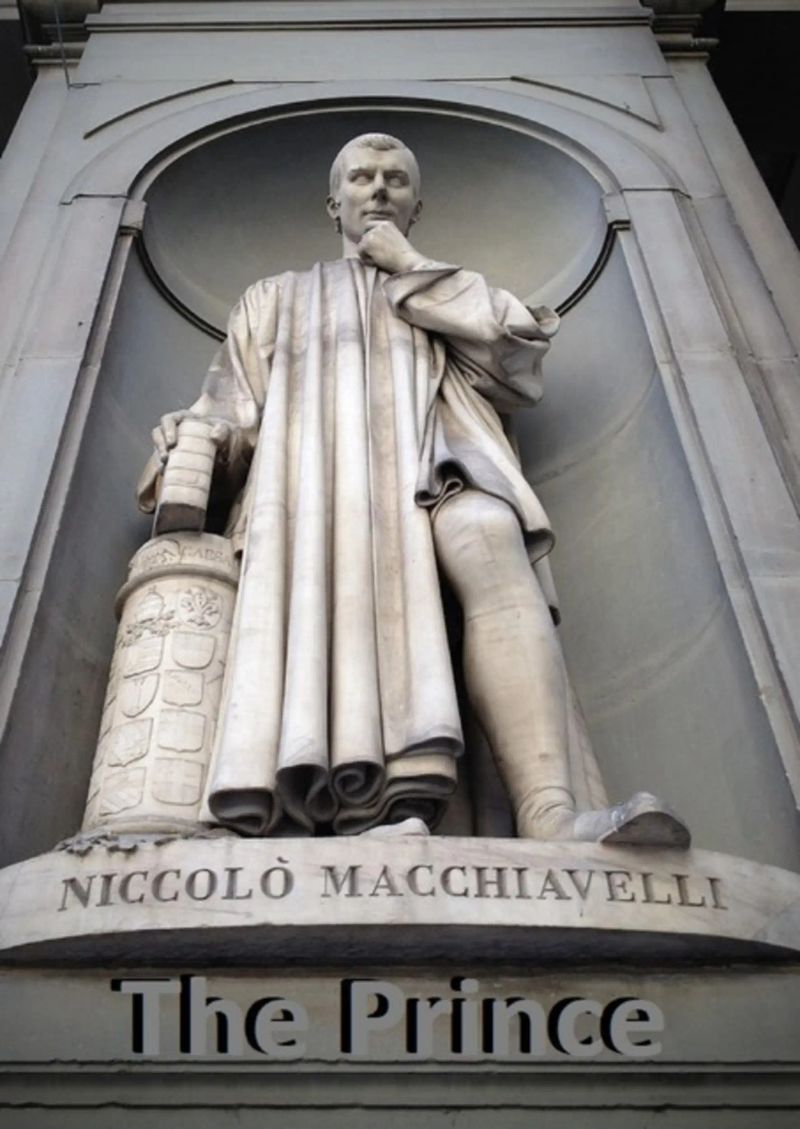


Length5h 38m
About this audiobook
The Prince is a 16th-century political treatise by the Italian diplomat and political theorist Niccolò Machiavelli. From correspondence a version appears to have been distributed in 1513, using a Latin title, De Principatibus (About Principalities). However, the printed version was not published until 1532, five years after Machiavelli s death. This was done with the permission of the Medici pope Clement VII, but long before then, in fact since the first appearance of the Prince in manuscript, controversy had swirled about his writings. Although it was written as if it were a traditional work in the mirrors for princes style, it is generally agreed that it was especially innovative. This is only partly because it was written in the vernacular Italian rather than Latin, a practice which had become increasingly popular since the publication of Dante s Divine Comedy and other works of Renaissance literature.The Prince is sometimes claimed to be one of the first works of modern philosophy, especially modern political philosophy, in which the effective truth is taken to be more important than any abstract ideal. It was also in direct conflict with the dominant Catholic and scholastic doctrines of the time concerning how to consider politics and ethics.Although it is relatively short, the treatise is the most remembered of Machiavelli s works and the one most responsible for bringing the word Machiavellian into usage as a pejorative. It also helped make Old Nick an English term for the devil, and even contributed to the modern negative connotations of the words politics and politician in western countries. In terms of subject matter it overlaps with the much longer Discourses on Livy, which was written a few years later. In its use of near-contemporary Italians as examples of people who perpetrated criminal deeds for politics, another lesser-known work by Machiavelli which The Prince has been compared to is the Life of Castruccio Castracani.The descriptions within The Prince have the general theme of accepting that the aims of princes-such as glory and survival-can justify the use of immoral means to achieve those ends. He who neglects what is done for what ought to be done, sooner effects his ruin than his preservation. -Machiavelli, Chapter 15
Audiobook details
Rating★★★★ 4.0 (469.2K)
Includes Goodreads, LibraryThing, Amazon, StoryGraph
GenrePolitics and Government, Psychology
Length5 hrs 38 mins
Narrated byListen with 1,000+ voices
FormateBook with Audio
Publish dateFeb 25, 2020
LanguageEnglish
Table of contents
1Nicolo Machiavelli
26cannot
2itself of
27fault, but
3five capital errors
28the Orsini and
4force
29that pretext
5their
30it
Show all chaptersShow less
6the
31CHAPTER VIII. CONCERNING THOSE WHO HAVE OBTAINED A PRINCIPALITY BY WICKEDNESS
7the germs of her renaissance among the nations of Europe.
32he
8contemporary
33for
9Correspondence
34CHAPTER IX. CONCERNING A CIVIL PRINCIPALITY
10CHAPTER III. CONCERNING MIXED PRINCIPALITIES
35can
11some difference
36the cruelty of
12in mind
37restrain
13in
38through
14for
39never
15friends;
40themselves, yet when
16to which
41in
17for
42if formerly
18sends
43delayed
19there
44recently
20those
45the
21Romans
46from
22cities or
47better
23least on
48than war and
24the
49that
25and
50it again, especially as
More from Niccolò Machiavelli


The Gulag Archipelago Volume 3Aleksandr I. Solzhenitsyn21h 56m4.7 (8.9K)$46 · $0.00
MotherlandJulia Ioffe17h 52m4.7 (2.5K)$40 · $0.00

HostageEli Sharabi5h 25m4.6 (10.8K)$24 · $0.00

KrantikariSanjeev Sanyal11h 44m4.6 (1.3K)$16 · $0.00

Unbroken Bonds of BattleJohnny Joey Jones8h 31m4.6 (2.6K)$8 · $0.00
On Democracies and Death CultsDouglas Murray10h 38m4.6 (6.5K)$29 · $0.00
Balcony Over Jerusalem: A Middle East Memoir - Israel, Palestine and BeyondJohn Lyons12h 37m4.6 (1.4K)$33 · $0.00
RiggedMollie Hemingway12h 48m4.6 (4.2K)$23 · $0.00

SledgehammerDavid Friedman8h 21m4.7 (589)$26 · $0.00
Citizenship in a Republic (Annotated)Theodore Roosevelt2h 44m4.6 (1.4K)$2 · $0.00

No EscapeNury Turkel9h 30m4.6 (809)$28 · $0.00

Always FaithfulThomas Schueman, Zainullah Zaki12h 12m4.6 (977)$29 · $0.00

UnthinkableJamie Raskin15h 8m4.5 (9.3K)$8 · $0.00

My Fourth Time, We DrownedSally Hayden13h 59m4.6 (2.9K)$23 · $0.00

A Revolution of Common SenseScott Jennings9h 29m4.6 (528)$29 · $0.00
Statement From the Dock at the Rivonia TrialNelson Mandela2h 18m4.6 (1.3K)$1 · $0.00

Lessons from the EdgeMarie Yovanovitch17h 11m4.5 (5.9K)$40 · $0.00

To Rescue the American SpiritBret Baier10h 12m4.5 (2.7K)$8 · $0.00

StonewalledSharyl Attkisson15h 19m4.5 (4.3K)$33 · $0.00
The World According to Orwell: 1984 & Animal FarmGeorge Orwell15h 42m4.6 (1.1K)$1 · $0.00
What to Make of a LifeJim Collins13h 31m4.4 (794)$33 · $0.00

Invisible StormJason Kander6h 48m4.7 (3.2K)$24 · $0.00

I Am The StormJanice Dean9h4.6 (1.5K)$8 · $0.00
On Democracies and Death CultsDouglas Murray10h 38m4.6 (6.5K)$29 · $0.00

TerraformPropaganda5h 39m4.7 (594)$24 · $0.00

Southern Horrors: Lynch Law in All Its Phases (Annotated)Ida B. Wells-Barnett2h 44m4.6 (1.3K)$2 · $0.00
Hour of the HeartIrvin D. Yalom, Benjamin Yalom8h 19m4.6 (2.3K)$26 · $0.00

Braving the TruthRachel Held Evans11h 31m4.7 (359)$29 · $0.00
Level UpRob Dial7h 42m4.6 (3.3K)$26 · $0.00

As a JewSarah Hurwitz8h 36m4.6 (1.2K)$26 · $0.00
Saint Joan (Annotated)George Bernard Shaw6h 20m4.6 (1.2K)$1.20 · $0.00

Burn the HaystackJennie Young, PhD9h 30m4.6 (543)$29 · $0.00

Woman and the New Race (Annotated)Margaret Sanger6h 30m4.6 (1K)$0.99 · $0.00

Good InsideBecky Kennedy9h 55m4.5 (59.3K)$29 · $0.00

The Mis-Education of the NegroCarter Godwin Woodson5h 4m4.5 (29.4K)$1.20 · $0.00

Du Bois: EssaysW.E.B. Du Bois6h 22m4.6 (1.5K)$1 · $0.00

The North American Indian (Illustrated Edition)Edward S. Curtis, Frederick Webb Hodge5h 59m4.6 (1.4K)$2 · $0.00

Valley of the BirdtailAndrew Stobo Sniderman, Douglas Sanderson10h 1m4.6 (2.4K)$29 · $0.00

Lies My Therapist Told MeGreg E. Gifford9h 3m4.6 (503)$29 · $0.00

Disturbed in Their NestsAlephonsion Deng, Judy A. Bernstein11h 22m4.6 (595)$23 · $0.00
You may also like

The PrinceNiccolò Machiavelli3h 24m4.0 (451.2K)$3 · $0.00

The Histories & The AnnalsTacitus29h 25m4.3 (1.5K)$1.99 · $0.00

The PrinceNiccolo Machiavelli3h 27m4.0 (475.6K)$16 · $0.00

Rousseau and RevolutionWill Durant, Ariel Durant57h 17m4.4 (4.6K)$30

Napoleon's Maxims of War (Annotated)Napoleon Bonaparte4h 44m4.2 (2.3K)$0.99 · $0.00

The Life of Sir Thomas MoreWilliam Roper, Henri Brémond9h 20m4.1 (1.6K)$2 · $0.00

The PrinceNiccolò Machiavelli5h 10m4.0 (440.8K)$2.30

THE ANNALSTacitus19h 7m4.2 (15.2K)$1.99 · $0.00
CitizensSimon Schama36h 48m4.1 (9K)$40
Discourses on the First Decade of Titus LiviusNiccolò Machiavelli15h 3m4.2 (11.3K)$2 · $0.00
The PrinceNicolo Machiavelli5h 19m4.0 (461.4K)$7 · $0.00

The History of King George the ThirdHorace Walpole40h 25m$1.99 · $0.00

Memoirs of the Duchesse de Dino (Afterwards Duchesse de Talleyrand et de Sagan) , 1836-1840Dorothée duchesse de Dino18h 34m$2 · $0.00

Memoirs of the Court of Queen ElizabethLucy Aikin30h 43m3.5 (54)$2 · $0.00

The History of England: From Elizabeth to James IDavid Hume28h 13m4.4 (45)$2 · $0.00

The Art of War - Book Set (Annotated)Napoleon Bonaparte, Ernesto Che Guevara, US Marine Corps, Sun Tzu, Wu Qi, Confucius, Niccolò Machiavelli, Ardant du Picq, Kautilya, Carl von Clausewitz, Publius Vegetius Renatus, Sextus Julius Frontinus113h 12m$3 · $0.00

The History of King George the ThirdHorace Walpole51h 26m$1 · $0.00

A Character of King Charles the Second (Annotated)George Savile Marquis of Halifax3h 23m$1.99 · $0.00
Arthashastra (Annotated)Kautilya20h 6m4.3 (115)$2 · $0.00

The Politically Incorrect Guide to the Middle EastMartin Sieff6h 34m3.5 (350)$14