
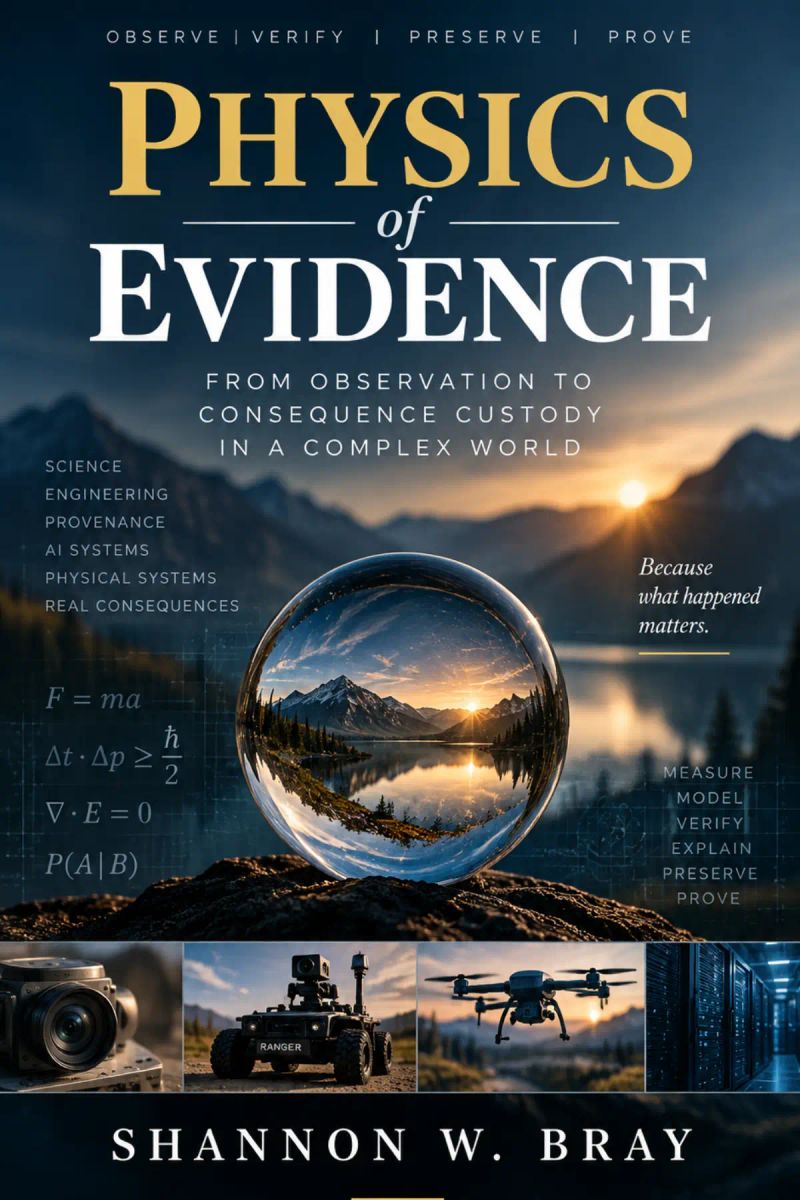


Length6h 10m
About this audiobook
The Physics of Evidence explores a critical question for the age of AI and autonomous machines: When software causes change in the physical world, how do we prove what actually happened?
Shannon W. Bray builds from physics fundamentals—measurement, uncertainty, motion, force, energy, waves, electricity, optics, and sensors—into robotics, cyber-physical systems, AI agents, and independent verification. Through practical examples, the course introduces Evidence Architecture, a framework for preserving the chain from observation and authority through action, physical consequence, custody, and verification.
Physics constrains what could have happened. Measurement establishes what was observed. Evidence Architecture preserves how we know. Independent verification tests what can actually be proved.
Ultimately, the audiobook asks one deceptively simple question:
What actually happened, and how do we know?
Audiobook details
Rating★★★★ 4.3 (11)
Includes Amazon
GenreEducation and Learning, Science and Nature
Length6 hrs 10 mins
Narrated byListen with 1,000+ voices
FormateBook with Audio
Publish dateSep 14, 2026
LanguageEnglish
Table of contents
1The Physics of Evidence
2Chapter 1: The Robot Says It Moved
3Chapter 2: Every Measurement Has a Boundary
4Chapter 3: The Clock and the Coordinate Frame Can Both Lie to You
5Chapter 4: A Command Is Not a Displacement
Show all chaptersShow less
6Chapter 5: Which Way Is Forward?
7Chapter 6: Where Software Becomes Force
8Chapter 7: Follow the Energy
9Chapter 8: The Evidence Hidden in an Impulse
10Chapter 9: Rotation Changes the Evidence Problem
11Chapter 10: When the Sensor Mount Becomes Part of the Event
12Chapter 11: Pressure Is Measured. Depth Is Inferred.
13Chapter 12: Resonance Can Tell the Truth and Still Mislead You
14Chapter 13: Listening for Distance
15Chapter 14: Heat Leaves Evidence
16Chapter 15: Voltage Is Not Motion
17Chapter 16: Did the System Actually Receive the Energy?
18Chapter 17: From Current to Torque
19Chapter 18: The Radio Message Was Authentic. Was It Current?
20Chapter 19: A Camera Does Not See Truth
21Chapter 20: How Reality Becomes a Number
22Chapter 21: When Several Wrong Sensors Agree
23Chapter 22: The AI Is an Actor, Not the Sole Historian
24Chapter 23: Intended, Requested, Attempted, Executed, Achieved
25Chapter 24: Consequence Custody
26Chapter 25: When the Logs and Reality Disagree
27Chapter 26: Design the Evidence Before the Experiment
28Chapter 27: Instrument the Entire Actuator Chain
29Chapter 28: Mobile Evidence Lives in Six Degrees of Freedom
30Chapter 29: Two Sensors Are Not Necessarily Two Witnesses
31Chapter 30: Build the Evidence Object Without Changing the Evidence
32Chapter 31: What Can the Independent Verifier Actually Say?
33Chapter 32: Prove What the Machine Did
34Chapter 33: What Actually Happened, and How Do We Know?
More from Shannon W. Bray
Lantern Protocol: VRX Physics LaboratoryShannon W. Bray6h 4mFree

The First CipherShannon W. Bray8h 6m Only with Ultra
Evidence ArchitectureShannon W. Bray16h 25m5.0 (1)$4.99 · $0.00

Book 1Shannon W. Bray5h 40m3.9 (19)$4.99

Silver BulletShannon W. Bray5h 32m4.4 (18)$9.99
The Living AnchorShannon W. Bray8h 37mFree

Liberty UnleashedShannon W Bray2h 3mFree
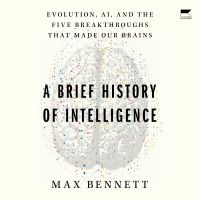
A Brief History of IntelligenceMax S. Bennett12h 18m4.6 (6.6K)$29 · $0.00

HomeschooledStefan Merrill Block7h 10m3.6 (18.5K)$28 · $0.00

EducationEllen G. White9h 41m4.6 (1.5K)$2 · $0.00

Parents and Children (Annotated)Charlotte Mason9h 23m4.6 (988)$2 · $0.00

Children Under FireJohn Woodrow Cox10h 17m4.5 (1.6K)$29 · $0.00

The State Must ProvideAdam Harris7h 15m4.5 (775)$24 · $0.00

The Call of the Wild and FreeAinsley Arment9h 7m4.4 (21.2K)$29 · $0.00
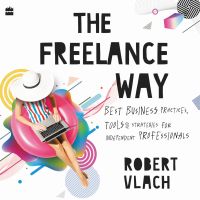
The Freelance WayRobert Vlach19h 48m4.5 (528)$40 · $0.00
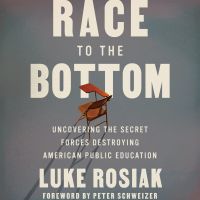
Race to the BottomLuke Rosiak9h 20m4.5 (600)$29 · $0.00

They Came for the SchoolsMike Hixenbaugh9h 5m4.5 (2.6K)$8 · $0.00

Find Me UnafraidKennedy Odede, Jessica Posner11h 11m4.5 (2.7K)$29 · $0.00

Asking for ItKate Harding8h 55m4.4 (5.3K)$20 · $0.00
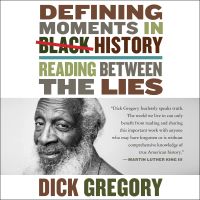
Defining Moments in Black HistoryDick Gregory7h 37m4.4 (6K)$26 · $0.00
The Emerald Tablets of Thoth the AtlanteanMaurice Doreal3h 4m4.4 (8.8K)$6 · $0.00

Learning AmericaLuma Mufleh6h 37m4.4 (564)$24 · $0.00
Math-ishJo Boaler7h 21m4.4 (588)$24 · $0.00
It Worked For MeColin Powell7h 42m4.3 (9.8K)$26 · $0.00

Little SoldiersLenora Chu11h 30m4.3 (3.1K)$29 · $0.00

Financial FeministTori Dunlap8h 3m4.2 (22.2K)$8 · $0.00

Grammar-land; Or, Grammar in Fun for the Children of Schoolroom-shireM. L. Nesbitt2h 36m4.4 (487)$1 · $0.00
A Brief History of IntelligenceMax S. Bennett12h 18m4.6 (6.6K)$29 · $0.00
The Story of BirdsSteve Brusatte11h 49m4.6 (401)$29 · $0.00

Craig & FredCraig Grossi8h 6m4.5 (9.6K)$26 · $0.00
Celebrating BirdsNatalia Rojas, Ana Maria Martinez6h 47m4.6 (330)$24 · $0.00

Saving JemimaJulie Zickefoose4h 59m4.5 (749)$20 · $0.00

Will's Red CoatTom Ryan8h 23m4.5 (2.3K)$26 · $0.00
Of Time and TurtlesSy Montgomery10h 34m4.5 (5K)$29 · $0.00

Zen and the Art of Saving the PlanetThich Nhat Hanh9h 20m4.5 (3.9K)$29 · $0.00
BLACK BEAUTY (With Original Illustrations)Anna Sewell7h 31m4.5 (1.3K)$1.99 · $0.00

Bottle of LiesKatherine Eban14h 25m4.4 (12K)$33 · $0.00
IngrainedCallum Robinson8h 10m4.5 (1.1K)$26 · $0.00

The Lion Tracker's Guide To LifeBoyd Varty3h 1m4.4 (4.8K)$18 · $0.00

Born for LoveBruce D. Perry, Maia Szalavitz11h 42m4.4 (4K)$29 · $0.00

The Mountains of California (With Original Drawings & Photographs) (Annotated)John Muir11h 35m4.5 (1.1K)$2 · $0.00

The New GuysMeredith Bagby16h 50m4.4 (1.2K)$40 · $0.00
Blue PasturesMary Oliver3h 23m4.4 (3.8K)$18 · $0.00
The Rise and Reign of the MammalsSteve Brusatte13h 26m4.4 (11.1K)$33 · $0.00
VaccinatedPaul A. Offit8h 30m4.4 (3.7K)$26 · $0.00

The Light EatersZoë Schlanger10h 57m4.4 (22.8K)$29 · $0.00

Where the Lost Dogs GoSusannah Charleson11h 7m4.5 (699)$23 · $0.00
You may also like
ConsciousAnnaka Harris2h 23m4.0 (11.5K)$16 · $0.00
AutonomyLawrence D. Burns, Christopher Shulgan11h 21m4.1 (1.1K)$29 · $0.00
Robot RightsDavid J. Gunkel10h 58m4.1 (122)$23 · $0.00
Tech of TomorrowJulie Murray18m$3
Artificial Intelligence for Workflow AutomationTheo Riven3h 25m$5
Build Intelligent SystemsNathan Underwood7h 15m$5 · $0.00
Giant Brains, or, Machines That ThinkEdmund Callis Berkeley9h 21m$2.30
Build AI Agents with FlowiseCyrus Fontaine8h 1m$5
Eft Investing: A Comprehensive Guide to Researching and Investing (The Intelligent Investor's Guide to Using Free Online Stock Screeners to Find Winning Stocks)Matthew Nagel2h 7m$3.50 · $0.00
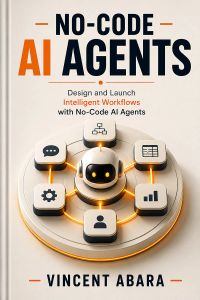
No-Code AI AgentsVincent Abara7h 37m$5 · $0.00

Quantum Mechanics for Applied NanotechnologyMarcus Lawn18h 20m$10

Introduction to AI and Machine LearningDisrupt.co.nz1h 23m$1.20 · $0.00
I, Robot by Isaac Asimov (Book Analysis)Bright Summaries27m$29 · $0.00
How to Build an AndroidDavid F. Dufty7h 38m3.7 (361)$17 · $0.00

Automate Real Work with AILena Devlin7h 30m$5 · $0.00
In Our Own ImageGeorge Zarkadakis13h 48m3.8 (341)$23 · $0.00

Build with Agentic AIDaria Quill7h 21m$5

Artificial IntelligenceAxel Mammitzsch53m$10 · $0.00

Boogie Boy and the Blue Glow MysteryCaterina Christakos15m$4.50 · $0.00
Love and Sex with RobotsDavid Levy11h 28m3.4 (512)$21 · $0.00