
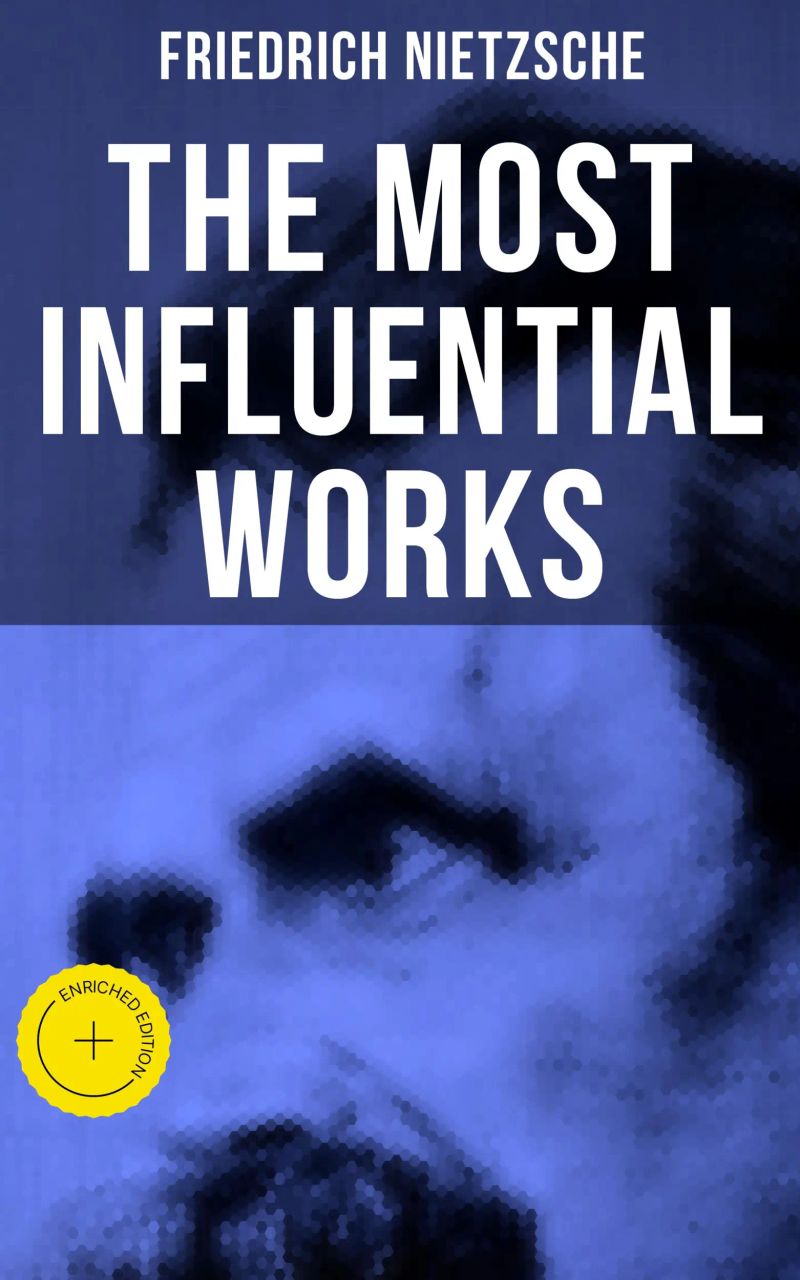
The Most Influential Works of Friedrich Nietzsche
Enriched edition. Thus Spoke Zarathustra, Beyond Good and Evil, The Will to Power, Antichrist, Ecce Homo…By Friedrich Nietzsche


Length93h 31m
About this audiobook
In 'The Most Influential Works of Friedrich Nietzsche,' readers are introduced to a selection of Nietzsche's most impactful writings, offering insight into the philosophical ideas that have shaped modern thought. Nietzsche's literary style is characterized by his use of poetic language, aphorisms, and provocative ideas that challenge traditional values and beliefs. This collection provides a comprehensive overview of his work, exploring themes such as the will to power, eternal recurrence, and the concept of the ubermensch. Friedrich Nietzsche, a German philosopher and cultural critic, was known for his critiques of morality, religion, and Western philosophy. His personal struggles and experiences, including his rejection of traditional Christianity, greatly influenced his philosophical writings. Nietzsche's works continue to be studied and debated by scholars around the world for their profound impact on existentialism and postmodern thought. I highly recommend 'The Most Influential Works of Friedrich Nietzsche' to readers interested in delving into the profound and thought-provoking ideas of one of the most influential philosophers of the 19th century. This collection serves as a valuable resource for understanding Nietzsche's philosophical legacy and its relevance to contemporary discourse.
In this enriched edition, we have carefully created added value for your reading experience:
- A comprehensive Introduction outlines these selected works' unifying features, themes, or stylistic evolutions.
- The Author Biography highlights personal milestones and literary influences that shape the entire body of writing.
- A Historical Context section situates the works in their broader era—social currents, cultural trends, and key events that underpin their creation.
- A concise Synopsis (Selection) offers an accessible overview of the included texts, helping readers navigate plotlines and main ideas without revealing critical twists.
- A unified Analysis examines recurring motifs and stylistic hallmarks across the collection, tying the stories together while spotlighting the different work's strengths.
- Reflection questions inspire deeper contemplation of the author's overarching message, inviting readers to draw connections among different texts and relate them to modern contexts.
- Lastly, our hand‐picked Memorable Quotes distill pivotal lines and turning points, serving as touchstones for the collection's central themes.
Audiobook details
Rating★★★★ 4.4 (118)
Includes Amazon, Goodreads
GenrePhilosophy
Length93 hrs 31 mins
Narrated byListen with 1,000+ voices
FormateBook with Audio
Publish dateOct 6, 2017
LanguageEnglish
Table of contents
1The Most Influential Works of Friedrich Nietzsche
2Introduction
3Author Biography
4Historical Context
5Synopsis (Selection)
Show all chaptersShow less
6Beyond Good and Evil
7Chapter I. Prejudices of Philosophers
8Chapter II. The Free Spirit
9Chapter III. The Religious Mood
10Chapter IV. Apophthegms and Interludes
11Chapter V. The Natural History of Morals
12Chapter VI. We Scholars
13Chapter VII. Our Virtues
14Chapter VIII. Peoples and Countries
15Chapter IX. What is Noble?
16The Genealogy of Morals (pt. 1)
17The Genealogy of Morals (pt. 2)
18The Genealogy of Morals (pt. 3)
19The Birth of Tragedy or, Hellenism and Pessimism (pt. 1)
20The Birth of Tragedy or, Hellenism and Pessimism (pt. 2)
21The Birth of Tragedy or, Hellenism and Pessimism (pt. 3)
22The Antichrist (pt. 1)
23The Antichrist (pt. 2)
24Thus Spoke Zarathustra: A Book for All and None
25First Part. Zarathustra’s Discourses
26Second Part.
27Third Part. (pt. 1)
28Third Part. (pt. 2)
29Fourth and Last Part. (pt. 1)
30Fourth and Last Part. (pt. 2)
31Appendix
32The Case of Wagner
33The Twilight of the Idols (pt. 1)
34The Twilight of the Idols (pt. 2)
35The Will to Power (Vol. 1&2)
36Volume I
37Book I. European Nihilism
38A Plan
39I. Nihilism
40II. Concerning the History of European Nihilism
41Book II. Criticism of the Highest Values that have Prevailed Hitherto
42I. Criticism of Religion
433. Christian Ideals
44II. A Criticism of Morality
455. The Moral Ideal
46III. Criticism of Philosophy
47Volume II
48Book III. The Principles of a New Valuation
49I. The Will to Power in Science (pt. 1)
50I. The Will to Power in Science (pt. 2)

Sehnsucht nach Italien: Die 60 schönsten Italien-GedichteFriedrich Nietzsche, Georg Trakl, J.W. Goethe, Rainer Maria Rilke, Stefan Zweig, Adolf Friedrich von Schack, Alfred de Musset, Alfred Henschke, Anastasius Grün, Franz Grillparzer, Francesco Petrarca2h 2m$1 · $0.00

Ejercicios Resueltos De Sistemas DigitalesFriedrich Nietzsche5h 10m$15 · $0.00

Die Geburt der Tragödie (Kommentiert)Friedrich Nietzsche7h 20m4.4 (133)$1 · $0.00

Le Gai Savoir (Annoté)Friedrich Nietzsche12h 20m$1.99 · $0.00
Thus Spoke Zarathustra, Beyond Good and Evil, Hellenism & Pessimism (Annotated)Friedrich Nietzsche27h 36m$2 · $0.00
BEYOND GOOD AND EVIL - Prelude to a Philosophy of the Future (Annotated)Friedrich Nietzsche8h 46m4.2 (197.2K)$2 · $0.00
Ecce homo (Kommentiert)Friedrich Nietzsche5h 34m4.3 (44.5K)$1 · $0.00

Jenseits von Gut und Böse (Kommentiert)Friedrich Nietzsche9h 28m4.2 (134.6K)$1 · $0.00

Menschliches, Allzumenschliches (Band 1&2) (Kommentiert)Friedrich Nietzsche22h 46m4.3 (11.1K)$1 · $0.00

The Antichrist & The Twilight of the Idols (Modern Philosophy Series) (Annotated)Friedrich Nietzsche19h 45m$2 · $0.00

Götzen-Dämmerung oder Wie man mit dem Hammer philosophiert (Kommentiert)Friedrich Nietzsche5h 1m4.3 (1.4K)$1 · $0.00

Der Antichrist (Kommentiert)Friedrich Nietzsche4h 51m4.1 (2.4K)$1 · $0.00

Morgenröthe: Gedanken über die moralischen Vorurteile (Kommentiert)Friedrich Nietzsche12h 30m4.2 (2.4K)$1 · $0.00

THE GENEALOGY OF MORALS - Including Ecce Homo Autobiography & Nietzsche's Personal Letters (Annotated)Friedrich Nietzsche18h 19m$2 · $0.00

BEYOND GOOD AND EVIL (Modern Philosophy Series) (Annotated)Friedrich Nietzsche8h 39m$2 · $0.00
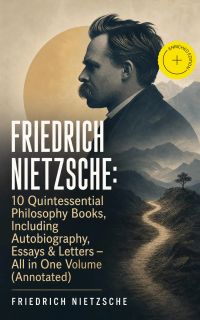
FRIEDRICH NIETZSCHE: 10 Quintessential Philosophy Books, Including Autobiography, Essays & Letters – All in One Volume (Annotated)Friedrich Nietzsche93h 8m4.5 (14)$3 · $0.00

THUS SPOKE ZARATHUSTRA - A Book for All and None (World Classics Series) (Annotated)Friedrich Nietzsche13h 7m$2 · $0.00

Vom Nutzen und Nachteil der Historie für das LebenFriedrich Nietzsche3h 14m4.3 (2.9K)$12 · $0.00

Thus Spoke ZarathustraFriedrich Nietzsche14h 29m4.3 (209.4K)$1 · $0.00

EL ANTICRISTOFriedrich Nietzsche3h 5m4.1 (40.6K)$1 · $0.00
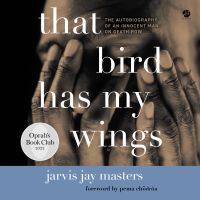
That Bird Has My WingsJarvis Jay Masters9h 49m4.4 (13.7K)$29 · $0.00

Tâo Teh KingLaozi2h 34m4.4 (230.9K)$2 · $0.00
SymposiumPlato3h 26m4.4 (97.9K)$1.20 · $0.00

Buddhist Boot CampTimber Hawkeye2h 39m4.4 (8.4K)$18 · $0.00
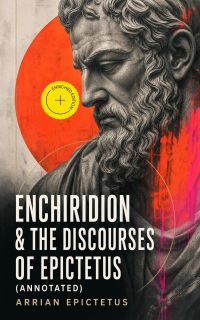
Enchiridion & The Discourses of Epictetus (Annotated)Arrian Epictetus18h 9m4.4 (3.5K)$2 · $0.00

The Meditations of the Emperor Marcus Aurelius AntoninusEmperor of Rome Marcus Aurelius5h 41m4.4 (1.8M)$1 · $0.00

Crime and PunishmentFyodor Dostoevsky23h 11m4.4 (1.3M)$12 · $0.00

MeditationsMarcus Aurelius5h 52m4.4 (433.7K)$1 · $0.00
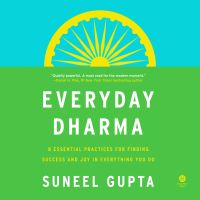
Everyday DharmaSuneel Gupta5h 2m4.5 (761)$20 · $0.00

The Joyful Wisdom ("La Gaya Scienza")Friedrich Wilhelm Nietzsche11h 37m4.4 (26.6K)$1 · $0.00
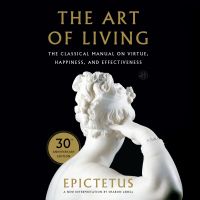
The Art of LivingEpictetus, Sharon Lebell3h 16m4.4 (50.1K)$18 · $0.00
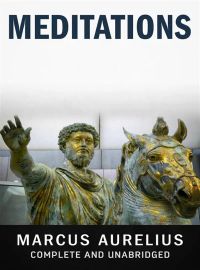
MeditationsEmperor Of Rome Marcus Aurelius7h 23m4.3 (477.5K)$1.20 · $0.00

The Imitation of ChristThomas à Kempis6h 27m4.3 (84.6K)$21 · $0.00

Sadhana: the realisation of lifeRabindranath Tagore3h 49m4.4 (8.6K)$6 · $0.00
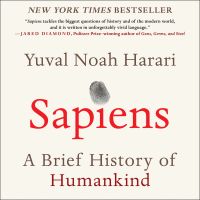
SapiensYuval Noah Harari15h 18m4.3 (1.4M) · 1186$33 · $0.00

You BelongSebene Selassie8h 35m4.4 (2.7K)$26 · $0.00

The Song Celestial; Or, Bhagavad-Gîtâ (from the Mahâbhârata)Anonymous2h 18m4.4 (3.2K)$2 · $0.00

The KybalionThe Three Initiates3h 47m4.3 (58.7K)$20 · $0.00

Chuang Tzu: Mystic, Moralist, and Social ReformerZhuangzi14h 42m4.4 (1.2K)$1 · $0.00

High-RisersBen Austen13h 33m4.4 (2.8K)$33 · $0.00
You may also like

Mr. Bennett and Mrs. BrownVirginia Woolf50m4.2 (850)$2 · $0.00

In the MarginsElena Ferrante2h 22m3.9 (8.9K)$15

On Being IllVirginia Woolf1h 46m4.1 (3.6K)$1 · $0.00

The Genealogy of MoralsFriedrich Nietzsche5h 43m4.3 (84.3K)$12

The World as Will and Idea (Vol. 1-3)Arthur Schopenhauer56h 21m4.3 (2K)$2 · $0.00
The Critique of Practical ReasonImmanuel Kant8h 28m4.1 (13.8K)$1.99 · $0.00
The Damned (Là-bas)Joris-Karl Huysmans8h 55m4.1 (5.8K)$1 · $0.00

A ROOM OF ONE'S OWNVirginia Woolf5h 26m4.3 (346.9K)$1.99 · $0.00

Beyond Good and EvilFriedrich Nietzsche7h 5m4.2 (137.8K)$2 · $0.00
The Joyful Wisdom ("La Gaya Scienza")Friedrich Wilhelm Nietzsche11h 37m4.4 (26.6K)$1 · $0.00

A Room of One’s OwnVirginia Woolf3h 56m4.3 (334.5K)$3.50 · $0.00
All Things are PossibleLev Shestov5h 38m4.1 (323)$1 · $0.00
Obedience to AuthorityStanley Milgram8h 50m4.3 (13.3K)$22 · $0.00
Beyond Good and EvilFriedrich Nietzsche8h 10m4.2 (136.2K)$17

The Essays of Arthur Schopenhauer; The Art of LiteratureArthur Schopenhauer4h 1m4.1 (1.6K)$2.30

ON BEING ILLVirginia Woolf1h 59m4.1 (3.8K)$1.99 · $0.00

Fascinate, Revised and UpdatedSally Hogshead7h 40m4.1 (1.1K)$26 · $0.00
Beyond Good and EvilFriedrich Nietzsche7h 5m4.2 (155.1K)$1.20 · $0.00

English literary criticismCharles Edwyn Vaughan8h 38m$2 · $0.00
Critical Ethnography: Method, Ethics, and PerformanceD. Soyini Madison9h 56m4.0 (91)Free