
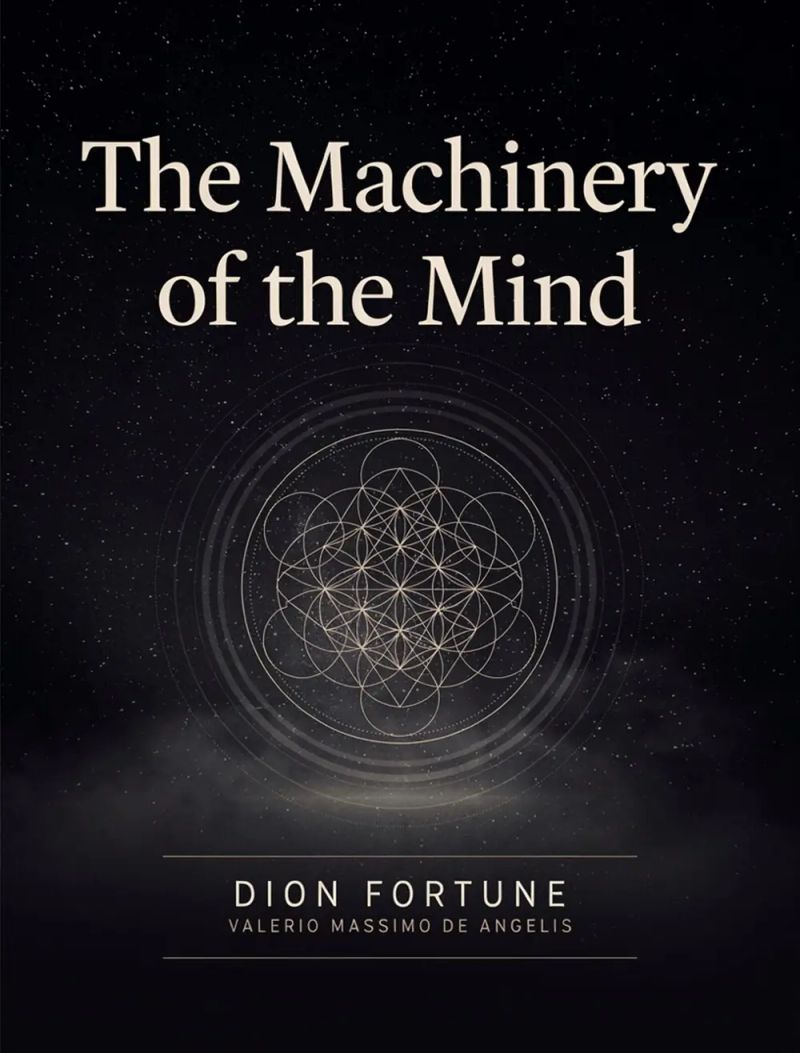
Audio only


Length1h 55m
About this audiobook
In this nimble, smooth-reading little volume, renowned esotericist Dion Fortune, one of London's most famous psychoanalysts of her time, gives us an explanation of the workings of the mind and its structure.
All this can be easily understood and assimilated even by those who have never approached psychological and psychoanalytic theories, thus saving them the time and effort they would spend in reading the ponderous and often obscure tomes written on the subject by other authors.
On the other hand, since these mechanisms act continuously within each of us, it is at the very least appropriate that one be aware of their existence and their mode of action.
Dion Fortune clearly and unequivocally reveals to us that instincts, not reason, are the key to the human mind.
Audiobook details
Rating★★★★ 4.0 (86)
Includes Goodreads, Amazon
GenreLiterary Classics, Biography and Memoir
Length1 hr 55 mins
Narrated byListen with 1,000+ voices
FormateBook with Audio
Publish dateJul 8, 2026
LanguageEnglish
Table of contents
1Foreword
2Introduction
3Chapter 1. The Physical Vehicle Of Consciousness
4Chapter 2. The Evolution Of The Nervous System
5Chapter 3. How An Idea Enters The Mind
Show all chaptersShow less
6Chapter 4. The Organisation Of The Upper Levels Of The Mind
7Chapter 5. The Organization Of The Lower Levels Of The Mind
8Chapter 6. Complexes
9Chapter 7. The Instincts
10Chapter 8. The Self-Preservation Instinct
11Chapter 9. Diseases Of The Self-Preservation Instinct
12Chapter 10. The Reproductive Instinct
13Chapter 11. Development Of The Reproductive Instinct
14Chapter 12. Diseases Of The Reproductive Instinct
15Chapter 13. Sublimation
16Chapter 14. Maladaptation To Environment And Psychopathology
17Chapter 15. Conflict
18Chapter 16. Repression
19Chapter 17. Dissociation
20Chapter 18. Symbolisation
21Chapter 19. Phantasies, Dreams, And Delusions
22Chapter 20. Psychotherapy
23Chapter 21. Psychoanalysis
24Chapter 22. Hypnosis, Suggestion, And Autosuggestion
25Chapter 23. The Practical Application Of Psychology
26Chapter 24. Conclusion

Esoteric HealingDion Fortune, Ale.mar4h 48m4.2 (77)$4.50 · $0.00

La curación esotéricaDion Fortune, Ale.mar5h 7m4.3 (17)$4.50 · $0.00

A cura esotéricaDion Fortune, Ale.mar4h 52m4.2 (302)$4.50 · $0.00

Esoterische HeilungDion Fortune, Ale.mar5h 26m4.3 (44)$4.50 · $0.00

La guérison ésotériqueDion Fortune, Ale.mar5h 18m4.0 (25)$4.50 · $0.00

La guarigione esotericaDion Fortune, Ale.mar4h 57m4.3 (63)$4.50 · $0.00
Sane OccultismDion Fortune4h 45m4.1 (362)$7.30 · $0.00
Gesunder Okkultismus (Übersetzt)Dion Fortune5h 20m4.2 (201)$7.90 · $0.00
Ocultismo saludable (Traducido)Dion Fortune4h 56m4.2 (1.1K)$6.80 · $0.00
Occultisme Sain (Traduit)Dion Fortune5h 9m4.3 (22)$6.80 · $0.00
Ocultismo saudável (Traduzido)Dion Fortune4h 48m4.4 (118)$6.80 · $0.00

Occultismo sano (Tradotto)Dion Fortune4h 53m4.3 (34)$6.80 · $0.00

Come difendersi dagli influssi negativiDion Fortune9h 51m4.2 (11.8K)$4.60 · $0.00

Wie man sich vor negativen Einflüssen schütztDion Fortune10h 34m4.3 (181)$4.60 · $0.00

Como se defender de influências negativasDion Fortune9h 32m4.3 (1.9K)$4.60 · $0.00

Cómo defenderse de las influencias negativasDion Fortune9h 52m4.3 (558)$4.60 · $0.00

Comment se défendre contre les influences négativesDion Fortune10h 18m4.3 (174)$4.60 · $0.00

How to Defend Yourself Against Negative InfluencesDion Fortune9h 14m4.3 (19)$4.60 · $0.00

Psychic Self-DefenseDion Fortune8h 38m4.2 (9.4K)$2.40 · $0.00

The Secrets of Dr. TavernerDion Fortune8h 39m4.0 (1.6K)$1.20 · $0.00

To Kill a MockingbirdHarper Lee12h 18m4.5 (7.4M)$29 · $0.00

These Precious DaysAnn Patchett11h 14m4.5 (45.2K)$29 · $0.00

The Jeeves and Wooster Stories: The Complete Collection (33 Books)P. G. Wodehouse21h 57m4.7 (2.8K)$15 · $0.00

The Gulag Archipelago Volume 3Aleksandr I. Solzhenitsyn21h 56m4.7 (8.9K)$46 · $0.00

This Side of Paradise - The Original 1920 Edition (Annotated)F. Scott Fitzgerald11h 30m4.6 (1.6K)$2 · $0.00

The Great Gatsby: Original 1925 Edition (An F. Scott Fitzgerald Classic NovelFrancis Scott Fitzgerald4h 45m4.6 (9.3K)$18 · $0.00

TWELFTH NIGHTWilliam Shakespeare, Sidney Lee16h 38m4.6 (2.8K)$1.99 · $0.00

The Complete Histories / History Plays of William Shakespeare (Annotated)William Shakespeare29h 42m4.6 (2.3K)$1.99 · $0.00

Braving the TruthRachel Held Evans11h 31m4.7 (359)$29 · $0.00

The Old Man and the Sea (Annotated)Ernest Hemingway4h 27m4.6 (1.4K)$2 · $0.00

Henry V (The Play, Historical Background and Analysis of the Character in the Play)William Shakespeare, William Hazlitt8h 50m4.6 (1.3K)$1.99 · $0.00

H. P. LOVECRAFT Ultimate Collection: Novellas, Short Stories, Poetry & Essays (Annotated)H. P. Lovecraft12h 28m4.6 (2.3K)$2 · $0.00

Time RegainedMarcel Proust16h 8m4.5 (10.6K)$1.99 · $0.00

The Mis-Education of the NegroCarter Goodwin Woodson4h 32m4.5 (28.4K)$10 · $0.00
Lessons in TruthH. Emilie3h 50m4.6 (1.4K)$4.70 · $0.00

TORAH - Bilingual Edition: English/Hebrew (Annotated)Max Margolis, JPS28h 26m4.6 (1K)$2 · $0.00

Betty Crocker picture cooky bookBetty Crocker, Inc. General Mills2h 13m4.5 (6.5K)$1 · $0.00

The Complete Tales of Beatrix PotterBeatrix Potter3h 36m4.5 (75K)$3 · $0.00

Anne of Green GablesL. M. Montgomery11h 1m4.5 (1.2M)$2.30 · $0.00

Crime and Punishment (The Unabridged Garnett Translation) (Annotated)Fyodor Dostoevsky24h 25m4.5 (15.4K)$1.99 · $0.00

Matters of the HeartJacinta Nampijinpa Price9h 35m4.8 (359)$29 · $0.00

The StepsSylvester Stallone9h 4m4.8 (635)$29 · $0.00

How to Test Negative for StupidJohn Kennedy8h 13m4.7 (9.7K)$28 · $0.00

Bad Fat Black GirlSesali Bowen6h 32m4.7 (2.8K)$24 · $0.00

Send MeMarty Skovlund, Joe Kent8h 10m4.7 (1.6K)$26 · $0.00

John Muir: The Story of My Boyhood and Youth & Letters to a Friend (Annotated)John Muir10h 13m4.7 (1.1K)$1.99 · $0.00

Invisible StormJason Kander6h 48m4.7 (3.2K)$24 · $0.00

Forever BoyKate Swenson9h 27m4.7 (5K)$29 · $0.00

You Are Worth ItKyle Carpenter, Don Yaeger8h 53m4.7 (4.8K)$29 · $0.00

The Happiest Man on EarthEddie Jaku3h 48m4.6 (178K)$7 · $0.00

MotherlandJulia Ioffe17h 52m4.7 (2.5K)$40 · $0.00

Evidence Not SeenDarlene Deibler Rose11h 11m4.6 (11.9K)$29 · $0.00

Where Cowards Go to DieBenjamin Sledge8h 42m4.7 (351)$20 · $0.00

Will You Love Me?Cathy Glass9h 5m4.6 (9.3K)$29 · $0.00

Designing Terry Pratchett’s DiscworldPaul Kidby3h 52m4.7 (343)$20 · $0.00

HostageEli Sharabi5h 25m4.6 (10.8K)$24 · $0.00

Finding MeViola Davis9h 15m4.6 (256.4K)$29 · $0.00

The Dangerous Truth about Today’s MarijuanaLaura Stack CSP, MBA9h 57m4.7 (385)$20 · $0.00

Birdie & HarlowTaylor Wolfe7h 50m4.6 (6.5K)$26 · $0.00

The Lives of BrianBrian Johnson9h 45m4.6 (3.5K)$29 · $0.00
You may also like

The Analysis of MindBertrand Russell9h 38m4.0 (1K)Free

The Seven Sins Of MemoryDaniel L. Schacter13h 14m4.0 (5.7K)$33 · $0.00

Your Mind and How to Use It: A Manual of Practical Psychology (Unabridged)William Walker Atkinson5h 55m4.2 (1.8K)$2 · $0.00
Your Brain at WorkDavid Rock9h 42m4.2 (15.2K)$29 · $0.00

The Complete Poetry (Annotated)Robert Browning72h 52m4.4 (316)$2 · $0.00

The Predictably IrrationalDan Ariely7h 24m4.2 (370.5K)$24 · $0.00
The Extended MindAnnie Murphy Paul11h 26m4.2 (4.5K)$29 · $0.00

Talks To Teachers On PsychologyWilliam James7h 58m4.1 (650)$1.99 · $0.00

David Hume: The Collected WorksDavid Hume37h 13m4.5 (261)$1 · $0.00

A Treatise of Human NatureDavid Hume24h 50m4.1 (20.1K)$2.30

Matter & MemoryHenri Bergson10h 46m4.2 (3.9K)$1.99 · $0.00

Memory How to Develop, Train, and Use ItWilliam Walker Atkinson3h 56m4.0 (2.7K)$2.30
Mind Mapping: Unlock Your Brain's Hidden Potential for Creativity (A Comprehensive Guide on How to Improve Memory and Boost Productivity to Succeed in Life)John Petersen2h 34m$3.50 · $0.00

Your Mind and How to Use ItWilliam Walker5h 10m4.0 (246)$3.50 · $0.00

The Intelligence of Decision-MakingDanniel Silva3h 51m$1.80 · $0.00

Foundations Of Human LearningDr. Asheotsala A. Alaku2h 36m$12 · $0.00

Improve Your Memory NowMark Cosmo53m$16 · $0.00

Phenomenology: Understanding ExperienceSaraban K. K. 1h 39m5.0 (8) Only with Ultra
The Code of Invisible InfluenceDanniel Silva3h 47m$1.80 · $0.00

The Curiosity MuscleMark Adamar5h 34m$6 · $0.00