
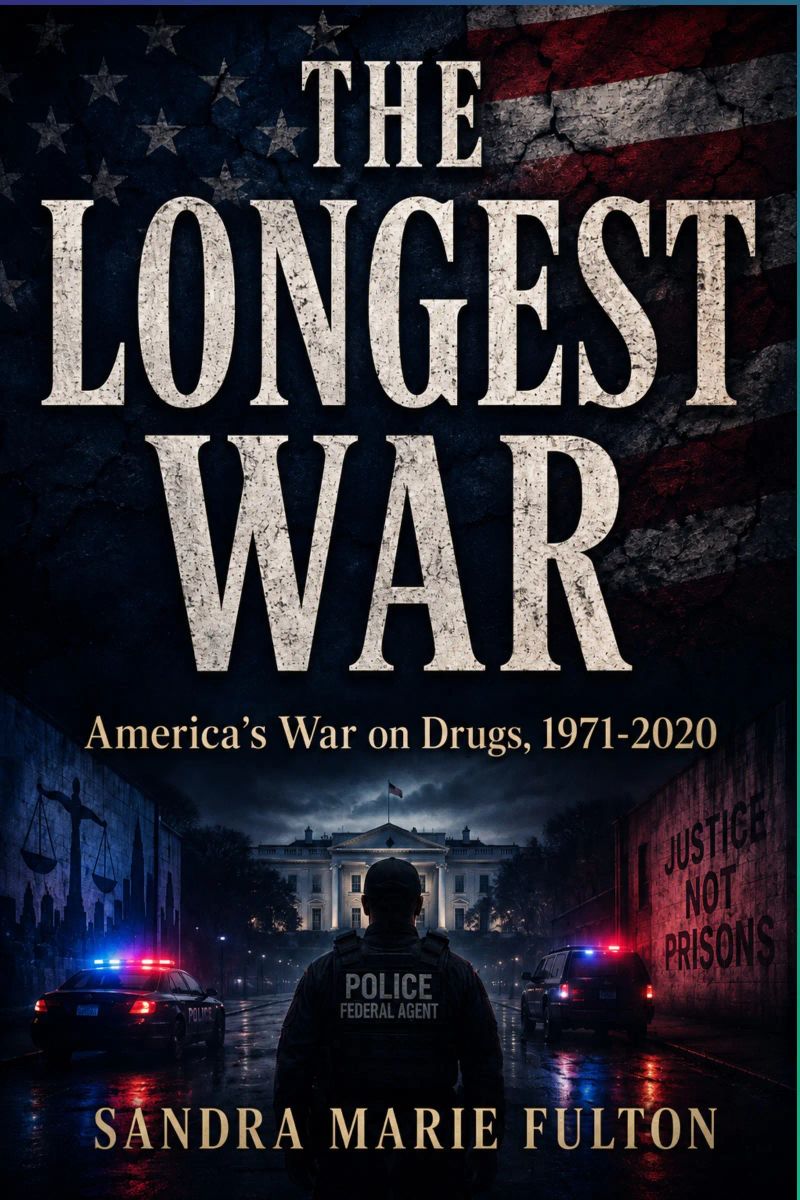
THE LONGEST WAR
America's War on Drugs, 1971-2020By Sandra Marie Fulton

Length5h 53m
About this audiobook
America's war on drugs, mass incarceration, the opioid crisis, and the failure of drug prohibition — Nixon's 1971 declaration through the fentanyl epidemic, a complete narrative history of the costliest domestic policy in American history.
On June 17, 1971, Richard Nixon stood in the White House briefing room and declared drug abuse "public enemy number one." Nixon aide John Ehrlichman would later acknowledge what the declaration actually was: a political strategy to criminalize the anti-war left and Black communities Nixon's team saw as enemies. The war on drugs had begun with a lie embedded in its foundation — and the country is still paying for it.
This is the complete narrative history of that war. Historian Sandra Marie Fulton traces the full arc: the racial politics behind the 1914 Harrison Act and Harry Anslinger's marijuana prohibition built on Mexican immigrant stereotypes, the DEA's billion-dollar expansion, the 100-to-1 crack-powder sentencing disparity Congress rushed into law eleven weeks after Len Bias died at 22, Pablo Escobar's plata o plomo cartel machine, and the OxyContin fraud before synthetic fentanyl turned overdose deaths into a national emergency killing 70,000 Americans a year.
Inside this drug war history:
• The racial origins of prohibition — Anslinger's testimony that cocaine "is often the direct incentive to the crime of rape by the negroes of the South," and the Harrison Act that turned physicians treating addicted patients into federal suspects (Chapters 1-3)
• Mandatory minimums and Len Bias — the 1986 Anti-Drug Abuse Act drafted in eleven weeks without hearings, the 100-to-1 crack-powder disparity, Black defendants at 93 percent of federal crack prosecutions by 1992 (Chapter 6)
• Mass incarceration's mechanics — the prison population from 325,000 in 1970 to 2.3 million by 2008, California building twelve new prisons in a decade, corrections unions that helped write the three-strikes laws keeping their prisons full (Chapter 7)
• The Colombian cartels — Escobar's 15 tons of cocaine daily, the assassination of a presidential candidate and 11 Supreme Court justices, and the plata o plomo calculus that corrupted Colombia at every level (Chapter 8)
• The opioid pipeline — Purdue Pharma's OxyContin marketing, Florida pill mills dispensing 98 of the 100 most potent oxycodone pills sold nationwide in 2010, fentanyl fifty times more potent than morphine in counterfeit tablets (Chapters 13-15)
• The reckoning — Colorado and Washington's 2012 marijuana legalization, the First Step Act of 2018, drug courts in 3,000 jurisdictions, and the 2022 federal strategy naming public health first for the first time in fifty years (Chapters 17-20)
More than a trillion dollars spent. Forty million arrests. Drugs cheaper and more available today than in 1971. The war on drugs failed every stated goal while succeeding at others — distributing enforcement power, maintaining racial hierarchies that predated Nixon's declaration. Fulton's drug war history is the most complete account of how America chose punishment over treatment for fifty years and what that choice cost.
For readers of Michelle Alexander's THE NEW JIM CROW and Johann Hari's CHASING THE SCREAM.
Audiobook details
GenreHistory, Psychology
Length5 hrs 53 mins
Narrated byListen with 1,000+ voices
FormateBook with Audio
Publish dateJun 1, 2026
LanguageEnglish
Table of contents
1Introduction
2Prologue: Nixon Declares War
3PART ONE: THE ORIGINS (1900-1970)
4Chapter 1: The First Drug Laws — Harrison, Prohibition, and the Federal Control of Narcotics
5Chapter 2: The Marijuana Tax Act — Anslinger, Racism, and the Criminalization of Cannabis
Show all chaptersShow less
6Chapter 3: The Sixties Drug Culture — Counterculture, LSD, and the Politics of Intoxication
7Chapter 4: Nixon's War — The Declaration and Its Political Logic
8PART TWO: THE MACHINERY OF THE WAR (1970-1990)
9Chapter 5: The DEA — Creating the Federal Drug Enforcement Bureaucracy
10Chapter 6: Mandatory Minimums — Congress, Len Bias, and the Crack-Cocaine Sentencing Disparity
11Chapter 7: The Prison-Industrial Complex — Mass Incarceration and the Drug War
12Chapter 8: The Colombian Cartels — Cocaine, Violence, and the Supply Side
13PART THREE: RACE AND THE DRUG WAR
14Chapter 9: The Crack Epidemic — Media, Panic, and Policy in the 1980s
15Chapter 10: Racial Disparity in Drug Enforcement — The Statistics and Their Meaning
16Chapter 11: Stop and Frisk — Urban Policing and the Drug War on the Street
17Chapter 12: The War on Black America — Civil Rights Leaders and the Drug War Critique
18PART FOUR: THE OPIOID CRISIS
19Chapter 13: OxyContin and the Sackler Family — The Pharmaceutical Origins of the Opioid Epidemic
20Chapter 14: From Pills to Heroin — How the Opioid Crisis Evolved
21Chapter 15: Fentanyl — The Synthetic Crisis and the New Overdose Epidemic
22Chapter 16: Rural America and the Opioid Crisis — Geography, Race, and Policy Response
23PART FIVE: REFORM AND RESISTANCE
24Chapter 17: Harm Reduction — Needle Exchanges, Safe Injection Sites, and Naloxone
25Chapter 18: Marijuana Legalization — Colorado, California, and the State-Level Revolution
26Chapter 19: Drug Courts — Treatment Over Incarceration
27Chapter 20: Criminal Justice Reform — Sentencing Reform and the First Step Act
28PART SIX: LEGACIES
29Chapter 21: The Human Cost — Deaths, Incarceration, and Families Destroyed
30Chapter 22: The International Drug War — Mexico, Colombia, and American Drug Policy Abroad
31Chapter 23: The Failed War — What the Evidence Shows
32Chapter 24: A Different Approach — What Drug Policy Could Look Like
33Epilogue: The Reckoning
34Acknowledgments
35Selected Bibliography
36About the Author
More from Sandra Marie Fulton


A Brief History of IntelligenceMax S. Bennett12h 18m4.6 (6.6K)$29 · $0.00

The Happiest Man on EarthEddie Jaku3h 48m4.6 (178K)$7 · $0.00

MotherlandJulia Ioffe17h 52m4.7 (2.5K)$40 · $0.00

Where Cowards Go to DieBenjamin Sledge8h 42m4.7 (351)$20 · $0.00
RevolutionariesSanjeev Sanyal11h 23m4.6 (2.6K)$29 · $0.00
Days of Love and Rage: A Story of RevolutionAnand Gopal22h 36m4.7 (584)$34 · $0.00

We Crossed a Bridge and It TrembledWendy Pearlman6h4.6 (5.2K)$24 · $0.00

Unbroken Bonds of BattleJohnny Joey Jones8h 31m4.6 (2.6K)$8 · $0.00

The Daughter of AuschwitzTova Friedman, Malcolm Brabant7h 54m4.6 (16.7K)$26 · $0.00

Lily's PromiseLily Ebert, Dov Forman8h 54m4.6 (16.1K)$29 · $0.00
On Democracies and Death CultsDouglas Murray10h 38m4.6 (6.5K)$29 · $0.00

Across the RiverKent Babb11h 40m4.6 (927)$29 · $0.00

Balcony Over Jerusalem: A Middle East Memoir - Israel, Palestine and BeyondJohn Lyons12h 37m4.6 (1.4K)$33 · $0.00

BeyondStephen Walker15h 39m4.6 (3.2K)$33 · $0.00
Kings and PawnsHoward Bryant10h 9m4.6 (678)$29 · $0.00

No EscapeNury Turkel9h 30m4.6 (809)$28 · $0.00
Jubal Stone: U.S. Marshal: Blood Trail To Hell: A Western Adventure NovelCasey Nash3h 42m4.6 (3.2K)$18 · $0.00

Fall and RiseMitchell Zuckoff17h 23m4.6 (9.8K)$40 · $0.00
The SurvivorJosef Lewkowicz, Michael Calvin9h 22m4.6 (2.5K)$29 · $0.00

Always FaithfulThomas Schueman, Zainullah Zaki12h 12m4.6 (977)$29 · $0.00
What to Make of a LifeJim Collins13h 31m4.4 (794)$33 · $0.00

Invisible StormJason Kander6h 48m4.7 (3.2K)$24 · $0.00

I Am The StormJanice Dean9h4.6 (1.5K)$8 · $0.00
On Democracies and Death CultsDouglas Murray10h 38m4.6 (6.5K)$29 · $0.00

TerraformPropaganda5h 39m4.7 (594)$24 · $0.00

Southern Horrors: Lynch Law in All Its Phases (Annotated)Ida B. Wells-Barnett2h 44m4.6 (1.3K)$2 · $0.00
Hour of the HeartIrvin D. Yalom, Benjamin Yalom8h 19m4.6 (2.3K)$26 · $0.00

Braving the TruthRachel Held Evans11h 31m4.7 (359)$29 · $0.00
Level UpRob Dial7h 42m4.6 (3.3K)$26 · $0.00

As a JewSarah Hurwitz8h 36m4.6 (1.2K)$26 · $0.00

Saint Joan (Annotated)George Bernard Shaw6h 20m4.6 (1.2K)$1.20 · $0.00

Burn the HaystackJennie Young, PhD9h 30m4.6 (543)$29 · $0.00

Woman and the New Race (Annotated)Margaret Sanger6h 30m4.6 (1K)$0.99 · $0.00

Good InsideBecky Kennedy9h 55m4.5 (59.3K)$29 · $0.00
The Mis-Education of the NegroCarter Godwin Woodson5h 4m4.5 (29.4K)$1.20 · $0.00

Du Bois: EssaysW.E.B. Du Bois6h 22m4.6 (1.5K)$1 · $0.00

The North American Indian (Illustrated Edition)Edward S. Curtis, Frederick Webb Hodge5h 59m4.6 (1.4K)$2 · $0.00

Valley of the BirdtailAndrew Stobo Sniderman, Douglas Sanderson10h 1m4.6 (2.4K)$29 · $0.00

Lies My Therapist Told MeGreg E. Gifford9h 3m4.6 (503)$29 · $0.00
Disturbed in Their NestsAlephonsion Deng, Judy A. Bernstein11h 22m4.6 (595)$23 · $0.00
You may also like
Policing the WombMichele Goodwin13h 15m4.5 (481)$23
HomewreckersAaron Glantz10h 10m4.3 (927)$29 · $0.00
Trust the PlanWill Sommer8h 13m4.2 (5K)$7 · $0.00

Jihad AcademyNicolas Hénin4h 28m4.0 (405)$14

Anarchism and Other EssaysEmma Goldman4h 38m4.2 (9.8K)$2.30

Southern Horrors: Lynch Law in All Its PhasesIda B. Wells-Barnett1h 3m4.4 (1.6K)$2.30

AlmightyDan Zak10h 49m4.1 (473)$20 · $0.00

Policing the Black ManAngela J. Davis10h 11m4.3 (1.6K)$20 · $0.00
Not For SaleDavid Batstone9h 22m4.2 (2.1K)$29 · $0.00

Land Of Big NumbersTe-Ping Chen6h 35m4.0 (12.2K)$24 · $0.00
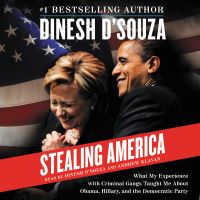
Stealing AmericaDinesh D'Souza11h 3m4.2 (2.8K)$29 · $0.00

Open SeasonBen Crump7h 57m4.4 (1.2K)$26 · $0.00
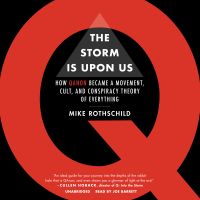
The Storm Is upon UsMike Rothschild7h 58m4.1 (4K)$20 · $0.00
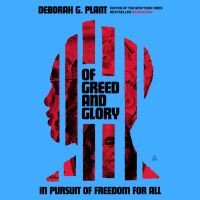
Of Greed and GloryDeborah G. Plant7h 33m4.1 (58)$26 · $0.00
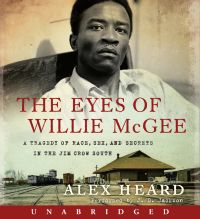
The Eyes of Willie McGeeAlex Heard14h 1m3.8 (427)$33 · $0.00

Woman VS. Church and StateMatilda Joslyn Gage20h 24m$1 · $0.00
ROAD NOT TAKEN? - Imperium in Imperio & The Hindered Hand (Annotated)Sutton E. Griggs14h 50m$2 · $0.00

History of the Inquisition of SpainHenry Charles Lea113h 34m4.0 (12)$1 · $0.00

The Complete Works of Lysander Spooner (Annotated)Lysander Spooner88h 47m$2 · $0.00

Ending the War on DrugsDirk Chase Eldredge6h 55m3.4 (27)$17 · $0.00