
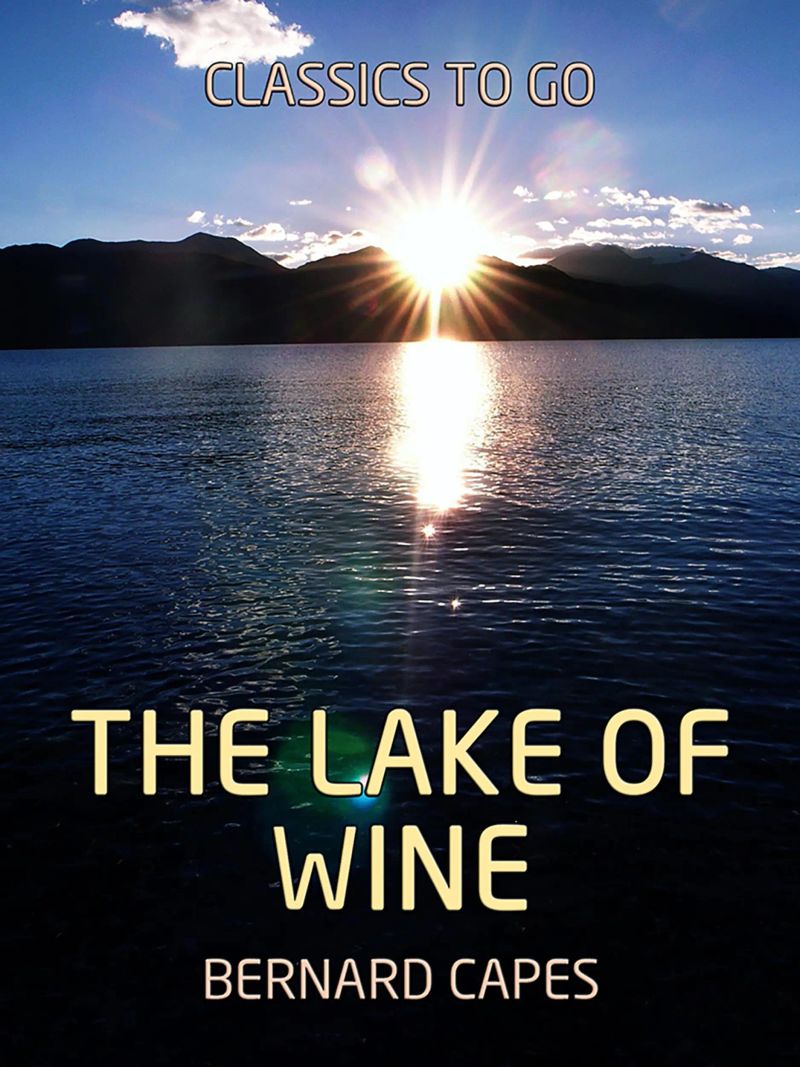


Length13h 40m
About this audiobook
Excerpt: "Some time in June of the year 1800 (as privately chronicled) there came a famous evening at Whitelaw's Club in St. James's Street, off Piccadilly, London. There and then—according to the unattested evidence of an eyewitness—Mr. Ladislaw lost his head, Lord Dunlone his mistress, Sir Robert Linne his fortune, and Major Dalrymple his life. Thus it appears these four were all losers, and each of a material property, save the first, who, alone of the quartette, commuted his self-possession for a very real equivalent in hard cash. "Whitelaw's" in those days ran, of a host of gambling clubs, the deepest. It was there all heavy potations and long stakes (at which many a self-martyr burned); but the first of these were put down and the second up with an accepted solemnity of decorum that was traditional to the place and the sign of its moral endowment. Fox, in his heavier moments, had been known to hazard in its glooms occasionally, and to lose, of course; and—equally of course—to find immediate balm for his scorched fingers in the inevitable "Herodotus." Selwyn, also, and Topham Beauclerc, and many another Georgium sidus, had played and hiccupped within its pregnant walls; but always with gravity and a weight of personal responsibility towards the foundation. "Brookes's" might have held in its time more showy revelry; "Almack's" have gambled in broad-brimmed straw hats, bedecked with flowers, and masks to hide the play of emotions. "Whitelaw's" would have none of these. It had ever stood coldly aloof from flash and notoriety, accepting Todd's definition of a club as "An association of persons subjected to particular rules," rather than that of Johnson (the rendering has a warm personal flavour), who calls it "An assembly of good fellows, meeting under certain conditions." From first to last it remained ponderous in self-importance and rigid in exacting the observance of its unwritten codes of conduct. If its gaming operations were large, it desired the company of no feather-brain "plungers"; but rather of players of substance, to whom cards were a market, not a raffle. Therefore, when on this particular night no fewer than four of its members—like those in the fable—suddenly revolted against the central system, and, for a space of minutes, made havoc of its respectable traditions, it is no wonder that "Whitelaw's" rose at the outrage like one man, and, in the upshot, pronounced sentence of club ostracism upon the delinquents. This, as it affected three, is matter of private history. The fourth escaped the distinction there and then through the interposition of "the man with the scythe.""
Audiobook details
GenreGeneral Fiction, Literary Classics
Length13 hrs 40 mins
Narrated byListen with 1,000+ voices
FormateBook with Audio
Publish dateOct 13, 2022
LanguageEnglish
Table of contents
1EPIGRAPH.
26CHAPTER XXV.
2CHAPTER I.
27CHAPTER XXVI.
3CHAPTER II.
28CHAPTER XXVII.
4CHAPTER III.
29CHAPTER XXVIII.
5CHAPTER IV.
30CHAPTER XXIX.
Show all chaptersShow less
6CHAPTER V.
31CHAPTER XXX.
7CHAPTER VI.
32CHAPTER XXXI.
8CHAPTER VII.
33CHAPTER XXXII.
9CHAPTER VIII.
34CHAPTER XXXIII.
10CHAPTER IX.
35CHAPTER XXXIV.
11CHAPTER X.
36CHAPTER XXXV.
12CHAPTER XI.
37CHAPTER XXXVI.
13CHAPTER XII.
38CHAPTER XXXVII.
14CHAPTER XIII.
39CHAPTER XXXVIII.
15CHAPTER XIV.
40CHAPTER XXXIX.
16CHAPTER XV.
41CHAPTER XL.
17CHAPTER XVI.
42CHAPTER XLI.
18CHAPTER XVII.
43CHAPTER XLII.
19CHAPTER XVIII.
44CHAPTER XLIII.
20CHAPTER XIX.
45CHAPTER XLIV.
21CHAPTER XX.
46CHAPTER XLV.
22CHAPTER XXI.
47CHAPTER XLVI.
23CHAPTER XXII.
48CHAPTER XLVII.
24CHAPTER XXIII.
49CHAPTER XLVIII.
25CHAPTER XXIV.
50CHAPTER XLIX.
Series
More from Bernard Capes
Moll Davis A ComedyBernard Capes7h 15m$2.30
Where England Sets Her Feet, A RomanceBernard Capes10h 52m$2.30
The Story of FifineBernard Capes9h 7m$2.40
A Rogue's TragedyBernard Capes9h 36m$2.30
Adventures of the Comte de la Muette During the Reign of TerrorBernard Capes7h 56m$2.30
Our Lady of DarknessBernard Capes13h 16m3.8 (47)$2.30
The Extraordinary Confessions of Diana PleaseBernard Capes10h 12m3.5 (12)$2.30
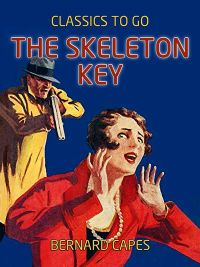
The Skeleton KeyBernard Capes7h 21m3.6 (1.6K)$2.30

A Jay of ItalyBernard Capes10h 21m$2.30

WhistlerAnn Patchett10h 45m4.6 (4.6K)$29 · $0.00
Demon CopperheadBarbara Kingsolver21h 3m4.5 (949.4K)$46 · $0.00
To Kill a MockingbirdHarper Lee12h 18m4.5 (7.4M)$29 · $0.00

Remarkably Bright CreaturesShelby Van Pelt11h 17m4.4 (1.7M)$29 · $0.00
Desperate MeasuresBrenda Jackson8h 59m4.7 (670)$28 · $0.00

This Side of Paradise - The Original 1920 Edition (Annotated)F. Scott Fitzgerald11h 30m4.6 (1.6K)$2 · $0.00

War LordBernard Cornwell13h 21m4.6 (33.1K)$33 · $0.00
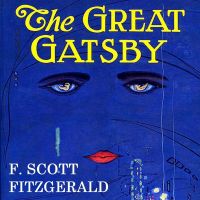
The Great Gatsby: Original 1925 Edition (An F. Scott Fitzgerald Classic NovelFrancis Scott Fitzgerald4h 45m4.6 (9.3K)$18 · $0.00
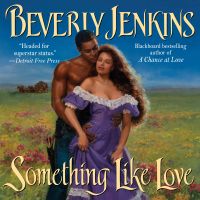
Something Like LoveBeverly Jenkins10h 21m4.6 (2.7K)$29 · $0.00
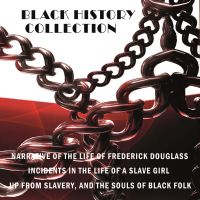
Black History CollectionFrederick Douglass, Harriet Ann Jacobs, Booker T. Washington, W.E.B. Du Bois27h 9m4.6 (2.6K)$18 · $0.00

The Old Man and the Sea (Annotated)Ernest Hemingway4h 27m4.6 (1.4K)$2 · $0.00

White HotIlona Andrews13h 18m4.5 (136.9K)$5 · $0.00

The Ghost by the Billabong (The Matilda Saga, #5)Jackie French14h 58m4.6 (773)$33 · $0.00
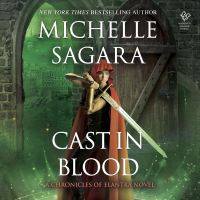
Cast in BloodMichelle Sagara16h 35m4.6 (607)$33 · $0.00
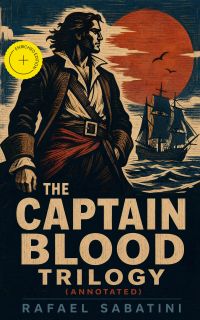
The Captain Blood Trilogy (Annotated)Rafael Sabatini29h 20m4.6 (1K)$3 · $0.00
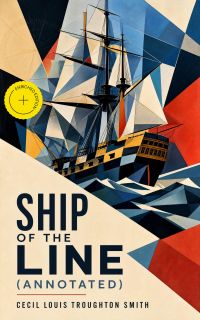
Ship of the Line (Annotated)Cecil Louis Troughton Smith11h 13m4.6 (1K)$2 · $0.00

The George Orwell CollectionGeorge Orwell24h 46m4.5 (14.4K)$12 · $0.00
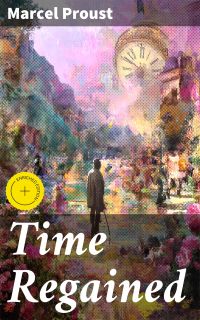
Time RegainedMarcel Proust15h 38m4.5 (9.2K)$2 · $0.00

Driving ForceElle James4h 58m4.6 (407)$20 · $0.00

When God Calls the HeartBrian Bird, Michelle Cox3h 24m4.6 (439)$10 · $0.00
To Kill a MockingbirdHarper Lee12h 18m4.5 (7.4M)$29 · $0.00

These Precious DaysAnn Patchett11h 14m4.5 (45.2K)$29 · $0.00
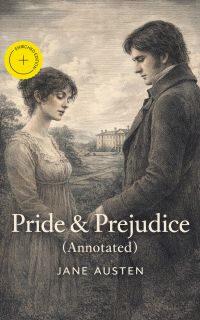
Pride & Prejudice (Annotated)Jane Austen15h 10m4.7 (13.3K)$2 · $0.00
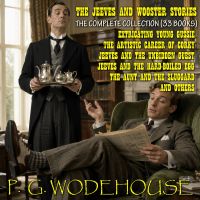
The Jeeves and Wooster Stories: The Complete Collection (33 Books)P. G. Wodehouse21h 57m4.7 (2.8K)$15 · $0.00
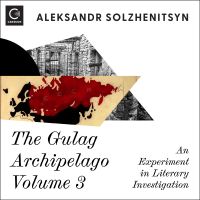
The Gulag Archipelago Volume 3Aleksandr I. Solzhenitsyn21h 56m4.7 (8.9K)$46 · $0.00
This Side of Paradise - The Original 1920 Edition (Annotated)F. Scott Fitzgerald11h 30m4.6 (1.6K)$2 · $0.00
The Great Gatsby: Original 1925 Edition (An F. Scott Fitzgerald Classic NovelFrancis Scott Fitzgerald4h 45m4.6 (9.3K)$18 · $0.00
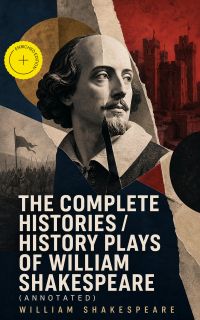
The Complete Histories / History Plays of William Shakespeare (Annotated)William Shakespeare29h 42m4.6 (2.3K)$1.99 · $0.00

Braving the TruthRachel Held Evans11h 31m4.7 (359)$29 · $0.00
The Old Man and the Sea (Annotated)Ernest Hemingway4h 27m4.6 (1.4K)$2 · $0.00
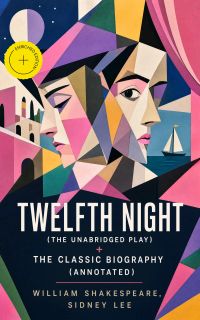
Twelfth Night (The Unabridged Play) + The Classic Biography (Annotated)William Shakespeare, Sidney Lee16h 38m4.6 (1.4K)$2 · $0.00
Henry V (The Play, Historical Background and Analysis of the Character in the Play)William Shakespeare, William Hazlitt8h 50m4.6 (1.3K)$1.99 · $0.00
H. P. LOVECRAFT Ultimate Collection: Novellas, Short Stories, Poetry & Essays (Annotated)H. P. Lovecraft12h 28m4.6 (2.3K)$2 · $0.00
Time RegainedMarcel Proust16h 8m4.5 (10.6K)$1.99 · $0.00
Lessons in TruthH. Emilie3h 50m4.6 (1.4K)$4.70 · $0.00

TORAH - Bilingual Edition: English/Hebrew (Annotated)Max Margolis, JPS28h 26m4.6 (1K)$2 · $0.00

Betty Crocker picture cooky bookBetty Crocker, Inc. General Mills2h 13m4.5 (6.5K)$1 · $0.00

The Complete Tales of Beatrix PotterBeatrix Potter3h 36m4.5 (75K)$3 · $0.00
Anne of Green GablesL. M. Montgomery11h 1m4.5 (1.2M)$2.30 · $0.00
Crime and Punishment (The Unabridged Garnett Translation) (Annotated)Fyodor Dostoevsky24h 25m4.5 (15.4K)$1.99 · $0.00
You may also like
The Mobster's DaughterRachel Scott McDaniel10h 42m4.5 (892)$20
The Lady Risks AllStephanie Laurens16h 5m3.8 (5K)$33 · $0.00

A Dreadful SplendorB.R. Myers11h 4m3.9 (9.6K)$29 · $0.00
The Red Signal (Musaicum Romance Classics)Grace Livingston Hill8h 12m4.2 (533)$1 · $0.00
Loving RoseStephanie Laurens11h 27m4.0 (3.9K)$29 · $0.00
The Tryst (Annotated)Grace Livingston Hill13h 12m4.2 (630)$2 · $0.00
Dreams of DestinyMay McGoldrick, Jan Coffey11h 40m4.2 (711)$6 · $0.00
The CountessLynsay Sands9h 46m4.0 (8.8K)$29 · $0.00
The Lady Risks AllStephanie Laurens16h 5m3.9 (5K)$33 · $0.00
A Gentleman’s GameTheresa Romain8h 31m3.6 (1.4K)$20

The Castle of WolfenbachEliza Parsons9h 42m3.5 (968)$11 · $0.00

Hunted by the LairdIain MacLennan9h 46m4.2 (18)$5
The Golden ThreadTea Cooper9h 33m3.7 (824)$29 · $0.00

Laid up in LavenderStanley John Weyman6h 31m$2 · $0.00
The Man with a Secret / A NovelFergus Hume10h 34m3.5 (58)$1.20 · $0.00
At LargeE. W. Hornung10h 28m3.1 (22)$2.30

Anne HerefordHenry Mrs. Wood19h 2m4.1 (107)$1 · $0.00
The Scales of JusticeFred M. White10h 37m3.7 (27)$1 · $0.00
The Nether MillstoneFred M. White11h 10m$2 · $0.00
The Living Link: A NovelJames De Mille15h 12m$2.30 · $0.00