

The Influence of the Bible on Civilisation
By Ernst von Dobschütz


Length3h 21m
About this audiobook
In "The Influence of the Bible on Civilisation," Ernst von Dobschütz presents a thorough examination of the Bible's profound impact on various facets of Western society, including ethics, law, art, and literature. The text employs a scholarly yet accessible style, weaving together historical context with literary analysis to underscore the Bible's role as a foundational text in shaping cultural values. Dobschütz meticulously navigates through centuries of biblical interpretation, revealing the intricate ways in which scripture has informed societal norms and intellectual thought throughout history. Ernst von Dobschütz was a renowned theologian and biblical scholar whose extensive academic background provided him with the tools to explore the intersection of scripture and societal development. His lifelong engagement with religious texts and their interpretations resulted in a deep-seated conviction that the Bible is not only a religious document but also a vital cultural artifact. His insights are rooted in a rich understanding of both theology and history, making his arguments all the more compelling. This book is recommended for scholars, students, and general readers alike, providing a profound insight into how biblical texts have shaped civilization. It invites readers to reflect on the enduring relevance of the Bible while encouraging them to appreciate the complexities of its influence on contemporary society.
Audiobook details
Rating★★★★ 3.9 (25)
Includes Goodreads, Amazon
GenreSpirituality and Religion
Length3 hrs 21 mins
Narrated byListen with 1,000+ voices
FormateBook with Audio
Publish dateSep 16, 2022
LanguageEnglish
Table of contents
1Introduction
2THE BIBLE TEACHES THE GERMAN NATIONS (500-800 A. D.)
3THE BIBLE BECOMES ONE BASIS OF MEDIÆVAL CIVILISATION (800-1150 A. D.)
4THE BIBLE STIRS NON-CONFORMIST MOVEMENTS (1150-1450)
5THE BIBLE TRAINS PRINTERS AND TRANSLATORS (1450-1611)
Show all chaptersShow less
6THE BIBLE RULES DAILY LIFE (1550-1850)
7THE BIBLE BECOMES ONCE MORE THE BOOK OF DEVOTION
The Holy Qur-an: Text, Translation and CommentaryAbdullah Yusuf Ali22h 16m4.7 (133K)$1 · $0.00
All of Grace (Annotated)Charles Spurgeon5h 1m4.7 (1.3K)$0.99 · $0.00

Steps to ChristEllen G. White3h 12m4.7 (13.8K)$2 · $0.00
The Doctrine and Selected CovenantsJoseph Smith13h 53m4.7 (10.4K)$1.99 · $0.00
Sinners in the Hands of an Angry God & Other Sermons (Annotated)Jonathan Edwards7h 51m4.7 (1.5K)$2 · $0.00
Swayam Ki AwaazPrem Rawat8h 34m4.7 (1.1K)$26 · $0.00

Behind the BadgeAdam Davis10h 18m4.7 (2.7K)$10 · $0.00
The New Human Revolution, vol. 1Daisaku Ikeda7h 46m4.7 (669)$12 · $0.00

You Are Worth ItKyle Carpenter, Don Yaeger8h 53m4.7 (4.8K)$29 · $0.00
Praying GraceDavid A. Holland3h 2m4.7 (658)$10 · $0.00
Evidence Not SeenDarlene Deibler Rose11h 11m4.6 (11.9K)$29 · $0.00

The Christ KeyChad Bird, Chad Bird7h 33m4.7 (592)$17.40 · $0.00
He and IGabrielle Bossis10h 12m4.7 (554)$17 · $0.00

Your Body Already KnowsNidhi Pandya Bhanshali9h 7m4.7 (360)$16 · $0.00

The Complete WorksFlorence Scovel Shinn7h 59m4.6 (6.6K)$2 · $0.00
Driven by EternityJohn Bevere3h 50m4.6 (3.2K)$10 · $0.00
Spiritual AnatomyDaaji Kamlesh D. Patel9h 47m4.7 (319)$29 · $0.00

The Mahabharata of Krishna-Dwaipayana Vyasa Translated into English ProseAnonymous8h 1m4.7 (1.9K)$2 · $0.00
The Chosen Book OneAmanda Jenkins, Kristen Hendricks, Dallas Jenkins3h 8m4.6 (4.9K)$10 · $0.00
The Grace MessageAndrew Farley8h 49m4.7 (433)$20 · $0.00
You may also like

The Everlasting ManG. K. Chesterton10h 27m4.4 (15.3K)$2.30 · $0.00

The Religion of the SamuraiKaiten Nukariya7h 36m4.1 (733)$1.20 · $0.00
The Psychology of RevolutionGustave Le Bon9h 1m3.9 (1.1K)$1.20 · $0.00
Obedience to AuthorityStanley Milgram8h 50m4.3 (13.3K)$22 · $0.00

The Twilight of the IdolsFriedrich Nietzsche4h 38m4.3 (42K)$12 · $0.00

The Millionaire Fastlane: Crack the Code to Wealth and Live Rich for a LifetimeMj DeMarco12h 46m4.3 (95K)$16 · $0.00

The State of Society in France Before the Revolution of 1789 (Annotated)Alexis de Tocqueville17h 25m4.6 (1.2K)$2 · $0.00
Mencius (Bilingual Edition: English/Chinese)Mencius9h 3m4.3 (11.2K)$1.99 · $0.00

you are your own fairy taleAmanda Lovelace2h 39m4.2 (1.8K)$15
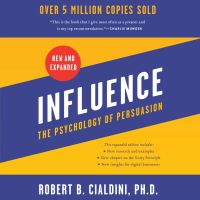
Influence, New and ExpandedRobert B. Cialdini20h 44m4.3 (186.5K)$46 · $0.00
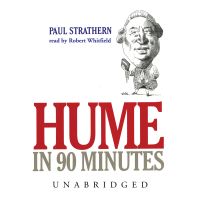
Hume in 90 MinutesPaul Strathern1h 18m3.6 (1.2K)$7
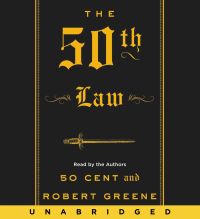
The 50th Law50 Cent, Robert Greene8h 17m4.3 (27.4K)$26 · $0.00
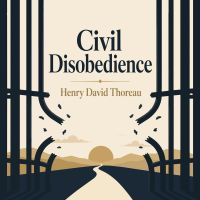
Civil DisobedienceHenry David Thoreau51m4.1 (29.6K)$10 · $0.00
Rousseau and RevolutionWill Durant, Ariel Durant57h 17m4.4 (4.6K)$30

Sex in the Cities Vol 3 (Paris)Hans Jürgen Döpp4h 4m$12 · $0.00

Piercing PassionSebastian U. McAllister6h 38m$4.10 · $0.00
The Philosophy of Friedrich Nietzsche (Annotated)H. L. Mencken10h 21m4.0 (631)$2 · $0.00
CourbetPatrick Bade1h 9m4.0 (18)$13.50 · $0.00

English Eccentrics and EccentricitiesJohn Timbs19h 6m$2 · $0.00

The Responsible RebelSteve Pavlina14m$4 · $0.00