
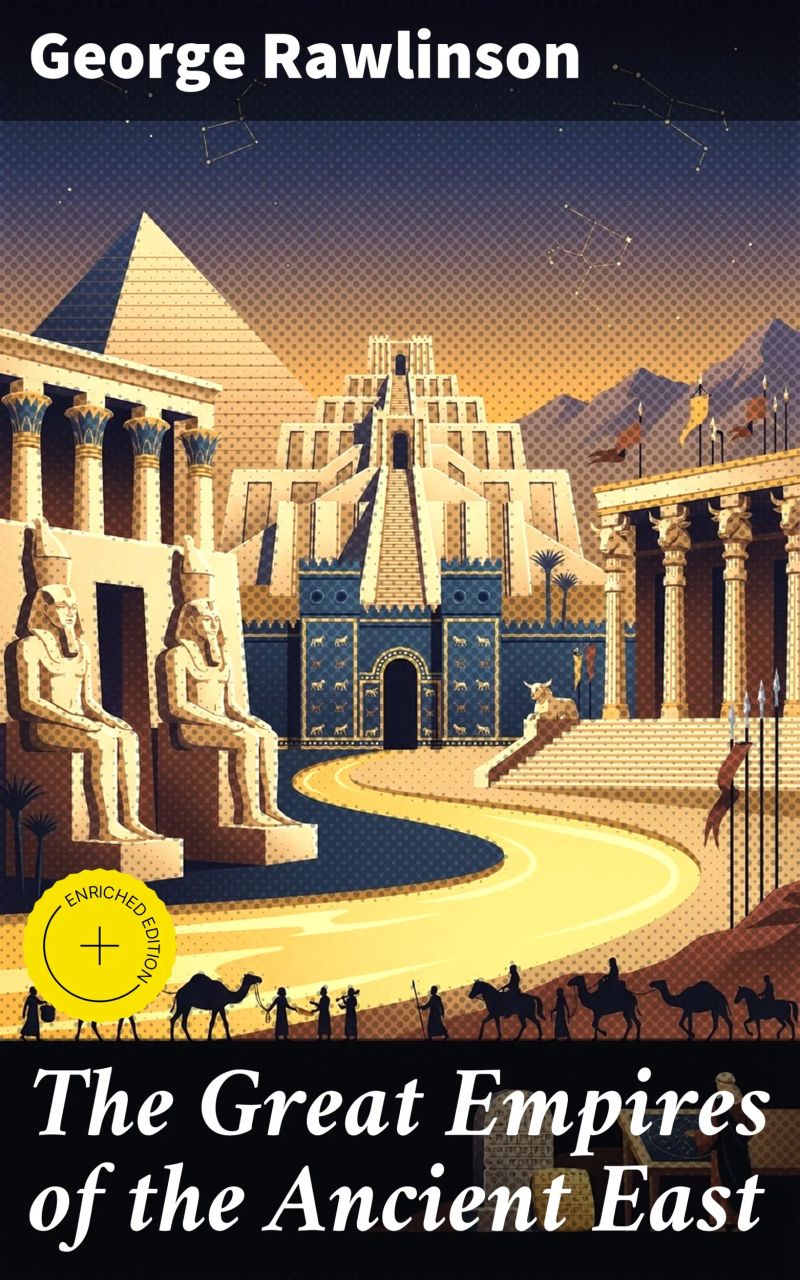
The Great Empires of the Ancient East
Enriched edition. Egypt, Phoenicia, The Kings of Israel and Judah, Babylon, Parthia, Chaldea, Assyria, Media, Persia, Sasanian Empire & The History of HerodotusBy George Rawlinson

Length145h 1m
About this audiobook
In "The Great Empires of the Ancient East," George Rawlinson offers a meticulously researched exploration of the significant civilizations that flourished in Mesopotamia, Persia, and Egypt. Rawlinson's literary style is characterized by a blend of scholarly rigor and accessible prose, making complex historical events comprehensible to a broad audience. The book situates these ancient societies within their rich cultural and political contexts, highlighting their achievements in governance, architecture, and trade while drawing connections to contemporary understanding of ancient history. George Rawlinson, a British historian and Assyriologist, draws on his extensive knowledge of ancient languages and inscriptions to present a narrative that is both enlightening and engaging. His background in classical studies and personal encounters with the historical sites of the Near East imbue his writing with authenticity and passion. As a prominent figure in 19th-century studies of the ancient world, Rawlinson's insights were instrumental in shaping modern perspectives on civilizations that laid the foundations of human history. I wholeheartedly recommend "The Great Empires of the Ancient East" to history enthusiasts and scholars alike. Rawlinson'Äôs work not only informs but also inspires a deeper appreciation for the complexity of ancient societies. It is a vital text for anyone seeking to understand the roots of modern civilization and the enduring legacy of these empires.
In this enriched edition, we have carefully created added value for your reading experience:
- A succinct Introduction situates the work's timeless appeal and themes.
- The Synopsis outlines the central plot, highlighting key developments without spoiling critical twists.
- A detailed Historical Context immerses you in the era's events and influences that shaped the writing.
- A thorough Analysis dissects symbols, motifs, and character arcs to unearth underlying meanings.
- Reflection questions prompt you to engage personally with the work's messages, connecting them to modern life.
- Hand‐picked Memorable Quotes shine a spotlight on moments of literary brilliance.
- Interactive footnotes clarify unusual references, historical allusions, and archaic phrases for an effortless, more informed read.
Audiobook details
GenreHistory
Length145 hrs 1 min
Narrated byListen with 1,000+ voices
FormateBook with Audio
Publish dateNov 17, 2023
LanguageEnglish
Table of contents
1Introduction
2Introduction
3Synopsis
4Historical Context
5I. The Land of Egypt.
Show all chaptersShow less
6II. The People of Egypt.
7III. The Dawn of History.
8IV. The Pyramid Builders.
9V. The Rise of Thebes to Power, and the Early Theban Kings.
10VI. The Good Amenemhat and His Works.
11VII. Abraham in Egypt.
12VIII. The Great Invasion—The Hyksôs or Shepherd Kings—Joseph and Apepi.
13IX. How the Hyksôs were Expelled from Egypt.
14X. Thothmes I., The First Great Egyptian Conqueror.
15XI. Queen Hatasu and Her Merchant Fleet.
16XII. Thothmes the Third and Amenhotep the Second.
17XIII. Amenhotep III. And His Great Works—The Vocal Memnon.
18XIV. Khuenaten and the Disk-Worshippers.
19XV. Beginning of the Decline of Egypt.
20XVI. Menephthah I., The Pharaoh of the Exodus.
21XVII. The Decline of Egypt Under the Later Ramessides.
22XVIII. The Priest-Kings—Pinetem and Solomon.
23XIX. Shishak and His Dynasty.
24XX. The Land Shadowing With Wings—Egypt Under the Ethiopians
25XXI. The Fight Over the Carcase—Ethiopia v. Assyria.
26XXII. The Corpse Comes to Life Again—Psamatik I. and His Son Neco.
27XXIII. The Later Saïte Kings.—Psamatik II., Apries, and Amasis.
28XXIV. The Persian Conquest.
29XXV. Three Desperate Revolts.
30XXVI. A Last Gleam of Sunshine—Nectanebo I.
31XXVII. The Light Goes Out in Darkness.
32Preface
33Chapter II—Climate and Productions
34Chapter IV—The Cities
35Chapter V—The Colonies
36Chapter VI—Architecture
37Chapter VII—Æsthetic Art
38Chapter VIII—Industrial Art and Manufactures
39Chapter IX—Ships, Navigation, and Commerce
40Chapter X—Mining
41Chapter XII—Dress, Ornaments, and Social Habits
42Chapter XIII—Phoenician Writing, Language, and Literature
43Chapter XIV—Political History
443. Phoenicia during the period of its subjection to Assyria (B.C. 877-635)
455. Phoenicia under the Persians (B.C. 528-333)
466. Phoenicia in the time of Alexander the Great (B.C. 333-323)
477. Phoenicia under the Greeks (B.C. 323-65) (pt. 1)
487. Phoenicia under the Greeks (B.C. 323-65) (pt. 2)
49Chapter I. General View of the Country
50Chapter II. Climate and Productions

CHALDEA (Illustrated Edition)George Rawlinson6h 18m4.4 (12)$1.99 · $0.00
The Greatest Empires & Civilizations of the Ancient EastGeorge Rawlinson145h 34m4.3 (21)$1.99 · $0.00
The Essential Works of George RawlinsonGeorge Rawlinson145h 32m$1.99 · $0.00
Ancient Egypt: History, Mythology & LiteratureGeorge Rawlinson, Arthur Gilman, Gaston Maspero, Agnes Sophia Griffith Johns, E. A. Wallis Budge, Lewis Spence47h 17m4.4 (32)$1.99 · $0.00
Ancient Empires: A 15-Volume AnthologyGeorge Rawlinson, L. W. King, John Bagnell Bury, Arrian, Theodor Mommsen, Edward Gibbon, Charles Oman455h 5m4.6 (12)$1.99
History of the Sasanian Empire (Annotated)George Rawlinson17h 20m3.9 (25)$2 · $0.00
The Kings of Israel and Judah (Annotated)George Rawlinson10h 6m4.1 (729)$2 · $0.00
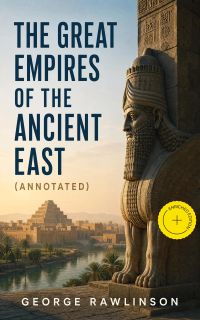
The Great Empires of the Ancient East (Annotated)George Rawlinson144h 35m$2 · $0.00
History of the Ancient Chaldea (Annotated)George Rawlinson6h 11m$2 · $0.00

The Essential Works of George Rawlinson (Annotated)George Rawlinson145h 34m$2 · $0.00

Ancient Media (Annotated)George Rawlinson6h 32m$2 · $0.00
The Great Civilizations of the Ancient East (Annotated)George Rawlinson145h 31m$2 · $0.00

The Greatest Empires & Civilizations of the Ancient EastGeorge Rawlinson145h 7m$2 · $0.00
The History of BabylonGeorge Rawlinson7h 24m3.2 (37)$1 · $0.00

The Seven Great Monarchies Of The Ancient Eastern World: BabylonGeorge Rawlinson7h 3m3.4 (16)$1 · $0.00
History of the Ancient ChaldeaGeorge Rawlinson6h 10m$2 · $0.00
History of the Phoenician CivilizationGeorge Rawlinson16h 50m3.8 (134)$1 · $0.00
History of the Phoenician CivilizationGeorge Rawlinson17h 33m3.6 (89)$1 · $0.00

PARTHIA (Illustrated)George Rawlinson11h 59m4.3 (11)$1.99 · $0.00

A Brief History of IntelligenceMax S. Bennett12h 18m4.6 (6.6K)$29 · $0.00

The Happiest Man on EarthEddie Jaku3h 48m4.6 (178K)$7 · $0.00

MotherlandJulia Ioffe17h 52m4.7 (2.5K)$40 · $0.00

Where Cowards Go to DieBenjamin Sledge8h 42m4.7 (351)$20 · $0.00

RevolutionariesSanjeev Sanyal11h 23m4.6 (2.6K)$29 · $0.00

We Crossed a Bridge and It TrembledWendy Pearlman6h4.6 (5.2K)$24 · $0.00

Unbroken Bonds of BattleJohnny Joey Jones8h 31m4.6 (2.6K)$8 · $0.00

The Daughter of AuschwitzTova Friedman, Malcolm Brabant7h 54m4.6 (16.7K)$26 · $0.00

Lily's PromiseLily Ebert, Dov Forman8h 54m4.6 (16.1K)$29 · $0.00

On Democracies and Death CultsDouglas Murray10h 38m4.6 (6.5K)$29 · $0.00

Across the RiverKent Babb11h 40m4.6 (927)$29 · $0.00
Balcony Over Jerusalem: A Middle East Memoir - Israel, Palestine and BeyondJohn Lyons12h 37m4.6 (1.4K)$33 · $0.00

BeyondStephen Walker15h 39m4.6 (3.2K)$33 · $0.00

Kings and PawnsHoward Bryant10h 9m4.6 (678)$29 · $0.00

No EscapeNury Turkel9h 30m4.6 (809)$28 · $0.00

Jubal Stone: U.S. Marshal: Blood Trail To Hell: A Western Adventure NovelCasey Nash3h 42m4.6 (3.2K)$18 · $0.00

Fall and RiseMitchell Zuckoff17h 23m4.6 (9.8K)$40 · $0.00

The SurvivorJosef Lewkowicz, Michael Calvin9h 22m4.6 (2.5K)$29 · $0.00

Always FaithfulThomas Schueman, Zainullah Zaki12h 12m4.6 (977)$29 · $0.00

The State of Society in France Before the Revolution of 1789 (Annotated)Alexis de Tocqueville17h 25m4.6 (1.2K)$2 · $0.00
You may also like

Tacitus on GermanyCornelius Tacitus2h 29m4.1 (4.5K)$2 · $0.00

The Triumph of ChristianityRodney Stark13h 26m4.2 (1.4K)$33 · $0.00
The LawsPlato15h 8m4.1 (4K)$16 · $0.00

The SuppliantsAeschylus2h 40m3.8 (2.9K)$1 · $0.00

God's BattalionsRodney Stark7h 19m4.2 (3.7K)$7 · $0.00

FeminaJanina Ramirez11h 56m4.2 (9.1K)$8 · $0.00

The Defence of PoesyPhilip Sidney2h 43m3.9 (3.4K)$1 · $0.00

More and More and MoreJean-Baptiste Fressoz8h 7m4.0 (467)$26 · $0.00

The American Heritage History of the Civil WarBruce Catton8h4.4 (1.7K)$20

BotticelliÉmile Gebhart, Victoria Charles4h 39m4.3 (24)$18 · $0.00
The Origin of TyrannyP. N. Ure19h 28m3.6 (15)$1 · $0.00

Oxford and Its StoryCecil Headlam10h 3m$2 · $0.00

American DemagogueJ. D. Dickey12h 14m3.9 (300)$23

The Beginnings of New EnglandJohn Fiske8h 20m4.0 (27)$1 · $0.00

Classic of History (Part 1 & 2: The Book of Thang & The Books of Yü) (Annotated)Confucius2h 36m$2 · $0.00

The Age of Justinian and Theodora (Vol.1&2)William Gordon Holmes28h 24m3.8 (25)$1 · $0.00

The Byzantine Achievement (Annotated)Robert Byron9h 28m4.1 (128)$2 · $0.00
Plato and the Other Companions of SokratesGeorge Grote93h 3m4.2 (47)$2.99 · $0.00

Toledo: an historical and descriptive account of the "City of generations"Albert Frederick Calvert5h 48m$2 · $0.00

The History of the English People (All 8 Volumes)John Richard Green72h 1m4.0 (22)$2 · $0.00