

The Foundations of Normal and Abnormal Psychology (Annotated)
Enriched Edition. Consciousness, Suggestion, and the Early Science of PsychopathologyBy Boris Sidis


Length12h 47m
About this audiobook
The Foundations of Normal and Abnormal Psychology presents Boris Sidis's ambitious attempt to ground psychopathology in a general science of mind. Written in the idiom of early twentieth-century experimental and clinical psychology, the book moves between philosophical analysis, case-based observation, and theoretical synthesis. Sidis examines consciousness, subconscious processes, dissociation, suggestion, and the gradations between ordinary mental life and pathological states, situating abnormal psychology not as an exotic deviation but as an extension of normal psychic mechanisms. Boris Sidis, a Russian-born American psychologist and physician, was shaped by the intellectual ferment of Harvard psychology and by his association with figures such as William James. His work with hypnosis, multiple personality, fear, and suggestibility informed his conviction that mental disorders could be studied scientifically without reducing the mind to mere physiology. As an immigrant scholar attentive to both laboratory method and lived suffering, Sidis sought a rigorous framework for understanding human adaptability and breakdown. This book is recommended for readers interested in the origins of clinical psychology, psychiatry, and theories of the unconscious before Freud's dominance became absolute. Scholars of intellectual history, psychology, and medicine will find in Sidis a bold and often penetrating thinker whose categories still illuminate debates about normality, illness, and the hidden architecture of mental life.
This enriched edition has been carefully crafted to add value to your reading experience.
- A succinct Introduction situates the work's timeless appeal and themes.
- The Synopsis outlines the central plot, highlighting key developments without spoiling critical twists.
- A detailed Historical Context immerses you in the era's events and influences that shaped the writing.
- A thorough Analysis dissects symbols, motifs, and character arcs to unearth underlying meanings.
- Reflection questions prompt you to engage personally with the work's messages, connecting them to modern life.
- Hand‐picked Memorable Quotes shine a spotlight on moments of literary brilliance.
- Interactive footnotes clarify unusual references, historical allusions, and archaic phrases for an effortless, more informed read.
Audiobook details
GenrePsychology
Length12 hrs 47 mins
Narrated byListen with 1,000+ voices
FormateBook with Audio
Publish dateDec 6, 2023
LanguageEnglish
Table of contents
1The Foundations of Normal and Abnormal Psychology (Annotated)
2Introduction
3Synopsis
4Historical Context
5Preface
Show all chaptersShow less
6I Psychology as a Science
7II Physical and Psychic Facts
8III The Definition of the Psychic Process
9IV Psychic States as Objects
10V The Scope of Psychology
11VI The Sources of Psychology
12VII Psychology and Psychopathology
13VIII The Spiritualistic and Materialistic Hypotheses
14IX The Transmission Hypothesis
15X The Metaphysical Hypothesis of Parallelism
16XI The Unitary Experience of Voluntarism
17XII The Inductive Basis of the Positive Psychological Hypothesis
18XIII The Deductive Basis of the Positive Psychological Hypothesis
19XIV Life and the Psychic Process
20XV The Chance Aspect of Life and Mind
21XVI Activity of Mental Life
22XVII The Postulates of Psychology
23XVIII Mental Synthesis
24XIX Theories of Perception
25XX The Structure and Function of the Perception
26XXI Primary and Secondary Sensory Elements
27XXII Secondary Sensory Elements and Hallucinatory Perception
28XXIII The Attributes of Sensory Elements
29XXIV Sensation and External Reality
30XXV The Subconscious and Unconscious Cerebration
31XXVI The Subconscious and Automatism
32XXVII The Subconscious and the Passive Consciousness
33XXVIII Subconscious and Unconscious Ideas
34XXIX The Subconscious, Conscious and Unconscious
35XXX The Threshold and Mental Systems
36XXXI The Principle of Reserve Energy
37I The Moment Consciousness
38II Types of Moment and Moment-Threshold
39III Modifications of Moments in the Organized Aggregate
40IV Mental Organization
41V The Growth and Function of the Moment
42VI The Relation of the Moment to the Environment
43VII The Assimilation of the Moment in Normal States
44VIII Abnormal Moments
45IX Mental Continuity and the Psychic Gap
46X The Moment-Threshold
47XI The Process of Moment-Disaggregation
48XII Reproduction and the Reflex Moment
49XIII Desultory Consciousness
50XIV The Synthetic Moment and its Reproduction
More from Boris Sidis

What to Make of a LifeJim Collins13h 31m4.4 (794)$33 · $0.00

Black AF HistoryMichael Harriot15h 43m4.7 (14.6K)$33 · $0.00

Bad Fat Black GirlSesali Bowen6h 32m4.7 (2.8K)$24 · $0.00

Invisible StormJason Kander6h 48m4.7 (3.2K)$24 · $0.00

I Am The StormJanice Dean9h4.6 (1.5K)$8 · $0.00

On Democracies and Death CultsDouglas Murray10h 38m4.6 (6.5K)$29 · $0.00

TerraformPropaganda5h 39m4.7 (594)$24 · $0.00

Southern Horrors: Lynch Law in All Its Phases (Annotated)Ida B. Wells-Barnett2h 44m4.6 (1.3K)$2 · $0.00

Hour of the HeartIrvin D. Yalom, Benjamin Yalom8h 19m4.6 (2.3K)$26 · $0.00

Braving the TruthRachel Held Evans11h 31m4.7 (359)$29 · $0.00
Level UpRob Dial7h 42m4.6 (3.3K)$26 · $0.00

As a JewSarah Hurwitz8h 36m4.6 (1.2K)$26 · $0.00

Saint Joan (Annotated)George Bernard Shaw6h 20m4.6 (1.2K)$1.20 · $0.00

Burn the HaystackJennie Young, PhD9h 30m4.6 (543)$29 · $0.00

Woman and the New Race (Annotated)Margaret Sanger6h 30m4.6 (1K)$0.99 · $0.00

Good InsideBecky Kennedy9h 55m4.5 (59.3K)$29 · $0.00
The Mis-Education of the NegroCarter Godwin Woodson5h 4m4.5 (29.4K)$1.20 · $0.00

Du Bois: EssaysW.E.B. Du Bois6h 22m4.6 (1.5K)$1 · $0.00

The North American Indian (Illustrated Edition)Edward S. Curtis, Frederick Webb Hodge5h 59m4.6 (1.4K)$2 · $0.00

Valley of the BirdtailAndrew Stobo Sniderman, Douglas Sanderson10h 1m4.6 (2.4K)$29 · $0.00
You may also like

The Analysis of MindBertrand Russell9h 38m4.0 (1K)Free
Mind is a MythU.G. Krishnamurti6h 3m4.2 (630)$1.99 · $0.00

Psychology: Briefer Course (Annotated)William James14h 29m4.2 (283)$2 · $0.00
Memory: How to Develop, Train, and Use ItWilliam Walker Atkinson4h 9m3.9 (1.4K)$0.99 · $0.00

The Complete Poetry (Annotated)Robert Browning72h 52m4.4 (316)$2 · $0.00
Time and Free WillHenri Bergson8h 31m4.1 (1.8K)$1.99 · $0.00
EncounterMilan Kundera4h 21m3.8 (2.1K)$20 · $0.00

UnthinkableHelen Thomson7h 19m4.1 (6.4K)$24 · $0.00

Matter & MemoryHenri Bergson10h 46m4.2 (3.9K)$1.99 · $0.00

On the Improvement of the UnderstandingBenedictus de Spinoza1m4.0 (1.1K)$2.30

A Treatise of Human NatureDavid Hume24h 50m4.1 (20.1K)$2.30

Talks To Teachers On PsychologyWilliam James7h 58m4.1 (650)$1.99 · $0.00
The Art of Public SpeakingDale Carnegie11h 10m4.0 (8.5K)$1 · $0.00

A TREATISE OF HUMAN NATURE ABCD24h 51m4.1 (19.3K)Free

The ShallowsNicholas Carr10h 6m4.0 (43.2K)$20

Your Mind and How to Use It: A Manual of Practical Psychology (Unabridged)William Walker Atkinson5h 55m4.2 (1.8K)$2 · $0.00
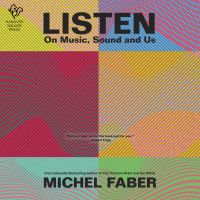
ListenMichel Faber12h 49m3.5 (534)$33 · $0.00
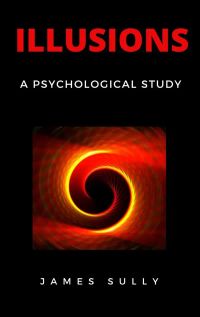
Illusions - A Psychological StudyJames Sully10h3.8 (14)$3.50 · $0.00
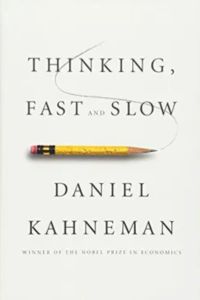
Thinking fast and SlowJereship1h 43m5.0 (5)Free

Phenomenology: Understanding ExperienceSaraban K. K. 1h 39m5.0 (8) Only with Ultra