
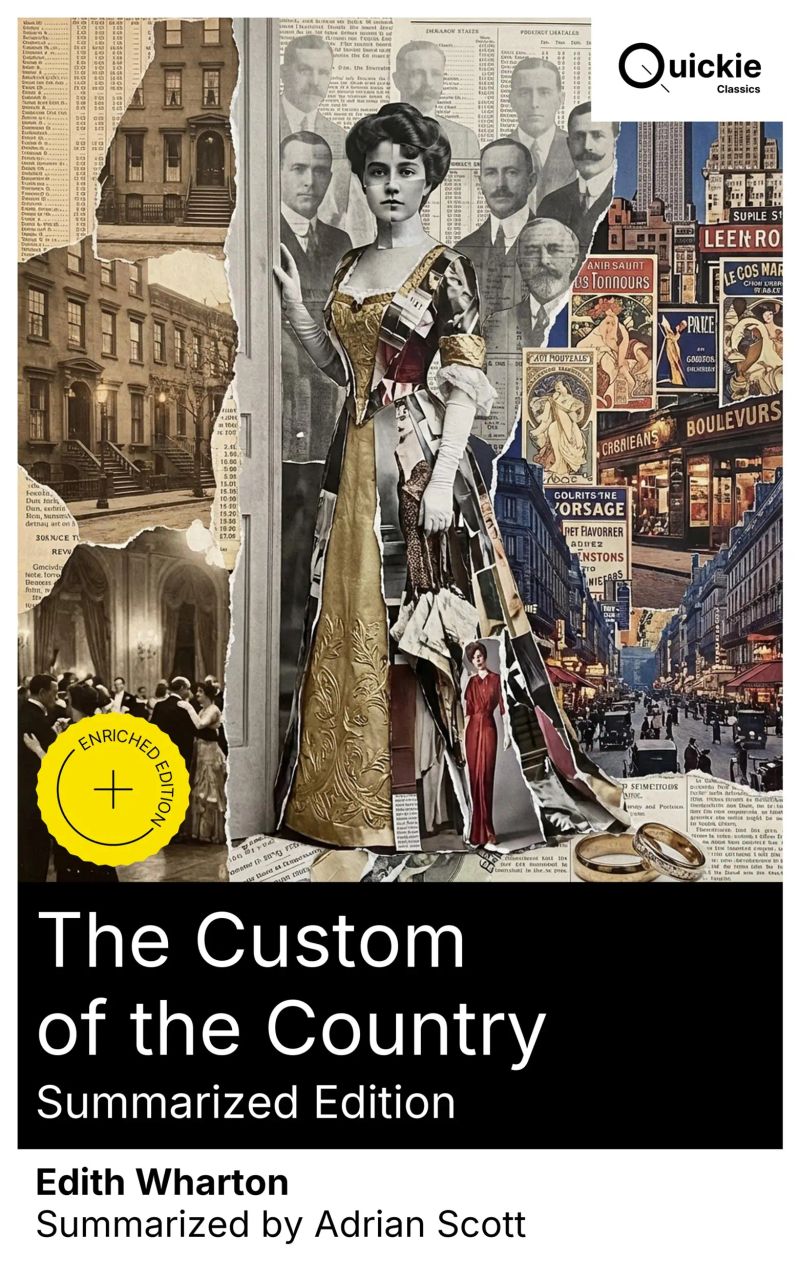
The Custom of the Country (Summarized Edition)
Enriched edition. A ruthless social climber in 20th-century New York exposes class, marriage, gender, and wealth inequality in American realismBy Edith Wharton


Length4h 58m
About this audiobook
Published in 1913, The Custom of the Country anatomizes the brisk commerce of status in New York and Paris through Undine Spragg, whose radiant will-to-consume turns marriage, art, and lineage into negotiable currency. With cool, surgical irony and supple free indirect discourse, Wharton stages a transatlantic comedy of manners whose settings—from clubrooms to divorce courts—expose the hinge between old money's codes and new money's appetites. Even the title plays on habit and tariff: the custom that sanctions predation, and the customs that tax every crossing. Wharton wrote from inside knowledge. Born into Old New York and later resident in Paris, she observed both genteel hypocrisies and raw plutocratic energies at close range. Her difficult marriage and cosmopolitan circle, including Henry James, sharpened her sense of marriage as marketplace and of women's agency constrained by law, money, and decorum. Recommended to readers of James and Balzac, to scholars of gender and capitalism, and to anyone curious about consumer modernity, this novel feels startlingly current. Its crystalline sentences and unsentimental intelligence make Undine's ascent both exhilarating and terrifying—a classic that clarifies the prices we pay for wanting everything.
Quickie Classics summarizes timeless works with precision, preserving the author's voice and keeping the prose clear, fast, and readable—distilled, never diluted. Enriched Edition extras: Introduction · Synopsis · Historical Context · Author Biography · Brief Analysis · 4 Reflection Q&As · Editorial Footnotes.
Audiobook details
GenreLiterary Classics, General Fiction
Length4 hrs 58 mins
Narrated byListen with 1,000+ voices
FormateBook with Audio
Publish dateJan 10, 2026
LanguageEnglish
Table of contents
1Introduction
2Introduction
3Synopsis
4Historical Context
5Author Biography
Show all chaptersShow less
6The Custom of the Country (pt. 1)
7The Custom of the Country (pt. 2)
8Analysis
9Reflection
Summer (Musaicum Romance Series)Edith Wharton7h 42m4.0 (19K)$1.99 · $0.00
Ethan Frome (World's Classics Series)Edith Wharton5h 24m3.7 (202.5K)$1.99 · $0.00
Tales of Old New YorkEdith Wharton10h 2m4.1 (3.8K)$1.99 · $0.00
The TouchstoneEdith Wharton2h 39m3.7 (2.5K)$16 · $0.00
The Glimpses of the MoonEdith Wharton7h 42m3.8 (6.2K)$10 · $0.00
SummerEdith Wharton5h 40m3.9 (27.8K)$16 · $0.00
The Age of InnocenceEdith Wharton9h 46m4.1 (244.3K)$6 · $0.00
Ethan FromeEdith Wharton3h 4m3.7 (181.1K)$9 · $0.00
Le temps de l'innocenceEdith Wharton12h 31m4.1 (238.3K)$0.99 · $0.00

The Ghost StoriesEdith Wharton14h 14m4.2 (6.7K)$0.99 · $0.00
10 American Romance ClassicsEdith Wharton, Louisa May Alcott, F. Scott Fitzgerald, Henry James, Frances Hodgson Burnett, Robert Barr, Grace Livingston Hill, Randall Parrish, Gene Stratton-Porter, Nathaniel Hawthorne114h 18m4.2 (12)$0.99

Tales of Old New York: A 40-Book CollectionEdith Wharton, F. Scott Fitzgerald, Herman Melville, Theodore Dreiser, Harriet Beecher Stowe, Horatio Jr. Alger, Edgar Fawcett, Grace Livingston Hill, H. C. Witwer, Myra Kelly, Clara Morris, Louis Tracy, Basil King, Arthur Stringer, Frances Hodgson Burnett, Montague Glass, Emma Speed Sampson, A. M. Williamson, C. N. Williamson, Cosmo Hamilton, Robert W. Chambers, H. C. Bunner, Louis Joseph Vance, Ellen Anderson Gholson Glasgow, Anthony Hope, John Bell Bouton, Gilbert Parker, George Barr McCutcheon, Owen Johnson, Ernest Poole, Lemuel Ely Quigg363h 31m$0.99

Italian Villas and Their Gardens (Annotated)Edith Wharton5h 54m$2 · $0.00
Mr. Jones (Annotated)Edith Wharton2h 37m4.3 (18)$2 · $0.00
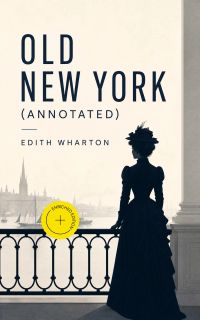
Old New York (Annotated)Edith Wharton10h 18m4.0 (4K)$2 · $0.00
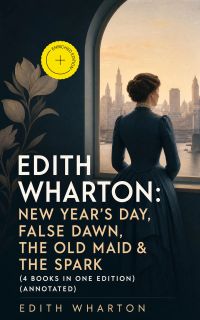
Edith Wharton: New Year's Day, False Dawn, The Old Maid & The Spark (4 Books in One Edition) (Annotated)Edith Wharton10h 20m4.4 (14)$2 · $0.00

The Children (Annotated)Edith Wharton12h 12m$2 · $0.00
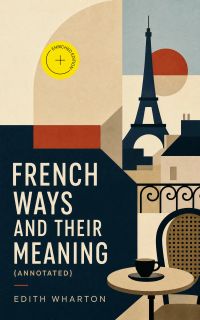
French Ways and Their Meaning (Annotated)Edith Wharton4h 19m3.9 (488)$2 · $0.00
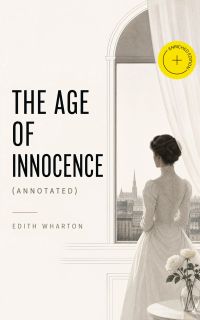
The Age of Innocence (Annotated)Edith Wharton13h 4m4.1 (236K)$2 · $0.00
Gesammelte Werke (Kommentiert)Edith Wharton59h 52m$2 · $0.00

To Kill a MockingbirdHarper Lee12h 18m4.5 (7.4M)$29 · $0.00

These Precious DaysAnn Patchett11h 14m4.5 (45.2K)$29 · $0.00
Pride & Prejudice (Annotated)Jane Austen15h 10m4.7 (13.3K)$2 · $0.00
The Jeeves and Wooster Stories: The Complete Collection (33 Books)P. G. Wodehouse21h 57m4.7 (2.8K)$15 · $0.00

The Gulag Archipelago Volume 3Aleksandr I. Solzhenitsyn21h 56m4.7 (8.9K)$46 · $0.00

This Side of Paradise - The Original 1920 Edition (Annotated)F. Scott Fitzgerald11h 30m4.6 (1.6K)$2 · $0.00
The Great Gatsby: Original 1925 Edition (An F. Scott Fitzgerald Classic NovelFrancis Scott Fitzgerald4h 45m4.6 (9.3K)$18 · $0.00
TWELFTH NIGHTWilliam Shakespeare, Sidney Lee16h 38m4.6 (2.8K)$1.99 · $0.00
The Complete Histories / History Plays of William Shakespeare (Annotated)William Shakespeare29h 42m4.6 (2.3K)$0.99 · $0.00
Braving the TruthRachel Held Evans11h 31m4.7 (359)$29 · $0.00

The Old Man and the Sea (Annotated)Ernest Hemingway4h 27m4.6 (1.4K)$2 · $0.00
Henry V (The Play, Historical Background and Analysis of the Character in the Play)William Shakespeare, William Hazlitt8h 50m4.6 (1.3K)$1.99 · $0.00
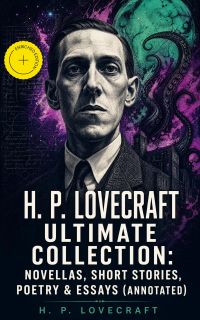
H. P. LOVECRAFT Ultimate Collection: Novellas, Short Stories, Poetry & Essays (Annotated)H. P. Lovecraft12h 28m4.6 (2.3K)$2 · $0.00
Time RegainedMarcel Proust16h 8m4.5 (10.6K)$1.99 · $0.00
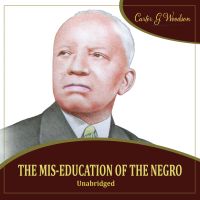
The Mis-Education of the NegroCarter Goodwin Woodson4h 32m4.5 (28.4K)$10 · $0.00

TORAH - Bilingual Edition: English/Hebrew (Annotated)Max Margolis, JPS28h 26m4.6 (1K)$2 · $0.00

Betty Crocker picture cooky bookBetty Crocker, Inc. General Mills2h 13m4.5 (6.5K)$1 · $0.00

The Complete Tales of Beatrix PotterBeatrix Potter3h 36m4.5 (75K)$3 · $0.00
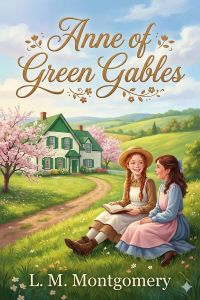
Anne of Green GablesL. M. Montgomery11h 1m4.5 (1.2M)$2.30 · $0.00

Crime and Punishment (The Unabridged Garnett Translation) (Annotated)Fyodor Dostoevsky24h 25m4.5 (15.4K)$0.99 · $0.00

WhistlerAnn Patchett10h 45m4.6 (4.6K)$29 · $0.00
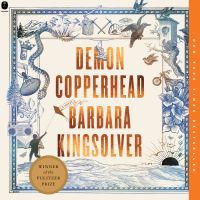
Demon CopperheadBarbara Kingsolver21h 3m4.5 (949.4K)$46 · $0.00
To Kill a MockingbirdHarper Lee12h 18m4.5 (7.4M)$29 · $0.00

Remarkably Bright CreaturesShelby Van Pelt11h 17m4.4 (1.7M)$29 · $0.00
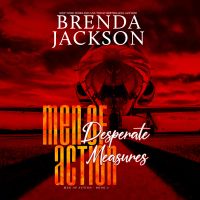
Desperate MeasuresBrenda Jackson8h 59m4.7 (670)$28 · $0.00
This Side of Paradise - The Original 1920 Edition (Annotated)F. Scott Fitzgerald11h 30m4.6 (1.6K)$2 · $0.00

War LordBernard Cornwell13h 21m4.6 (33.1K)$33 · $0.00
The Great Gatsby: Original 1925 Edition (An F. Scott Fitzgerald Classic NovelFrancis Scott Fitzgerald4h 45m4.6 (9.3K)$18 · $0.00
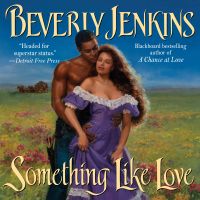
Something Like LoveBeverly Jenkins10h 21m4.6 (2.7K)$29 · $0.00
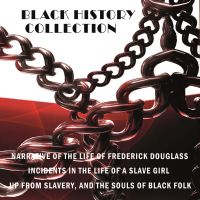
Black History CollectionFrederick Douglass, Harriet Ann Jacobs, Booker T. Washington, W.E.B. Du Bois27h 9m4.6 (2.6K)$18 · $0.00
The Old Man and the Sea (Annotated)Ernest Hemingway4h 27m4.6 (1.4K)$2 · $0.00

White HotIlona Andrews13h 18m4.5 (136.9K)$5 · $0.00

The Ghost by the Billabong (The Matilda Saga, #5)Jackie French14h 58m4.6 (773)$33 · $0.00
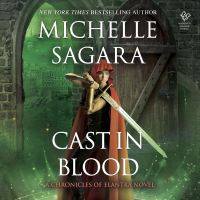
Cast in BloodMichelle Sagara16h 35m4.6 (607)$33 · $0.00
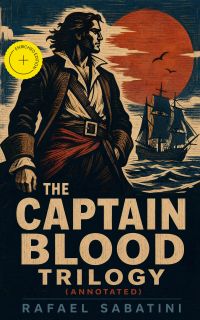
The Captain Blood Trilogy (Annotated)Rafael Sabatini29h 20m4.6 (1K)$3 · $0.00
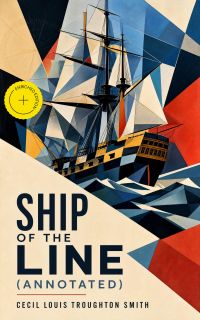
Ship of the Line (Annotated)Cecil Louis Troughton Smith11h 13m4.6 (1K)$2 · $0.00
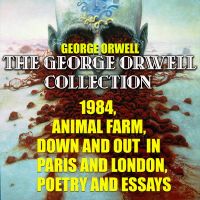
The George Orwell CollectionGeorge Orwell24h 46m4.5 (14.4K)$12 · $0.00
ShivajiRanjit Desai25h 13m4.6 (3.1K)$24 · $0.00
Time RegainedMarcel Proust15h 38m4.5 (9.2K)$2 · $0.00

Driving ForceElle James4h 58m4.6 (407)$20 · $0.00
You may also like
New Grub StreetGeorge Gissing21h 58m4.0 (9.6K)$1.99 · $0.00
Vanity FairMakepeace Thackeray35h 5m4.0 (158.7K)$2 · $0.00

The Luck of Barry Lyndon (Historical Novel)William Makepeace Thackeray13h 17m3.7 (4.3K)$1.99 · $0.00

The Custom of the CountryEdith Wharton14h 9m4.1 (25.8K)$2 · $0.00
The EgoistGeorge Meredith21h 25m3.7 (8.5K)$21 · $0.00

The Custom of the CountryEdith Wharton14h 13m4.1 (25.6K)$2.30 · $0.00
The Custom of the CountryEdith Wharton15h 30m4.2 (23.7K)$2.30

The Custom of the CountryEdith Wharton14h 30m4.1 (23.9K)$25
The Custom of the Country (Romance Classic)Edith Wharton17h 7m4.1 (39K)$1.99 · $0.00
The Memoirs of Barry Lyndon, Esq. (Annotated)William Makepeace Thackeray13h 16m3.8 (3.9K)$1.20 · $0.00

Elmer Gantry (Annotated)Sinclair Lewis19h 30m4.5 (1.2K)$2 · $0.00
An Apology for the Life of Mrs. Shamela AndrewsHenry Fielding1h 18m3.6 (1K)$2.30 · $0.00
Vanity Fair (Annotated)Makepeace Thackeray35h 14m4.1 (145.9K)$0.99 · $0.00
Lady Susan (Annotated)Jane Austen3h 53m3.8 (67.3K)$1.99 · $0.00

Keep the Aspidistra Flying (Annotated)Eric Arthur Blair11h 27m3.9 (26.4K)$0.99 · $0.00

Vanity FairWilliam Makepeace Thackeray34h 28m4.0 (163.8K)$1.99 · $0.00
BabbittSinclair Lewis11h 55m3.9 (35K)$23

The Lesson of the MasterHenry James2h 29m3.6 (1.7K)$8 · $0.00
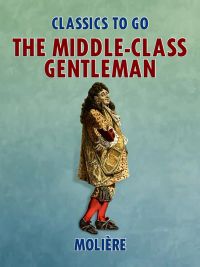
The Middle-Class GentlemanMolière2h 21m3.9 (16.4K)$2.30
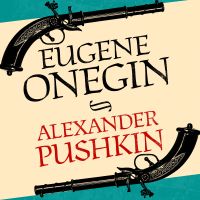
Eugene OneginAlexander Pushkin4h 42m4.2 (82K)$20 · $0.00