
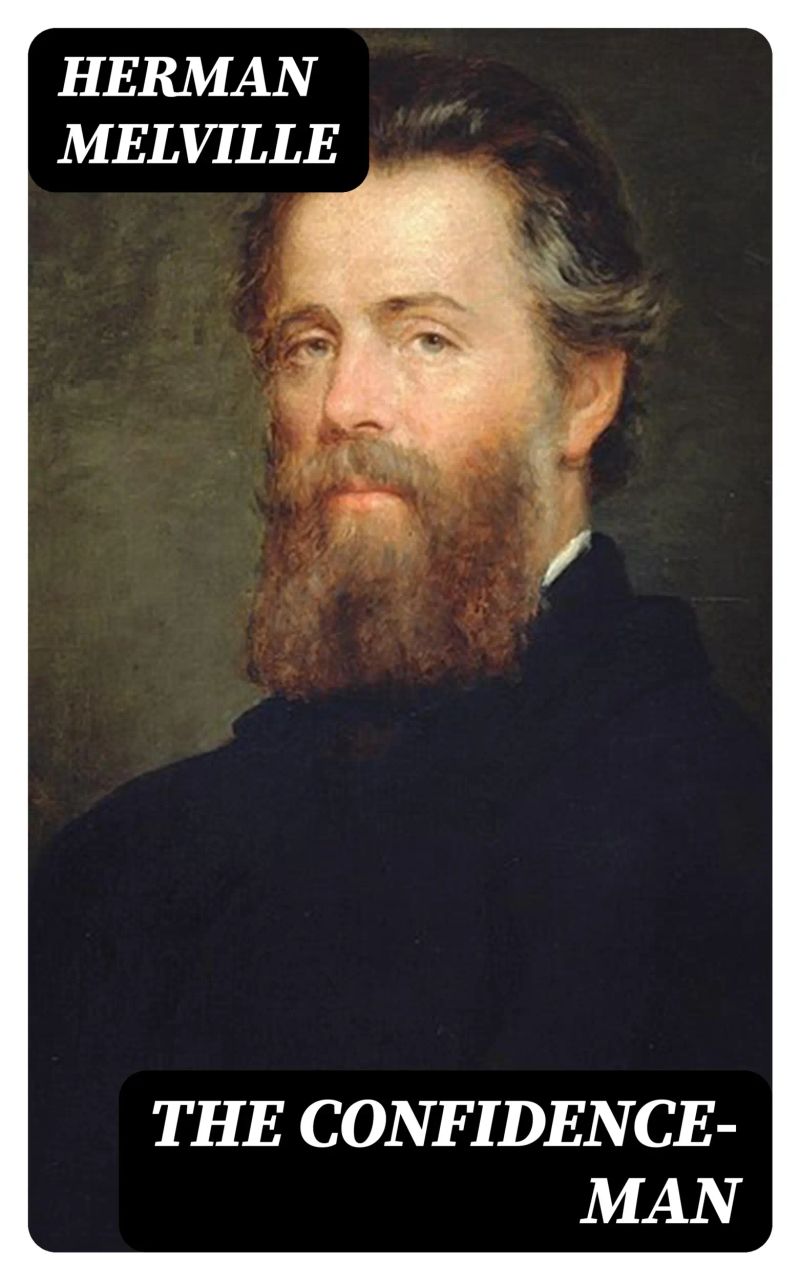
The Confidence-Man
Enriched edition. A Satirical Mississippi Steamboat Allegory of Trust, Identity, and Deception in Pre–Civil War AmericaBy Herman Melville


Length10h 38m
About this audiobook
In "The Confidence-Man," Herman Melville explores the themes of identity, trust, and deception within the framework of a philosophical narrative set on a Mississippi River steamboat. Written in 1857, this novel employs a satirical tone and fragmented style, incorporating dialogues and encounters that reflect the socio-economic uncertainties of pre-Civil War America. The characters, predominantly disguised swindlers, embody various facets of human nature, challenging readers to discern authenticity in a world rife with impostures. Melville's exploration of confidence as currency parallels the emergent capitalist ethos, probing the moral landscape of an era teetering on the brink of transformation. Herman Melville, renowned for his later masterpiece "Moby-Dick," delves into psychological intricacies through this earlier work, influenced by his experiences at sea and encounters with diverse cultures and customs. The philosophical underpinnings of his narratives often compelled him to question societal norms, making "The Confidence-Man" a critical lens on American individualism and morality. Melville's own struggles with public perception and artistic integrity resonate through the duplicitous interactions of his characters. Readers seeking a profound examination of human nature amidst social critique will find "The Confidence-Man" both engaging and thought-provoking. The blend of humor and social commentary invites reflection on the nature of trust and self-deception in relationships. This novel not only enriches the understanding of Melville's oeuvre but also stands as a crucial text in American literature that echoes the perennial conflicts between idealism and reality.
In this enriched edition, we have carefully created added value for your reading experience:
- A succinct Introduction situates the work's timeless appeal and themes.
- The Synopsis outlines the central plot, highlighting key developments without spoiling critical twists.
- A detailed Historical Context immerses you in the era's events and influences that shaped the writing.
- An Author Biography reveals milestones in the author's life, illuminating the personal insights behind the text.
- A thorough Analysis dissects symbols, motifs, and character arcs to unearth underlying meanings.
- Reflection questions prompt you to engage personally with the work's messages, connecting them to modern life.
- Hand‐picked Memorable Quotes shine a spotlight on moments of literary brilliance.
- Interactive footnotes clarify unusual references, historical allusions, and archaic phrases for an effortless, more informed read.
Audiobook details
Rating★★★★ 3.6 (12.6K)
Includes Goodreads, LibraryThing, StoryGraph, Amazon
GenreLiterary Classics, Humor
Length10 hrs 38 mins
Narrated byListen with 1,000+ voices
FormateBook with Audio
Publish dateNov 13, 2022
LanguageEnglish
Table of contents
1Chapter 1. A mute goes aboard a boat on the Mississippi
2Chapter 2. Showing that many men have many minds
3Chapter 3. In which a variety of characters appear
4Chapter 4. Renewal of old acquaintance
5Chapter 5. The man with the weed makes it an even question whether he be a great sage or a great simpleton
Show all chaptersShow less
6Chapter 6. At the outset of which certain passengers prove deaf to the call of charity
7Chapter 7. A gentleman with gold sleeve-buttons
8Chapter 8. A charitable lady
9Chapter 9. Two business men transact a little business
10Chapter 10. In the cabin
11Chapter 11. Only a page or so
12Chapter 12. The story of the unfortunate man, from which may be gathered whether or no he has been justly so entitled
13Chapter 13. The man with the traveling-cap evinces much humanity, and in a way which would seem to show him to be one of the most logical of optimists
14Chapter 14. Worth the consideration of those to whom it may prove worth considering
15Chapter 15. An old miser, upon suitable representations, is prevailed upon to venture an investment
16Chapter 16. A sick man, after some impatience, is induced to become a patient
17Chapter 17. Towards the end of which the Herb-Doctor proves himself a forgiver of injuries
18Chapter 18. Inquest into the true character of the Herb-Doctor
19Chapter 19. A soldier of fortune
20Chapter 20. Reappearance of one who may be remembered
21Chapter 21. A hard case
22Chapter 22. In the polite spirit of the Tusculan disputations
23Chapter 23. In which the powerful effect of natural scenery is evinced in the case of the Missourian, who, in view of the region round about Cairo, has a return of his chilly fit
24Chapter 24. A philanthropist undertakes to convert a misanthrope, but does not get beyond confuting him
25Chapter 25. The Cosmopolitan makes an acquaintance
26Chapter 26. Containing the metaphysics of Indian-hating, according to the views of one evidently not so prepossessed as Rousseau in favor of savages
27Chapter 27. Some account of a man of questionable morality, but who, nevertheless, would seem entitled to the esteem of that eminent English moralist who said he liked a good hater
28Chapter 28. Moot points touching the late Colonel John Moredock
29Chapter 29. The boon companions
30Chapter 30. Opening with a poetical eulogy of the Press and continuing with talk inspired by the same
31Chapter 31. A metamorphosis more surprising than any in Ovid
32Chapter 32. Showing that the age of music and magicians is not yet over
33Chapter 33. Which may pass for whatever it may prove to be worth
34Chapter 34. In which the Cosmopolitan tells the story of the gentleman-madman
35Chapter 35. In which the Cosmopolitan strikingly evinces the artlessness of his nature
36Chapter 36. In which the Cosmopolitan is accosted by a mystic, whereupon ensues pretty much such talk as might be expected
37Chapter 37. The mystical master introduces the practical disciple
38Chapter 38. The disciple unbends, and consents to act a social part
39Chapter 39. The hypothetical friends
40Chapter 40. In which the story of China Aster is, at second-hand, told by one who, while not disapproving the moral, disclaims the spirit of the style
41Chapter 41. Ending with a rupture of the hypothesis
42Chapter 42. Upon the heel of the last scene, the Cosmopolitan enters the barber's shop, a benediction on his lips
43Chapter 43. Very charming
44Chapter 44. In which the last three words of the last chapter are made the text of the discourse, which will be sure of receiving more or less attention from those readers who do not skip it
45Chapter 45. The Cosmopolitan increases in seriousness
Moby DickHerman Melville13h 39m3.8 (733.4K)$16 · $0.00
The Essential H. Melville - 9 Books in One VolumeHerman Melville57h 36m$1.99 · $0.00
MOBY DICK (Adventure Classic)Herman Melville25h 40m3.8 (740.9K)$1.99 · $0.00
The Man & The Sea - 10 Maritime Novels in One EditionHerman Melville115h 3m$2.99 · $0.00
The Complete Works of Herman Melville: Novels, Short Stories, Poems & EssaysHerman Melville185h 51m4.6 (413)$1.99 · $0.00
Benito Cereno & BartlebyHerman Melville5h 22m4.0 (3.8K)$1.99 · $0.00

Bartleby, der SchreiberHerman Melville2h 8m4.2 (153K)$1 · $0.00
Taipi (Deutsche Ausgabe)Herman Melville11h 45m4.1 (11)$1.50 · $0.00
Taipi & Omoo: Abenteuerromane aus der SüdseeHerman Melville21h 35m4.1 (77)$1 · $0.00

Moby DickHerman Melville19m3.8 (721.5K)$14 · $0.00

Moby Dick oder Der Wal (Kommentiert)Herman Melville10h 58m4.3 (5.3K)$2 · $0.00

50 American ClassicsHerman Melville, Walt Whitman, Henry David Thoreau, Sinclair Lewis, Louisa May Alcott, Emily Dickinson, F. Scott Fitzgerald, Gertrude Stein, Kate Chopin, Theodore Dreiser, Edith Wharton, Frances Hodgson Burnett, Mark Twain, Mary Mapes Dodge, Jack London, James Fenimore Cooper, Stephen Crane, O. Henry, Henry James, Edgar Allan Poe, Washington Irving, H. P. Lovecraft, L. Frank Baum, Edgar Rice Burroughs, Lew Wallace, Max Brand, Zane Grey, Dillon Wallace, Meriwether Lewis, William Clark, Harriet Jacobs, Frederick Douglass, Harriet Beecher Stowe, Nathaniel Hawthorne, Richard Henry Dana, William Dean Howells, Edward Bellamy, Willa Cather, Ambrose Bierce, E. W. Hornung, Wallace D. Wattles, William Walker Atkinson818h 47m4.4 (38)$1.99
Moby DickHerman Melville24h 41m3.8 (722.4K)$1.99 · $0.00

New York Narratives: A 40-Book Library of Old New York Stories & NovelsHerman Melville, Theodore Dreiser, Harriet Beecher Stowe, Edith Wharton, F. Scott Fitzgerald, Horatio Jr. Alger, Edgar Fawcett, Grace Livingston Hill, H. C. Witwer, Myra Kelly, Clara Morris, Louis Tracy, Basil King, Arthur Stringer, Frances Hodgson Burnett, Montague Glass, Emma Speed Sampson, A. M. Williamson, C. N. Williamson, Cosmo Hamilton, Robert W. Chambers, H. C. Bunner, Louis Joseph Vance, Ellen Anderson Gholson Glasgow, Anthony Hope, John Bell Bouton, Gilbert Parker, George Barr McCutcheon, Owen Johnson, Ernest Poole, Lemuel Ely Quigg363h 31m$1.99

Abenteuer in der Südsee: Taipi + Omoo (Kommentiert)Herman Melville21h 27m4.2 (37)$1 · $0.00
Moby DickHerman Melville24h 41m3.8 (708.5K)$1.99 · $0.00
THE GREAT SEA ADVENTURE - Pirate Novels, Treasure-Hunt Tales & Maritime StoriesHerman Melville, R. L. Stevenson, Daniel Defoe, Tobias Smollett, Walter Scott, Frederick Marryat, Edgar Allan Poe, James Fenimore Cooper, Thomas Mayne Reid, Victor Hugo, R. M. Ballantyne, Jules Verne, Jack London, L. Frank Baum, Randall Parrish, Charles Boardman Hawes, Joseph Conrad, Rudyard Kipling, Ralph Henry Barbour, Rafael Sabatini, Jeffery Farnol, Henry De Vere Stacpoole569h 41m4.4 (11)$1.99 · $0.00
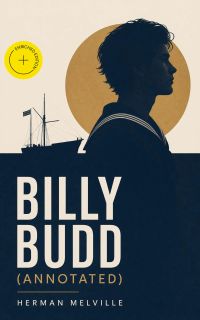
Billy Budd (Annotated)Herman Melville5h 12m3.2 (20.1K)$2 · $0.00
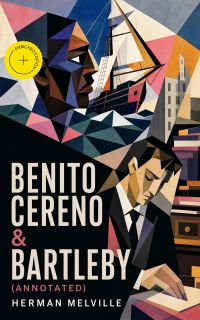
Benito Cereno & Bartleby (Annotated)Herman Melville6h 34m$2 · $0.00

Die größten philosophischen Romane (Kommentiert)Herman Melville, Joris-Karl Huysmans, Franz Kafka, Friedrich Nietzsche, Voltaire, Jean-Jacques Rousseau, André Gide, Rainer Maria Rilke, Joseph Conrad, Knut Hamsun, Klaus Mann, Fjodor Michailowitsch Dostojewski, Oscar Wilde, Thomas Wolfe176h 27m4.3 (10)$1 · $0.00
To Kill a MockingbirdHarper Lee12h 18m4.5 (7.4M)$29 · $0.00

These Precious DaysAnn Patchett11h 14m4.5 (45.2K)$29 · $0.00

This Side of Paradise - The Original 1920 Edition (Annotated)F. Scott Fitzgerald11h 30m4.6 (1.6K)$2 · $0.00
The Great Gatsby: Original 1925 Edition (An F. Scott Fitzgerald Classic NovelFrancis Scott Fitzgerald4h 45m4.6 (9.3K)$18 · $0.00
TWELFTH NIGHTWilliam Shakespeare, Sidney Lee16h 38m4.6 (2.8K)$1.99 · $0.00

The Complete Histories / History Plays of William Shakespeare (Annotated)William Shakespeare29h 42m4.6 (2.3K)$1.99 · $0.00

Braving the TruthRachel Held Evans11h 31m4.7 (359)$29 · $0.00

The Old Man and the Sea (Annotated)Ernest Hemingway4h 27m4.6 (1.4K)$2 · $0.00
Henry V (The Play, Historical Background and Analysis of the Character in the Play)William Shakespeare, William Hazlitt8h 50m4.6 (1.3K)$1.99 · $0.00
H. P. LOVECRAFT Ultimate Collection: Novellas, Short Stories, Poetry & Essays (Annotated)H. P. Lovecraft12h 28m4.6 (2.3K)$2 · $0.00
Time RegainedMarcel Proust16h 8m4.5 (10.6K)$1.99 · $0.00
The Mis-Education of the NegroCarter Goodwin Woodson4h 32m4.5 (28.4K)$10 · $0.00
Lessons in TruthH. Emilie3h 50m4.6 (1.4K)$4.70 · $0.00

TORAH - Bilingual Edition: English/Hebrew (Annotated)Max Margolis, JPS28h 26m4.6 (1K)$2 · $0.00

Betty Crocker picture cooky bookBetty Crocker, Inc. General Mills2h 13m4.5 (6.5K)$1 · $0.00

The Complete Tales of Beatrix PotterBeatrix Potter3h 36m4.5 (75K)$3 · $0.00

Anne of Green GablesL. M. Montgomery11h 1m4.5 (1.2M)$2.30 · $0.00

Crime and Punishment (The Unabridged Garnett Translation) (Annotated)Fyodor Dostoevsky24h 25m4.5 (15.4K)$1.99 · $0.00

The North American IndianEdward S. Curtis, Frederick Webb Hodge6h4.5 (1.2K)$2 · $0.00

The Picture of Dorian Gray: The Uncensored 13 Chapter Version + The Revised 20 Chapter Version (Annotated)Oscar Wilde16h 12m4.5 (2.8K)$1.99 · $0.00

Lost In TranslationAudrey Davis9h 15m4.4 (235)Free

The Life of DaiDai Henwood, Jaquie Brown8h 2m4.6 (790)$26 · $0.00
Welcome to PawneeJim O'Heir6h 24m4.5 (5.3K)$24 · $0.00
Going PostalTerry Pratchett13h 36m4.5 (163.8K)$33 · $0.00

Woman UninterruptedBrodie Kane7h 1m4.6 (562)$24 · $0.00
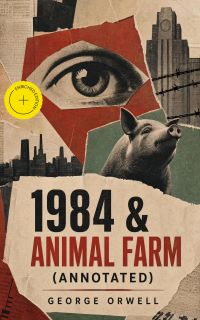
1984 & Animal Farm (Annotated)George Orwell15h 54m4.5 (220.8K)$3.99 · $0.00

Kingsblood Royal (Annotated)Sinclair Lewis14h 42m4.6 (264)$2 · $0.00

This Is Going to HurtAdam Kay5h 47m4.4 (444.7K)$24 · $0.00

You Will Get Through This NightDaniel Howell6h 56m4.4 (11.8K)$24 · $0.00

Northanger Abbey (Annotated)Jane Austen10h 7m4.5 (1.6K)$2 · $0.00

My Dear HamiltonStephanie Dray, Laura Kamoie23h 7m4.4 (63.6K)$46 · $0.00
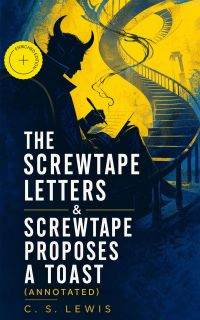
THE SCREWTAPE LETTERS & SCREWTAPE PROPOSES A TOAST (Annotated)C. S. Lewis5h 6m4.4 (471K)$2 · $0.00

BufferingHannah Hart5h 55m4.4 (12.4K)$24 · $0.00

The Office BFFsJenna Fischer, Angela Kinsey8h 26m4.3 (45.4K)$26 · $0.00

The Collected Stories of Dorothy ParkerDorothy Parker8h 36m4.3 (13.6K)$1 · $0.00
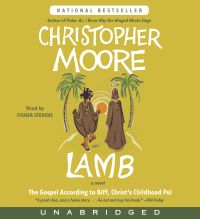
LambChristopher Moore15h 22m4.3 (211.3K)$33 · $0.00
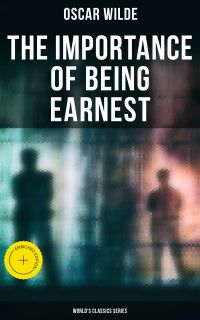
The Importance of Being Earnest (World's Classics Series)Oscar Wilde4h 10m4.3 (467.3K)$1.99 · $0.00

#IMomSoHardKristin Hensley, Jen Smedley7h 19m4.3 (7.3K)$24 · $0.00
Mixed PlateJo Koy8h 18m4.3 (7.1K)$26 · $0.00

Over the TopJonathan Van Ness5h 50m4.3 (87.3K)$24 · $0.00
You may also like
The Confidence-ManHerman Melville10h 27m3.7 (5.8K)$23
THE CONFIDENCE-MAN (Modern Classics Series) (Annotated)Herman Melville12h 21m3.6 (3.6K)$1.99 · $0.00
The Confidence-Man His MasqueradeHerman Melville10h 34m3.7 (5.7K)$2.30

Is Shakespeare Dead?Mark Twain2h 57m3.9 (2K)$7 · $0.00
The Confidence-Man: His MasqueradeHerman Melville10h 36m3.6 (13K)$2.30 · $0.00

Dead SoulsNikolai Vasilievich15h 38m4.1 (111.8K)$3.50 · $0.00

In a German PensionKatherine Mansfield3h 47m3.8 (1.9K)$20

PARISIAN SKETCHESEmile Zola1h 8m4.2 (357)$1.99 · $0.00
Fletch and the Widow BradleyGregory Mcdonald5h 28m3.8 (2.3K)$17
Elmer GantrySinclair Lewis17h 30m4.0 (8.9K)$2.40
Dead soulsNikolai Gogol15h 44m4.1 (110.8K)$3 · $0.00
The Inspector-General (Annotated)Nikolai Vasilevich Gogol4h 59m4.0 (19.7K)$2 · $0.00
Dead SoulsNikolai Gogol12h 58m4.1 (115.8K)$23

Queen LuciaEdward Frederic Benson9h 28m4.0 (7.7K)$1 · $0.00
Dead Souls (Annotated)Nikolai Gogol17h 21m4.1 (106.9K)$2 · $0.00
The Gilded Age, A Tale of TodayMark Twain15h 58m3.6 (21.5K)$1 · $0.00

Studies In Classic American LiteratureD. H. Lawrence6h 51m4.1 (1.5K)$2.30
The Blithedale RomanceNathaniel Hawthorne7h 32m3.6 (9.8K)$6 · $0.00

The Man Who Lost Himself (Annotated)Henry De Vere Stacpoole8h 26m4.0 (56)$2 · $0.00
ShriverChris Belden7h 36m3.8 (523)$17