
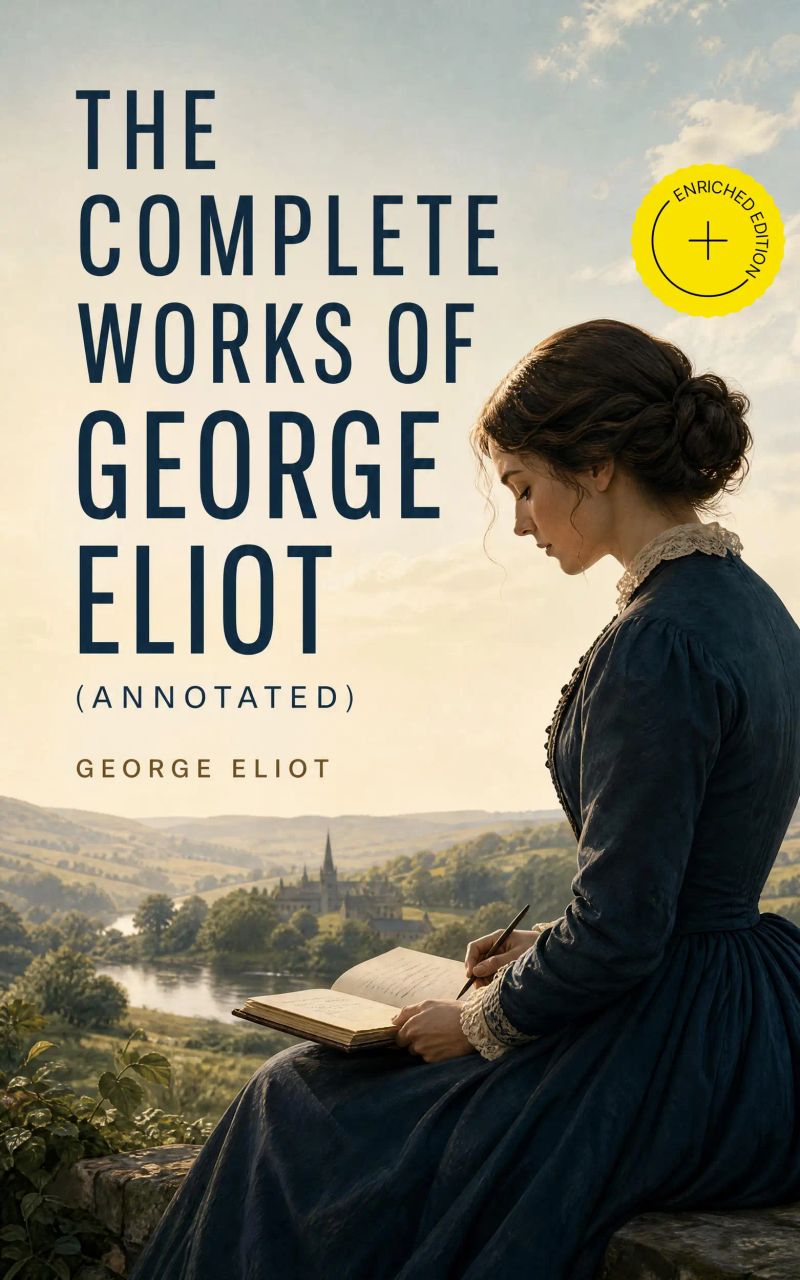
The Complete Works of George Eliot (Annotated)
Enriched Edition. Victorian Realism, Moral Psychology, Provincial Life, and Social Consequence in Nineteenth-Century EnglandBy George Eliot


Length216h 23m
About this audiobook
The Complete Works of George Eliot gathers the fiction, essays, poetry, and translations that established Eliot as one of the central moral intelligences of Victorian literature. From Adam Bede and The Mill on the Floss to Middlemarch and Daniel Deronda, these works combine psychological realism, philosophical reflection, and social analysis, rendering provincial life, religious doubt, gender constraint, and ethical responsibility with extraordinary narrative depth. Eliot's prose is at once capacious, ironic, and compassionate, situated within the nineteenth-century realist tradition yet intellectually broader than most of its contemporaries. George Eliot was the pen name of Mary Ann Evans, whose formidable education, unconventional life, and career in journalism profoundly shaped her art. Her work as editor, critic, and translator exposed her to German theology, positivist philosophy, and debates over science, faith, and social reform. Living outside conventional respectability with George Henry Lewes, she understood intimately the pressures of moral judgment and social exclusion—experiences that sharpened her sympathy for complex human motives. This collection is recommended to readers seeking not merely classic novels but a complete encounter with a mind of rare ethical seriousness. It rewards those interested in literary realism, intellectual history, feminist inquiry, and the enduring question of how individuals act within webs of consequence.
This enriched edition has been carefully crafted to add value to your reading experience.
- A comprehensive Introduction outlines these selected works' unifying features, themes, or stylistic evolutions.
- The Author Biography highlights personal milestones and literary influences that shape the entire body of writing.
- A Historical Context section situates the works in their broader era—social currents, cultural trends, and key events that underpin their creation.
- A concise Synopsis (Selection) offers an accessible overview of the included texts, helping readers navigate plotlines and main ideas without revealing critical twists.
- A unified Analysis examines recurring motifs and stylistic hallmarks across the collection, tying the stories together while spotlighting the different work's strengths.
- Reflection questions inspire deeper contemplation of the author's overarching message, inviting readers to draw connections among different texts and relate them to modern contexts.
- Lastly, our hand‐picked Memorable Quotes distill pivotal lines and turning points, serving as touchstones for the collection's central themes.
Audiobook details
Rating★★★★ 4.2 (164)
Includes Goodreads
GenreLiterary Classics
Length216 hrs 23 mins
Narrated byListen with 1,000+ voices
FormateBook with Audio
Publish dateSep 20, 2013
LanguageEnglish
Table of contents
1The Complete Works of George Eliot (Annotated)
26Book Five. (pt. 2)
2Introduction
27Book Six. (pt. 1)
3Author Biography
28Book Six. (pt. 2)
4Historical Context
29The Lifted Veil.
5Synopsis (Selection)
30The Mill on the Floss.
Show all chaptersShow less
6The Complete Works of George Eliot
31Book I. (pt. 1)
7Scenes of Clerical Life.
32Book I. (pt. 2)
8The Sad Fortunes of the Rev. Amos Barton. (pt. 1)
33Book I. (pt. 3)
9The Sad Fortunes of the Rev. Amos Barton. (pt. 2)
34Book II. (pt. 1)
10Mr. Gilfil’s Love Story. (pt. 1)
35Book II. (pt. 2)
11Mr. Gilfil’s Love Story. (pt. 2)
36Book III. (pt. 1)
12Mr. Gilfil’s Love Story. (pt. 3)
37Book III. (pt. 2)
13Janet’s Repentance. (pt. 1)
38Book IV.
14Janet’s Repentance. (pt. 2)
39Book V. (pt. 1)
15Janet’s Repentance. (pt. 3)
40Book V. (pt. 2)
16Adam Bede.
41Book VI. (pt. 1)
17Book One. (pt. 1)
42Book VI. (pt. 2)
18Book One. (pt. 2)
43Book VI. (pt. 3)
19Book One. (pt. 3)
44Book VII.
20Book Two. (pt. 1)
45Silas Marner,the Weaver of Raveloe.
21Book Two. (pt. 2)
46Part One. (pt. 1)
22Book Three.
47Part One. (pt. 2)
23Book Four. (pt. 1)
48Part One. (pt. 3)
24Book Four. (pt. 2)
49Part Two.
25Book Five. (pt. 1)
50Romola.

MiddlemarchGeorge Eliot42h 9m4.2 (234K)$29 · $0.00
The Complete WorksGeorge Eliot216h 30m4.5 (599)$1.99 · $0.00

Silas Marner (The Weaver of Raveloe)George Eliot9h 9m3.9 (131.8K)$1.99 · $0.00
Daniel Deronda (Historical Novel)George Eliot35h 18m4.0 (32.4K)$1.99 · $0.00
The Life of George EliotGeorge Eliot35h 26m4.0 (225)$1.99 · $0.00
Middlemarch (Musaicum Vintage Classics)George Eliot36h 17m$1.99 · $0.00
The Complete Novels of George Eliot - All 9 Novels in One EditionGeorge Eliot169h 44m4.5 (711)$1.99 · $0.00
The Complete Novels in One VolumeGeorge Eliot199h 42m4.6 (410)$1.99 · $0.00

Die Mühle am Floß (Kommentiert)George Eliot25h 26m$2 · $0.00

Romola (Kommentiert)George Eliot30h 53m4.2 (15)$1 · $0.00
George Eliot - Sämtliche RomaneGeorge Eliot192h 34m4.6 (11)$2 · $0.00

A Cornucopia of Knowledge: 24 Didactic Fiction BooksGeorge Eliot, Thomas Carlyle, Irving Bacheller, Constance Fenimore Woolson, Sarah Fielding, T. S. Arthur, H. G. Wells, J. G. Holland, Mary H. Eastman, Brand Whitlock, James Oppenheim, Hannah More, Silas Xavier Floyd, George Horace Lorimer, George Griswold Livermore, Margaret M. Robertson, Eleanora H. Stooke, A. L. O. E., Horatio Jr. Alger, Mary Wollstonecraft, John Ruskin218h 45m$0.99 · $0.00

The Life of George Eliot (Vol. 1-3) (Annotated)George Eliot35h 25m$2 · $0.00
GEORGE ELIOT Ultimate Collection: 60+ Novels, Short Stories, Poems & Essays (Annotated)George Eliot266h 29m4.5 (129)$2 · $0.00

Adam Bede (Annotated)George Eliot24h4.1 (84.1K)$2 · $0.00

The Mill on the Floss (Annotated)George Eliot24h 23m3.8 (60.1K)$2 · $0.00

Middlemarch (Kommentiert)George Eliot47h 41m4.2 (209.5K)$2 · $0.00

Silas Marner (Annotated)George Eliot9h 16m$2 · $0.00
The Complete Novels of George Eliot - All 9 Novels in One Edition (Annotated)George Eliot169h 41m4.5 (404)$2 · $0.00

To Kill a MockingbirdHarper Lee12h 18m4.5 (7.4M)$29 · $0.00

These Precious DaysAnn Patchett11h 14m4.5 (45.2K)$29 · $0.00

The Complete Histories / History Plays of William Shakespeare (Annotated)William Shakespeare29h 42m4.6 (2.3K)$0.99 · $0.00
Braving the TruthRachel Held Evans11h 31m4.7 (359)$29 · $0.00

The Old Man and the Sea (Annotated)Ernest Hemingway4h 27m4.6 (1.4K)$2 · $0.00
Henry V (The Play, Historical Background and Analysis of the Character in the Play)William Shakespeare, William Hazlitt8h 50m4.6 (1.3K)$1.99 · $0.00
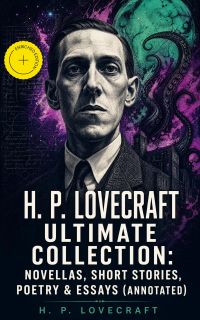
H. P. LOVECRAFT Ultimate Collection: Novellas, Short Stories, Poetry & Essays (Annotated)H. P. Lovecraft12h 28m4.6 (2.3K)$2 · $0.00
Time RegainedMarcel Proust16h 8m4.5 (10.6K)$1.99 · $0.00
The Mis-Education of the NegroCarter Goodwin Woodson4h 32m4.5 (28.4K)$10 · $0.00

TORAH - Bilingual Edition: English/Hebrew (Annotated)Max Margolis, JPS28h 26m4.6 (1K)$2 · $0.00

Betty Crocker picture cooky bookBetty Crocker, Inc. General Mills2h 13m4.5 (6.5K)$1 · $0.00

The Complete Tales of Beatrix PotterBeatrix Potter3h 36m4.5 (75K)$3 · $0.00
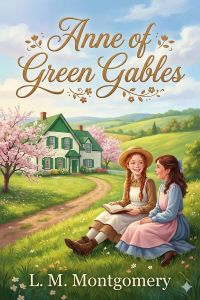
Anne of Green GablesL. M. Montgomery11h 1m4.5 (1.2M)$2.30 · $0.00

Crime and Punishment (The Unabridged Garnett Translation) (Annotated)Fyodor Dostoevsky24h 25m4.5 (15.4K)$0.99 · $0.00

The North American IndianEdward S. Curtis, Frederick Webb Hodge6h4.5 (1.2K)$2 · $0.00
The Picture of Dorian Gray: The Uncensored 13 Chapter Version + The Revised 20 Chapter Version (Annotated)Oscar Wilde16h 12m4.5 (2.8K)$0.99 · $0.00
Grimoire Of The Everyday WitchIsadora Lys / Virginia Santos5h 35m4.5 (3.9K)$9 · $0.00
Winnie-the-PoohAlan Alexander Milne2h 52m4.5 (401.1K)$3 · $0.00

Sitting PrettyRebekah Taussig7h 33m4.5 (18.9K)$26 · $0.00

The Poetic Edda & The Prose EddaSnorri Sturluson, Saemund Sigfusson9h 34m4.5 (4K)$1 · $0.00
You may also like
THE LETTERS OF F. SCOTT FITZGERALDF. Scott Fitzgerald22h 37m4.1 (388)$2 · $0.00

The Mint (Unabridged) (Annotated)T. E. Lawrence, Lawrence of Arabia8h 1m3.9 (1.6K)$1.99 · $0.00

The Inner SecretWilliam Walker Atkinson4h 32m4.3 (264)$2 · $0.00
The Elephant Man and Other ReminiscencesSir Frederick Treves5h 1m4.1 (937)$1 · $0.00
Louder Than WordsJoe Navarro, Toni Sciarra Poynter6h 49m4.1 (1.9K)$24 · $0.00
Things No One Taught Us About LoveVex King5h 55m4.2 (2.8K)$24 · $0.00
Within You is the PowerHenry Thomas Hamblin3h 19m3.9 (3.2K)$1.99 · $0.00
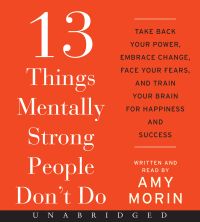
13 Things Mentally Strong People Don't DoAmy Morin6h 36m4.0 (42.7K)$7 · $0.00
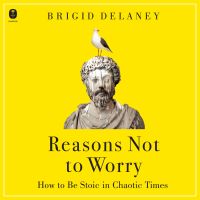
Reasons Not to WorryBrigid Delaney8h 25m4.1 (3.2K)$26 · $0.00

The BirthmarkNathaniel Hawthorne4h 45m3.9 (10.8K)$2 · $0.00

The Essays of Arthur Schopenhauer: the Wisdom of LifeArthur Schopenhauer3h 35m4.2 (29.7K)$2 · $0.00
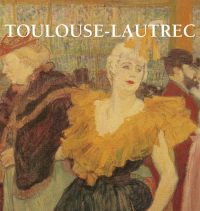
Toulouse-LautrecNathalia Brodskaya1h$7 · $0.00

The Complete Works of Charlotte Brontë (Annotated)Charlotte Brontë, Elizabeth Gaskell114h 50m$2 · $0.00
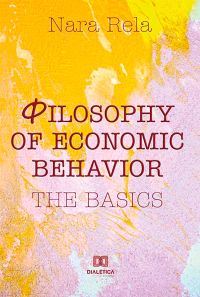
Philosophy of Economic BehaviorNara Rela10h 4m$14 · $0.00
Overcome ProcrastinationFelix KauFmann4h 21m$9 · $0.00

Negative Emotions: Emotional Self Help for Controlling Negative Feelings (Complete Step by Step Guide to Transforming Your Negativity Into Positive Energy)John Culpepper47m5.0 (1)$3.50 · $0.00

Captain Mansana & Mother's HandsBjørnstjerne Bjørnson5h 4m$2 · $0.00
Stoicism: The Ultimate Guide of Stoicism to Make Your Everyday Modern Life Calm (How Ancient Philosophy Will Help You Conquer Stress, Master Emotions, and Build Better Relationships)Michael Hughes1h 30m$3.50 · $0.00

The Attack on the Mill (Unabridged) (Annotated)Emile Zola2h 54m$2 · $0.00
Bipolar Disorder: A Comprehensive Guide to Symptom Control and Daily Functioning (The Most Effective Strategies for a Great Sense of Structure, Overall Mood Enhancement, and Increased Confidence)Gary Boddie4h 4m$3.50 · $0.00