
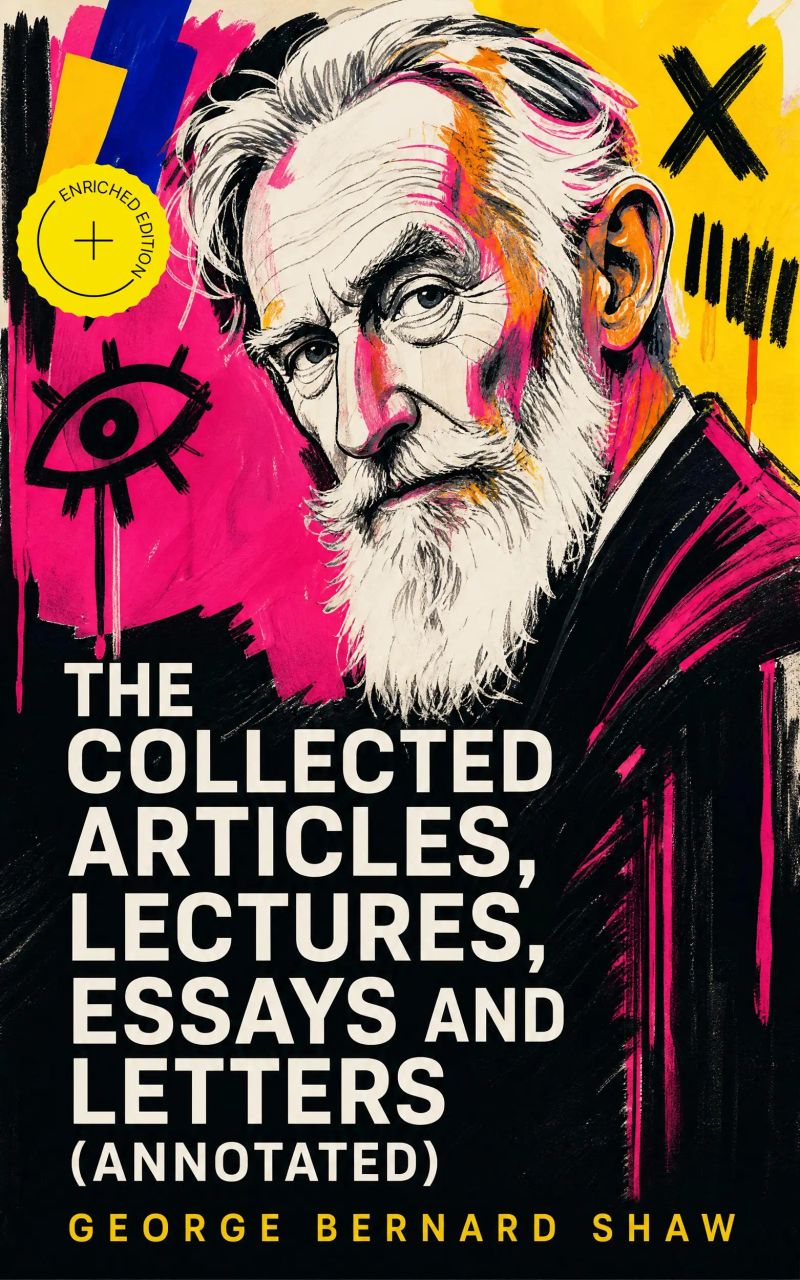
The Collected Articles, Lectures, Essays and Letters (Annotated)
Enriched Edition. Criticism, Prefaces, and Letters on Theater, Socialism, War, Faith, and Evolution from a Nobel LaureateBy George Bernard Shaw


Length45h 19m
About this audiobook
The Collected Articles, Lectures, Essays and Letters gathers George Bernard Shaw's occasional prose into a panoramic record of his public intelligence. Here are the polemicist, critic, socialist, dramatist, and irrepressible correspondent speaking in forms more immediate than the stage. Written with Shavian paradox, comic precision, and argumentative brilliance, these pieces illuminate the intellectual climate of late Victorian and Edwardian Britain, from art and theatre to politics, religion, economics, and social reform. Shaw's life prepared him uniquely for such a collection. Born in Dublin in 1856 and self-educated in London, he became a music and drama critic, a Fabian socialist, and one of the defining playwrights of modern English drama. His journalism and lectures were not ancillary to his plays; they were part of the same mission to expose cant, challenge institutions, and replace inherited assumptions with rational scrutiny and moral courage. This volume is recommended for readers who want to encounter Shaw beyond the familiar brilliance of Pygmalion or Major Barbara. It offers scholars and general readers alike a vivid map of his mind in motion: combative, humane, witty, and astonishingly contemporary.
This enriched edition has been carefully crafted to add value to your reading experience.
- A comprehensive Introduction outlines these selected works' unifying features, themes, or stylistic evolutions.
- The Author Biography highlights personal milestones and literary influences that shape the entire body of writing.
- A Historical Context section situates the works in their broader era—social currents, cultural trends, and key events that underpin their creation.
- A concise Synopsis (Selection) offers an accessible overview of the included texts, helping readers navigate plotlines and main ideas without revealing critical twists.
- A unified Analysis examines recurring motifs and stylistic hallmarks across the collection, tying the stories together while spotlighting the different work's strengths.
- Reflection questions inspire deeper contemplation of the author's overarching message, inviting readers to draw connections among different texts and relate them to modern contexts.
- Lastly, our hand‐picked Memorable Quotes distill pivotal lines and turning points, serving as touchstones for the collection's central themes.
Audiobook details
GenreLiterary Classics
Length45 hrs 19 mins
Narrated byListen with 1,000+ voices
FormateBook with Audio
Publish dateJul 31, 2017
LanguageEnglish
Table of contents
1Introduction
2Introduction
3Author Biography
4Historical Context
5Synopsis (Selection)
Show all chaptersShow less
6Quintessence Of Ibsenism (1891)
7PREFACE TO THE THIRD EDITION
8PREFACE: 1913
9PREFACE TO THE FIRST EDITION
10THE TWO PIONEERS
11IDEALS AND IDEALISTS
12THE WOMANLY WOMAN
13THE AUTOBIOGRAPHICAL ANTI-IDEALIST: EXTRAVAGANZAS
14THE OBJECTIVE ANTI-IDEALIST PLAYS
15THE LAST FOUR PLAYS DOWN AMONG THE DEAD MEN
16THE LESSON OF THE PLAYS
17WHAT IS THE NEW ELEMENT IN THE NORWEGIAN SCHOOL?
18THE TECHNICAL NOVELTY IN IBSEN’S PLAYS
19NEEDED: AN IBSEN THEATRE
20The Impossibilities Of Anarchism (1895)
21Anarchists and Socialists
22Individualist Anarchism
23Communist Anarchism
24Democracy
25The Anarchist Spirit
26The Perfect Wagnerite, Commentary on the Niblung’s Ring (1898)
27PREFACE TO THE FIRST GERMAN EDITION
28PREFACE TO THE SECOND EDITION
29PREFACE TO THE FIRST EDITION
30PRELIMINARY ENCOURAGEMENTS
31THE RING OF THE NIBLUNGS
32THE RHINE GOLD
33WAGNER AS REVOLUTIONIST
34THE VALKYRIES
35SIEGFRIED
36BACK TO OPERA AGAIN
37SIEGFRIED AS PROTESTANT
38PANACEA QUACKERY, OTHERWISE IDEALISM
39DRAMATIC ORIGIN OF WOTAN
40THE LOVE PANACEA
41NOT LOVE, BUT LIFE
42ANARCHISM NO PANACEA
43SIEGFRIED CONCLUDED
44NIGHT FALLS ON THE GODS
45A WAGNERIAN NEWSPAPER CONTROVERSY
46FORGOTTEN ERE FINISHED
47WHY HE CHANGED HIS MIND
48WAGNER’S OWN EXPLANATION
49THE PESSIMIST AS AMORIST
50THE MUSIC OF THE RING
The Essential G. B. Shaw: Celebrated Plays, Novels, Personal Letters, Essays & Articles (Annotated)George Bernard Shaw198h 42m$2 · $0.00
The Collected Plays (Illustrated) (Annotated)George Bernard Shaw175h 18m$2 · $0.00
The Collected Works: Plays, Novels, Articles, Lectures, Letters and Essays (Annotated)George Bernard Shaw257h 36m4.6 (40)$2 · $0.00
Pygmalion (Complete Illustrated Edition) (Annotated)George Bernard Shaw10h 56m4.2 (1.3K)$2 · $0.00
The Collected Works of George Bernard Shaw: Plays, Novels, Articles, Lectures, Letters and Essays (Annotated)George Bernard Shaw257h 23m4.6 (21)$2 · $0.00
George Bernard Shaw: Collected Articles, Lectures, Essays and Letters (Annotated)George Bernard Shaw45h 15m$2 · $0.00
Caesar and CleopatraGeorge Bernard Shaw4h 3m3.8 (3.3K)$2 · $0.00
The Simpleton of the Unexpected IslesGeorge Bernard Shaw4h 22m3.5 (154)$1 · $0.00
The Irrational KnotGeorge Bernard Shaw13h 24m3.5 (653)$2 · $0.00
The Complete Works of George Bernard ShawGeorge Bernard Shaw277h 41m4.5 (45)$1 · $0.00
"In Good King Charles's Golden Days"George Bernard Shaw4h 23m3.7 (246)$2 · $0.00
Man and SupermanGeorge Bernard Shaw9h 14m4.0 (7.5K)$2 · $0.00
Cashel Byron's ProfessionGeorge Bernard Shaw9h 15m3.8 (159)$1 · $0.00

A Journey Through Marital Tales: 52 StorybooksGeorge Bernard Shaw, John Kendrick Bangs, George Farquhar, Susanna Centlivre, Henrik Ibsen, Pierre Augustin Caron de Beaumarchais, Allan Monkhouse, Humphry Mrs. Ward, Charlotte Skinner, P. Jones, Mrs. Gordon Smythies, Arthur Hornblow, George Howells Broadhurst, Florence L. Barclay, A. S. M. Hutchinson, Archibald Marshall, Arthur Stringer, George Sand, Halliwell Sutcliffe, Margaret Widdemer, Mabel Barnes-Grundy, Neith Boyce, Martha Morton, W. Heimburg, Albert Delpit, Henry James, Thomas Hardy, George Moore, Elizabeth Cleghorn Gaskell, Walter Besant, Alfred Ollivant, Cornelia A. P. Comer, August Strindberg, P. G. Wodehouse, Mae M. Franking, Katherine Anne Porter, Honoré de Balzac, Arthur Conan Doyle, Arthur Morrison, George Gissing, Rudyard Kipling, Ella D'Arcy, Elinor Glyn, Harriet Beecher Stowe, Hannah More, Mary Croom Brown, Fowl, Helen Rowland, Burt L. Standish, Annie F. Johnston, Carolyn Wells, James Montgomery Flagg, Sir John Dillon, Edward Ward, Frank Chapman Bliss339h 20m$1.99 · $0.00

The Collected Works of George Bernard Shaw: Plays, Novels, Articles, Letters and EssaysGeorge Bernard Shaw199h 7m4.3 (177)$1 · $0.00
Pygmalion (Illustrated Edition)George Bernard Shaw9h 20m4.1 (236.8K)$2 · $0.00
Arms and the ManGeorge Bernard Shaw3h 53m4.0 (13.6K)$2 · $0.00
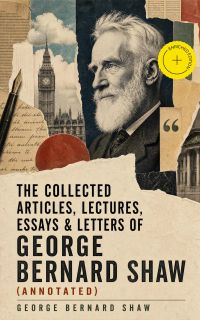
The Collected Articles, Lectures, Essays & Letters of George Bernard Shaw (Annotated)George Bernard Shaw45h 24m$2 · $0.00
PygmalionGeorge Bernard Shaw9h 19m4.1 (143.1K)$2 · $0.00

To Kill a MockingbirdHarper Lee12h 18m4.5 (7.4M)$29 · $0.00

These Precious DaysAnn Patchett11h 14m4.5 (45.2K)$29 · $0.00
Pride & Prejudice (Annotated)Jane Austen15h 10m4.7 (13.3K)$2 · $0.00
The Jeeves and Wooster Stories: The Complete Collection (33 Books)P. G. Wodehouse21h 57m4.7 (2.8K)$15 · $0.00
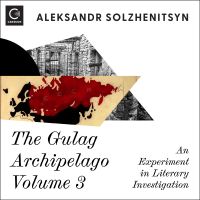
The Gulag Archipelago Volume 3Aleksandr I. Solzhenitsyn21h 56m4.7 (8.9K)$46 · $0.00

This Side of Paradise - The Original 1920 Edition (Annotated)F. Scott Fitzgerald11h 30m4.6 (1.6K)$2 · $0.00
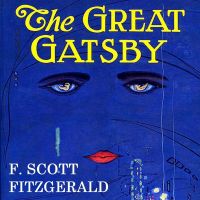
The Great Gatsby: Original 1925 Edition (An F. Scott Fitzgerald Classic NovelFrancis Scott Fitzgerald4h 45m4.6 (9.3K)$18 · $0.00
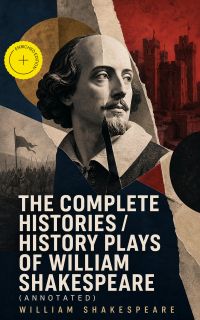
The Complete Histories / History Plays of William Shakespeare (Annotated)William Shakespeare29h 42m4.6 (2.3K)$1.99 · $0.00

Braving the TruthRachel Held Evans11h 31m4.7 (359)$29 · $0.00

The Old Man and the Sea (Annotated)Ernest Hemingway4h 27m4.6 (1.4K)$2 · $0.00
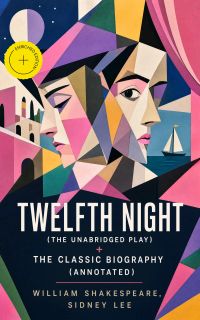
Twelfth Night (The Unabridged Play) + The Classic Biography (Annotated)William Shakespeare, Sidney Lee16h 38m4.6 (1.4K)$2 · $0.00
Henry V (The Play, Historical Background and Analysis of the Character in the Play)William Shakespeare, William Hazlitt8h 50m4.6 (1.3K)$1.99 · $0.00
H. P. LOVECRAFT Ultimate Collection: Novellas, Short Stories, Poetry & Essays (Annotated)H. P. Lovecraft12h 28m4.6 (2.3K)$2 · $0.00
Time RegainedMarcel Proust16h 8m4.5 (10.6K)$1.99 · $0.00
Lessons in TruthH. Emilie3h 50m4.6 (1.4K)$4.70 · $0.00

TORAH - Bilingual Edition: English/Hebrew (Annotated)Max Margolis, JPS28h 26m4.6 (1K)$2 · $0.00

Betty Crocker picture cooky bookBetty Crocker, Inc. General Mills2h 13m4.5 (6.5K)$1 · $0.00
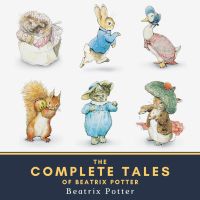
The Complete Tales of Beatrix PotterBeatrix Potter3h 36m4.5 (75K)$3 · $0.00

Anne of Green GablesL. M. Montgomery11h 1m4.5 (1.2M)$2.30 · $0.00

Crime and Punishment (The Unabridged Garnett Translation) (Annotated)Fyodor Dostoevsky24h 25m4.5 (15.4K)$1.99 · $0.00
You may also like
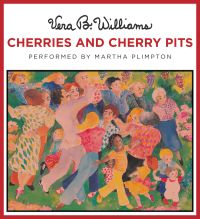
Cherries and Cherry PitsVera B. Williams12m4.3 (577)$4 · $0.00
Acres of DiamondsRussell H. Conwell1h 26m4.2 (12.9K)$13
KAMA SUTRA (Annotated)Richard Francis Burton7h 57m3.7 (26.7K)$2 · $0.00
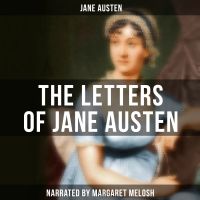
The Letters of Jane AustenJane Austen8h 34m4.3 (4.5K)$3 · $0.00

The Family ClauseJonas Hassen Khemiri10h3.9 (4.5K)$20 · $0.00

How to Analyze People on SightElsie Benedict7h 10m3.6 (2.7K)$1.20 · $0.00
13 Things Mentally Strong Parents Don't DoAmy Morin10h 10m4.2 (4.7K)$29 · $0.00
Sex ScandalAshley McGuire7h 9m4.0 (452)$20
MeditationsMarcus Aurelius6h 10m4.3 (449.1K)$21 · $0.00

Counterattacks at ThirtyWon-pyung Sohn6h 55m3.7 (3.2K)$24 · $0.00
Chanakya in Daily LifeRadhakrishnan Pillai6h 2m4.1 (2.8K)$8
WOMEN & ECONOMICSCharlotte Perkins Gilman8h 19m3.6 (326)$1.99 · $0.00

Partial PortraitsHenry James8h 23m4.1 (156)$1 · $0.00

The Expert Maid-ServantChristine Terhune Herrick2h 27m$2 · $0.00

The Decoration of HousesEdith Wharton, Ogden Codman4h 47m4.0 (289)$2 · $0.00

The Working Mom's Guide to Raising Successful KidsAurora Brooks1h 30m$3.50 · $0.00

Narcissism: Understanding Narcissism and the Mindset of Toxic People (A Healing Guide to Breaking Free From Toxic Family Patterns and Rediscovering Your True Self)Matt g, James Kearney3h 24m$15 · $0.00
Be a Great Leader by FridayDr. Kevin Leman5h 23m$10 · $0.00

SlaveryWilliam Ellery Channing4h 52m$1 · $0.00
SOUTH CAROLINA DMV Permit Study GuideLUCAS CRANE8h 50m$11.50 · $0.00