
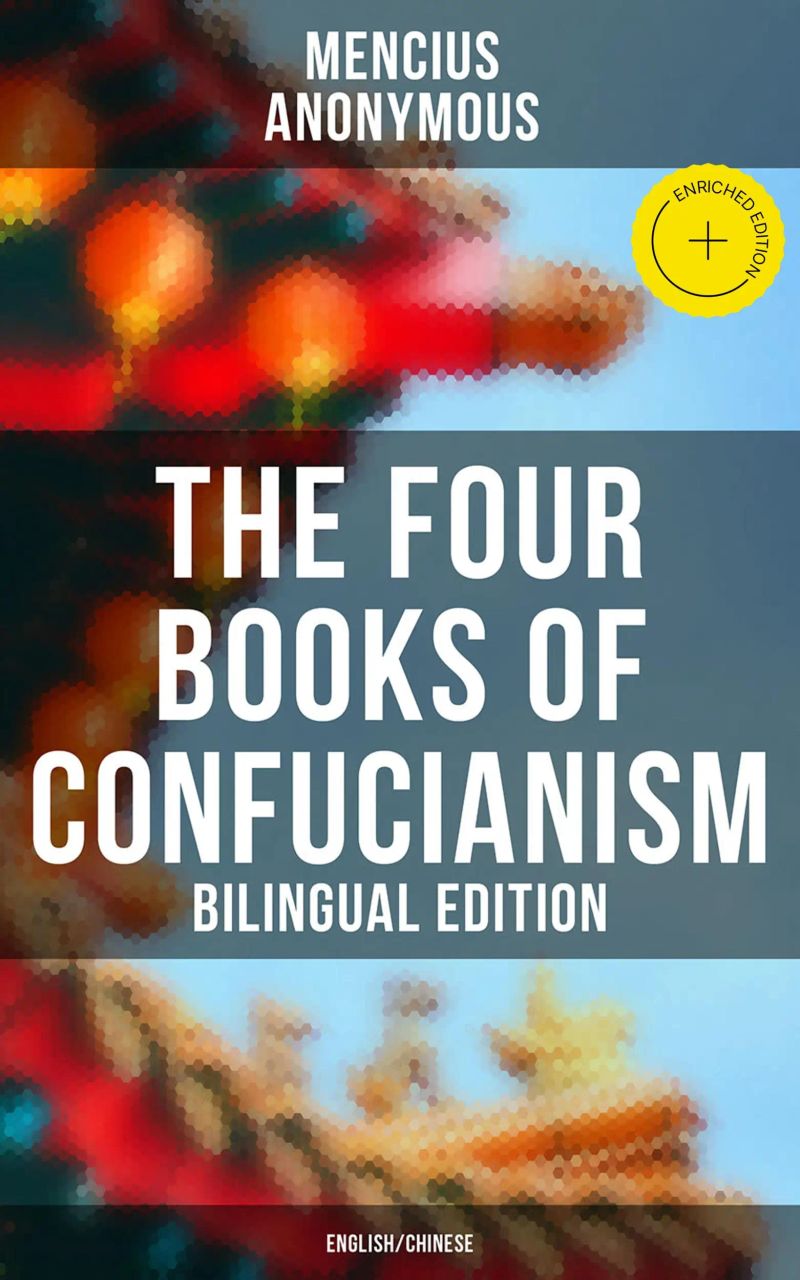
The Four Books of Confucianism (Bilingual Edition: English/Chinese)
Enriched edition. Confucian Insights on Ethics, Politics, and Personal GrowthBy Mencius, Anonymous


Length13h 41m
About this audiobook
The Four Books of Confucianism, in its bilingual English/Chinese edition, serves as a monumental compilation, revealing the profound depth and versatility of Confucian philosophy. Spanning across ethics, politics, and personal development, this anthology bridges ancient wisdom with contemporary inquiry through varied literary styles including dialogues, essays, and aphorisms. Though rooted in profound scholarship, the compilation remains vividly accessible and offers seminal texts that have shaped East Asian cultural and intellectual landscapes. Noteworthy are the texts that articulate the roles of individuals within society and the governing state, illustrating philosophical inquiries that remain relevant today. The contributing ancient scholars, including the legendary Mencius and various insightful but anonymous authors, lend their voices to a tapestry of ideas that echo through time. Their works collectively trace the evolution of Confucian thought and its adaptation within various historical epochs, influenced by political upheavals and cultural exchanges. As the Confucian canon forms a cornerstone in understanding traditional Chinese philosophy, this anthology captures a dynamic interplay of ideologies that have significantly sculpted philosophical discourse in East Asia. This bilingual anthology offers readers an unparalleled opportunity to engage with the foundational texts of Confucianism directly alongside their English translations, fostering a deeper understanding of the material and its contemporary relevance. Scholars, students, and enthusiasts of philosophy and Asian studies will find in these pages a rich source of educational enrichment and intellectual challenge, inviting a thoughtful reflection on life's cardinal questions and the societal values that guide human conduct.
In this enriched edition, we have carefully created added value for your reading experience:
- An Introduction draws the threads together, discussing why these diverse authors and texts belong in one collection.
- Historical Context explores the cultural and intellectual currents that shaped these works, offering insight into the shared (or contrasting) eras that influenced each writer.
- A combined Synopsis (Selection) briefly outlines the key plots or arguments of the included pieces, helping readers grasp the anthology's overall scope without giving away essential twists.
- A collective Analysis highlights common themes, stylistic variations, and significant crossovers in tone and technique, tying together writers from different backgrounds.
- Reflection questions encourage readers to compare the different voices and perspectives within the collection, fostering a richer understanding of the overarching conversation.
Audiobook details
Rating★★★★ 4.4 (18)
Includes Amazon
GenrePhilosophy, Literary Classics
Length13 hrs 41 mins
Narrated byListen with 1,000+ voices
FormateBook with Audio
Publish dateJan 4, 2022
LanguageEnglish
Table of contents
1The Complete Works of Nathaniel Hawthorne (Illustrated Edition)
2The Picture of Dorian Gray (Collector's Edition)
3William Shakespeare - Ultimate Collection: Complete Plays & Poetry in One Volume
4Running a Thousand Miles for Freedom
5The Books of Chinese Wisdom
Show all chaptersShow less
6Introduction
7Historical Context
8Synopsis (Selection)
9大學 The Great Learning
10中庸 The Doctrine of the Mean
11論語 Analects
12Chapter III. The Master said, "Fine words and an insinuating appearance are seldom associated with true virtue."
13Chapter V. 1. Mang I asked what filial piety was. The Master said, "It is not being disobedient."
14Chapter XVI. The Master said, "The study of strange doctrines is injurious indeed!"
15Chapter XXI. 1. Some one addressed Confucius, saying, "Sir, why are you not engaged in the government?"
16Chapter XXII. 1. The Master said, "Small indeed was the capacity of Kwan Chung!"
17Chapter IV. The Master said, "If the will be set on virtue, there will be no practice of wickedness."
18Chapter XXV. The Master said, "Virtue is not left to stand alone. He who practises it will have neighbors."
19Chapter IV. 1. Some one said, "Yung is truly virtuous, but he is not ready with his tongue."
20Chapter VII. 1. Mang Wu asked about Tsze-lu, whether he was perfectly virtuous. The Master said, "I do not know."
21Chapter VIII. 1. The Master said to Tsze-kung, "Which do you consider superior, yourself or Hui?"
22Chapter I. 1. The Master said, "There is Yung!—He might occupy the place of a prince."
23Chapter XXII. The Master said, "Heaven produced the virtue that is in me. Hwan T'ui—what can he do to me?"
24Chapter XXXVI. The Master said, "The superior man is satisfied and composed; the mean man is always full of distress."
25Chapter XVII. The Master said, "I have not seen one who loves virtue as he loves beauty."
26Chapter XIX. The Master said, "Never flagging when I set forth anything to him;—ah! that is Hui."
27Chapter VIII. When Yen Yuan died, the Master said, "Alas! Heaven is destroying me! Heaven is destroying me!"
28Chapter XIV. 1. The Master said, "What has the lute of Yu to do in my door?"
29Chapter XVII. 1. Ch'ai is simple.
30Chapter V. 1. Sze-ma Niu, full of anxiety, said, "Other men all have their brothers, I only have not."
31Chapter XII. 1. The Master said, "Ah! it is Yu, who could with half a word settle litigations!"
32Chapter XX. 1. Tsze-chang asked, "What must the officer be, who may be said to be distinguished?"
33Chapter VII. The Master said, "The governments of Lu and Wei are brothers."
34Chapter XXVII. The Master said, "The firm, the enduring, the simple, and the modest are near to virtue."
35Chapter XXX. The Master said, "To lead an uninstructed people to war, is to throw them away."
36Chapter X. 1. Some one asked about Tsze-ch'an. The Master said, "He was a kind man."
37Chapter XI. The Master said, "To be poor without murmuring is difficult. To be rich without being proud is easy."
38Chapter XXI. The Master said, "He who speaks without modesty will find it difficult to make his words good."
39Chapter XXIX. The Master said, "The superior man is modest in his speech, but exceeds in his actions."
40Chapter XXXVII. 1. The Master said, "Alas! there is no one that knows me."
41Chapter XL. The Master said, "Those who have done this are seven men."
42Chapter III. The Master said, "Yu, those who know virtue are few."
43Chapter XIX. The Master said, "The superior man dislikes the thought of his name not being mentioned after his death."
44Chapter XL. The Master said, "In language it is simply required that it convey the meaning."
45Chapter II. The Master said, "By nature, men are nearly alike; by practice, they get to be wide apart."
46Chapter XIII. The Master said, "Your good, careful people of the villages are the thieves of virtue."
47Chapter XIX. 1. The Master said, "I would prefer not speaking."
48Chapter VIII. Tsze-hsia said, "The mean man is sure to gloss his faults."
49Chapter XIV. Tsze-hsia said, "Mourning, having been carried to the utmost degree of grief, should stop with that."
50Chapter XXII. 1. Kung-sun Ch'ao of Wei asked Tsze-kung, saying, "From whom did Chung-ni get his learning?"
More from Mencius, Anonymous

WitnessAriel Burger8h 1m4.6 (1.3K)$20 · $0.00
The Magic PresenceGodfré Ray King10h 21m4.6 (307)$1.20 · $0.00
The Art of LivingThich Nhat Hanh5h 1m4.5 (14.2K)$24 · $0.00
Moral Letters to LuciliusLucius Annaeus Seneca24h 26m4.5 (71.7K)$1.99 · $0.00
Lessons in TruthH. Emilie Cady3h 50m4.5 (2.4K)$20 · $0.00
The Discourses of EpictetusP. E. MATHESOM12h 47m4.4 (17.7K)$1.20 · $0.00
IlluminationsWalter Benjamin10h 12m4.4 (16.2K)$20 · $0.00

That Bird Has My WingsJarvis Jay Masters9h 49m4.4 (13.7K)$29 · $0.00

Tâo Teh KingLaozi2h 34m4.4 (230.9K)$2 · $0.00
SymposiumPlato3h 26m4.4 (97.9K)$1.20 · $0.00

Buddhist Boot CampTimber Hawkeye2h 39m4.4 (8.4K)$18 · $0.00
Enchiridion & The Discourses of Epictetus (Annotated)Arrian Epictetus18h 9m4.4 (3.5K)$2 · $0.00

The Meditations of the Emperor Marcus Aurelius AntoninusEmperor of Rome Marcus Aurelius5h 41m4.4 (1.8M)$1 · $0.00
Crime and PunishmentFyodor Dostoevsky23h 11m4.4 (1.3M)$12 · $0.00

MeditationsMarcus Aurelius5h 52m4.4 (433.7K)$1 · $0.00

Everyday DharmaSuneel Gupta5h 2m4.5 (761)$20 · $0.00

The Joyful Wisdom ("La Gaya Scienza")Friedrich Wilhelm Nietzsche11h 37m4.4 (26.6K)$1 · $0.00
The Art of LivingEpictetus, Sharon Lebell3h 16m4.4 (50.1K)$18 · $0.00
MeditationsEmperor Of Rome Marcus Aurelius7h 23m4.3 (477.5K)$1.20 · $0.00

The Imitation of ChristThomas à Kempis6h 27m4.3 (84.6K)$21 · $0.00

To Kill a MockingbirdHarper Lee12h 18m4.5 (7.4M)$29 · $0.00

These Precious DaysAnn Patchett11h 14m4.5 (45.2K)$29 · $0.00

This Side of Paradise - The Original 1920 Edition (Annotated)F. Scott Fitzgerald11h 30m4.6 (1.6K)$2 · $0.00
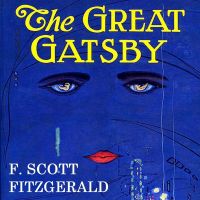
The Great Gatsby: Original 1925 Edition (An F. Scott Fitzgerald Classic NovelFrancis Scott Fitzgerald4h 45m4.6 (9.3K)$18 · $0.00
TWELFTH NIGHTWilliam Shakespeare, Sidney Lee16h 38m4.6 (2.8K)$1.99 · $0.00

The Complete Histories / History Plays of William Shakespeare (Annotated)William Shakespeare29h 42m4.6 (2.3K)$1.99 · $0.00

Braving the TruthRachel Held Evans11h 31m4.7 (359)$29 · $0.00

The Old Man and the Sea (Annotated)Ernest Hemingway4h 27m4.6 (1.4K)$2 · $0.00

Henry V (The Play, Historical Background and Analysis of the Character in the Play)William Shakespeare, William Hazlitt8h 50m4.6 (1.3K)$1.99 · $0.00

H. P. LOVECRAFT Ultimate Collection: Novellas, Short Stories, Poetry & Essays (Annotated)H. P. Lovecraft12h 28m4.6 (2.3K)$2 · $0.00
Time RegainedMarcel Proust16h 8m4.5 (10.6K)$1.99 · $0.00
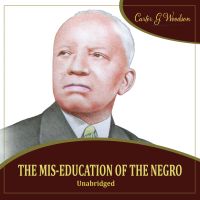
The Mis-Education of the NegroCarter Goodwin Woodson4h 32m4.5 (28.4K)$10 · $0.00
Lessons in TruthH. Emilie3h 50m4.6 (1.4K)$4.70 · $0.00

TORAH - Bilingual Edition: English/Hebrew (Annotated)Max Margolis, JPS28h 26m4.6 (1K)$2 · $0.00
Betty Crocker picture cooky bookBetty Crocker, Inc. General Mills2h 13m4.5 (6.5K)$1 · $0.00
The Complete Tales of Beatrix PotterBeatrix Potter3h 36m4.5 (75K)$3 · $0.00

Anne of Green GablesL. M. Montgomery11h 1m4.5 (1.2M)$2.30 · $0.00

Crime and Punishment (The Unabridged Garnett Translation) (Annotated)Fyodor Dostoevsky24h 25m4.5 (15.4K)$1.99 · $0.00

The North American IndianEdward S. Curtis, Frederick Webb Hodge6h4.5 (1.2K)$2 · $0.00

The Picture of Dorian Gray: The Uncensored 13 Chapter Version + The Revised 20 Chapter Version (Annotated)Oscar Wilde16h 12m4.5 (2.8K)$1.99 · $0.00
You may also like
Cherries and Cherry PitsVera B. Williams12m4.3 (577)$4 · $0.00

The Family ClauseJonas Hassen Khemiri10h3.9 (4.5K)$20 · $0.00

13 Things Mentally Strong Parents Don't DoAmy Morin10h 10m4.2 (4.7K)$29 · $0.00

How to Analyze People on SightElsie Benedict7h 10m3.6 (2.7K)$1.20 · $0.00
Just Show UpCal Ripken Jr., James Dale3h 33m4.0 (4K)$18 · $0.00

Counterattacks at ThirtyWon-pyung Sohn6h 55m3.7 (3.2K)$24 · $0.00
How To Win Friends And Influence People (Unabridged) (Annotated)Dale Carnegie11h 33m4.4 (3.2K)$1.99 · $0.00

Anton ChekhovDonald Rayfield28h 30m4.3 (590)$35

Get MarriedBrad Wilcox9h 15m4.3 (688)$29 · $0.00

Money and LoveMyra Strober, Abby Davisson8h 46m4.1 (368)$29 · $0.00

How to Retire the Cheapskate WayJeff Yeager7h 24m3.7 (1.3K)$22 · $0.00

The Expert Maid-ServantChristine Terhune Herrick2h 27m$2 · $0.00

The Decoration of HousesEdith Wharton, Ogden Codman4h 47m4.0 (289)$2 · $0.00

SOUTH CAROLINA DMV Permit Study GuideLUCAS CRANE8h 50m$11.50 · $0.00
Introduction and brief biography of Honore de BalzacGeorge Saintsbury2h 3m$1 · $0.00

Ancient, Curious, and Famous WillsVirgil M. Harris16h 38m3.9 (38)$1 · $0.00

A Faire Distance ApartFeral Sephrian41m$2 · $0.00
Aristoteles: Metaphysik, Nikomachische Ethik, Das Organon, Die Physik & Die DichtkunstAristoteles61h 42m4.4 (54)$1.99 · $0.00

How to Talk to Your Child about Difficult TopicsAurora Brooks59m$3.50 · $0.00

The Kallikak Family (Annotated)Henry H. Goddard2h 43m$2 · $0.00