
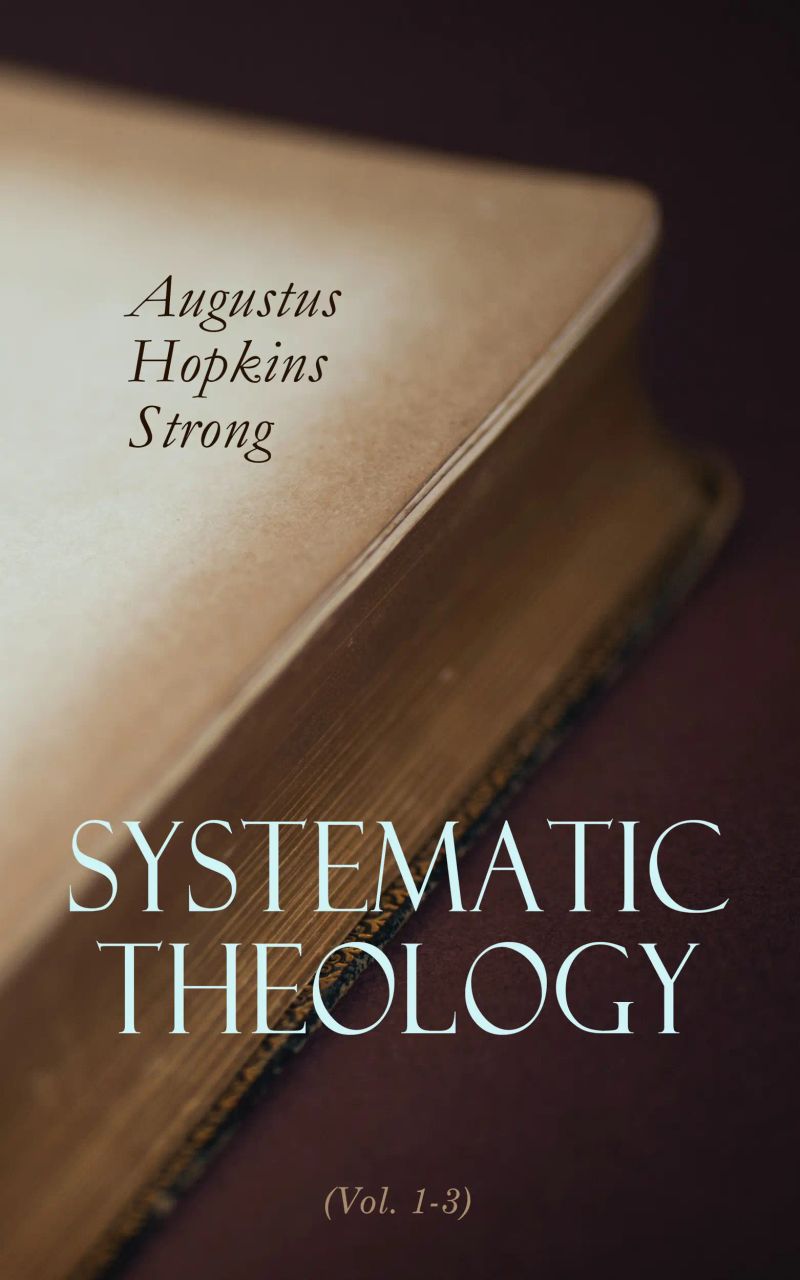
Systematic Theology (Vol. 1-3)
Complete EditionBy Augustus Hopkins Strong

Length92h 12m
About this audiobook
"Systematic Theology" in 3 volumes is one of the best-known works by the American Baptist minister and theologian Augustus Hopkins Strong. This carefully crafted e-artnow ebook is formatted for your eReader with a functional and detailed table of contents.
Excerpt:
"Under the influence of Ritschl and his Kantian relativism, many of our teachers and preachers have swung off into a practical denial of Christ's deity and of his atonement. We seem upon the verge of a second Unitarian defection that will break up churches and compel secessions, in a worse manner than did that of Channing and Ware a century ago. American Christianity recovered from that disaster only by vigorously asserting the authority of Christ and the inspiration of the Scriptures. We need a new vision of the Savior like that which Paul saw on the way to Damascus and John saw on the isle of Patmos, to convince us that Jesus is lifted above space and time, that his existence antedated creation, that he conducted the march of Hebrew history, that he was born of a virgin, suffered on the cross, rose from the dead, and now lives forevermore, the Lord of the universe, the only God with whom we have to do, our Savior here and our Judge hereafter. Without a revival of this faith our churches will become secularized, mission enterprise will die out, and the candlestick will be removed out of its place as it was with the seven churches of Asia, and as it has been with the apostate churches of New England."
Contents:
Idea of Theology
Method of Theology
The Existence of God
Origin of Our Idea of God's Existence
Corroborative Evidences of God's Existence
The Scriptures A Revelation from God
The Nature, Decrees, and Works of God
The Attributes of God
Doctrine of the Trinity
The Decrees of God
The Works of God
Anthropology, Or the Doctrine of Man:
The Original State of Man
Sin, Or Man's State Of Apostasy
Soteriology
Christology
The Reconciliation of Man to God
Ecclesiology, Or the Doctrine of the Church
Eschatology…
Audiobook details
GenreSpirituality and Religion
Length92 hrs 12 mins
Narrated byListen with 1,000+ voices
FormateBook with Audio
Publish dateSep 27, 2020
LanguageEnglish
Table of contents
1Preface
75Chapter IV. The Works Of God; Or The Execution Of The Decrees.
2Part I. Prolegomena.
76Section I.—Creation. (pt. 1)
3Chapter I. Idea Of Theology.
77Section I.—Creation. (pt. 2)
4I. Definition of Theology.
78Section II.—Preservation.
5II. Aim of Theology.
79Section III.—Providence.
Show all chaptersShow less
6III. Possibility of Theology.
80Section IV.—Good And Evil Angels.
7IV. Necessity of Theology.
81Part V. Anthropology, Or The Doctrine Of Man.
8V. Relation of Theology to Religion.
82Chapter I. Preliminary.
9Chapter II. Material of Theology.
83I. Man a Creation of God and a Child of God.
10I. Sources of Theology.
84II. Unity of the Human Race.
11II. Limitations of Theology.
85III. Essential Elements of Human Nature.
12III. Relations of Material to Progress in Theology.
86IV. Origin of the Soul.
13Chapter III. Method Of Theology.
87V. The Moral Nature of Man.
14I. Requisites to the study of Theology.
88Chapter II. The Original State Of Man.
15II. Divisions of Theology.
89I. Essentials of Man's Original State.
16III. History of Systematic Theology.
90II. Incidents of Man's Original State.
17IV. Order of Treatment in Systematic Theology.
91Chapter III. Sin, Or Man's State Of Apostasy.
18V. Text-Books in Theology.
92Section I.—The Law Of God.
19Part II. The Existence Of God.
93Section II.—Nature Of Sin.
20Chapter I. Origin Of Our Idea Of God's Existence.
94Section III.—Universality Of Sin.
21I. First Truths in General.
95Section IV.—Origin Of Sin In The Personal Act Of Adam.
22II. The Existence of God a first truth.
96Section V.—Imputation Of Adam's Sin To His Posterity. (pt. 1)
23III. Other Supposed Sources of our Idea of God's Existence.
97Section V.—Imputation Of Adam's Sin To His Posterity. (pt. 2)
24IV. Contents of this Intuition.
98Section VI.—Consequences Of Sin To Adam's Posterity.
25Chapter II. Corroborative Evidences Of God's Existence.
99Section VII.—The Salvation Of Infants.
26I. The Cosmological Argument, or Argument from Change in Nature.
100Part VI. Soteriology, Or The Doctrine Of Salvation Through The Work Of Christ And Of The Holy Spirit.
27II. The Teleological Argument, or Argument from Order and Useful Collocation in Nature.
101Chapter I. Christology, Or The Redemption Wrought By Christ.
28III. The Anthropological Argument, or Argument from Man's Mental and Moral Nature.
102Section I.—Historical Preparation For Redemption.
29IV. The Ontological Argument, or Argument from our Abstract and Necessary Ideas.
103Section II.—The Person Of Christ. (pt. 1)
30Chapter III. Erroneous Explanations, And Conclusion.
104Section II.—The Person Of Christ. (pt. 2)
31I. Materialism.
105Section III.—The Two States Of Christ.
32II. Materialistic Idealism.
106Section IV.—The Offices Of Christ. (pt. 1)
33III. Idealistic Pantheism.
107Section IV.—The Offices Of Christ. (pt. 2)
34IV. Ethical Monism.
108Section IV.—The Offices Of Christ. (pt. 3)
35Part III. The Scriptures A Revelation From God.
109Chapter II. The Reconciliation Of Man To God, Or The Application Of Redemption Through The Work Of The Holy Spirit.
36Chapter I. Preliminary Considerations.
110Section I.—The Application Of Christ's Redemption In Its Preparation.
37I. Reasons a priori for expecting a Revelation from God.
111Section II.—The Application Of Christ's Redemption In Its Actual Beginning. (pt. 1)
38II. Marks of the Revelation man may expect.
112Section II.—The Application Of Christ's Redemption In Its Actual Beginning. (pt. 2)
39III. Miracles, as attesting a Divine Revelation.
113Section II.—The Application Of Christ's Redemption In Its Actual Beginning. (pt. 3)
40IV. Prophecy as Attesting a Divine Revelation.
114Section III.—The Application Of Christ's Redemption In Its Continuation.
41V. Principles of Historical Evidence applicable to the Proof of a Divine Revelation.
115Part VII. Ecclesiology, Or The Doctrine Of The Church.
42Chapter II. Positive Proofs That The Scriptures Are A Divine Revelation.
116Chapter I. The Constitution Of The Church. Or Church Polity.
43I. Genuineness of the Christian Documents.
117I. Definition of the Church.
44II. Credibility of the Writers of the Scriptures.
118II. Organization of the Church.
45III. The Supernatural Character of the Scripture Teaching.
119III. Government of the Church.
46IV. The Historical Results of the Propagation of Scripture Doctrine.
120IV. Relation of Local Churches to one another.
47Chapter III. Inspiration Of The Scriptures.
121Chapter II. The Ordinances Of The Church.
48I. Definition of Inspiration.
122I. Baptism.
49II. Proof of Inspiration.
123II. The Lord's Supper.
50III. Theories of Inspiration.
124Part VIII. Eschatology, Or The Doctrine Of Final Things.
51IV. The Union of the Divine and Human Elements in Inspiration.
125I. Physical Death.
52V. Objections to the Doctrine of Inspiration.
1261. Upon rational grounds.
53Part IV. The Nature, Decrees, And Works Of God.
1272. Upon scriptural grounds.
54Chapter I. The Attributes Of God.
128II. The Intermediate State.
55I. Definition of the term Attributes.
1291. Of the righteous.
56II. Relation of the divine Attributes to the divine Essence.
1302. Of the wicked.
57III. Methods of determining the divine Attributes.
131III. The Second Coming of Christ.
58IV. Classification of the Attributes.
1321. The nature of this coming.
59V. Absolute or Immanent Attributes.
1332. The time of Christ's coming.
60VI. Relative or Transitive Attributes.
1343. The precursors of Christ's coming.
61VII. Rank and Relations of the several Attributes.
1354. Relation of Christ's second coming to the millennium.
62Chapter II. Doctrine Of The Trinity.
136IV. The Resurrection.
63I. In Scriptures there are Three who are recognized as God.
1371. The exegetical objection.
64II. These Three are so described in Scripture that we are compelled to conceive of them as distinct Persons.
1382. The scientific object.
65III. This Tripersonality of the Divine Nature is not merely economic and temporal, but is immanent and eternal.
139V. The Last Judgment.
66IV. This Tripersonality is not Tritheism; for, while there are three Persons, there is but one Essence.
1401. The nature of the final judgment.
67V. The Three Persons, Father, Son, and Holy Spirit, are equal.
1412. The object of the final judgment.
68VI. Inscrutable, yet not self-contradictory, this Doctrine furnishes the Key to all other Doctrines.
1423. The Judge in the final judgment.
69Chapter III. The Decrees Of God.
1434. The subjects of the final judgment.
70I. Definition of Decrees.
1445. The grounds of the final judgment.
71II. Proof of the Doctrine of Decrees.
145VI. The Final States of the Righteous and of the Wicked.
72III. Objections to the Doctrine of Decrees.
1461. Of the righteous.
73IV. Concluding Remarks.
1472. Of the wicked.
74Part IV. The Nature, Decrees, And Works of God. (Continued)
More from Augustus Hopkins Strong



The Gospel of Luke: NASB 2020New American Standard Bible2h 41m$15
Morning & EveningC.H. Spurgeon35h 32m$30
Prayers from the Throne RoomBrian Simmons8h 55m$10 · $0.00
31 Decrees of Blessing for Your LifePatricia King2h 38m$10 · $0.00

Walk With Me JesusMarie Chapian6h 4m$10 · $0.00
Prayers on Fire for WomenBrian Simmons, Candice Simmons8h 24m$10 · $0.00
Strong's Bible ConcordanceJames Strong136h 23m$2 · $0.00

365 Days of Hope and Healing for Your Body, Mind, and SoulJoan Hunter8h 48m$10 · $0.00

Rewrite the Mother CodeDr. Gertrude Lyons10h 55m$25

Loved BabySarah Philpott4h 51m$10 · $0.00

The QuranAllah23h 12m$1 · $0.00
The Holy Qur-an: Text, Translation and CommentaryAbdullah Yusuf Ali21h 14m$3 · $0.00
The Secret of the RosaryLouis de Montfort6h 7m$2 · $0.00
Jesus the ChristJames E. Talmage30h 50m$2 · $0.00

Defying JihadEsther Ahmad8h 50m$20
PsalmsKing James Bible4h 2m$10
The Two Swords of ChristRaymond Ibrahim15h 55m$30

Steps to ChristEllen G. White3h 12m$2 · $0.00
Praying Grace for MenDavid Holland3h 24m$10 · $0.00

C. S. LewisC. S. Lewis38h 55m$30
You may also like
An Introduction to PhilosophyJohn Warwick Montgomery7h 36m$29 · $0.00
SUMMA THEOLOGICAThomas Aquinas282h 57m$1 · $0.00

Some Christian ConvictionsHenry Sloane Coffin3h 47m$2 · $0.00
On Christian DoctrineSaint Augustine9h 8m$2 · $0.00
Death Of "The Death Of God"John Warwick Montgomery1h 47m$6 · $0.00
MERE CHRISTIANITY (Including The Case for Christianity, Christian Behaviour and Beyond Personality)C. S. Lewis6h 45m$2 · $0.00
2009 Apologetics SymposiumRod Rosenbladt, Southern Orange County Outreach, Craig A. Parton6h 29m$6 · $0.00
Into the Region of AweDavid C. Downing6h 16m$14

Christian Philosophy of HistoryJohn Warwick Montgomery, John Warwick Montgomery13h$49 · $0.00
Is Man His Own God?John Warwick Montgomery1h 41m$6 · $0.00
The Mystics of IslamReynold Alleyne Nicholson4h 32m$2 · $0.00
Demolishing Doubt Bible Study: AudioCliffe Knechtle, Stuart Knechtle1h 55m$17 · $0.00

The Freedom of the Will (Vol. 1-4)Jonathan Edwards15h 13m$1 · $0.00
100 Bible Questions and Answers for FamiliesAlex McFarland, Bert Harper6h 55m$10 · $0.00

The World's Last Night and Other EssaysC. S. Lewis3h 3m$1 · $0.00
An Apology for the True Christian DivinityRobert Barclay24h 3m$2 · $0.00

Companion to the BibleE. P. Barrows25h 47m$1 · $0.00

Pascal's PenséesBlaise Pascal12h 15m$2 · $0.00

The Pursuit of Belief - Christian Classics CollectionJohann Wolfgang von Goethe, Martin Luther, Henryk Sienkiewicz, Dante Alighieri, Henry Van Dyke, David Hume, James Allen, Ralph Waldo Emerson, Andrew Murray, John Bunyan, Grace Livingston Hill, Thomas Paine, Voltaire, Lew Wallace, John Milton, Charles M. Sheldon, Ludwig Feuerbach, G. K. Chesterton, Friedrich Nietzsche, Thomas à Kempis, Leo Tolstoy, Fyodor Dostoevsky, Prentice Mulford, St. Teresa of Ávila, Florence Scovel Shinn, H. Emilie Cady, Gregory of Nyssa, Pope Gregory I, Athanasius of Alexandria, Basil the Great, John of Damascus, Brother Lawrence, Arthur Pink, St. Thomas Aquinas, St. Augustine1163h 24m$1 · $0.00
Questioning Evangelism, Second EditionRandy Newman8h 25m$20 · $0.00