
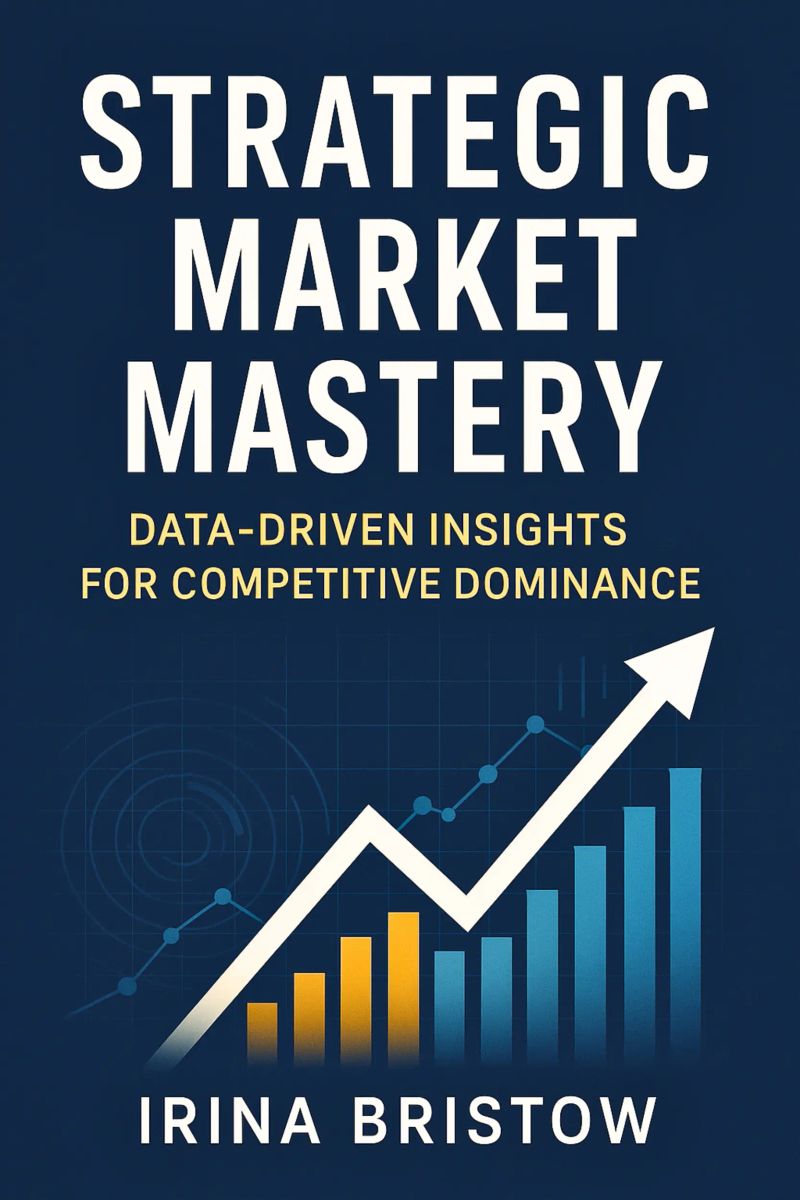
Strategic Market Mastery
Data-Driven Insights for Competitive DominanceBy Irina Bristow


Length2h 44m
About this audiobook
Are you ready to gain a powerful edge in your industry—one that propels you ahead of competitors and ignites unstoppable growth? Strategic Market Mastery: Data-Driven Insights for Competitive Dominance by Irina Bristow reveals the keys to dissecting any market, identifying your true opportunities, and forging strategies that stand the test of time.
Using the latest in market research and competitive intelligence, this indispensable guide demystifies everything from pricing optimization to scenario planning, helping you create a future-proof plan for your brand. Packed with real-life examples, step-by-step methods, and advanced techniques like AI-driven analytics and blue ocean strategy, it’s your ticket to outmaneuvering rivals—no matter how saturated the field.
Inside You’ll Discover:
Proven frameworks to analyze customer needs, trends, and pain points
Ethical competitive research methods to see exactly where you stand
Action-oriented drills that translate theory into quick, profitable wins
Effective pricing strategies that lock in higher margins
Tactics for pivoting swiftly when the market shifts under your feet
Grab Your Copy Today and Elevate Your Business to Unrivaled Heights!
If you’re hungry for real results and sick of guesswork, this is where you’ll truly see how Strategic Market Mastery transforms your business trajectory:
Innovative Blue Ocean Tactics: Uncover underserved niches before competitors do
Advanced Analytics & Tech Tools: Leverage AI and predictive modeling for market foresight
Resilience & Risk Management: Develop contingency plans for every scenario
Global & Cultural Adaptations: Adapt strategies across regions without losing brand identity
Audiobook details
GenreBusiness and Economics, Politics and Government
Length2 hrs 44 mins
Narrated byListen with 1,000+ voices
FormateBook with Audio
Publish dateJan 19, 2026
LanguageEnglish
Table of contents
11. Introduction
22. Chapter 1: Identifying & Understanding Your Target Customer Segments
33. Chapter 2: Assessing Your Total Addressable Market (TAM)
44. Chapter 3: Evaluating Competitors & Industry Structure
55. Chapter 4: Understanding Industry Trends & Timing
Show all chaptersShow less
66. Chapter 5: Standing Out in a Crowded Market
77. Chapter 6: Monitoring Competitor Pricing & Feature Updates
88. Chapter 7: Developing Competitive Intelligence Programs
99. Chapter 8: Analyzing Barriers to Entry
1010. Chapter 9: Assessing Potential Market Saturation
1111. Chapter 10: Seasonal & Cyclical Demand Patterns
1212. Chapter 11: Recognizing Emerging Market Niches
1313. Chapter 12: Accounting for Cultural & Regional Differences
1414. Chapter 13: Tracking Shifting Consumer Preferences & Behaviors
1515. Chapter 14: Evaluating Economic Conditions Affecting Your Market
1616. Chapter 15: Understanding Willingness-to-Pay Thresholds
1717. Chapter 16: Conducting SWOT & PESTEL Analyses
1818. Chapter 17: Dealing with Market Unpredictability
1919. Chapter 18: Identifying Blue Ocean Opportunities
2020. Chapter 19: Responding Quickly to New Market Entrants
2121. Chapter 20: Using Market Data to Guide Strategic Decisions
2222. Chapter 20B: Integrating Advanced Analytics & Technology
2323. Chapter 20C: Ethical and Legal Considerations in Market Analysis
2424. Chapter 21: Synthesizing Insights into a Cohesive Strategy
2525. Chapter 21B: Internal Culture, Skills & Preparedness
2626. Chapter 22: Continuous Improvement & Ongoing Market Analysis
2727. Chapter 23: Sustainability, Social Responsibility & Market Strategy
2828. Conclusion
2929. Appendices
3030. Additional Expansions & Practical Applications
3131. Additional Enhancements, Tools & Perspectives
3232. Further Depth: Advanced Techniques, Special Cases, and Ongoing Evolution
3333. Expanding the Horizon: Cross-Industry Insights, Leadership Workshops, and Future-Proof Strategies
3434. Disclaimer
Digital Revenue BlueprintIrina Bristow5h 1m$8
Side Hustle MasteryIrina Bristow1h 47m$4

Unmasking the Fraud WithinIrina Bristow1h 23m$4
The Ultimate Online Course BlueprintIrina Bristow3h 7m$6

The Unbreakable RoadIrina Bristow2h 30m$5
The Discipline BlueprintIrina Bristow2h 59m$6

Financial IkigaiIrina Bristow2h 9m$5
Bullseye ProductivityIrina Bristow1h 25m$4

Unlocking, Your Deep Work PotentialIrina Bristow4h 19m$6

Influence with IntegrityIrina Bristow4h 27m$6

Purposeful ProfitIrina Bristow2h 16m$5

Harmony HandbookIrina Bristow3h 9m$6
Time MasteryIrina Bristow2h 24m$5

The Collaboration CodeIrina Bristow3h 19m$5

Funnel MasteryIrina Bristow2h 52m$5

The Focus BlueprintIrina Bristow1h 15m$4

Reading the RoomIrina Bristow2h 10m$5

The Time Trade-OffIrina Bristow1h 54m$5

The Gilded CageIrina Bristow2h 9m$5
Never Split the DifferenceChris Voss, Tahl Raz8h 7m4.4 (277.7K)$26 · $0.00
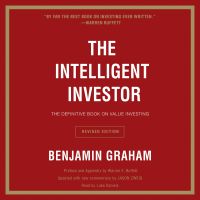
The Intelligent Investor Rev Ed.Benjamin Graham17h 48m4.3 (191.5K)$40 · $0.00

The Hard Thing About Hard ThingsBen Horowitz7h 57m4.2 (134.3K)$26 · $0.00

Boundaries for LeadersHenry Cloud7h 36m4.3 (3.6K)$26 · $0.00
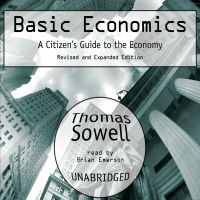
Basic EconomicsThomas Sowell18h 32m4.5 (29.3K)$28 · $0.00

The Ambuja StoryNarotam Sekhsaria13h 59m4.5 (830)$33 · $0.00

This Is Going to HurtAdam Kay5h 47m4.4 (444.7K)$24 · $0.00

Big TrustShadé Zahrai, Fayçal Sekkouah8h 36m4.6 (406)$26 · $0.00
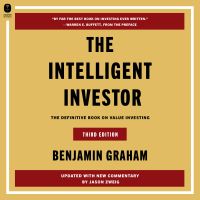
The Intelligent Investor Third EditionBenjamin Graham, Jason Zweig20h4.4 (156.6K)$46 · $0.00

Bottle of LiesKatherine Eban14h 25m4.4 (12K)$33 · $0.00

The Antiracist Business BookTrudi Lebrón6h 10m4.6 (275)$17 · $0.00

The FormulaJoshua Robinson, Jonathan Clegg10h 41m4.4 (6.9K)$29 · $0.00

Let Them LeadJohn U. Bacon7h 10m4.5 (1.4K)$24 · $0.00

Secrets of the Millionaire MindT. Harv Eker5h 11m4.4 (301.4K)$24 · $0.00

The Person You Mean to BeDolly Chugh9h 6m4.4 (7.2K)$29 · $0.00
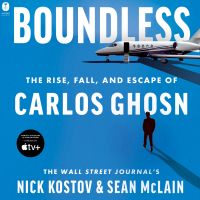
BoundlessNick Kostov, Sean McLain9h 17m4.5 (1.1K)$29 · $0.00

Everyday DharmaSuneel Gupta5h 2m4.5 (761)$20 · $0.00

Let's Talk Mutual FundsMonika Halan7h 5m4.4 (2.4K)$16 · $0.00
The Law of Success in Sixteen LessonsNapoleon Hill2h 39m4.4 (17.2K)$2 · $0.00
Barbarians at the GateBryan Burrough, John Helyar3h 3m4.4 (52.7K)$18 · $0.00

KrantikariSanjeev Sanyal11h 44m4.6 (1.3K)$16 · $0.00

Unbroken Bonds of BattleJohnny Joey Jones8h 31m4.6 (2.6K)$8 · $0.00

On Democracies and Death CultsDouglas Murray10h 38m4.6 (6.5K)$29 · $0.00

Balcony Over Jerusalem: A Middle East Memoir - Israel, Palestine and BeyondJohn Lyons12h 37m4.6 (1.4K)$33 · $0.00
RiggedMollie Hemingway12h 48m4.6 (4.2K)$23 · $0.00

SledgehammerDavid Friedman8h 21m4.7 (589)$26 · $0.00

Citizenship in a Republic (Annotated)Theodore Roosevelt2h 44m4.6 (1.4K)$2 · $0.00

No EscapeNury Turkel9h 30m4.6 (809)$28 · $0.00

Always FaithfulThomas Schueman, Zainullah Zaki12h 12m4.6 (977)$29 · $0.00

UnthinkableJamie Raskin15h 8m4.5 (9.3K)$8 · $0.00

My Fourth Time, We DrownedSally Hayden13h 59m4.6 (2.9K)$23 · $0.00

A Revolution of Common SenseScott Jennings9h 29m4.6 (528)$29 · $0.00

Statement From the Dock at the Rivonia TrialNelson Mandela2h 18m4.6 (1.3K)$1 · $0.00

Lessons from the EdgeMarie Yovanovitch17h 11m4.5 (5.9K)$40 · $0.00

To Rescue the American SpiritBret Baier10h 12m4.5 (2.7K)$8 · $0.00

StonewalledSharyl Attkisson15h 19m4.5 (4.3K)$33 · $0.00

The World According to Orwell: 1984 & Animal FarmGeorge Orwell15h 42m4.6 (1.1K)$1 · $0.00
Basic EconomicsThomas Sowell18h 32m4.5 (29.3K)$28 · $0.00

To Rescue the RepublicBret Baier, Catherine Whitney11h 42m4.5 (8.6K)$29 · $0.00

Modern WarriorsPete Hegseth7h 10m4.5 (4.7K)$24 · $0.00
You may also like
Never Lost AgainBill Kilday10h 1m4.4 (805)$29 · $0.00

Seeing Around CornersRita McGrath7h 46m4.1 (886)$26 · $0.00

Jab, Jab, Jab, Right HookGary Vaynerchuk5h 42m4.1 (36.7K)$17 · $0.00

Escape VelocityGeoffrey A. Moore6h 6m4.1 (857)$24 · $0.00

Hook PointBrendan Kane8h 11m3.8 (2.3K)$20

This Way UpMap Men8h 18m4.1 (2.8K)$26 · $0.00

The Autobiographical WorksGeorge Orwell35h 35m4.5 (2.3K)$2 · $0.00

The Business of PlatformsMichael A. Cusumano, Annabelle Gawer, David B. Yoffie8h 7m4.1 (692)$26 · $0.00

An Elegant DefenseMatt Richtel12h 33m4.2 (15.3K)$33 · $0.00
Marketing Management for Beginners: How to Create and Establish Your Brand With the Right Marketing Management, Build Sustainable Customer Relationships and Increase Sales Despite a Buyer's MarketSebastian Wahlig1h 24m$12 · $0.00
Marketing Management for Beginners: How to Create and Establish Your Brand With the Right Marketing Management, Build Sustainable Customer Relationships and Increase Sales Despite a Buyer's MarketSebastian Wahlig1h 24m$12 · $0.00

Think, Focus, Grow RichRobert4h 38m$6 · $0.00

Acquired TasteEric Manges8h 32m4.3 (31)Free
The Six Disciplines of Strategic ThinkingMichael D. Watkins4h 22m4.0 (636)$20 · $0.00

The Numbers Behind Success in SoccerChest Dugger3h4.1 (39)$14.99
Open to WorkRyan Roslansky, Aneesh Raman5h 56m$24 · $0.00

On the process of maintenance decision-making in the offshore operational environment of the oil and gas industryMario Marcondes Machado4h 39m$20 · $0.00

Binge TimesDade Hayes, Dawn Chmielewski12h 24m3.8 (525)$29 · $0.00

OutskillPartha Basu6h 10m3.9 (25)$24 · $0.00

Zero to Power: The Hidden Laws of Influence, Wealth & MindsetYasin Ali4h 17m5.0 (43) Only with Ultra