

Savva and the Life of Man
Two plays by Leonid AndreyevBy Leonid Andreyev


Length5h 46m
About this audiobook
In "Savva and the Life of Man," Leonid Andreyev masterfully weaves a philosophical narrative that delves into the existential dilemmas of humanity. This novella is emblematic of early 20th-century Russian literature, characterized by its expressionistic style and profound psychological exploration. Through the turmoil of the titular character, Savva, Andreyev examines themes of suffering, redemption, and the eternal search for meaning in an indifferent universe. The text invites readers to confront their own existential crises, using rich symbolism and a unique structure that evokes an atmosphere of despair interspersed with fleeting moments of hope. Leonid Andreyev, a prominent figure in the Silver Age of Russian literature, was deeply influenced by his tumultuous personal experiences and the societal shifts of his time. His background as a journalist and playwright informed his narrative techniques and thematic preoccupations, particularly his fascination with the darker aspects of human existence. Andreyev's poignant understanding of the human condition positions him as a precursor to existentialist thought, making his works relevant even today. "Savva and the Life of Man" is highly recommended for readers seeking a profound exploration of the human psyche. It challenges us to confront our own lives amidst the complexities of existence and is particularly suitable for those interested in philosophical literature and the psychological realism characteristic of Andreyev's oeuvre.
Audiobook details
GenreGeneral Fiction, Literary Classics
Length5 hrs 46 mins
Narrated byListen with 1,000+ voices
FormateBook with Audio
Publish dateSep 16, 2022
LanguageEnglish
Table of contents
1INTRODUCTION
9TO THE BRIGHT MEMORY OF MY FRIEND, MY WIFE
2INTRODUCTION
10PERSONS
3A CHRONOLOGICAL LIST OF PLAYS
11THE LIFE OF MAN
4PERSONS
12THE FIRST SCENE
5PELAGUEYA
13THE SECOND SCENE
Show all chaptersShow less
6THE SECOND ACT
14THE THIRD SCENE
7THE THIRD ACT
15THE FOURTH SCENE
8THE FOURTH ACT
16THE FIFTH SCENE
More from Leonid Andreyev

The Giants of Russian Literature: The Greatest Russian Novels, Stories, Plays, Folk Tales & LegendsLeonid Andreyev, Saki, Herman Bernstein, Maxim Gorky, Ivan Turgenev, Anton Chekhov, Leo Tolstoy, Fyodor Dostoevsky, Alexander Pushkin, Nikolai Gogol, M.Y. Saltykov, V.G. Korolenko, V.N. Garshin, F.K. Sologub, I.N. Potapenko, S.T. Semyonov, M.P. Artzybashev, A.I. Kuprin, H. H. Munro, Ivan Goncharov367h 19m4.4 (10)$0.99 · $0.00
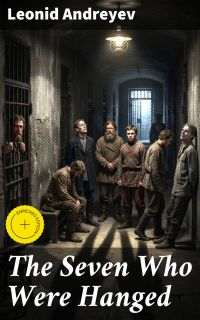
The Seven Who Were HangedLeonid Andreyev3h 29m4.1 (3.3K)$1 · $0.00

The Sorrows of BelgiumLeonid Andreyev3h 1m4.0 (13)$2 · $0.00
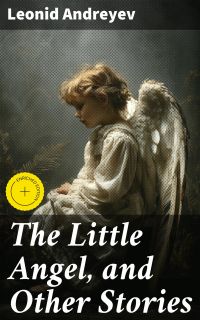
The Little Angel, and Other StoriesLeonid Andreyev6h 19m3.8 (217)$1 · $0.00
Satan's DiaryLeonid Andreyev6h 55m3.6 (1.3K)$1 · $0.00
Satan's Diary (Annotated)Leonid Andreyev7h 7m3.9 (3.1K)$0.99 · $0.00

LazarusLeonid Andreyev46m4.2 (739)$2 · $0.00

WhistlerAnn Patchett10h 45m4.6 (4.6K)$29 · $0.00
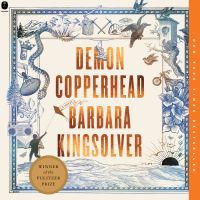
Demon CopperheadBarbara Kingsolver21h 3m4.5 (949.4K)$46 · $0.00

To Kill a MockingbirdHarper Lee12h 18m4.5 (7.4M)$29 · $0.00
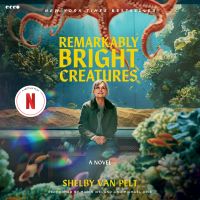
Remarkably Bright CreaturesShelby Van Pelt11h 17m4.4 (1.7M)$29 · $0.00
Something Like LoveBeverly Jenkins10h 21m4.6 (2.7K)$29 · $0.00
Black History CollectionFrederick Douglass, Harriet Ann Jacobs, Booker T. Washington, W.E.B. Du Bois27h 9m4.6 (2.6K)$18 · $0.00

The Old Man and the Sea (Annotated)Ernest Hemingway4h 27m4.6 (1.4K)$2 · $0.00

White HotIlona Andrews13h 18m4.5 (136.9K)$5 · $0.00

The Ghost by the Billabong (The Matilda Saga, #5)Jackie French14h 58m4.6 (773)$33 · $0.00
Cast in BloodMichelle Sagara16h 35m4.6 (607)$33 · $0.00
The Captain Blood Trilogy (Annotated)Rafael Sabatini29h 20m4.6 (1K)$3 · $0.00
Ship of the Line (Annotated)Cecil Louis Troughton Smith11h 13m4.6 (1K)$2 · $0.00
The George Orwell CollectionGeorge Orwell24h 46m4.5 (14.4K)$12 · $0.00

ShivajiRanjit Desai25h 13m4.6 (3.1K)$24 · $0.00
Time RegainedMarcel Proust15h 38m4.5 (9.2K)$2 · $0.00

Driving ForceElle James4h 58m4.6 (407)$20 · $0.00

When God Calls the HeartBrian Bird, Michelle Cox3h 24m4.6 (439)$10 · $0.00

Five Little IndiansMichelle Good10h 34m4.5 (64.5K)$29 · $0.00
Lolth's WarriorR. A. Salvatore13h 20m4.6 (2.4K)$33 · $0.00

The Things We Cannot SayKelly Rimmer13h 48m4.5 (359.1K)$33 · $0.00
To Kill a MockingbirdHarper Lee12h 18m4.5 (7.4M)$29 · $0.00

These Precious DaysAnn Patchett11h 14m4.5 (45.2K)$29 · $0.00
The Great Gatsby: Original 1925 Edition (An F. Scott Fitzgerald Classic NovelFrancis Scott Fitzgerald4h 45m4.6 (9.3K)$18 · $0.00
TWELFTH NIGHTWilliam Shakespeare, Sidney Lee16h 38m4.6 (2.8K)$1.99 · $0.00
The Complete Histories / History Plays of William Shakespeare (Annotated)William Shakespeare29h 42m4.6 (2.3K)$0.99 · $0.00
Braving the TruthRachel Held Evans11h 31m4.7 (359)$29 · $0.00
The Old Man and the Sea (Annotated)Ernest Hemingway4h 27m4.6 (1.4K)$2 · $0.00
Henry V (The Play, Historical Background and Analysis of the Character in the Play)William Shakespeare, William Hazlitt8h 50m4.6 (1.3K)$1.99 · $0.00
H. P. LOVECRAFT Ultimate Collection: Novellas, Short Stories, Poetry & Essays (Annotated)H. P. Lovecraft12h 28m4.6 (2.3K)$2 · $0.00
Time RegainedMarcel Proust16h 8m4.5 (10.6K)$1.99 · $0.00
The Mis-Education of the NegroCarter Goodwin Woodson4h 32m4.5 (28.4K)$10 · $0.00

TORAH - Bilingual Edition: English/Hebrew (Annotated)Max Margolis, JPS28h 26m4.6 (1K)$2 · $0.00

Betty Crocker picture cooky bookBetty Crocker, Inc. General Mills2h 13m4.5 (6.5K)$1 · $0.00

The Complete Tales of Beatrix PotterBeatrix Potter3h 36m4.5 (75K)$3 · $0.00

Anne of Green GablesL. M. Montgomery11h 1m4.5 (1.2M)$2.30 · $0.00
Crime and Punishment (The Unabridged Garnett Translation) (Annotated)Fyodor Dostoevsky24h 25m4.5 (15.4K)$0.99 · $0.00

The North American IndianEdward S. Curtis, Frederick Webb Hodge6h4.5 (1.2K)$2 · $0.00
The Picture of Dorian Gray: The Uncensored 13 Chapter Version + The Revised 20 Chapter Version (Annotated)Oscar Wilde16h 12m4.5 (2.8K)$0.99 · $0.00
Grimoire Of The Everyday WitchIsadora Lys / Virginia Santos5h 35m4.5 (3.9K)$9 · $0.00
Winnie-the-PoohAlan Alexander Milne2h 52m4.5 (401.1K)$3 · $0.00
You may also like

Poems: Series TwoEmily Dickinson1h 38m4.4 (1.8K)$2 · $0.00
Bartleby, the Scrivener: A Story of Wall-StreetHerman Melville1h 38m4.1 (70.2K)$2.30 · $0.00
The Damned (Là-bas)Joris-Karl Huysmans8h 55m4.1 (5.8K)$1 · $0.00
The Soul's ReligionThomas Moore12h 11m4.3 (302)$29 · $0.00

Songs of Kabir (Annotated)Kabir3h 7m4.2 (1.1K)$2 · $0.00
Bartleby, the Scrivener: A Story of Wall-StreetHerman Melville1h 31m4.0 (83.9K)Free
The Reed of GodCaryll Houselander5h 28m4.6 (4.1K)$1 · $0.00

Les Fleurs du MalCharles Baudelaire2h 59m4.3 (88K)$3.50 · $0.00
Hieroglyphics (Annotated)Arthur Machen4h 27m4.0 (537)$1.99 · $0.00
Leaves of Grass (Annotated)Walt Whitman20h 1m4.3 (1.5K)$0.99 · $0.00
The Varieties of Religious Experience (Complete Edition)William James1h 40m4.2 (17.6K)$1 · $0.00

THE FLOWERS OF EVILCharles Baudelaire2h 28m4.3 (94.6K)$1.99 · $0.00

Meister Eckhart’s Book of SecretsJon M. Sweeney, Mark S. Burrows2h 6m4.2 (530)$15
The Raven (Illustrated)Edgar Allan Poe12h 39m4.4 (286.5K)$1.99 · $0.00

Revelations of Divine LoveOf Norwich Julian9h 4m4.3 (12.5K)$1 · $0.00

The Flowers of EvilCharles Baudelaire2h 12m4.3 (95.8K)$1 · $0.00

OrthodoxyG.K Chesterton6h 59m4.3 (64.1K)$1 · $0.00
The Three Critiques: The Critique of Pure Reason, Practical Reason and JudgmentImmanuel Kant46h 6m4.3 (15.5K)$1.99 · $0.00

The Love Song of J. Alfred PrufrockT.S. Eliot9m4.5 (112.2K)$1 · $0.00

THE GAY SCIENCE – Nietzsche's Forging Metaphysical Thought (Annotated)Friedrich Nietzsche11h 10m$0.99 · $0.00