
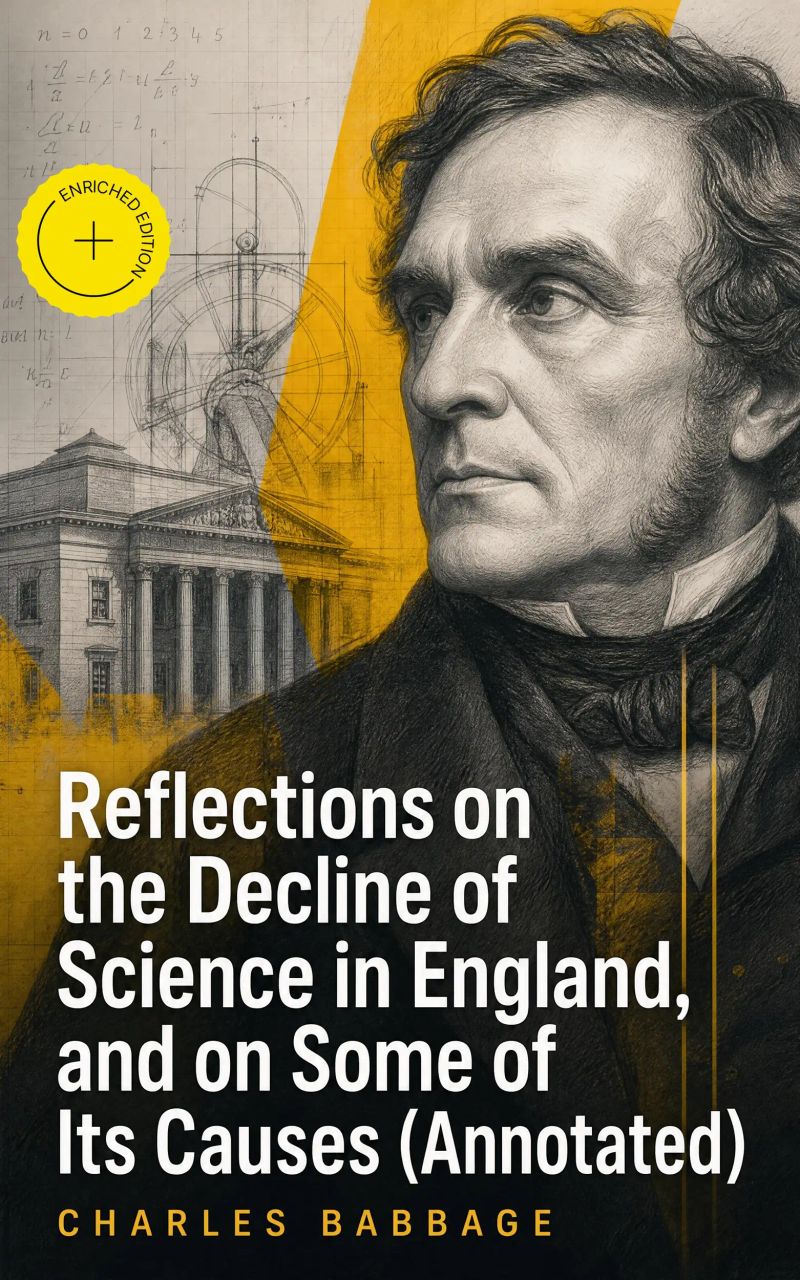
Reflections on the Decline of Science in England, and on Some of Its Causes (Annotated)
Enriched Edition. A Victorian Critique of British Science, Reform, and Learned SocietiesBy Charles Babbage


Length7h 1m
About this audiobook
Reflections on the Decline of Science in England, and on Some of Its Causes is a forceful polemic and institutional critique, combining statistical observation, moral argument, and satirical sharpness. Published in 1830, it diagnoses what Babbage saw as Britain's failure to support scientific labor with the seriousness shown by continental Europe. Its style is lucid, combative, and reformist, standing within early Victorian debates over professionalization, public funding, learned societies, and the social value of exact knowledge. Charles Babbage, mathematician, inventor, and later designer of the Difference and Analytical Engines, wrote from within the scientific establishment yet against its complacencies. His experiences with the Royal Society, government indifference, and the practical demands of calculation shaped his conviction that science required disciplined institutions, meritocratic recognition, and material support. The book reflects both his personal frustrations and his broader vision of science as a national enterprise. This work is recommended to readers interested in the history of science, Victorian intellectual life, and the politics of knowledge. It remains compelling not merely as complaint, but as an early manifesto for research culture, scientific infrastructure, and the public responsibilities of learned communities.
This enriched edition has been carefully crafted to add value to your reading experience.
- A succinct Introduction situates the work's timeless appeal and themes.
- The Synopsis outlines the central plot, highlighting key developments without spoiling critical twists.
- A detailed Historical Context immerses you in the era's events and influences that shaped the writing.
- An Author Biography reveals milestones in the author's life, illuminating the personal insights behind the text.
- A thorough Analysis dissects symbols, motifs, and character arcs to unearth underlying meanings.
- Reflection questions prompt you to engage personally with the work's messages, connecting them to modern life.
- Hand‐picked Memorable Quotes shine a spotlight on moments of literary brilliance.
- Interactive footnotes clarify unusual references, historical allusions, and archaic phrases for an effortless, more informed read.
Audiobook details
Rating★★★ 3.3 (14)
Includes Goodreads
GenreScience and Nature
Length7 hrs 1 min
Narrated byListen with 1,000+ voices
FormateBook with Audio
Publish dateNov 22, 2023
LanguageEnglish
Table of contents
1Introduction
2Introduction
3Synopsis
4Historical Context
5Author Biography
Show all chaptersShow less
6PREFACE.
7REFLECTIONS ON THE DECLINE OF SCIENCE IN ENGLAND, AND ON SOME OF ITS CAUSES.
8INTRODUCTORY REMARKS.
9CHAPTER I. ON THE RECIPROCAL INFLUENCE OF SCIENCE AND EDUCATION.
10CHAPTER II. OF THE INDUCEMENTS TO INDIVIDUALS TO CULTIVATE SCIENCE.
11SECTION 1. PROFESSIONAL IMPULSES.
12SECTION 2. OF NATIONAL ENCOURAGEMENT.
13SECTION 3. Of Encouragement from Learned Societies.
14CHAPTER III. GENERAL STATE OF LEARNED SOCIETIES IN ENGLAND.
15CHAPTER IV. STATE OF THE ROYAL SOCIETY IN PARTICULAR.
16SECTION 1. MODE OF BECOMING A FELLOW OF THE ROYAL SOCIETY.
17SECTION 2. OF THE PRESIDENCY AND VICE-PRESIDENCIES.
18SECTION 3. OF THE SECRETARISHIPS.
19SECTION 4. OF THE SCIENTIFIC ADVISERS.
20SECTION 5. OF THE UNION OF SEVERAL OFFICES IN ONE PERSON.
21SECTION 6. OF THE FUNDS OF THE SOCIETY.
22SECTION 7. OF THE ROYAL MEDALS.
23SECTION 8. OF THE COPLEY MEDALS.
24SECTION 9. OF THE FAIRCHILD LECTURE.
25SECTION 10. OF THE CROONIAN LECTURE.
26SECTION 11. OF THE CAUSES OF THE PRESENT STATE OF THE ROYAL SOCIETY.
27SECTION 12. OF THE PLAN FOR REFORMING THE SOCIETY.
28CHAPTER V. OF OBSERVATIONS.
29SECTION 1. OF MINUTE PRECISION.
30SECTION 2. ON THE ART OF OBSERVING.
31SECTION 3. ON THE FRAUDS OF OBSERVERS.
32CHAPTER VI. SUGGESTIONS FOR THE ADVANCEMENT OF SCIENCE IN ENGLAND.
33SECTION 1. OF THE NECESSITY THAT MEMBERS OF THE ROYAL SOCIETY SHOULD
34SECTION 2. OF BIENNIAL PRESIDENTS.
35SECTION 3. OF THE INFLUENCE OF THE COLLEGES OF PHYSICIANS AND SURGEONS
36SECTION 4. OF THE INFLUENCE OF THE ROYAL INSTITUTION ON THE ROYAL SOCIETY.
37SECTION 5. OF THE TRANSACTIONS OF THE ROYAL SOCIETY.
38SECTION 6. ORDER OF MERIT.
39SECTION 7. OF THE UNION OF SCIENTIFIC SOCIETIES.
40CONCLUSION.
41APPENDIX, No. 1.
42APPENDIX, No. 2.
43APPENDIX, No. 3,
44LIST OF THE MEMBERS OF THE ROYAL SOCIETY, WHO HAVE CONTRIBUTED TO THE
45Analysis
46Reflection
47Memorable Quotes
More from Charles Babbage
Reflections on the Decline of Science in England, and on Some of Its CausesCharles Babbage7h 2m3.7 (40)$1 · $0.00

Reflections on the Decline of Science in England, and on Some of Its CausesCharles Babbage7h 5m3.6 (40)$1 · $0.00
Passages from the Life of a Philosopher (Annotated)Charles Babbage16h 33m4.4 (110)$0.99 · $0.00

A Brief History of IntelligenceMax S. Bennett12h 18m4.6 (6.6K)$29 · $0.00
The Story of BirdsSteve Brusatte11h 49m4.6 (401)$29 · $0.00

BeyondStephen Walker15h 39m4.6 (3.2K)$33 · $0.00

LiftoffEric Berger9h 4m4.6 (9.5K)$29 · $0.00

Black Earth WisdomLeah Penniman11h 54m4.6 (577)$8 · $0.00

Total Cat MojoJackson Galaxy10h 13m4.5 (8.4K)$23 · $0.00

My Life Among the UnderdogsTia Torres5h 51m4.5 (4K)$24 · $0.00

What It Takes to Save a LifeKwane Stewart6h4.6 (556)$24 · $0.00

Pastoral SongJames Rebanks8h 35m4.5 (12K)$26 · $0.00

How Stella Learned to TalkChristina Hunger7h4.5 (10.9K)$24 · $0.00

Craig & FredCraig Grossi8h 6m4.5 (9.6K)$26 · $0.00

Celebrating BirdsNatalia Rojas, Ana Maria Martinez6h 47m4.6 (330)$24 · $0.00

Saving JemimaJulie Zickefoose4h 59m4.5 (749)$20 · $0.00

Will's Red CoatTom Ryan8h 23m4.5 (2.3K)$26 · $0.00
Of Time and TurtlesSy Montgomery10h 34m4.5 (5K)$29 · $0.00

THE WOLF TRILOGY: Call of the Wild, White Fang & The Son of the WolfJack London17h 31m4.5 (2.4K)$1.99 · $0.00

Zen and the Art of Saving the PlanetThich Nhat Hanh9h 20m4.5 (3.9K)$29 · $0.00
BLACK BEAUTY (With Original Illustrations)Anna Sewell7h 31m4.5 (1.3K)$1.99 · $0.00

Bottle of LiesKatherine Eban14h 25m4.4 (12K)$33 · $0.00
IngrainedCallum Robinson8h 10m4.5 (1.1K)$26 · $0.00
You may also like
When to Rob a BankSteven D. Levitt, Stephen J. Dubner8h 14m3.7 (19.9K)$26 · $0.00
The Eighteenth Brumaire of Louis NapoleonKarl Marx4h 42m4.3 (9.3K)$4 · $0.00

The XVIII Brumaire of Louis BonaparteKarl Marx6h 21m4.4 (12.9K)$1.99 · $0.00

A Slobbering Love AffairGoldberg, Bernard3h 48m3.9 (1.2K)Free

Hot Talk, Cold Science, Third EditionS. Fred Singer6h 22m4.5 (779)$23
The Dilbert PrincipleScott Adams1h 11m4.0 (48.5K)$13 · $0.00

The Tyranny of ClichésJonah Goldberg11h 7m4.2 (2.3K)$25 · $0.00

The Politically Incorrect Guide to American HistoryWoods, Thomas E.8h 49m4.0 (4K)Free
Animal FarmGeorge Orwell3h 12m4.2 (5M)$20 · $0.00

Give Me a BreakJohn Stossel5h 40m4.2 (2.1K)$24 · $0.00

Treatise on Tolerance (Annotated)Voltaire10h 25m4.3 (1.3K)$2 · $0.00
An Inquiry into the Nature and Causes of the Wealth of NationsAdam Smith39h 18m4.1 (60K)Free
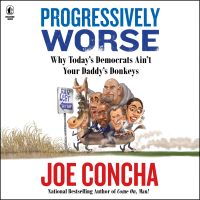
Progressively WorseJoe Concha8h 3m4.6 (300)$7 · $0.00
Reflections on the Decline of Science in England, and on Some of Its CausesCharles Babbage7h 5m3.6 (40)$1 · $0.00

The New English Canaan of Thomas Morton with Introductory Matter and Notes (Annotated)Thomas Morton11h 2m3.7 (118)$2 · $0.00

The Age of ErasmusP. S. Allen9h 3m3.9 (14)$2 · $0.00

The Politics of America: 9 Classic Books on Power and PolicyBlythe Harding, William H. Taft, Robert J. Shores, Leslie M. Shaw, Joseph C. Manning, Newton Macmillan, Paul S. Reinsch, Thomas Baines, J. W. Sullivan24h 44m4.6 (40)$0.99 · $0.00
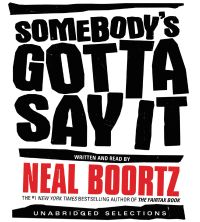
Somebody's Gotta Say ItNeal Boortz6h 1m4.0 (911)$24 · $0.00

Diderot and the Encyclopaedists (Vol. 1&2)John Morley20h 29m3.7 (32)$1.99 · $0.00

Essays on Political Economy (Annotated)Frédéric Bastiat8h4.4 (239)$2 · $0.00