
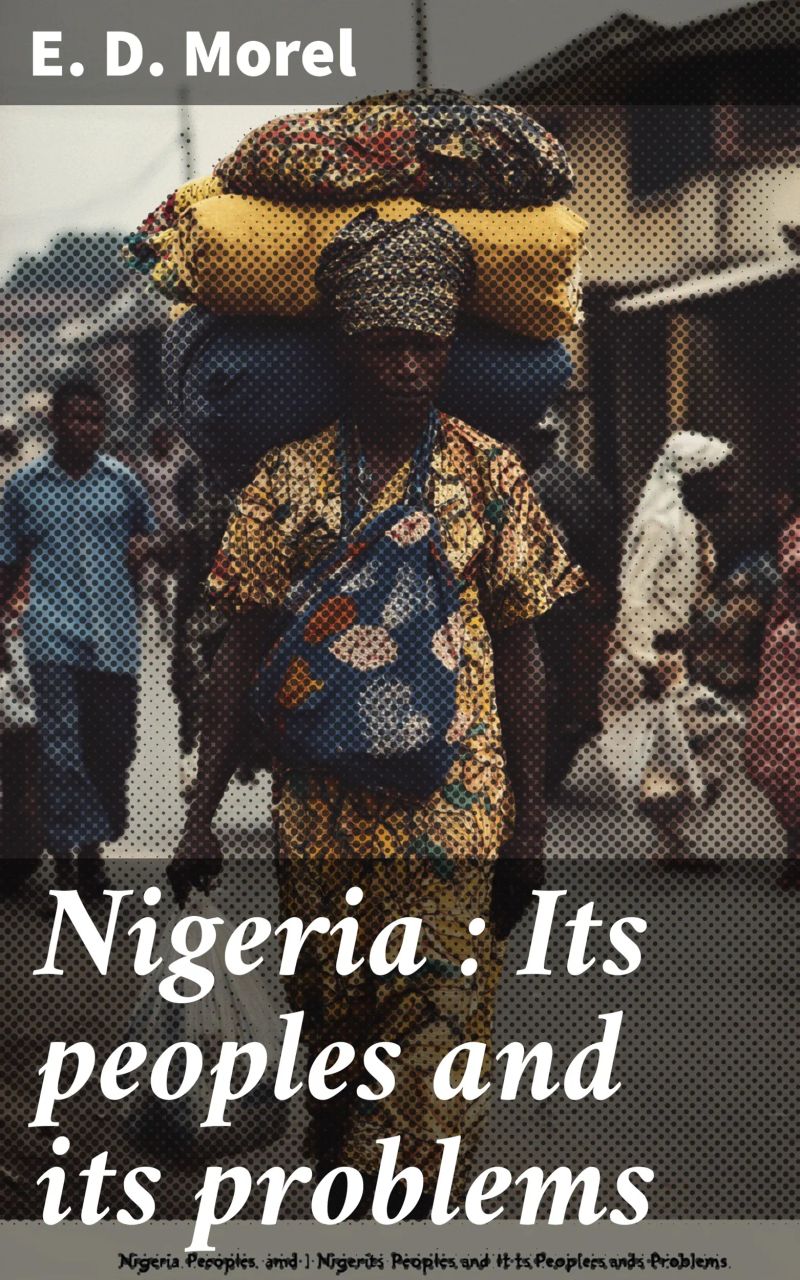
Nigeria : Its peoples and its problems
By E. D. Morel


Length8h 6m
About this audiobook
In "Nigeria: Its Peoples and Its Problems," E. D. Morel offers a penetrating analysis of the multifaceted issues surrounding Nigeria's diverse ethnic groups and the socio-political dynamics that have shaped the nation's trajectory. Written in an incisive and accessible prose style, Morel intertwines historical context with contemporary observations, shedding light on the complexities of colonial legacies, resource management, and national identity. This work stands as a critical examination of how varying interests converge and clash, reflecting a broader narrative of postcolonial challenges faced by many African nations. E. D. Morel was an influential British journalist, author, and social reformer, renowned for his passionate activism against exploitation in colonized territories. His firsthand experiences and scholarly commitment to social justice inspired him to delve into Nigeria's plight, as he sought to illuminate the injustices related to British colonial policies. Morel's keen insights are rooted in his broader critique of imperialism, making his perspectives profoundly relevant and historically significant. I wholeheartedly recommend "Nigeria: Its Peoples and Its Problems" to anyone interested in understanding the intricate tapestry of Nigerian society. Morel's work not only serves as a historical document but also invites readers to reflect on the enduring implications of colonialism, making it essential reading for students, historians, and global citizens alike.
Audiobook details
GenrePsychology
Length8 hrs 6 mins
Narrated byListen with 1,000+ voices
FormateBook with Audio
Publish dateMar 2, 2025
LanguageEnglish
Table of contents
1PREFACE
2INTRODUCTION
3CHAPTER I ON WHAT HAS BEEN AND MAY BE
4CHAPTER II ON THE GREAT WHITE ROAD
5CHAPTER III ON THE CARRIER
Show all chaptersShow less
6CHAPTER IV ON AFRICAN MODESTY AND AFRICAN COURTESY
7CHAPTER V ON THE MEANING OF “RELIGIOUS”
8CHAPTER VI A RAGOÛT OF THINGS SEEN AND FELT
9CHAPTER VII THE SALLAH AT ZARIA
10CHAPTER I NIGERIA’S CLAIM UPON PUBLIC ATTENTION
11CHAPTER II THE NIGER DELTA
12CHAPTER III THE FOREST BELT
13CHAPTER IV THE CENTRAL AND EASTERN PROVINCES
14CHAPTER V LAGOS AND ITS PORT—THE FUTURE BOMBAY OF WEST AFRICA
15CHAPTER VI THE YORUBAS AND THEIR COUNTRY
16CHAPTER VII BRITISH POLICY IN YORUBALAND
17CHAPTER I THE NATURAL HIGHWAY TO THE UPLANDS OF THE NORTH
18CHAPTER II NORTHERN NIGERIA PRIOR TO THE BRITISH OCCUPATION
19CHAPTER III THE INDIGENOUS CIVILIZATION OF THE NORTH
20CHAPTER IV THE LIFE OF THE PEOPLE—THE LONG-DISTANCE TRADER
21CHAPTER V THE LIFE OF THE PEOPLE—THE AGRICULTURIST
22CHAPTER VI THE LIFE OF THE PEOPLE—THE HERDSMAN AND THE ARTISAN
23CHAPTER VII THE CITY OF KANO AND ITS MARKET
24CHAPTER VIII A VISIT TO THE EMIR OF KANO
25CHAPTER IX GOVERNING ON NATIVE LINES
26CHAPTER X THE FOUNDATIONS OF NATIVE SOCIETY—THE TENURE OF LAND
27CHAPTER XI THE FOUNDATIONS OF NATIVE SOCIETY—THE ADMINISTRATIVE MACHINERY
28CHAPTER XII THE PRESERVATION OF THE NATIONAL LIFE
29CHAPTER XIII A PAGE OF HISTORY AND ITS MORAL
30CHAPTER XIV A SCHEME OF NATIONAL EDUCATION
31CHAPTER XV COMMERCIAL DEVELOPMENT
32CHAPTER XVI MINING DEVELOPMENT AND THE BAUCHI PLATEAU
33CHAPTER XVII THE NECESSITY OF AMALGAMATING THE TWO PROTECTORATES
34CHAPTER XVIII RAILWAY POLICY AND AMALGAMATION
35CHAPTER XIX AN UNAUTHORIZED SCHEME OF AMALGAMATION
36CHAPTER I CHRISTIANITY AND ISLAM IN SOUTHERN NIGERIA
37CHAPTER II THE COTTON INDUSTRY
38CHAPTER III THE COTTON INDUSTRY—continued
What to Make of a LifeJim Collins13h 31m4.4 (794)$33 · $0.00

I Am The StormJanice Dean9h4.6 (1.5K)$8 · $0.00
On Democracies and Death CultsDouglas Murray10h 38m4.6 (6.5K)$29 · $0.00

TerraformPropaganda5h 39m4.7 (594)$24 · $0.00

Southern Horrors: Lynch Law in All Its Phases (Annotated)Ida B. Wells-Barnett2h 44m4.6 (1.3K)$2 · $0.00
Hour of the HeartIrvin D. Yalom, Benjamin Yalom8h 19m4.6 (2.3K)$26 · $0.00
Braving the TruthRachel Held Evans11h 31m4.7 (359)$29 · $0.00
Level UpRob Dial7h 42m4.6 (3.3K)$26 · $0.00

As a JewSarah Hurwitz8h 36m4.6 (1.2K)$26 · $0.00
Saint Joan (Annotated)George Bernard Shaw6h 20m4.6 (1.2K)$1.20 · $0.00

Burn the HaystackJennie Young, PhD9h 30m4.6 (543)$29 · $0.00

Woman and the New Race (Annotated)Margaret Sanger6h 30m4.6 (1K)$0.99 · $0.00

Good InsideBecky Kennedy9h 55m4.5 (59.3K)$29 · $0.00
The Mis-Education of the NegroCarter Godwin Woodson5h 4m4.5 (29.4K)$1.20 · $0.00
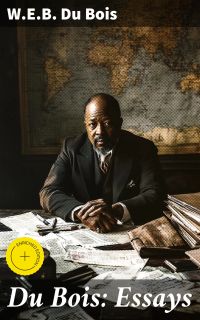
Du Bois: EssaysW.E.B. Du Bois6h 22m4.6 (1.5K)$1 · $0.00

The North American Indian (Illustrated Edition)Edward S. Curtis, Frederick Webb Hodge5h 59m4.6 (1.4K)$2 · $0.00
Valley of the BirdtailAndrew Stobo Sniderman, Douglas Sanderson10h 1m4.6 (2.4K)$29 · $0.00

Lies My Therapist Told MeGreg E. Gifford9h 3m4.6 (503)$29 · $0.00
Disturbed in Their NestsAlephonsion Deng, Judy A. Bernstein11h 22m4.6 (595)$23 · $0.00
No Name in the StreetJames Baldwin5h4.5 (8.5K)$20 · $0.00
You may also like

Being TexanEditors of Texas Monthly8h 44m4.4 (255)$29 · $0.00
Silent Spring RevolutionDouglas Brinkley29h 25m4.4 (752)$53 · $0.00

Animal, Vegetable, JunkMark Bittman12h 53m4.0 (5.3K)$33 · $0.00
What I BelieveBertrand Russell2h 25m4.2 (4.3K)$15
LandSimon Winchester13h 47m3.9 (5.8K)$5 · $0.00

Republican Like MeKen Stern7h 52m3.9 (1K)$26 · $0.00
Lives of the Most Excellent Painters, Sculptors and Architects (Annotated)Giorgio Vasari96h 46m4.4 (2.4K)$2 · $0.00

WordslutAmanda Montell6h 56m4.2 (36.1K)$24 · $0.00
A Little History of the United StatesJames West Davidson11h 8m4.1 (2.8K)$20

The Best American Food Writing 2023Mark Bittman, Silvia Killingsworth8h 5m3.9 (348)$26 · $0.00
Cali, expanded city-regionFernando Urrea Giraldo, Júber Galeano Loaiza, María Isabel Caicedo Hurtado13h 18m$25 · $0.00

Taiwan Art & CivilisationHsiu-Huei Wang2h 7m$18 · $0.00

Experiments and Observations on Electricity Made at Philadelphia in AmericaBenjamin Franklin3h 29m4.2 (25)$1 · $0.00

On BelongingKim Samuel11h 29m4.2 (200)$20 · $0.00
Southern Lights and ShadowsFrank Fowler3h 31m$2 · $0.00

Canterbury PapersTthe Association for Founding the Settlement of Canterbury in New Zealand3h 59m$1 · $0.00
NeoclassicismVictoria Charles1h 20m$13 · $0.00

Down Town BrooklynN.Y.) . Committee of Ten Brooklyn (New York1h$1 · $0.00

A Tour in Ireland. 1776-1779 (Annotated)Arthur Young5h 12m3.7 (10)$1.99 · $0.00

Brazil and its Perspectives on The Climate, Digital-Technological and Biological AgesFrancisco Gaetani, Izabella Teixeira, Marcello Brito, Roberto S. Waack4h 2m$3