
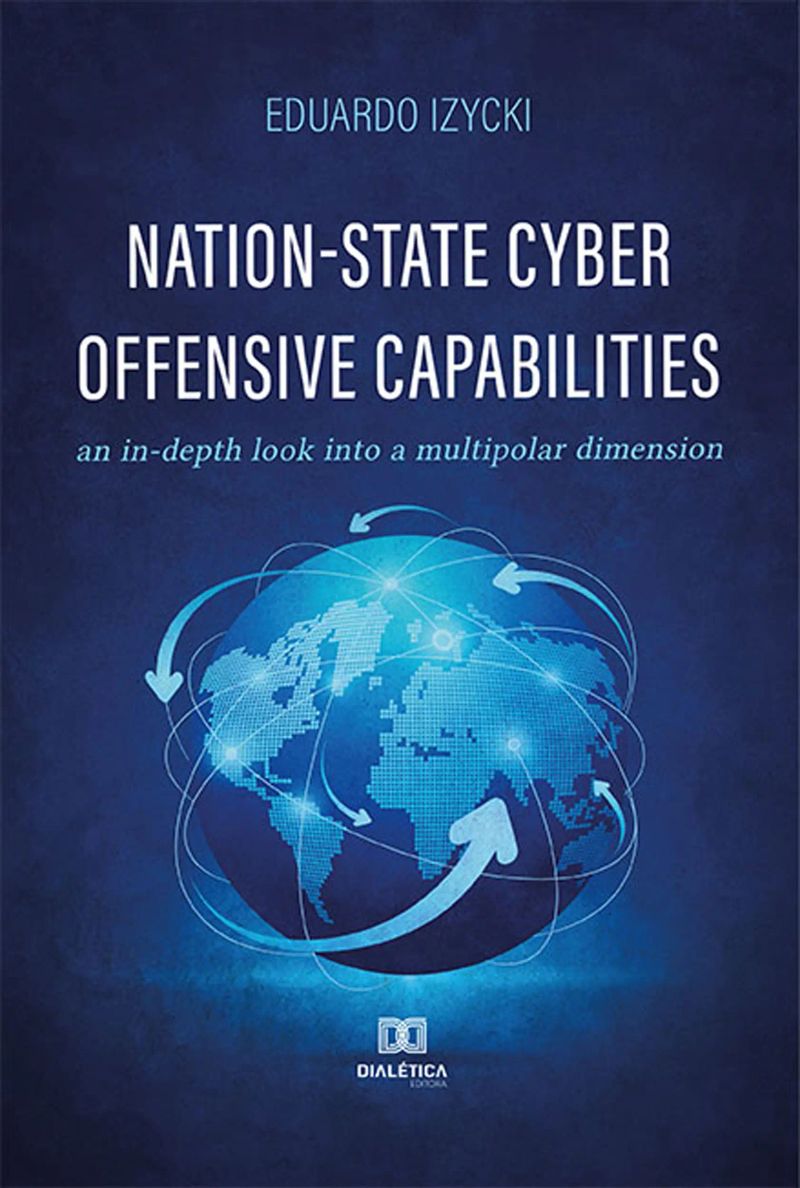
Nation-State Cyber Offensive Capabilities
an in-depth look into a multipolar dimensionBy Eduardo Izycki


Length4h 31m
About this audiobook
One of the most striking features of the 21st century is the widespread adoption of information technology in every aspect of the modern life of individuals, society, or nation-states.
When compared to land, sea, air, and space, cyberspace has unique features. Its ""geography"" is easily modified, oceans and mountains are hard to be changed, but entire cyberspace regions can be turned on or off with a button click. Moreover, anonymity, the low cost of acquiring or developing offensive capabilities, and the plausible deniability of actions have turned this dimension into a theater of operations for nation-states.
This book does not focus on the worst-case scenario where cyber offensive actions will revolutionize war. Instead, it intends to provide empirical analysis regarding the current state of cyber conflict. This book presents evidence of 29 countries engaging in state-sponsored actions and 85 nations acquiring cyber offensive technologies from private vendors. The numbers challenge the average perception of concentration of cyber capabilities in a few ""traditional"" actors.
Cyberspace provides alternatives for the bargaining and interactions to nation-states below the threshold of the use of force. As a result, actors can achieve strategic outcomes and influence the balance of power without resorting to an armed attack and minimizing the risk of a military or nuclear response from their targets.
Audiobook details
GenreEducation and Learning
Length4 hrs 31 mins
Narrated byListen with 1,000+ voices
FormateBook with Audio
Publish dateJan 31, 2022
LanguageEnglish
Table of contents
1Introduction
21. INTRODUCTION
32. CONCEPTUAL FRAMEWORK
43. LITERATURE REVIEW
54. RESEARCH QUESTIONS
Show all chaptersShow less
65. METHODOLOGY
75.1. RESEARCH LIMITATIONS
85.2. TECHNICAL REPORTS AND INDEPENDENT STUDIES
95.3. DATA BREACHES
105.4. REPORT FROM EXPORTS CONTROLS
115.5. PROCESSING THE DATA COLLECTED
125.6. THE CLASSIFICATION AND ENTITY RECOGNITION
135.7. PARSING STRUCTURED DATA
145.8. THREAT ACTORS AND DOCUMENT CLUSTERING
155.9. MERGING THE DATASETS
166. OVERARCHING RESULTS
177. NATION-STATE CYBER OFFENSIVE ACTIONS
187.1. THREAT ACTORS
197.2. INDIGENOUS TECHNOLOGY OR OUTSOURCING
207.3. TARGET’S GEOGRAPHICAL DISPERSION
217.4. PREFERRED TARGETED SECTORS
227.5. ACTIONS COMPLEXITY
237.6. ATTACKS OBJECTIVES
248. CYBER OFFENSIVE CAPABILITIES ACQUISITION
258.1. MULTIPLE ACQUISITIONS
268.2. CUSTOMERS
279. DISCUSSION
289.1. DIFFUSION (NOT EQUALITY) OF CYBER OFFENSIVE CAPABILITIES
299.2. GEOGRAPHY MATTERS
309.3. PROFILING NATION-STATE BEHAVIOR
319.4. BUILDING CYBER OFFENSIVE CAPABILITIES
329.5. CORRELATING CYBER OFFENSIVE CAPABILITIES AND AUTHORITARIANISM
339.6. IS THE BEST DEFENSE A GOOD OFFENSE?
349.7. MULTIPOLARITY IN CYBERSPACE
3510. CONCLUSIONS
3611. REFERENCES
37APPENDIX A - CYBER CAPABILITIES PROVIDERS
38APPENDIX B - CYBER CAPABILITIES PURCHASES
39APPENDIX C - COUNTRIES PROFILES

A Brief History of IntelligenceMax S. Bennett12h 18m4.6 (6.6K)$29 · $0.00

HomeschooledStefan Merrill Block7h 10m3.6 (18.5K)$28 · $0.00

EXPERIENCE AND EDUCATION – Premium Edition (Including Democracy & Education) (Annotated)John Dewey19h 17m4.6 (1K)$2 · $0.00

WitnessAriel Burger8h 1m4.6 (1.3K)$20 · $0.00

EducationEllen G. White9h 41m4.6 (1.5K)$2 · $0.00

Parents and Children (Annotated)Charlotte Mason9h 23m4.6 (988)$2 · $0.00

Children Under FireJohn Woodrow Cox10h 17m4.5 (1.6K)$29 · $0.00

The State Must ProvideAdam Harris7h 15m4.5 (775)$24 · $0.00

The Call of the Wild and FreeAinsley Arment9h 7m4.4 (21.2K)$29 · $0.00

The Freelance WayRobert Vlach19h 48m4.5 (528)$40 · $0.00

Race to the BottomLuke Rosiak9h 20m4.5 (600)$29 · $0.00

They Came for the SchoolsMike Hixenbaugh9h 5m4.5 (2.6K)$8 · $0.00

Find Me UnafraidKennedy Odede, Jessica Posner11h 11m4.5 (2.7K)$29 · $0.00

Asking for ItKate Harding8h 55m4.4 (5.3K)$20 · $0.00

Defining Moments in Black HistoryDick Gregory7h 37m4.4 (6K)$26 · $0.00

The Emerald Tablets of Thoth the AtlanteanMaurice Doreal3h 4m4.4 (8.8K)$6 · $0.00

Learning AmericaLuma Mufleh6h 37m4.4 (564)$24 · $0.00

Math-ishJo Boaler7h 21m4.4 (588)$24 · $0.00

Daddy-Long-LegsJean Webster12h 18m4.2 (91K)$1.99 · $0.00

It Worked For MeColin Powell7h 42m4.3 (9.8K)$26 · $0.00
You may also like
@WarShane Harris9h 43m3.9 (1.6K)$20 · $0.00

Kill ChainAndrew Cockburn10h 10m3.9 (1.6K)$20
Never Lost AgainBill Kilday10h 1m4.4 (805)$29 · $0.00

American TraitorBrad Taylor13h 25m4.4 (12.2K)$33 · $0.00

CrusadeRick Atkinson24h 32m4.3 (2K)$35

War HawkJames Rollins, Grant Blackwood12h 36m4.2 (9.6K)$33 · $0.00
Net Force: Dark WebJerome Preisler14h 9m3.7 (1.8K)$33 · $0.00
Wireless WarsJonathan Pelson8h 2m4.3 (418)$20 · $0.00

WarshotDon Keith, George Wallace11h 32m4.5 (2.3K)$20

The Tejano ConflictSteve Perry8h 4m4.2 (1.3K)$20

Tomcat FuryMike Guardia4h 34m4.3 (665)$15
Net Force: Threat PointTom Clancy, Steve Pieczenik, Jerome Preisler11h 35m4.1 (339)$29 · $0.00
Five TribesBrian A. Nelson11h 46m4.3 (2.2K)$23
Human Intelligence Collector OperationsDepartment of the Army Headquarters16h 13m4.1 (269)$2 · $0.00

Everyday Chanakya | Chanakya An Inspiring Personality S01E01Radhakrishnan Pillai57m4.3 (1.1K)$4
Threat VectorMichael DiMercurio16h 15m4.3 (705)$30

Putin’s PlaybookRebekah Koffler13h 10m3.9 (2.4K)$23

The Changing Face of WarScientific American7h 11m$17

Cyber HackingScientific American4h 51m$15 · $0.00

Cybersecurity:Henrique Xavier Oliveira4h 10m$6 · $0.00