


Length1h 18m
About this audiobook
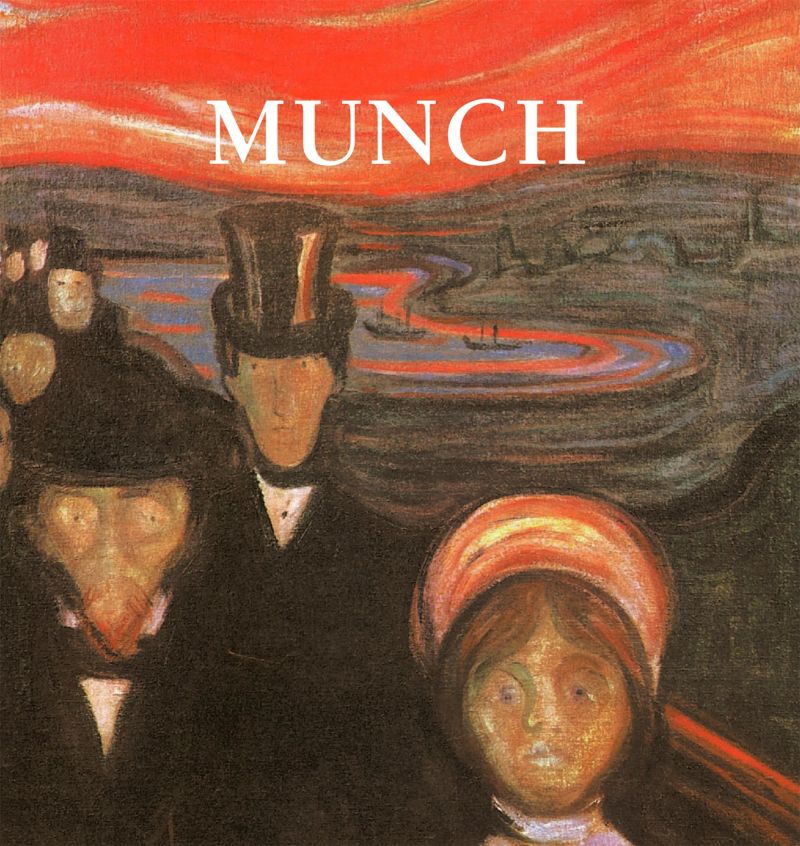
Edvard Munch, born in 1863, was Norway's most popular artist. His brooding and anguished paintings, based on personal grief and obsessions, were instrumental in the development of Expressionism. During his childhood, the death of his parents, his brother and sister, and the mental illness of another sister, were of great influence on his convulsed and tortuous art. In his works, Munch turned again and again to the memory of illness, death and grief. During his career, Munch changed his idiom many times. At first, influenced by Impressionism and Post-impressionism, he turned to a highly personal style and content, increasingly concerned with images of illness and death. In the 1892s, his style developed a 'Synthetist' idiom as seen in The Scream (1893) which is regarded as an icon and the portrayal of modern humanity's spiritual and existential anguish. He painted different versions of it. During the 1890s Munch favoured a shallow pictorial space, and used it in his frequently frontal pictures. His work often included the symbolic portrayal of such themes as misery, sickness, and death. and the poses of his figures in many of his portraits were chosen in order to capture their state of mind and psychological condition. It also lends a monumental, static quality to the paintings. In 1892, the Union of Berlin Artists invited Munch to exhibit at its November exhibition. His paintings invoked bitter controversy at the show, and after one week the exhibition closed. In the 1930s and 1940s, the Nazis labeled his work "degenerate art", and removed his works from German museums. This deeply hurt the anti-fascist Munch, who had come to feel Germany was his second homeland. In 1908 Munch's anxiety became acute and he was hospitalized. He returned to Norway in 1909 and died in Oslo in 1944.
Audiobook details
GenreOther
Length1 hr 18 mins
Narrated byListen with 1,000+ voices
FormateBook with Audio
Publish dateDec 22, 2011
LanguageEnglish
Table of contents
1MUNCH
2Edvard Munch
3near Oslo, 1881.
4Oil on canvas, 96.5 x 66 cm.
5Munch Museum, Oslo.
Show all chaptersShow less
6Billedgalleri, Bergen.
7Munch Museum, Oslo.
8Private Collection.
9and his wife Oda, Gunnar Heiberg, Hans Heyerdahl and others.
10Tempera and pastel on
11Private Collection.
12Bergen.
13Munch Museum, Oslo.
14Oil on canvas.
15Munch Museum, Oslo.
16Munch in a Spotted Dress, 1892).
17Private Collection, Bergen.
18Cigarette, 1895.
19frequently over the next few years.
20Munch Museum, Oslo.
21the Model
22Private Collection.
23Bridge, 1905.
24Brushes, 1904.
25of Wine, 1906.
26Hanover.
27exponents of Abstract Expressionism included Arshile Gorky, Jackson Pollock, Willem de
28Oil on canvas, 205 x 98 cm.
29Munch Museum, Oslo.
30Foundation, Houston.
31dispassionately, even slightly cruelly.
32Oil on canvas, 4.5 x 11.6 m.
33Munch Museum, Oslo.
34Kunsthaus Zürich, Zurich.
35Oil on canvas.
36BIOGRAPHY
37Laura and Inger.
38First exhibition as part of a group; Head of a Red-Haired Woman.
39The Sick Child begins.
40Jealousy. Returns to Norway.
411915 Workers Returning Home.
421921-22 Murals for canteen of Freia Chocolate Factory, Kristiania.
43450 watercolours, over 15,000 prints).
44LIST OF ILLUSTRATIONS
45The Worker and the Little Girl, 1908.
Edvard MunchPatrick Bade1h 25m4.1 (54)$8 · $0.00

LempickaPatrick Bade3h 36m4.2 (168)$13 · $0.00
Félicien RopsPatrick Bade1h 5m3.7 (14)$13 · $0.00
Aubrey BeardsleyPatrick Bade1h 15m4.3 (42)$13 · $0.00
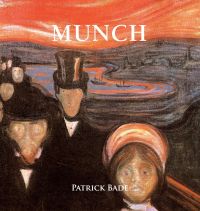
MunchPatrick Bade1h 20m3.9 (40)$8 · $0.00
KlimtPatrick Bade1h 2m4.3 (257)$8 · $0.00
MuchaPatrick Bade1h 12m4.1 (288)$8 · $0.00
Felicien RopsPatrick Bade58m4.1 (27)$13 · $0.00

Gustav Klimt und KunstwerkePatrick Bade, Jane Rogoyska1h 21m4.3 (80)$15 · $0.00
Auguste RenoirPatrick Bade55m4.0 (52)$13 · $0.00

Alfons MuchaPatrick Bade, Victoria Charles2h 51m4.4 (31)$16 · $0.00
Aubrey BeardsleyPatrick Bade1h 2m4.3 (24)$13 · $0.00
Henri de Toulous Lautrec: Kunst und intrigenPatrick Bade1h$13 · $0.00
SchielePatrick Bade1h 16m4.3 (33)$8 · $0.00
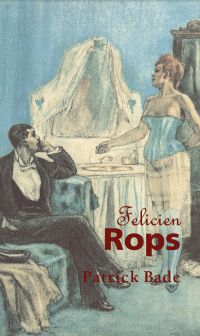
Felicien RopsPatrick Bade1h 4m3.8 (35)$13 · $0.00
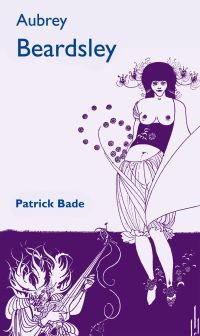
Aubrey BeardsleyPatrick Bade1h 16m4.3 (12)$13 · $0.00
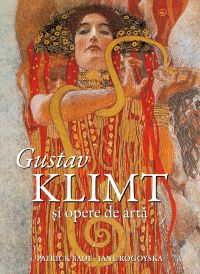
Gustav Klimt și opere de artăPatrick Bade, Jane Rogoyska1h 19m$15 · $0.00
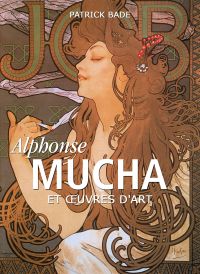
Alphonse Mucha et œuvres d'artPatrick Bade1h 26m4.0 (120)$15 · $0.00

Alphonse MuchaPatrick Bade, Victoria Charles2h 57m4.1 (31)$16 · $0.00
KlimtPatrick Bade58m3.7 (52)$8 · $0.00
Mere ChristianityC. S. Lewis7h 7m4.4 (519.7K)$24 · $0.00

Her Daily BreadKate Wood12h 57m4.6 (153)$33 · $0.00
The Holy Bible - 1 SamuelKing James2h 13m4.8 (1.6K)$3 · $0.00
The American Standard Bible — The Gospel of MatthewMatthew3h 56m4.7 (3K)$2 · $0.00

Bad Fat Black GirlSesali Bowen6h 32m4.7 (2.8K)$24 · $0.00
The King James Audio Bible New Testament CompleteChristopher Glyn20h 2m4.7 (2.6K)$12 · $0.00
Faiths CheckbookCharles Spurgeon12h 44m4.7 (3.2K)$11 · $0.00

Ten Things I Wish You Knew About Your Child's Mental HealthDr. Billy Garvey4h 53m4.7 (2.4K)$20 · $0.00

Designing Terry Pratchett’s DiscworldPaul Kidby3h 52m4.7 (343)$20 · $0.00
The Chosen Book OneAmanda Jenkins, Kristen Hendricks, Dallas Jenkins3h 8m4.6 (4.9K)$10 · $0.00
The Lives of BrianBrian Johnson9h 45m4.6 (3.5K)$29 · $0.00
Expository Thoughts on the Gospel of LukeJ.C. Ryle27h 13m4.7 (536)$18 · $0.00

CrossroadsKaleb Dahlgren7h 56m4.6 (4.9K)$26 · $0.00

Across the RiverKent Babb11h 40m4.6 (927)$29 · $0.00

Brain Training for RidersAndrea Monsarrat Waldo5h 56m4.7 (550)$19 · $0.00
My Effin' LifeGeddy Lee17h 11m4.6 (13.1K)$40 · $0.00

Kings and PawnsHoward Bryant10h 9m4.6 (678)$29 · $0.00

The Elementia Chronicles #2: The New OrderSean Fay Wolfe11h 17m4.6 (841)$29 · $0.00
The ActsLuke2h 55m4.6 (19.7K)$12 · $0.00
New Testament - Easy NavigationWorld English Bible19h 35m4.6 (1.3K)$1.30 · $0.00
You may also like
To Have and to HoldMolly Millwood9h 1m4.4 (4.9K)$29 · $0.00
But You Seemed So HappyKimberly Harrington7h 10m3.9 (2.1K)$24 · $0.00

Holler If You Hear MeMichael Eric Dyson9h 32m4.1 (2.1K)$20
Vincent van GoghVictoria Charles3h 16m4.1 (334)$16 · $0.00

The Prince of TidesPat Conroy25h 55m4.3 (232.2K)$53 · $0.00

DrinkAnn Dowsett Johnston8h 47m3.9 (5.1K)$29 · $0.00

Irreversible DamageAbigail Shrier9h 2m4.2 (26.6K)$20
The Essays of Arthur SchopenhauerArthur Schopenhauer3h 3m4.3 (2.4K)Free

All the RageDarcy Lockman8h 53m4.2 (3.5K)$29 · $0.00
Missing OutAdam Phillips4h 46m3.6 (3.4K)$20
Albert EinsteinKathleen Krull2h 35m4.1 (334)$15

Never Leave the Dogs BehindBrianna Madia5h 37m4.2 (7.8K)$24 · $0.00
Live FreeDeVon Franklin8h 33m4.3 (524)$26 · $0.00

Villain Era SpiritualityMarisol 'Sol' Vega-Okafor8h 35m$6 · $0.00

The Nervous HousewifeAbraham Myerson3h 47m3.6 (30)$1 · $0.00
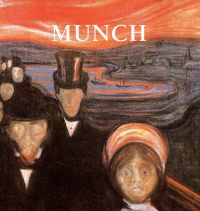
MunchPatrick Bade1h 14m4.1 (31)$8 · $0.00
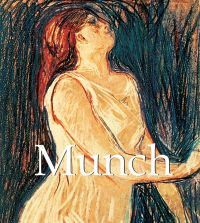
MunchElizabeth Ingles1h 32m4.1 (62)$13.50 · $0.00
Unf*ck Your BoundariesFaith G. Harper PhD2h 48m$15

Intimate FridaIsolda P. Kahlo7h 35m3.7 (11)$11 · $0.00
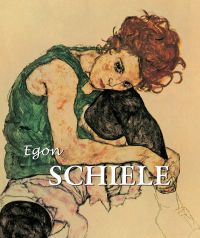
Egon SchieleEsther Selsdon, Jeanette Zwingenberger2h 55m3.9 (107)$16 · $0.00