
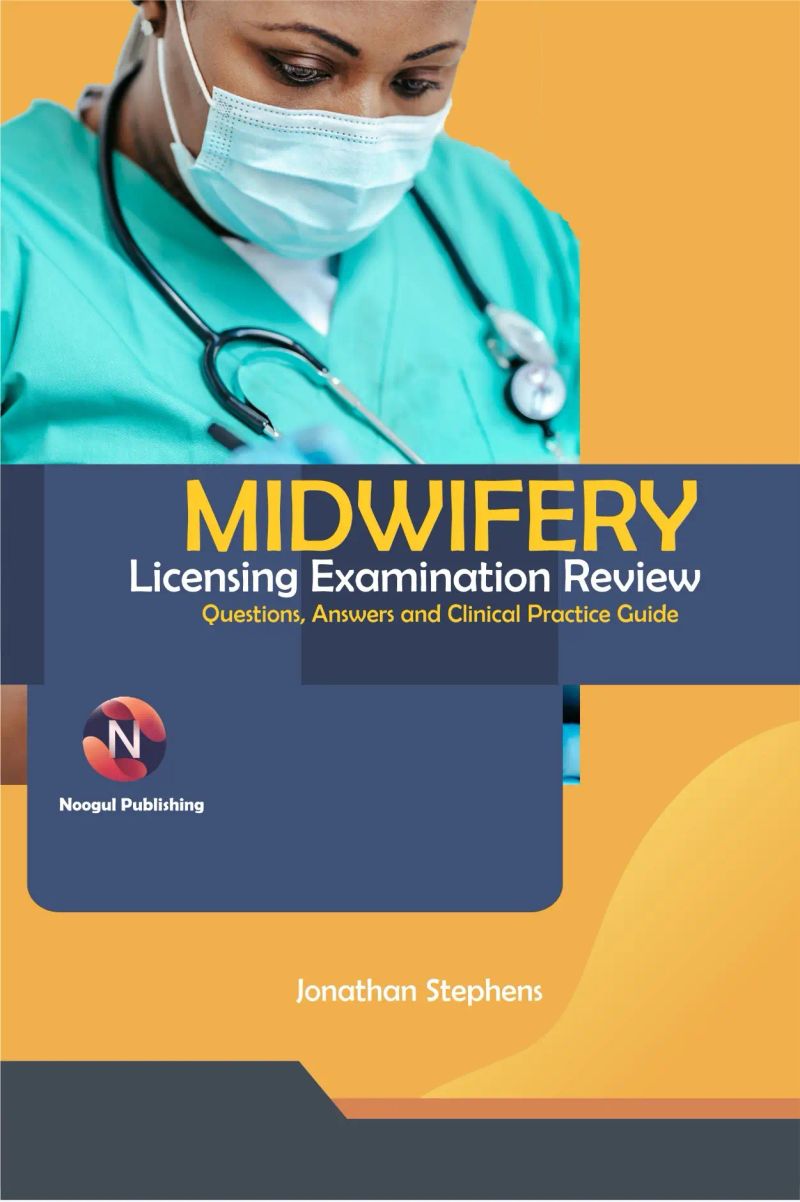
Midwifery Licensing Examination Review. Questions, Answers and Clinical Practice Guide
By Jonathan Stephens


Length5h 32m
About this audiobook
Midwifery Licensing Examination Review: Questions, Answers and Clinical Practice Guide is a comprehensive, examination-focused resource designed for student midwives, nurses, maternity care practitioners, and healthcare professionals preparing for licensing examinations, CBTs, OSCEs, promotion tests, and professional certification programmes. The book simplifies complex midwifery concepts through clear, structured questions and answers that strengthen clinical reasoning, critical thinking, and examination confidence.
It provides extensive coverage of essential topics including antenatal care, labour and delivery, postpartum management, neonatal care, reproductive health, family planning, obstetric emergencies, infection prevention, emergency interventions, and professional ethics. Using multiple-choice questions, scenario-based applications, and practical management guides, readers are exposed to realistic examination formats and evidence-based maternal healthcare practices.
The text also addresses major obstetric complications such as postpartum haemorrhage, sepsis, obstetric shock, ectopic pregnancy, prolonged labour, cord prolapse, and respiratory distress in pregnancy. Practical clinical procedures, maternal assessment techniques, counselling approaches, fertility awareness methods, and emergency response protocols are integrated to enhance bedside competence and safe maternity care delivery.
With its learner-friendly presentation, updated clinical knowledge, and practical orientation, this guide serves as both an examination companion and a clinical reference for practicing midwives, nurse educators, teaching hospitals, schools of nursing and midwifery, and public health professionals committed to improving maternal and neonatal outcomes.
Audiobook details
GenreHealth and Wellness
Length5 hrs 32 mins
Narrated byListen with 1,000+ voices
FormateBook with Audio
Publish dateMay 27, 2026
LanguageEnglish
Table of contents
1SECTION ONE:
2FOUNDATIONS AND CLINICAL MANAGEMENT OF COMPLICATED MIDWIFERY CONDITIONS
3These section provides a comprehensive introduction to the principles, clinical features, emergency management, and examination-based approaches to complicated obstetric and midwifery conditions. Presented in a simplified question-and-answer format, this section is designed to strengthen both theoretical understanding and practical clinical competence among student midwives, nursing students, educators, and healthcare professionals. It covers major obstetric emergencies and procedures including caesarean section, postpartum haemorrhage, puerperal sepsis, obstetric shock, amniotic fluid embolism, ectopic pregnancy, prolonged labour, fetal distress, and retained placenta, while also addressing essential maternal and newborn care concepts such as breastfeeding challenges, cervical assessment, fetal monitoring, and postnatal complications. The section emphasizes evidence-based practice, critical thinking, rapid decision-making, and patient safety, enabling readers to confidently recognize, prevent, and manage life-threatening maternal conditions in clinical settings. Combining examination preparation with practical relevance, this section serves as a valuable resource for licensing examinations, CBT assessments, clinical postings, and professional development in maternal and child healthcare.
4SECTION TWO
5PRINCIPLES, METHODS, AND CLINICAL APPLICATIONS OF FAMILY PLANNING
Show all chaptersShow less
6These section presents a comprehensive and practical guide to family planning, reproductive health, and contraceptive care in a simplified examination-oriented format. This section explores the principles of family planning, informed choice, reproductive rights, counselling techniques, and population education while providing detailed coverage of traditional, natural, hormonal, barrier, emergency, and permanent contraceptive methods. It discusses the mechanisms, effectiveness, advantages, disadvantages, indications, and contraindications of various family planning methods, including oral contraceptive pills, injectables, implants, intrauterine devices, fertility awareness methods, lactational amenorrhea, condoms, vasectomy, and tubal ligation. The section also examines reproductive anatomy and physiology, ovulation, infertility, sexually transmitted infections, breast and pelvic examinations, and client-centered counselling approaches essential for effective reproductive healthcare delivery. Through clinically relevant questions and practical scenarios, readers develop critical thinking, examination preparedness, and professional competence required for safe, ethical, and evidence-based family planning services. This section serves as a valuable resource for nursing and midwifery students, CBT and licensing examination candidates, educators, and healthcare professionals committed to improving reproductive health outcomes, maternal wellbeing, and sustainable family health practices.
7SECTON THREE
8INFANT DISORDERS, CONGENITAL ABNORMALITIES, AND NEWBORN EMERGENCY CARE
9These section presents a practical and examination-focused guide to infant disorders, congenital abnormalities, neonatal assessment, and newborn emergency care in a simplified question-and-answer format. This section provides comprehensive coverage of common congenital and neonatal conditions including club foot, congenital hip dysplasia, cleft lip and palate, hypospadias, epispadias, ambiguous genitalia, congenital diaphragmatic hernia, pyloric stenosis, gastroschisis, omphalocele, tongue tie, tracheoesophageal fistula, syndactyly, polydactyly, and umbilical hernia, while also exploring their causes, symptoms, diagnosis, treatment, and nursing management. It further examines essential newborn care procedures such as Apgar scoring, reflex assessment, cord care, neonatal resuscitation, respiratory adaptation, feeding assessment, neurological evaluation, and emergency interventions required for critically ill newborns. Through clinically relevant examination questions and practical scenarios, readers develop critical thinking, clinical decision-making, and professional competence necessary for safe neonatal and pediatric care. Combining academic knowledge with practical application, this section serves as an invaluable resource for nursing and midwifery students, CBT and licensing examination candidates, educators, and healthcare professionals seeking updated knowledge and confidence in managing newborn and infant health conditions effectively.
10SECTION FOUR
11REPRODUCTIVE HEALTH, FERTILITY, SAFE MOTHERHOOD AND MODERN REPRODUCTIVE TECHNOLOGIES
12This section provides a comprehensive and engaging exploration of reproductive health, emphasizing its importance in promoting individual well-being, healthy families, and sustainable communities. It examines key concepts such as reproductive rights, fertility, infertility, family planning, safe motherhood, prenatal and postnatal care, and quality reproductive healthcare services. Readers are introduced to modern assisted reproductive technologies, including IVF, ICSI, IUI, GIFT, ZIFT, surrogacy, and cryopreservation, while also gaining insight into their ethical, legal, and psychosocial implications. The section further addresses major maternal and newborn health challenges, including pregnancy complications, obstetric emergencies, labour monitoring, neonatal care, and strategies for reducing maternal and infant mortality. Combining practical knowledge with current scientific advances, this section equips readers, healthcare professionals, students, and policymakers with the information needed to make informed reproductive health decisions, support safe motherhood, and improve health outcomes for present and future generations.
13SECTION FIVE
14RESEARCH METHODS, STATISTICS, AND EVIDENCE-BASED PRACTICE
15This section demystifies the world of research and statistics, transforming concepts that many learners find intimidating into practical tools for academic success, professional growth, and evidence-based decision-making. Readers are guided through the foundations of scientific inquiry, including problem identification, literature review, formulation of research questions and objectives, hypothesis development, data collection, measurement scales, research ethics, and the interpretation of findings. The section also provides a clear and engaging introduction to descriptive and inferential statistics, covering measures of central tendency, variability, probability, data presentation, and statistical reasoning in real-world contexts. Emphasizing the importance of evidence-based practice, it demonstrates how research drives innovation, improves healthcare outcomes, informs policy, and strengthens professional competence. Whether you are a student, researcher, healthcare professional, or lifelong learner, this section equips you with the knowledge and confidence to understand, conduct, evaluate, and apply research effectively in academic, clinical, and professional settings. Through practical examples and easy-to-follow explanations, readers will discover how research and statistics serve as powerful tools for solving problems, generating knowledge, and making informed decisions in an increasingly data-driven world.
More from Jonathan Stephens
Comprehensive Ophthalmology Multiple-Choice Questions and Answers Study GuideJonathan Stephens5h 46m$17 · $0.00
Midwifery Exam Mastery: A Complete Study Guide with High-Yield Questions, Detailed Answers, OSCE Clinical Stations, Obstetric Practice, Newborn Care, and Professional Competency ReviewJonathan Stephens13h 30m$19 · $0.00

The Dangerous Truth about Today’s MarijuanaLaura Stack CSP, MBA9h 57m4.7 (385)$20 · $0.00
Hour of the HeartIrvin D. Yalom, Benjamin Yalom8h 19m4.6 (2.3K)$26 · $0.00

The Yoga Sutras of PatanjaliPatanjali4h 8m4.5 (18.5K)$6 · $0.00
The Lost VoiceGreta Morgan8h 30m4.7 (285)$26 · $0.00
Healthy Kids, Happy KidsElisa Song14h 18m4.6 (760)$33 · $0.00
Eat It!Jordan Syatt, Michael Vacanti4h 40m4.6 (1.5K)$20 · $0.00
Consent Laid BareChanel Contos7h 11m4.5 (1.7K)$24 · $0.00
How to Make Disease DisappearRangan Chatterjee5h 26m4.5 (3.5K)$24 · $0.00

The Complete Herbal (Annotated)Nicholas Culpeper29h 8m4.5 (1.4K)$2 · $0.00

A Plague Upon Our HouseScott W. Atlas MD10h 37m4.5 (3.4K)$20 · $0.00
The Cancer CodeDr. Jason Fung10h 48m4.5 (5.3K)$29 · $0.00
The Gift of TherapyIrvin Yalom7h 39m4.5 (38.8K)$26 · $0.00

EarlySarah DiGregorio9h 47m4.5 (1.3K)$29 · $0.00
Bottle of LiesKatherine Eban14h 25m4.4 (12K)$33 · $0.00
The 36-Hour DayNancy L. Mace, Peter V. Rabins17h 13m4.4 (9.2K)$28 · $0.00
FlooredSara Reardon10h 36m4.5 (1K)$29 · $0.00
Radical RemissionKelly A. Turner9h 26m4.4 (8.1K)$29 · $0.00
The Sinatra SolutionStephen T. Sinatra MD9h4.5 (899)$20 · $0.00

The Songaminute ManSimon McDermott6h 12m4.5 (280)$24 · $0.00
Sometimes BrilliantLarry Brilliant12h 27m4.5 (954)$29 · $0.00
You may also like
A Revised and Illustrated Treatise On Grain StackingJohn N. De Lamater13m$2 · $0.00
Washington Flagger and Traffic Control Study Guide 2026/2027Hollis Quarrington10h 12m$17

The Revenue AcceleratorAllan Colman4h 37m4.8 (11)$25

HSA ExplainedImad Muratspahic3h 39m4.5 (12)$12 · $0.00

North Dakota CDL Permit and Endorsement Test Prep 2026/2027Wendell Tollgard15h 11m$20
Arizona DMV Permit Test Study Guide 2026/2027Lydia Pembrook10h 27m$19
Vermont DMV Permit Test Study Guide 2026/2027Lydia Pembrook10h 30m$19
Arkansas Flagger and Traffic Control Study Guide 2026/2027Hollis Quarrington10h 15m$17
Alabama Flagger and Traffic Control Study Guide 2026/2027Hollis Quarrington10h 13m$17
Indiana Flagger and Traffic Control Study Guide 2026/2027Hollis Quarrington10h$17
California Flagger and Traffic Control Study Guide 2026/2027Hollis Quarrington10h 13m$17
Montana Flagger and Traffic Control Study Guide 2026/2027Hollis Quarrington10h 14m$17

DroppedImad Muratspahic2h 4m$13 · $0.00

KENTUCKY MOTORCYCLE PERMIT EXAM PREP 2026–2027Tyler Knox7h 23m$10

HAWAII MOTORCYCLE PERMIT EXAM PREP 2026–2027Tyler Knox8h 47m$10

DELAWARE COMMERCIAL DRIVER'S LICENSE STUDY GUIDE 2026/2027JAMES DALTON9h 48m$11.50 · $0.00
A Treatise on Grain StackingJohn N. De Lamater13m$1 · $0.00

Sweet Clover: Harvesting and Thrashing the Seed CropH. S. Coe45m$2 · $0.00
ISO 22301: 2019 - An introduction to a business continuity management system (BCMS)Alan Calder53m$14 · $0.00

The Off-Grid Solar PowerHarold M.Stevens2h$9.50 · $0.00