
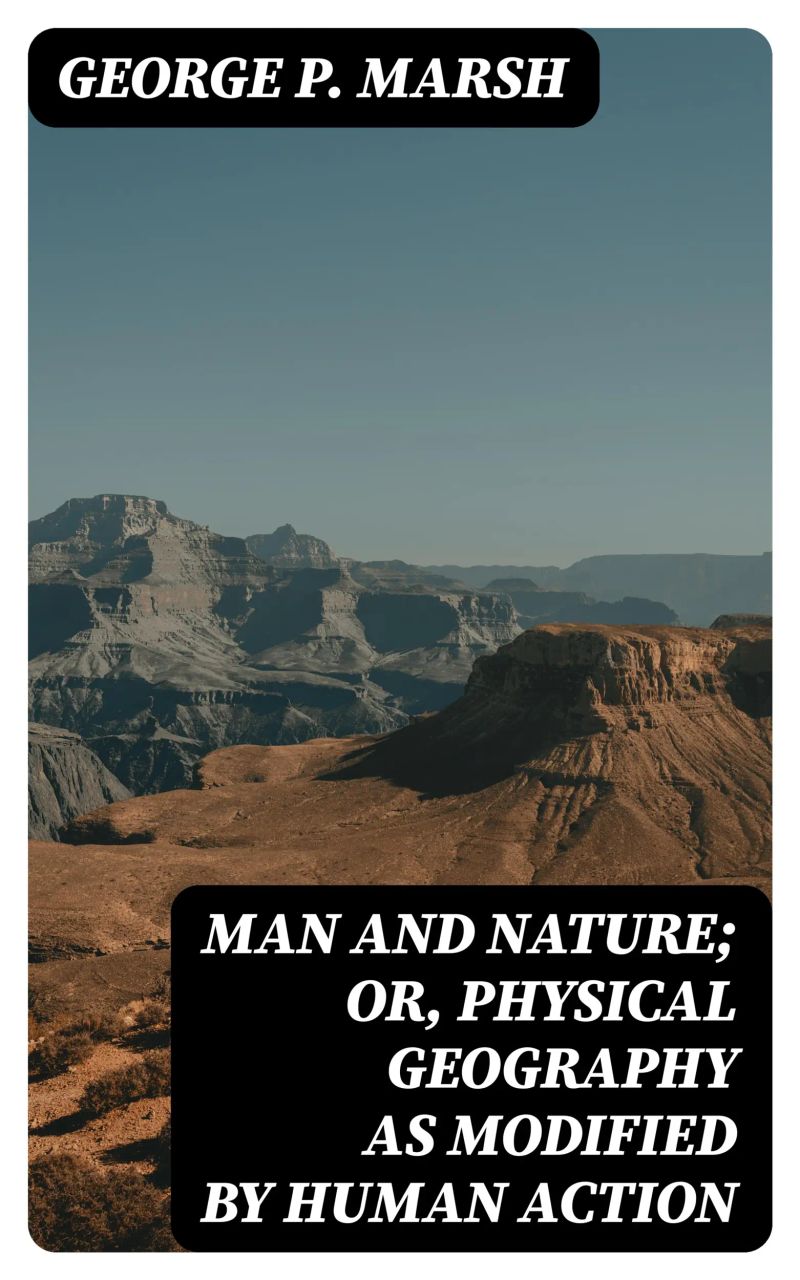
Man and Nature; Or, Physical Geography as Modified by Human Action
By George P. Marsh


Length24h 6m
About this audiobook
In "Man and Nature; Or, Physical Geography as Modified by Human Action," George P. Marsh explores the intricate relationship between humans and the natural environment, articulating a compelling argument that human intervention profoundly shapes physical geography. Written in the mid-19th century, Marsh's work blends empirical observations with a poetic literary style, reflecting the Romantic ideals of the time while firmly grounding his insights in scientific inquiry. The text serves as a pioneering examination of ecology, urging readers to consider the systemic consequences of human activity on the Earth, while also weaving historical context into a critique of contemporary environmental policies. George P. Marsh, a polymath and diplomat, was deeply influenced by his experiences in both academia and politics, particularly his advocacy for environmental awareness and conservation. His focus on the deleterious effects of deforestation and urbanization arose from a belief in the moral and philosophical duty of mankind to safeguard the natural world. Marsh's background in linguistics and history enabled him to draw lessons from ancient cultures, providing a multi-faceted view on the sustainability of ecosystems. This seminal work is highly recommended for readers interested in environmental studies, history, and geography. Marsh's timeless insights resonate with contemporary discussions on climate change and sustainability, making "Man and Nature" an indispensable text for anyone seeking to understand the consequences of human action on our planet.
Audiobook details
Rating★★★★ 4.0 (218)
Includes Amazon, Goodreads, LibraryThing
GenreScience and Nature
Length24 hrs 6 mins
Narrated byListen with 1,000+ voices
FormateBook with Audio
Publish dateAug 1, 2022
LanguageEnglish
Table of contents
1MAN AND NATURE;
2TABLE OF CONTENTS.
3CHAPTER I.
4INTRODUCTORY.
5Natural Advantages of the Territory of the Roman Empire.
Show all chaptersShow less
6Physical Decay of the Territory of the Roman Empire, and of other parts of the Old World.
7Causes of this Decay.
8New School of Geographers.
9Reaction of Man on Nature.
10Observation of Nature.
11Cosmical and Geological Influences.
12Geographical Influence of Man.
13Uncertainty of our Meteorological Knowledge.
14Mechanical Effects produced by Man on the Surface of the Earth more easily ascertainable.
15Importance and Possibility of Physical Restoration.
16Stability of Nature.
17Restoration of Disturbed Harmonies.
18Destructiveness of Man.
19Human and Brute Action Compared.
20Physical Improvement.
21Arrest of Physical Decay of New Countries.
22Forms and Formations most liable to Physical Degradation.
23Physical Decay of New Countries.
24CHAPTER II.
25TRANSFER, MODIFICATION, AND EXTIRPATION OF VEGETABLE AND OF ANIMAL SPECIES.
26Modern Geography embraces Organic Life.
27Transfer of Vegetable Life.
28Foreign Plants grown in the United States.
29American Plants grown in Europe.
30Modes of Introduction of Foreign Plants.
31Vegetables, how affected by Transfer to Foreign Soils.
32Extirpation of Vegetables.
33Origin of Domestic Plants.
34Organic Life as a Geological and Geographical Agency.
35Number of Quadrupeds in the United States.
36Origin and Transfer of Domestic Quadrupeds.
37Extirpation of Quadrupeds.
38Number of Birds in the United States.
39Birds as Sowers and Consumers of Seeds, and as Destroyers of Insects.
40Diminution and Extirpation of Birds.
41Introduction of Birds.
42Introduction of Insects.
43Destruction of Insects.
44Reptiles.
45Destruction of Fish.
46Introduction and Breeding of Fish.
47Extirpation of Aquatic Animals.
48Minute Organisms.
49CHAPTER III.
50THE WOODS.
More from George P. Marsh

A Brief History of IntelligenceMax S. Bennett12h 18m4.6 (6.6K)$29 · $0.00
The Story of BirdsSteve Brusatte11h 49m4.6 (401)$29 · $0.00

LiftoffEric Berger9h 4m4.6 (9.5K)$29 · $0.00
Black Earth WisdomLeah Penniman11h 54m4.6 (577)$8 · $0.00

Total Cat MojoJackson Galaxy10h 13m4.5 (8.4K)$23 · $0.00

My Life Among the UnderdogsTia Torres5h 51m4.5 (4K)$24 · $0.00

What It Takes to Save a LifeKwane Stewart6h4.6 (556)$24 · $0.00

Pastoral SongJames Rebanks8h 35m4.5 (12K)$26 · $0.00
How Stella Learned to TalkChristina Hunger7h4.5 (10.9K)$24 · $0.00

Craig & FredCraig Grossi8h 6m4.5 (9.6K)$26 · $0.00

Celebrating BirdsNatalia Rojas, Ana Maria Martinez6h 47m4.6 (330)$24 · $0.00

Saving JemimaJulie Zickefoose4h 59m4.5 (749)$20 · $0.00

Will's Red CoatTom Ryan8h 23m4.5 (2.3K)$26 · $0.00
Of Time and TurtlesSy Montgomery10h 34m4.5 (5K)$29 · $0.00
THE WOLF TRILOGY: Call of the Wild, White Fang & The Son of the WolfJack London17h 31m4.5 (2.4K)$1.99 · $0.00

Zen and the Art of Saving the PlanetThich Nhat Hanh9h 20m4.5 (3.9K)$29 · $0.00

BLACK BEAUTY (With Original Illustrations)Anna Sewell7h 31m4.5 (1.3K)$1.99 · $0.00

Bottle of LiesKatherine Eban14h 25m4.4 (12K)$33 · $0.00
IngrainedCallum Robinson8h 10m4.5 (1.1K)$26 · $0.00

The Lion Tracker's Guide To LifeBoyd Varty3h 1m4.4 (4.8K)$18 · $0.00
You may also like

Wilderness, A Journal of Quiet Adventure in AlaskaRockwell Kent5h 15m4.2 (490)$1 · $0.00

Organ SpeakGiulia Enders8h 53m4.2 (1.5K)$29 · $0.00
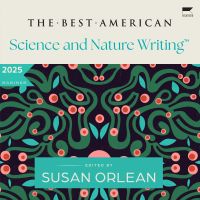
The Best American Science and Nature Writing 2025Susan Orlean, Jaime Green12h 21m4.2 (256)$29 · $0.00

The Art of LivingThich Nhat Hanh5h 1m4.5 (14.2K)$24 · $0.00

Letters from EgyptLucie Lady Duff Gordon13h 29m4.1 (434)$1 · $0.00
Thomas Jefferson: Notes on the State of Virginia (Annotated)Thomas Jefferson12h 6m3.7 (1.1K)$2 · $0.00

A Monograph of OdontoglossumJas. Bateman3h 10m$2 · $0.00

The Land's End: A Naturalist's Impressions In West Cornwall, IllustratedW. H. Hudson8h 37m$1 · $0.00

Wood and ForestWilliam Noyes6h 32m$1 · $0.00

TitanicHistory in an Hour1h 51m$4 · $0.00

The American Practical Brewer and TannerJoseph Coppinger4h 11m3.7 (12)$2 · $0.00
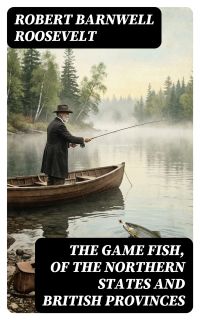
The Game Fish, of the Northern States and British ProvincesRobert Barnwell Roosevelt10h 15m$1 · $0.00

How To Make Natural Skincare Products At Home Organic Moisturizers, Masks, Balms, Polishes And ExfoliantsJideon Marques Marques3h 16m$15 · $0.00

Titanic: The Harrowing True Story of the Titanic Disaster (The History and Legacy of the World’s Most Famous Ship From 1907 to Today)Mason g, John Redmond1h 33m$6.40 · $0.00

The Rocky Mountain WonderlandEnos A. Mills5h 48m4.2 (22)$1 · $0.00

The Spring of the YearDallas Lore Sharp3h 3m4.3 (30)$1 · $0.00
Trees of IndianaCharles Clemon Deam8h 59m$1 · $0.00
The Ice Crop, How to Harvest, Store, Ship and Use IceTheron L. Hiles3h 6m4.4 (11)$2.30

Chambers's Journal of Popular Literature, Science, and Art, No. 740, March 2, 1878Various1h 56m$2 · $0.00
Moths of the Limberlost: A Book About Limberlost CabinGene Stratton-Porter5h 17m4.1 (159)$2 · $0.00