
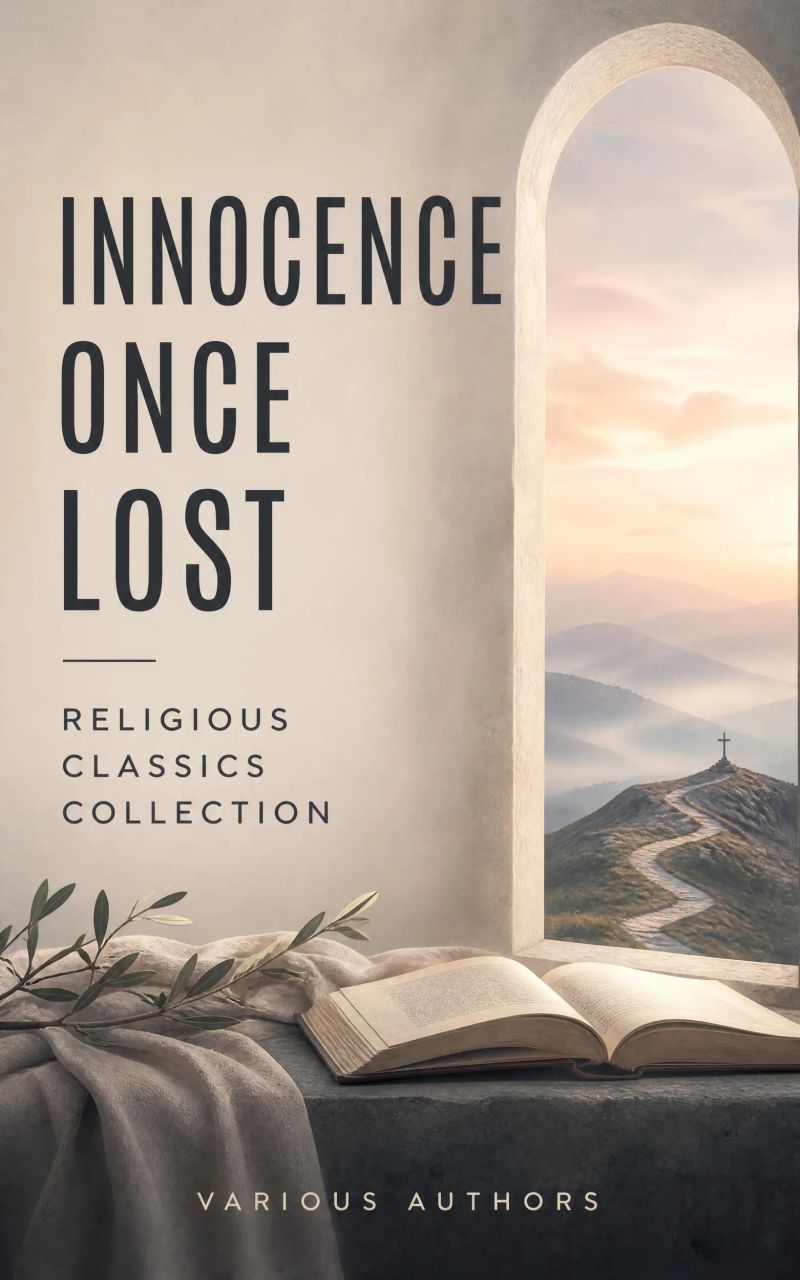
Innocence Once Lost - Religious Classics Collection
Classic Visions of Faith, Doubt, Sin, Grace, and Redemption Across the Western ImaginationBy C. S. Lewis, Dante Alighieri, John Milton, Anton Chekhov, John Bunyan, Voltaire, Lew Wallace, Henryk Sienkiewicz, Charles M. Sheldon, Henry Van Dyke, G. K. Chesterton, Grace Livingston Hill, Fyodor Dostoevsky, Johann Wolfgang von Goethe, Friedrich Nietzsche, John Henry Newman, Gustave Flaubert, Mark Twain, Robert Hugh Benson, Arthur Christopher Benson, Leo Tolstoy, Paul Laurence Dunbar, Prentice Mulford, Anatole France, Marie Corelli, Leonid Andreyev, George MacDonald, Elizabeth Miller, Eden Phillpotts


Length336h 18m
About this audiobook
Innocence Once Lost gathers religious classics around the fraught passage from moral simplicity to knowledge, sin, doubt, repentance, and grace. Its capacious selection moves among epic vision, allegory, parable, realist fiction, philosophical provocation, devotional reflection, satire, and romance, placing medieval and modern religious imaginations in productive tension. Pilgrimage narratives, infernal journeys, conversion dramas, and fables of social conscience stand out as recurring forms through which innocence is mourned, tested, and variously recovered. The volume's writers—drawn from Catholic, Protestant, Orthodox, skeptical, and heterodox traditions—represent a remarkably broad international canon. Poets, novelists, preachers, essayists, and public intellectuals bring the ethical pressures of Reformation Christianity, Victorian spirituality, Russian religious realism, European modernity, and transatlantic social reform into conversation. Their differing commitments prevent religion from appearing monolithic: faith emerges as consolation and discipline, institutional inheritance and personal struggle, while doubt becomes an indispensable mode of moral inquiry. This collection is especially rewarding for readers seeking a comparative introduction to religious literature across periods and genres. It offers an educational encounter with competing accounts of guilt, freedom, suffering, and redemption, while its varied styles illuminate how literary form shapes belief. Read together, these works invite sustained dialogue about what is lost with innocence—and what spiritual, ethical, or imaginative resources may remain.
Audiobook details
Rating★★★★ 4.4 (11)
Includes Amazon
GenreSpirituality and Religion, Christian & Inspirational
Length336 hrs 18 mins
Narrated byListen with 1,000+ voices
FormateBook with Audio
Publish dateJun 4, 2021
LanguageEnglish
Table of contents
1Divine Comedy (Dante Alighieri)
2Inferno
3Canto I. The Dark Forest. The Hill of Difficulty. The Panther, the Lion, and the Wolf. Virgil.
4Canto II. The Descent. Dante's Protest and Virgil's Appeal. The Intercession of the Three Ladies Benedight.
5Canto III. The Gate of Hell. The Inefficient or Indifferent. Pope Celestine V. The Shores of Acheron.
Show all chaptersShow less
6Canto IV. The First Circle, Limbo: Virtuous Pagans and the Unbaptized. The Four Poets, Homer, Horace, Ovid, and Lucan. The Noble Castle of Philosophy.
7Canto V. The Second Circle: The Wanton. Minos. The Infernal Hurricane. Francesca da Rimini.
8Canto VI. The Third Circle: The Gluttonous. Cerberus. The Eternal Rain. Ciacco. Florence.
9Canto VII. The Fourth Circle: The Avaricious and the Prodigal. Plutus. Fortune and her Wheel. The Fifth Circle: The Irascible and the Sullen. Styx.
10Canto VIII. Phlegyas. Philippo Argenti. The Gate of the City of Dis.
11Canto IX. The Furies and Medusa. The Angel. The City of Dis. The Sixth Circle: Heresiarchs.
12Canto X. Farinata and Cavalcante de' Cavalcanti. Discourse on the Knowledge of the Damned.
13Canto XI. The Broken Rocks. Pope Anastasius. General Description of the Inferno and its Divisions.
14Canto XII. The Minotaur. The Seventh Circle: The Violent. The River Phlegethon. The Violent against their Neighbours. The Centaurs. Tyrants.
15Canto XIII. The Wood of Thorns. The Harpies. The Violent against themselves. Suicides. Pier della Vigna. Lano and Jacopo da Sant' Andrea.
16Canto XIV. The Sand Waste and the Rain of Fire. The Violent against God. Capaneus. The Statue of Time, and the Four Infernal Rivers.
17Canto XV. The Violent against Nature. Brunetto Latini.
18Canto XVI. Guidoguerra, Aldobrandi, and Rusticucci. Cataract of the River of Blood.
19Canto XVII. Geryon. The Violent against Art. Usurers. Descent into the Abyss of Malebolge.
20Canto XVIII. The Eighth Circle, Malebolge: The Fraudulent and the Malicious. The First Bolgia: Seducers
21Canto XIX. The Third Bolgia: Simoniacs. Pope Nicholas III. Dante's Reproof of corrupt Prelates.
22Canto XX. The Fourth Bolgia: Soothsayers. Amphiaraus, Tiresias, Aruns, Manto, Eryphylus, Michael Scott, Guido Bonatti, and Asdente. Virgil reproaches Dante's Pity. Mantua's Foundation.
23Canto XXI. The Fifth Bolgia: Peculators. The Elder of Santa Zita. Malacoda and other Devils.
24Canto XXII. Ciampolo, Friar Gomita, and Michael Zanche. The Malabranche quarrel.
25Canto XXIII. Escape from the Malabranche. The Sixth Bolgia: Hypocrites. Catalano and Loderingo. Caiaphas.
26Canto XXIV. The Seventh Bolgia: Thieves. Vanni Fucci. Serpents.
27Canto XXV. Vanni Fucci's Punishment. Agnello Brunelleschi, Buoso degli Abati, Puccio Sciancato, Cianfa de' Donati, and Guercio Cavalcanti.
28Canto XXVI. The Eighth Bolgia: Evil Counsellors. Ulysses and Diomed. Ulysses' Last Voyage.
29Canto XXVII. Guido da Montefeltro. His deception by Pope Boniface VIII.
30Canto XXVIII. The Ninth Bolgia: Schismatics. Mahomet and Ali. Pier da Medicina, Curio, Mosca, and Bertrand de Born.
31Canto XXIX. Geri del Bello. The Tenth Bolgia: Alchemists. Griffolino d' Arezzo and Capocchino.
32Canto XXX. Other Falsifiers or Forgers. Gianni Schicchi, Myrrha, Adam of Brescia, Potiphar's Wife, and Sinon of Troy.
33Canto XXXI. The Giants, Nimrod, Ephialtes, and Antaeus. Descent to Cocytus.
34Canto XXXII. The Ninth Circle: Traitors. The Frozen Lake of Cocytus. First Division, Caina: Traitors to their Kindred. Camicion de' Pazzi. Second Division, Antenora: Traitors to their Country. Dante questions Bocca degli Abati. Buoso da Duera.
35Canto XXXIII. Count Ugolino and the Archbishop Ruggieri. The Death of Count Ugolino's Sons. Third Division of the Ninth Circle, Ptolomaea: Traitors to their Friends. Friar Alberigo, Branco d' Oria.
36Canto XXXIV. Fourth Division of the Ninth Circle, the Judecca: Traitors to their Lords and Benefactors. Lucifer, Judas Iscariot, Brutus, and Cassius. The Chasm of Lethe. The Ascent.
37Purgatorio
38I. The Shores of Purgatory. The Four Stars. Cato of Utica. The Rush.
39II. The Celestial Pilot. Casella. The Departure.
40III. Discourse on the Limits of Reason. The Foot of the Mountain. Those who died in Contumacy of Holy Church. Manfredi.
41IV. Farther Ascent. Nature of the Mountain. The Negligent, who postponed Repentance till the last Hour. Belacqua.
42V. Those who died by Violence, but repentant. Buonconte di Monfeltro. La Pia.
43VI. Dante's Inquiry on Prayers for the Dead. Sordello. Italy.
44VII. The Valley of Flowers. Negligent Princes.
45VIII. The Guardian Angels and the Serpent. Nino di Gallura. The Three Stars. Currado Malaspina.
46IX. Dante's Dream of the Eagle. The Gate of Purgatory and the Angel. Seven P's. The Keys.
47X. The Needle's Eye. The First Circle: The Proud. The Sculptures on the Wall.
48XI. The Humble Prayer. Omberto di Santafiore. Oderisi d' Agobbio. Provenzan Salvani.
49XII. The Sculptures on the Pavement. Ascent to the Second Circle.
50XIII. The Second Circle: The Envious. Sapia of Siena.
MERE CHRISTIANITY: The Case for Christianity, Christian Behaviour & Beyond PersonalityC. S. Lewis7h 44m4.4 (557.6K)$0.99 · $0.00
Religious Classics - Boxed SetC. S. Lewis, Dante Alighieri, John Milton, Anton Chekhov, John Bunyan, Voltaire, Lew Wallace, Henryk Sienkiewicz, Charles M. Sheldon, Henry Van Dyke, G. K. Chesterton, Grace Livingston Hill, Fyodor Dostoevsky, Johann Wolfgang von Goethe, Friedrich Nietzsche, John Henry Newman, Gustave Flaubert, Mark Twain, Robert Hugh Benson, Arthur Christopher Benson, Leo Tolstoy, Paul Laurence Dunbar, Prentice Mulford, Anatole France, Marie Corelli, Leonid Andreyev, George MacDonald, Elizabeth Miller, Eden Phillpotts336h 18m4.5 (19)$0.99 · $0.00
The Complete Works: Fantasy & Sci-Fi Novels, Religious Studies, Poetry & AutobiographyC. S. Lewis164h 50m4.7 (403)$0.99 · $0.00
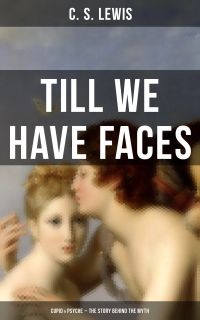
TILL WE HAVE FACES (Cupid & Psyche – The Story Behind the Myth)C. S. Lewis8h 22m4.3 (101.9K)$0.99 · $0.00

THE SCREWTAPE LETTERS & SCREWTAPE PROPOSES A TOAST (Unabridged)C. S. Lewis4h 49m4.2 (9.3K)$0.99 · $0.00
A GRIEF OBSERVED (Based on a Personal Journal)C. S. Lewis2h 45m4.4 (136.8K)$0.99 · $0.00
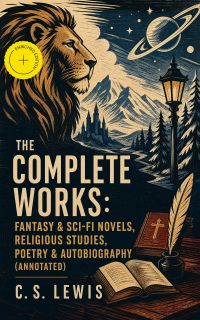
The Complete Works: Fantasy & Sci-Fi Novels, Religious Studies, Poetry & Autobiography (Annotated)C. S. Lewis165h 27m$2 · $0.00

THE SCREWTAPE LETTERS & SCREWTAPE PROPOSES A TOAST (Annotated)C. S. Lewis5h 6m4.4 (471K)$2 · $0.00

The Chronicles of Narnia - Complete 7 Books in One Edition (Annotated)C. S. Lewis35h 30m4.4 (781.2K)$2 · $0.00
Letters to Malcolm: Chiefly on Prayer (Annotated)C. S. Lewis5h 8m4.3 (7.8K)$2 · $0.00
The Four LovesC. S. Lewis5h 46m4.3 (82K)$1 · $0.00
That Hideous StrengthC. S. Lewis18h 20m4.1 (63.1K)$1 · $0.00
Out of the Silent PlanetC. S. Lewis6h 11m4.1 (141.6K)$1 · $0.00
Studies in WordsC. S. Lewis8h 30m4.3 (1.7K)$1 · $0.00

The Horse and his BoyC. S. Lewis5h 11m4.1 (545.5K)$2 · $0.00
TILL WE HAVE FACES (Cupid & Psyche – The Story Behind the Myth)C. S. Lewis9h 51m4.3 (104.5K)$1 · $0.00

The Lion, the Witch and the WardrobeC. S. Lewis5h 14m4.4 (3.3M)$1 · $0.00
Beyond Personality: The Christian Idea of GodC. S. Lewis2h 12m4.3 (228)$1 · $0.00

PerelandraC. S. Lewis8h 49m4.2 (124.3K)$1 · $0.00
The World's Last Night and Other EssaysC. S. Lewis3h 3m4.3 (3.5K)$1 · $0.00

Loved BabySarah Philpott4h 51m4.8 (1.4K)$10 · $0.00

The QuranAllah23h 7m4.7 (136.1K)$1 · $0.00

The Secret of the RosaryLouis de Montfort6h 1m4.7 (16K)$2 · $0.00
The Holy Qur-an: Text, Translation and CommentaryAbdullah Yusuf Ali22h 16m4.7 (133K)$1 · $0.00
All of Grace (Annotated)Charles Spurgeon5h 1m4.7 (1.3K)$1.99 · $0.00
Steps to ChristEllen G. White3h 12m4.7 (13.8K)$2 · $0.00
The Doctrine and Selected CovenantsJoseph Smith13h 53m4.7 (10.4K)$0.99 · $0.00
Sinners in the Hands of an Angry God & Other Sermons (Annotated)Jonathan Edwards7h 51m4.7 (1.5K)$2 · $0.00
Swayam Ki AwaazPrem Rawat8h 34m4.7 (1.1K)$26 · $0.00
Behind the BadgeAdam Davis10h 18m4.7 (2.7K)$10 · $0.00
The New Human Revolution, vol. 1Daisaku Ikeda7h 46m4.7 (669)$12 · $0.00

You Are Worth ItKyle Carpenter, Don Yaeger8h 53m4.7 (4.8K)$29 · $0.00
Praying GraceDavid A. Holland3h 2m4.7 (658)$10 · $0.00
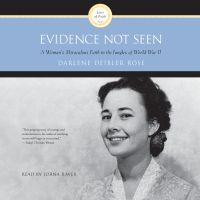
Evidence Not SeenDarlene Deibler Rose11h 11m4.6 (11.9K)$29 · $0.00
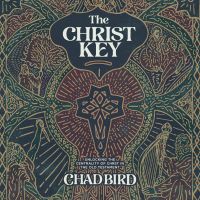
The Christ KeyChad Bird, Chad Bird7h 33m4.7 (592)$17.40 · $0.00
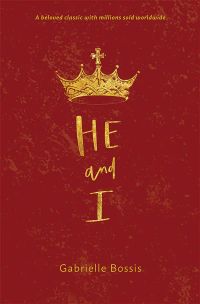
He and IGabrielle Bossis10h 12m4.7 (554)$17 · $0.00
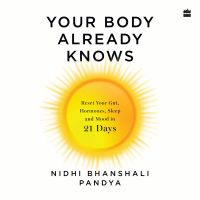
Your Body Already KnowsNidhi Pandya Bhanshali9h 7m4.7 (360)$16 · $0.00
The Complete WorksFlorence Scovel Shinn7h 59m4.6 (6.6K)$2 · $0.00
Driven by EternityJohn Bevere3h 50m4.6 (3.2K)$10 · $0.00
Spiritual AnatomyDaaji Kamlesh D. Patel9h 47m4.7 (319)$29 · $0.00

Search And DetectTerri Reed5h 51m4.6 (706)$24 · $0.00

Danger in the WildernessDarlene L. Turner6h 54m4.7 (299)$12 · $0.00

Yukon JusticeDana Mentink6h 15m4.6 (751)$12 · $0.00

The Rogue WarriorCindy Roland Anderson5h 44m4.6 (410)$17 · $0.00

Her Duty Bound DefenderSharee Stover6h 30m4.6 (1.1K)$24 · $0.00

Trail Of ThreatsJessica R. Patch5h 47m4.6 (425)$24 · $0.00

Ready to ProtectValerie Hansen5h 38m4.6 (981)$24 · $0.00

Searching For EvidenceCarol J. Post6h 21m4.6 (552)$24 · $0.00

Hiding in MontanaLaura Scott6h 18m4.6 (1K)$12 · $0.00
Christmas K-9 Unit HeroesLenora Worth, Katy Lee5h 51m4.6 (507)$24 · $0.00
The Rose CodeKate Quinn16h 2m4.4 (493.7K)$33 · $0.00

Tracking a KillerElizabeth Goddard6h 2m4.5 (1.4K)$24 · $0.00

Tracking The MissingSami A. Abrams5h 17m4.6 (376)$24 · $0.00
An Inside JobDaniel Silva9h 28m4.4 (26.3K)$29 · $0.00

Courage Under FireSharon Dunn5h 50m4.5 (730)$24 · $0.00

The Great Divorce (Annotated)C. S. Lewis4h 49m4.4 (195.6K)$2 · $0.00
The First and Second Books of Adam and EveChristopher Glyn4h 47m4.5 (1.2K)$10 · $0.00
Deep UndercoverLenora Worth6h 50m4.5 (1.6K)$24 · $0.00

Stepping HeavenwardE. Prentiss10h 40m4.4 (13.5K)$1 · $0.00

Exit FeeBrad Taylor3h 16m4.5 (1.9K)$18 · $0.00
You may also like
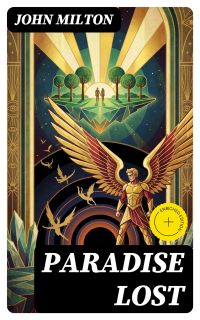
Paradise Lost (Annotated)John Milton8h 21m4.3 (6K)$0.99 · $0.00
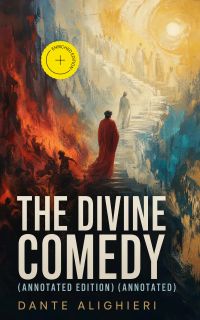
The Divine Comedy (Annotated Edition) (Annotated)Dante Alighieri17h 34m4.3 (8.8K)$1.99 · $0.00
The conference of the birdsFarid Ud-din Attar1h 44m4.3 (8.5K)$1.20 · $0.00
MYSTICISM (Complete Edition)Evelyn Underhill25h 31m4.2 (4.2K)$1 · $0.00
Dhammapada: The Sayings of the BuddhaAnonymous1h 31m4.5 (37.9K)$0.99 · $0.00
The Complete WorksRalph Waldo Emerson96h 51m4.5 (777)$0.99 · $0.00

At The Master’s FeetSadhu Sundar Singh2h 32m4.5 (292)$2.99 · $0.00

Thus Spoke ZarathustraFriedrich Nietzsche10h 44m4.2 (259.6K)$21 · $0.00
Birds, Beasts and FlowersD. H. Lawrence3h 58m4.3 (1.4K)$2 · $0.00

Shadow of the AlmightyElisabeth Elliot11h 27m4.4 (13.9K)$21
The Festival of Spring, from the Díván of JeláleddínMaulana Jalal al-Din Rumi3h 30m4.0 (1K)$2 · $0.00

Meister Eckhart’s Book of SecretsJon M. Sweeney, Mark S. Burrows2h 6m4.2 (530)$15
The Book of Job (With All the Original Illustrations)William Blake1h 55m4.4 (1.7K)$0.99 · $0.00
The Divine ComedyDante3h 41m4.3 (227.4K)$2.30

Seeing Beauty and Saying BeautifullyJohn Piper4h 28m4.4 (776)$15

The Divine Companion (Annotated)James Allen2h 58m4.3 (341)$1.20 · $0.00
The Divine ComedyDante Alighieri13h 18m4.2 (219.8K)$23

Emily DickinsonEmily Dickinson5h 23m4.5 (142.8K)$16

Pascal's PenséesBlaise Pascal12h 15m4.2 (19.2K)$2 · $0.00
The Divine Comedy: Inferno, Purgatorio & ParadisoDante Alighieri15h 22m4.2 (217K)$0.99 · $0.00