
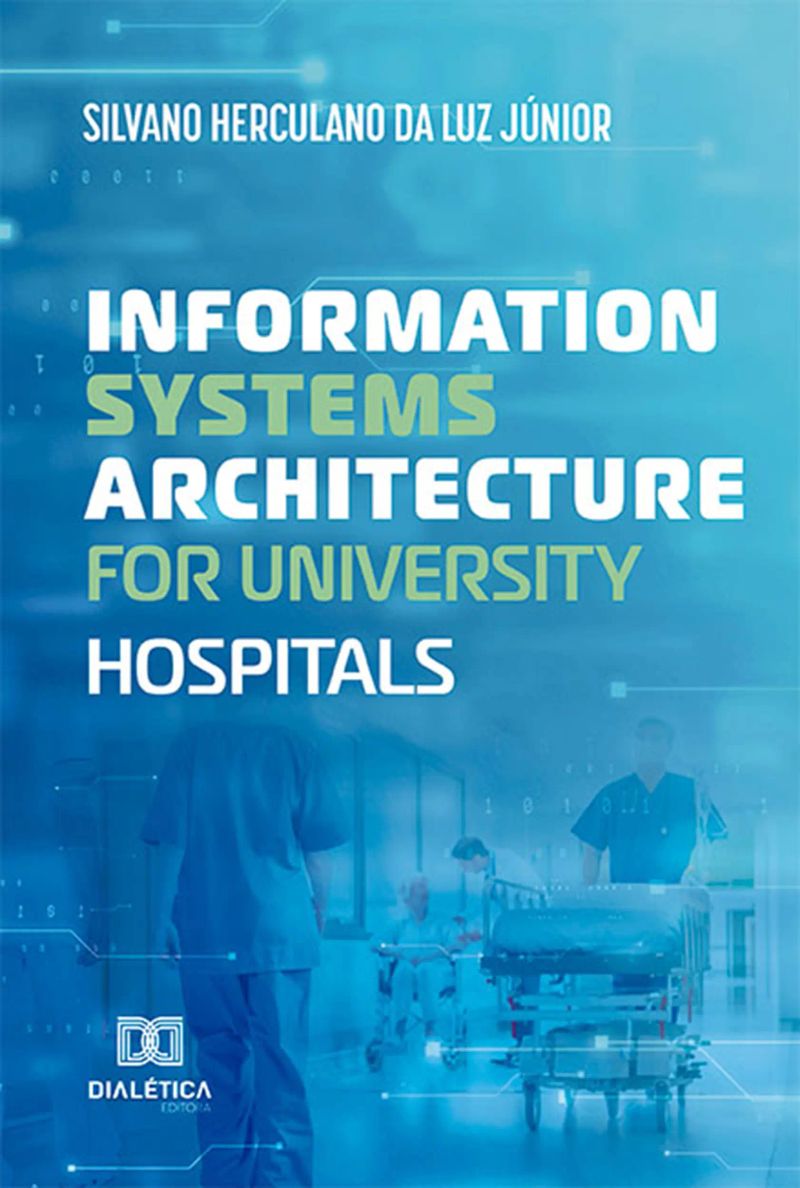
Information Systems Architecture for University Hospitals
By Silvano Herculano da Luz Júnior

Length3h 26m
About this audiobook
The implementation of the Information Systems (IS) Architecture is one of the steps in the construction of the Enterprise Architecture (EA), according to The Open Group Architecture Framework (TOGAF), and can bring notable benefits in supporting the management and governance of Information and Communication Technology (ICT) in organizations, including of health. However, this task is usually followed by several challenges, even more so when we refer to University Hospitals (HU), which are hospitals dedicated to teaching, research, and extension. The purpose of this book is to disseminate an empirical research whose methodological course was carried out in three phases: 1- an extensive Systematic Literature Review, based on 9 specific research questions, to explore the state of the art of the application of EA in health. 2- proposed the 5tep Model, with five well-defined steps to help the implementation of the IS Architecture in HUs. 3- practical application of the 5tep Model together with TOGAF 9.2 and the Archi tool to build and deliver the IS Architecture of a large HU which seeks to improve the provision of services to the population through investments in ICT. As result, in addition to relevant data to the literature on EA and IS through the SLR and the 5tep Model, the delivered IS Architecture for this UH offers a holistic view of the entire ICT, in which identified problems, challenges, possible solutions, and critical success factors for the hospital business.
Audiobook details
GenreOther
Length3 hrs 26 mins
Narrated byListen with 1,000+ voices
FormateBook with Audio
Publish dateNov 21, 2022
LanguageEnglish
Table of contents
1ACKNOWLEDGMENT
21. INTRODUCTION
31.1. MOTIVATION AND JUSTIFICATION
41.2. DELIMITATION OF RESEARCH
51.3. OBJECTIVES
Show all chaptersShow less
61.3.1. GENERAL OBJECTIVE
71.3.2. SPECIFIC OBJECTIVES
81.4. METHODOLOGY
91.4.1. SYSTEMATIC LITERATURE REVIEW (SLR):
101.4.1.1. ELABORATION OF RESEARCH QUESTIONS FOR SLR
111.4.1.2. ELABORATION OF A PROTOCOL FOR SLR
121.4.1.3. CONDUCTING SLR
131.4.2. CASE STUDY
141.5. CONTRIBUTIONS
151.6. WORK ORGANIZATION
162. THEORETICAL BACKGROUND
172.1. ENTERPRISE ARCHITECTURE (EA)
182.2. TOGAF 9.2
192.3. ARCHIMATE 3.1 SPECIFICATION
202.4. ARCHI® SOFTWARE
212.5. RELATED WORKS
223. ENTERPRISE ARCHITECTURE IN HEALTHCARE SYSTEMS: A SYSTEMATIC LITERATURE REVIEW
233.1. SYSTEMATIC LITERATURE REVIEW PROTOCOL
243.2. DATA EXTRACTION STRATEGY
253.3. DATA SYNTHESIS
263.4. RESULTS AND DISCUSSION
273.4.1. RQ2 – WHAT ARE THE MOST USED METHODOLOGIES, FRAMEWORKS AND BEST PRACTICES GUIDE FOR THE EA APPLICATION IN HEALTHCARE SYSTEMS?
283.4.2. RQ3 – WHAT ARE THE MOST USED TOOLS AND MODELS FOR THE DEVELOPMENT OF THE EA IN HEALTHCARE SYSTEMS?
293.4.3. RQ4. – WHAT ARE THE CRITERIA FOR CHOOSING THE METHODOLOGY, FRAMEWORK, AND TOOL USED FOR EA APPLICATION IN HEALTHCARE SYSTEMS?
303.4.4. RQ5 – WHAT PROBLEMS OR CHALLENGES THE EA APPLICATION IN HEALTHCARE SYSTEMS FACE?
313.4.5. RQ6 – WHAT ARE THE MAIN POSITIVE IMPACTS ACHIEVED WITH THE EA APPLICATION IN HEALTHCARE SYSTEMS?
323.4.6. RQ7 – WHAT IS THE CONTEXT FOR THE EA APPLICATION IN HEALTHCARE SYSTEMS?
333.4.7. RQ8 – WHO ARE THE MAIN PUBLICATION CHANNELS AND THE MOST INFLUENTIAL AUTHORS ON THE TOPIC OF EA IN HEALTHCARE SYSTEMS?
343.4.8. RQ9 – WHAT ARE THE MAIN CRITICAL SUCCESS FACTORS MENTIONED FOR EA APPLICATION IN HEALTHCARE SYSTEMS?
353.4.9. CONSIDERATIONS OF THE SYSTEMATIC LITERATURE REVIEW
364. CASE STUDY
374.1. 5TEP MODEL
384.2. DATA COLLECT AT HC-UFPE
394.3. BUILD HC-UFPE IS ARCHITECTURE
404.3.1. ORGANIZATIONAL STRUCTURE OF HC-UFPE
414.3.2. INFORMATION TECHNOLOGY PROCESS MANAGEMENT SECTOR (ITPMS)
424.3.3. ITPMS SYSTEMS AND APPLICATIONS PORTFOLIO
434.3.4. ITPMS DATA CENTER
444.3.5. FUTURE INFORMATION SYSTEMS ARCHITECTURE (TO-BE)
454.4. THREATS TO RESEARCH VALIDITY
464.5. DISCUSSION
475. CONCLUSION
48BIBLIOGRAPHIC REFERENCES
The Holy Bible - 1 SamuelKing James2h 13m4.8 (1.6K)$3 · $0.00

The American Standard Bible — The Gospel of MatthewMatthew3h 56m4.7 (3K)$2 · $0.00

Bad Fat Black GirlSesali Bowen6h 32m4.7 (2.8K)$24 · $0.00
The King James Audio Bible New Testament CompleteChristopher Glyn20h 2m4.7 (2.6K)$10 · $0.00
Faiths CheckbookCharles Spurgeon12h 44m4.7 (3.2K)$11 · $0.00

Ten Things I Wish You Knew About Your Child's Mental HealthDr. Billy Garvey4h 53m4.7 (2.4K)$20 · $0.00
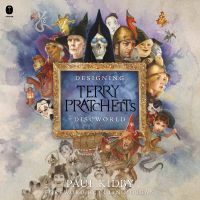
Designing Terry Pratchett’s DiscworldPaul Kidby3h 52m4.7 (343)$20 · $0.00

The Lives of BrianBrian Johnson9h 45m4.6 (3.5K)$29 · $0.00
Expository Thoughts on the Gospel of LukeJ.C. Ryle27h 13m4.7 (536)$18 · $0.00

CrossroadsKaleb Dahlgren7h 56m4.6 (4.9K)$26 · $0.00

Across the RiverKent Babb11h 40m4.6 (927)$29 · $0.00
Brain Training for RidersAndrea Monsarrat Waldo5h 56m4.7 (550)$19 · $0.00

My Effin' LifeGeddy Lee17h 11m4.6 (13.1K)$40 · $0.00

Kings and PawnsHoward Bryant10h 9m4.6 (678)$29 · $0.00

The Elementia Chronicles #2: The New OrderSean Fay Wolfe11h 17m4.6 (841)$29 · $0.00

The ActsLuke2h 55m4.6 (19.7K)$12 · $0.00

New Testament - Easy NavigationWorld English Bible19h 35m4.6 (1.3K)$1.30 · $0.00

Woodcraft and Camping (Annotated)George Washington Sears3h 30m4.6 (1.2K)$1.99 · $0.00

The Hate U GiveAngie Thomas11h 50m4.5 (1.1M)$8 · $0.00

The King of AttoliaMegan Whalen Turner10h 23m4.5 (61.3K)$29 · $0.00
You may also like

New Latin GrammarCharles E. Bennett12h 59m4.0 (1.1K)$2 · $0.00

Competing Against LuckClayton M. Christensen, Taddy Hall, Karen Dillon, David S. Duncan7h 25m4.3 (7.6K)$24 · $0.00

Como Ganar Amigos e Influir Sobre Las Personas (Condensado) [How to Win Friends and Influence People (Abridged)]Dale Carnegie55m4.4 (489)$4 · $0.00
Basic Economics, Fourth EditionThomas Sowell23h 51m4.4 (16.4K)$35 · $0.00
The Intelligent Investor Rev Ed.Benjamin Graham17h 48m4.3 (191.5K)$40 · $0.00
An Enquiry Concerning the Principles of MoralsDavid Hume4h 1m4.1 (7.1K)Free
Crossing the ChasmGeoffrey A. Moore9h 45m4.1 (37.9K)$29 · $0.00

A Poetry HandbookMary Oliver3h 33m4.3 (11.9K)$18 · $0.00

Day Trading AttentionGary Vaynerchuk8h 25m4.3 (1.8K)$28 · $0.00

The Principle of RelativityAlbert Einstein, H. Minkowski7h 43m4.4 (1.4K)$1 · $0.00
Collected Writings of Nikola TeslaNikola Tesla, Thomas Commerford Martin19h 42m4.2 (1.8K)$1.99 · $0.00
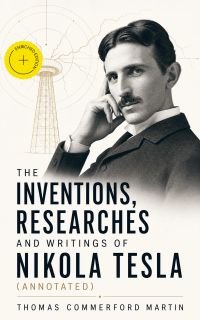
The inventions, researches and writings of Nikola Tesla (Annotated)Thomas Commerford Martin16h 59m4.3 (1.3K)$2 · $0.00

Collected Writings of Nikola TeslaThomas Commerford Martin, Nikola Tesla19h 42m4.4 (2.8K)$0.99 · $0.00

Nicomachean EthicsAristotle8h 51m4.3 (63.3K)$1.80 · $0.00

Influence, New and ExpandedRobert B. Cialdini20h 44m4.3 (186.5K)$46 · $0.00

Plato's Republic (Annotated)Plato18h 13m4.1 (1.3K)$1.99 · $0.00
Music TheoryJonatan Vale43m$7 · $0.00

I Work Abroad, Live in Poland, and My Paperwork Is Everywhere - How to Organize Your Cross-Border Calendar, Documents, and Specialist Contacts, and Keep Everyday Services Running Without Assuming Two Countries Automatically Share EverythingMax Paradox6h 49m$5.10

The Boston School Atlas, Embracing a Compendium of GeographyB. Franklin Edmands3h 30m$2 · $0.00
Why Businesses Fail? S01E02Amar Deshpande16m$4 · $0.00