
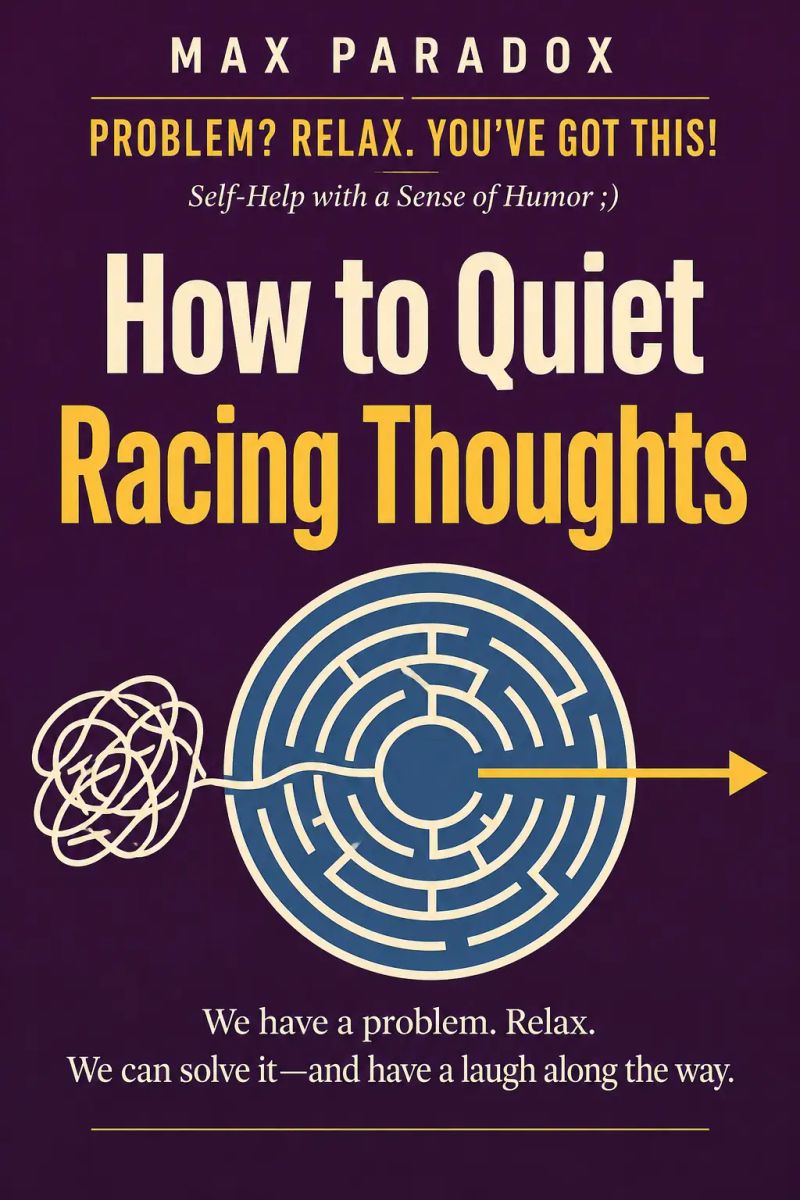


Length6h 34m
About this audiobook
Your brain was supposed to help you solve problems. Instead, it has scheduled a 1:17 a.m. emergency meeting about a text message from Tuesday.
If you replay conversations, predict disasters, research decisions long after you already have enough information, or lie awake trying to solve tomorrow before it arrives, How to Quiet Racing Thoughts is for you.
This practical self-help guide explores overthinking without pretending the answer is to "just stop thinking." Your mind is not a light switch, and attempting to force it into silence usually gives it one more thing to argue about. The goal is different: learn when thinking is useful, recognize when it has turned into looping, and stop giving every thought unlimited access to your attention.
Inside, you'll learn how to separate facts from assumptions, distinguish preparation from prediction, stop mentally replaying conversations that are already over, and make decisions without demanding perfect certainty. You'll discover practical ways to handle worst-case scenarios, reassurance seeking, information overload, nighttime racing thoughts, emotional reasoning, and the endless "what if?" questions that make ordinary uncertainty feel like an emergency.
The book also shows you how to give recurring worries a proper place instead of allowing them to interrupt the entire day. You'll learn how to capture unfinished tasks outside your head, schedule problems for later, create stopping rules for research and checking, reduce inputs that keep your mind activated, and redirect attention without turning mental calm into another perfectionist project.
This is not a promise of permanent mental silence. Thoughts will still appear. Doubts will still visit. Your brain may continue submitting unsolicited forecasts about your career, relationships, money, sleep, and whether everyone secretly noticed that awkward sentence you said three years ago. The difference is that you can learn not to follow every thought down the hallway.
With clear explanations, relatable examples, practical exercises, and humor that never treats the problem lightly, How to Quiet Racing Thoughts helps you build a more useful relationship with your own mind. Instead of trying to eliminate uncertainty, you'll practice functioning before certainty arrives. Instead of using worry as proof that you care, you'll learn to prepare, act, and then stop. Instead of letting one thought expand until it occupies the entire day, you'll learn to return to what is actually happening now.
The chapters move from recognizing the difference between useful thought and mental spinning to building routines that make spirals less likely in the first place. Whether your overthinking shows up as decision paralysis, social replay, late-night analysis, constant checking, or a browser full of "just one more" searches, the approach stays grounded in one question: what is actually useful now?
You do not need an empty mind. You need a mind whose every notification does not automatically become your job.
This publication was prepared with the assistance of tools that support the creative process, including artificial intelligence-based solutions. The final concept, structure, and editing belong to the author.
Audiobook details
GenreSelf-Help
Length6 hrs 34 mins
Narrated byListen with 1,000+ voices
FormateBook with Audio
Publish dateSep 11, 2026
LanguageEnglish
Table of contents
1INTRO
2Chapter 1 - When Thinking Stops Helping
3Chapter 2 - Why Your Brain Keeps Reopening the Case
4Chapter 3 - The Difference Between a Thought and a Fact
5Chapter 4 - Stop Trying to Solve Tomorrow Tonight
Show all chaptersShow less
6Chapter 5 - Stop Replaying Conversations That Are Already Over
7Chapter 6 - Decision Paralysis and the Myth of the Perfect Choice
8Chapter 7 - What to Do When Your Brain Won’t Shut Up at Night
9Chapter 8 - The Worst-Case Scenario Department
10Chapter 9 - You Do Not Have to Answer Every Thought
11Chapter 10 - Stop Checking Whether You Feel Certain Yet
12Chapter 11 - Give Your Thoughts Somewhere Else to Go
13Chapter 12 - Make Peace With Not Knowing Yet
14Chapter 13 - Stop Treating Every Feeling Like a Warning
15Chapter 14 - Stop Feeding the Thought With More Input
16Chapter 15 - Put the Problem on a Schedule
17Chapter 16 - Stop Asking Questions That Have No Good Answer
18Chapter 17 - Your Attention Is Not Public Property
19Chapter 18 - Build a Quieter Default
20Chapter 19 - What to Do When the Thoughts Come Back Anyway
21Chapter 20 - You Can Let the Thought Pass

I'm Afraid to Spend Money Even When I Can Afford It - How to Stop Treating Every $20 Purchase Like the Beginning of BankruptcyMax Paradox6h 50m$7.70 · $0.00

Mam 8462 zdjęcia i boję się usunąć choć jedno - Jak posprzątać cyfrowe życie bez oglądania wakacji z 2014 rokuMax Paradox5h 41m$7.70 · $0.00
Nothing Makes Me Happy Anymore - How to Rediscover Everyday Joy Without Buying a Motorcycle or Moving to BaliMax Paradox7h 19m$7.70 · $0.00

Every Day I Have to Figure Out What to Eat - How to Stop Losing Your Life to “What's for Dinner?”Max Paradox6h 58m$7.70 · $0.00

The Absurdities of Being a Lawyer - A Quietly Exhausting Guide to a Profession That Never Asked If You’re OkayMax Paradox4h 40m$7.70 · $0.00

The Absurdity of Owning Android Devices - Freedom, Features, and the Mild Chaos of Living in an Open EcosystemMax Paradox3h 51m$7.70 · $0.00

The Absurd War Between Apple and Android - How Two Rectangles Turned Into Tribes, Identities, and Endless ArgumentsMax Paradox3h 51m$7.70 · $0.00

Mój mózg chce wszystko w trzydzieści sekund - Jak odzyskać koncentrację po latach rolek, Shortsów i TikTokaMax Paradox5h 51m$7.70 · $0.00

My Parents Still Treat Me Like a Child - How to Be an Adult Even at Family DinnerMax Paradox7h 33m$7.70 · $0.00

I Can't Watch a Movie Without Checking My Phone - How to Recover the Ability to Do One Thing at a TimeMax Paradox7h 13m$7.70 · $0.00

AI miało oszczędzać mi czas, a mam jeszcze więcej roboty - Jak korzystać z automatyzacji bez automatycznego dokładania sobie obowiązkówMax Paradox5h 15m$7.70 · $0.00
Before I Choose Anything, I Need Fourteen More Reviews - How to Make Decisions Without Writing a Dissertation on Every PurchaseMax Paradox7h 3m$7.70 · $0.00
My Partner Doesn't Listen to Me - How to Talk Without Ending the Conversation by Slamming a CabinetMax Paradox6h 53m$7.70 · $0.00

Nic mnie już nie cieszy - Jak odzyskać zwykłą radość bez kupowania motocykla i przeprowadzki na BaliMax Paradox5h 20m$7.70 · $0.00

I Buy Healthy Food and Then Order Pizza - How to Plan Meals for the Person You Actually AreMax Paradox7h 34m$7.70 · $0.00

How to Be Productive While Doing Absolutely Nothing - The Ultimate Guide to Looking Busy, Feeling Accomplished, and Getting Nothing DoneMax Paradox1h 42m$7.70 · $0.00
How to Set Healthy Screen-Time Rules Without Daily ArgumentsMax Paradox6h 57m$7.70 · $0.00

Płacę za siłownię, żeby czuła moje wsparcie - Jak zacząć się ruszać bez rozpoczynania nowego życia od poniedziałkuMax Paradox5h 30m$7.70 · $0.00

The Internet Convinced Me I Have Seventeen Diseases - How to Stop Diagnosing Yourself After Three Reels and One CommentMax Paradox6h 17m$7.70 · $0.00

Labubu - A Quiet Study of How Something Small Took Over Without AskingMax Paradox4h 23m$7.70 · $0.00
Learning to PrayJames Martin13h 24m4.5 (3.4K)$33 · $0.00

Swayam Ki AwaazPrem Rawat8h 34m4.7 (1.1K)$26 · $0.00

Forever BoyKate Swenson9h 27m4.7 (5K)$29 · $0.00

You Are Worth ItKyle Carpenter, Don Yaeger8h 53m4.7 (4.8K)$29 · $0.00

The Happiest Man on EarthEddie Jaku3h 48m4.6 (178K)$7 · $0.00

Finding MeViola Davis9h 15m4.6 (256.4K)$29 · $0.00

Spiritual AnatomyDaaji Kamlesh D. Patel9h 47m4.7 (319)$29 · $0.00

The Dangerous Truth about Today’s MarijuanaLaura Stack CSP, MBA9h 57m4.7 (385)$20 · $0.00

The Gospel according to Spiritualism (Translated)Allan Kardec14h 39m4.6 (3.9K)$5.70 · $0.00

Birdie & HarlowTaylor Wolfe7h 50m4.6 (6.5K)$26 · $0.00

CrossroadsKaleb Dahlgren7h 56m4.6 (4.9K)$26 · $0.00

Life on the BridgeKaelynn Partlow5h 40m4.6 (1.1K)$24 · $0.00

Keep Your Love OnDanny Silk9h 4m4.6 (8.1K)$10 · $0.00

The Tao of Joy Every DayDerek Lin10h 24m4.6 (762)$20 · $0.00

UndividedVicky Beeching9h 2m4.6 (1.3K)$29 · $0.00

HE CAN WHO THINKS HE CAN & OTHER BOOKS ON SUCCESSOrison Swett Marden5h 54m4.6 (1.2K)$1.99 · $0.00
Level UpRob Dial7h 42m4.6 (3.3K)$26 · $0.00

Burn the HaystackJennie Young, PhD9h 30m4.6 (543)$29 · $0.00

ACRES OF DIAMONDS: Our Every-day Opportunities (Wisdom & Empowerment Series) (Annotated)Russell Conwell2h 26m4.6 (1K)$2 · $0.00

Good InsideBecky Kennedy9h 55m4.5 (59.3K)$29 · $0.00
You may also like

Your Mind and How to Use It: A Manual of Practical Psychology (Unabridged) (Annotated)William Walker Atkinson6h 3m4.1 (2.2K)$2 · $0.00

My Magic BreathNick Ortner, Alison Taylor4m4.3 (1.7K)$4 · $0.00
Peak MindAmishi P. Jha9h 29m4.1 (3.8K)$29 · $0.00

The Power of Concentration (Complete Edition)William Walker Atkinson4h 22m4.0 (3.1K)$1.99 · $0.00

The Code of a Healthy MindDanniel Silva3h 24m$1.80 · $0.00

Catch the LieKyrie Anderson3h 44m$4
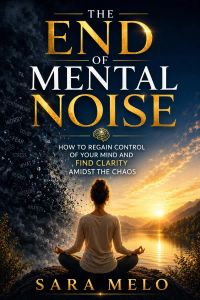
The End of Mental NoiseSara Melo3h 13m$1.80 · $0.00

Strong Mind, Light LifeDanniel Silva3h 40m$1.80 · $0.00
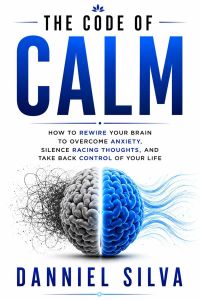
The Code of CalmDanniel Silva3h 47m$1.80 · $0.00
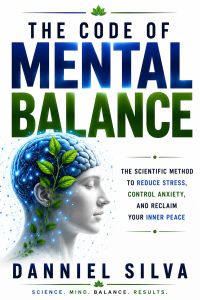
The Mental Balance CodeDanniel Silva3h 29m$1.80 · $0.00
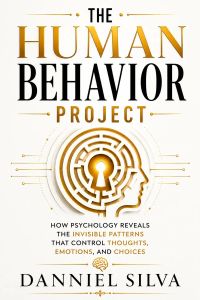
The Human Behavior ProjectDanniel Silva3h 10m$1.80 · $0.00

The Second Before the ChoiceDanniel Silva3h 36m$1.80 · $0.00
Intrusive Thoughts: The Ultimate Guide to Overcoming Intrusive Thoughts (An All-inclusive Guide to Tame Involuntary Thinking and Embrace Coping Strategies)Bernard Rodriguez1h 57m$3.50 · $0.00

GROUNDEDJames Igbodato3h 36m$8
How to Hack Your Brain for ProductivityJoylar B. James9h 44m$10

When the Mind Goes to WarSara Melo3h 1m$1.80 · $0.00
The Art of Public SpeakingAnthony Ekanem1h 14m$4 · $0.00

OverthinkingChristine Kennedy1h 49m4.0 (275)$9.99

Interview Red FlagsImad Muratspahic3h 15m$12 · $0.00

A Common Sense View of the Mind CureLaura M. Westall1h 58m$4.10 · $0.00