

How to Avoid Online Scams and Protect Your Money
By Max Paradox


Length8h 20m
About this audiobook
The message looks real. The caller knows your name. The website has the correct logo. Your "bank" says money is disappearing right now, your "boss" needs an urgent transfer, your "child" has a new number, or an online investment has somehow made you rich before lunch.
And then someone asks you to click, pay, approve, install, transfer, or share a code.
How to Avoid Online Scams and Protect Your Money is a practical guide to recognizing what modern scammers are actually doing - and stopping the process before your money, identity, or account access disappears.
Max Paradox takes the subject seriously without turning the internet into a horror movie. Instead of asking you to memorize every scam currently circulating, the book teaches a system that keeps working when the scam changes: identify the claim, notice the pressure, separate appearance from proof, verify through an independent channel, and delay irreversible actions until you know who you are dealing with.
Inside, you will learn how to handle fake bank calls, phishing emails, suspicious links, marketplace scams, investment fraud, romance scams, fake recruiters, fraudulent payment requests, remote-access scams, identity theft, gift-card demands, cryptocurrency transfers, fake checks, account takeovers, AI-assisted impersonation, and recovery scams aimed at people who have already lost money.
More importantly, you will learn what to do in ordinary life.
Which accounts should you protect first?
How should you verify a family emergency?
What should happen when a supplier suddenly changes bank details?
When should you refuse a payment method?
What should you do if you already clicked the link, shared a code, installed software, or sent money?
How do you make yourself safer without spending every evening investigating URLs like a tired intelligence analyst?
The answers are practical, specific, and designed for normal people who have jobs, families, bills, distractions, and occasionally click things before the skeptical part of the brain has finished loading.
You will build simple habits around passwords, multi-factor authentication, transaction alerts, payment verification, account recovery, credit and identity protection, family emergency procedures, safer online shopping, and rapid fraud response.
No cybersecurity bunker required.
No expectation that you become impossible to fool.
Just a system that makes you much harder to manipulate - and much faster to react if something does go wrong.
Because scammers want urgency, secrecy, confusion, and cooperation.
You are going to give them paperwork.
This publication was prepared with the assistance of tools that support the creative process, including artificial intelligence-based solutions. The final concept, structure, and editing belong to the author.
Audiobook details
GenreBusiness and Economics, Self-Help
Length8 hrs 20 mins
Narrated byListen with 1,000+ voices
FormateBook with Audio
Publish dateSep 7, 2026
LanguageEnglish
Table of contents
1INTRO
2Chapter 1 - The Scam Is a Situation, Not a Message
3Chapter 2 - Urgency Is Doing the Driving
4Chapter 3 - Your Brain Is Not a Fraud Department
5Chapter 4 - Looking Legit Is Cheap
Show all chaptersShow less
6Chapter 5 - Convenience Has a Security Department
7Chapter 6 - Stop Giving Away the Security System
8Chapter 7 - Stop Helping the Scammer
9Chapter 8 - A Great Deal Is Not an Emergency
10Chapter 9 - The Sixty-Second Scam Check
11Chapter 10 - Verify the Human, Not the Logo
12Chapter 11 - How You Pay Matters
13Chapter 12 - Click Less, Type More
14Chapter 13 - Make Your Identity Expensive to Steal
15Chapter 14 - Add Friction Before Money Moves
16Chapter 15 - You Clicked It. Now What?
17Chapter 16 - If the Money Is Gone, Move Fast
18Chapter 17 - When You Still Can’t Tell
19Chapter 18 - Make the Safe Choice Automatic
20Chapter 19 - Scammers Update. So Do You.
21Chapter 20 - Calm Is a Security Tool

My Parents Believe Everything They See on Facebook - How to Talk About Fakes, AI, and “A Friend Sent It” Without Starting a Family WarMax Paradox7h 49m$7.70 · $0.00

They Live Among Us - Aliens, Humans, and the Beautiful Disaster of Planet EarthMax Paradox2h 45m$7.70 · $0.00

How to Help Your Teen Quit VapingMax Paradox6h 49m$7.70 · $0.00

Nie umiem być sam - Jak polubić własne towarzystwo bez prowadzenia ze sobą dziwnych rozmówMax Paradox5h 9m$7.70 · $0.00
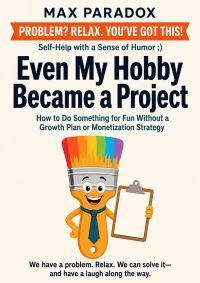
Even My Hobby Became a Project - How to Do Something for Fun Without a Growth Plan or Monetization StrategyMax Paradox6h 9m$7.70 · $0.00

Jest sobota, a ja już boję się poniedziałku: Jak odzyskać weekend od własnej pracyMax Paradox5h 33m$7.70 · $0.00

Everyone Is an Expert Now - How the Internet Replaced Knowledge with ConfidenceMax Paradox1h 46m$7.70 · $0.00

Zarabiam więcej, a i tak czuję się biedniejszy: Jak odnaleźć się w świecie, w którym wszystko kosztuje absurdalne pieniądzeMax Paradox5h 46m$7.70 · $0.00
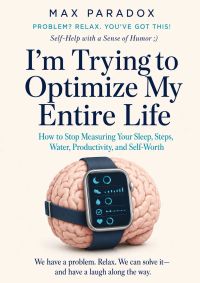
I'm Trying to Optimize My Entire Life - How to Stop Measuring Your Sleep, Steps, Water, Productivity, and Self-WorthMax Paradox7h 26m$7.70 · $0.00

How to Cope with Loneliness and Reconnect with PeopleMax Paradox7h 27m$7.70 · $0.00

I Can't Get Along with My Coworkers - How to Survive Eight Hours a Day with People You Would Never Have ChosenMax Paradox6h 37m$7.70 · $0.00

I Argue with People I'll Never Meet - How to Stop Donating Your Evenings to Internet CommentsMax Paradox6h 40m$7.70 · $0.00

Teściowie wchodzą nam na głowę - Jak postawić granice rodzinie, zanim zacznie wybierać wam zasłonyMax Paradox5h 49m$7.70 · $0.00
Brutalna prawda o LinkedIn Platforma, która mówi, kim jesteś, zanim zdążysz to zrobić samMax Paradox3h 54m$7.70 · $0.00

How to Move Through Grief and Find Life After LossMax Paradox7h 17m$7.70 · $0.00

Rodzice wciąż traktują mnie jak dziecko - Jak dorosnąć również podczas rodzinnego obiaduMax Paradox6h 10m$7.70 · $0.00

How to Get Your Energy and Motivation BackMax Paradox7h 45m$7.70 · $0.00

I'm Afraid I've Wasted My Life - How to Stop Taking Stock of Your Losses Before HalftimeMax Paradox7h 9m$7.70 · $0.00

Wszyscy mają lepiej ode mnie - Jak przestać porównywać swoje życie z cudzym highlightemMax Paradox4h 45m$7.70 · $0.00

Never Split the DifferenceChris Voss, Tahl Raz8h 7m4.4 (277.7K)$26 · $0.00
The Intelligent Investor Rev Ed.Benjamin Graham17h 48m4.3 (191.5K)$40 · $0.00

The Hard Thing About Hard ThingsBen Horowitz7h 57m4.2 (134.3K)$26 · $0.00
Boundaries for LeadersHenry Cloud7h 36m4.3 (3.6K)$26 · $0.00

Not Everything Counts but Everything Matters: The powerful and inspirational new book about leadership and achieving success from the visionary multi-premiership winning Panthers coachIvan Cleary6h 1m4.6 (680)$24 · $0.00

BuildTony Fadell11h 5m4.5 (14.3K)$8 · $0.00
The Joys Of CompoundingGautam Baid17h 34m4.5 (2.5K)$18 · $0.00
Basic EconomicsThomas Sowell18h 32m4.5 (29.3K)$28 · $0.00

Poor Charlie’s AlmanackGrover Gardener, Charles T. Munger13h 9m4.5 (24.7K)$18 · $0.00

The Ambuja StoryNarotam Sekhsaria13h 59m4.5 (830)$33 · $0.00

The Secret Door to SuccessFlorence Scovel Shinn2h 25m4.5 (2.1K)$1.20 · $0.00

This Is Going to HurtAdam Kay5h 47m4.4 (444.7K)$24 · $0.00

Big TrustShadé Zahrai, Fayçal Sekkouah8h 36m4.6 (406)$26 · $0.00
The Intelligent Investor Third EditionBenjamin Graham, Jason Zweig20h4.4 (156.6K)$46 · $0.00

Bottle of LiesKatherine Eban14h 25m4.4 (12K)$33 · $0.00

The Antiracist Business BookTrudi Lebrón6h 10m4.6 (275)$17 · $0.00

The FormulaJoshua Robinson, Jonathan Clegg10h 41m4.4 (6.9K)$29 · $0.00

Let Them LeadJohn U. Bacon7h 10m4.5 (1.4K)$24 · $0.00

Secrets of the Millionaire MindT. Harv Eker5h 11m4.4 (301.4K)$24 · $0.00

The Person You Mean to BeDolly Chugh9h 6m4.4 (7.2K)$29 · $0.00
Learning to PrayJames Martin13h 24m4.5 (3.4K)$33 · $0.00

Swayam Ki AwaazPrem Rawat8h 34m4.7 (1.1K)$26 · $0.00

Forever BoyKate Swenson9h 27m4.7 (5K)$29 · $0.00

You Are Worth ItKyle Carpenter, Don Yaeger8h 53m4.7 (4.8K)$29 · $0.00

The Happiest Man on EarthEddie Jaku3h 48m4.6 (178K)$7 · $0.00

Finding MeViola Davis9h 15m4.6 (256.4K)$29 · $0.00

Spiritual AnatomyDaaji Kamlesh D. Patel9h 47m4.7 (319)$29 · $0.00

The Dangerous Truth about Today’s MarijuanaLaura Stack CSP, MBA9h 57m4.7 (385)$20 · $0.00

The Gospel according to Spiritualism (Translated)Allan Kardec14h 39m4.6 (3.9K)$5.70 · $0.00

Birdie & HarlowTaylor Wolfe7h 50m4.6 (6.5K)$26 · $0.00

CrossroadsKaleb Dahlgren7h 56m4.6 (4.9K)$26 · $0.00

Life on the BridgeKaelynn Partlow5h 40m4.6 (1.1K)$24 · $0.00

Keep Your Love OnDanny Silk9h 4m4.6 (8.1K)$10 · $0.00

The Tao of Joy Every DayDerek Lin10h 24m4.6 (762)$20 · $0.00

UndividedVicky Beeching9h 2m4.6 (1.3K)$29 · $0.00

HE CAN WHO THINKS HE CAN & OTHER BOOKS ON SUCCESSOrison Swett Marden5h 54m4.6 (1.2K)$1.99 · $0.00
Level UpRob Dial7h 42m4.6 (3.3K)$26 · $0.00

Burn the HaystackJennie Young, PhD9h 30m4.6 (543)$29 · $0.00

ACRES OF DIAMONDS: Our Every-day Opportunities (Wisdom & Empowerment Series) (Annotated)Russell Conwell2h 26m4.6 (1K)$2 · $0.00

Good InsideBecky Kennedy9h 55m4.5 (59.3K)$29 · $0.00
You may also like
HypeGabrielle Bluestone10h 3m3.7 (1.7K)$29 · $0.00
Cult FollowingJ. W. Ocker8h 18m3.9 (2K)$23 · $0.00

Confident WomenTori Telfer7h 58m3.9 (4.5K)$26 · $0.00

The Senate Intelligence Committee Report on TortureSenate Select Committee on Intelligence16h 45m4.2 (506)$25 · $0.00

Victims of TradeRuby M. Harris8h 48m$4.10 · $0.00

ALLISON MACKGerald A. Lewis36m$6.50 · $0.00

OKLAHOMA DPS Permit Study Guide-2026 EDITIONLUCAS CRANE9h 52m$10

Bound and SoldElijah V. Reynolds4h 2m$4.10 · $0.00

Business-Englisch lernen Audio - Höflich anderer Meinung seinMelita Cameron-Wood1h 2m$18

Money 911: Identity Theft and ScamsJean Chatzky26m$7 · $0.00

NEW YORK NOTARY PUBLIC EXAM PREP 2026/2027Adrian Hartwell10h 8m$10

Business-Englisch lernen Audio - Elon Musk, eine umstrittene PersönlichkeitIan McMaster1h 4m$18

Protect Your Parents From AI ScamsImad Muratspahic2h 12m$11 · $0.00

ALLISON MACK BIOGRAPHYWilliam L. Steiner2h 25m$5
Dark PsychologyVincent McDaniel1h 35m3.1 (180) Only with Ultra

Guilt by AccusationAlan Dershowitz3h 27m$15 · $0.00

The Subterranean BrotherhoodJulian Hawthorne6h 47m$2 · $0.00

DoctorXJosé Ángel Mañas, Jordi Ledesma6h 18m2.9 (14)$10 · $0.00
The Puppet Master's HandbookYasin Ali4h 16m5.0 (7) Only with Ultra
Spies, Lies, and CybercrimeEric O'Neill9h 10m4.2 (77)$29 · $0.00