
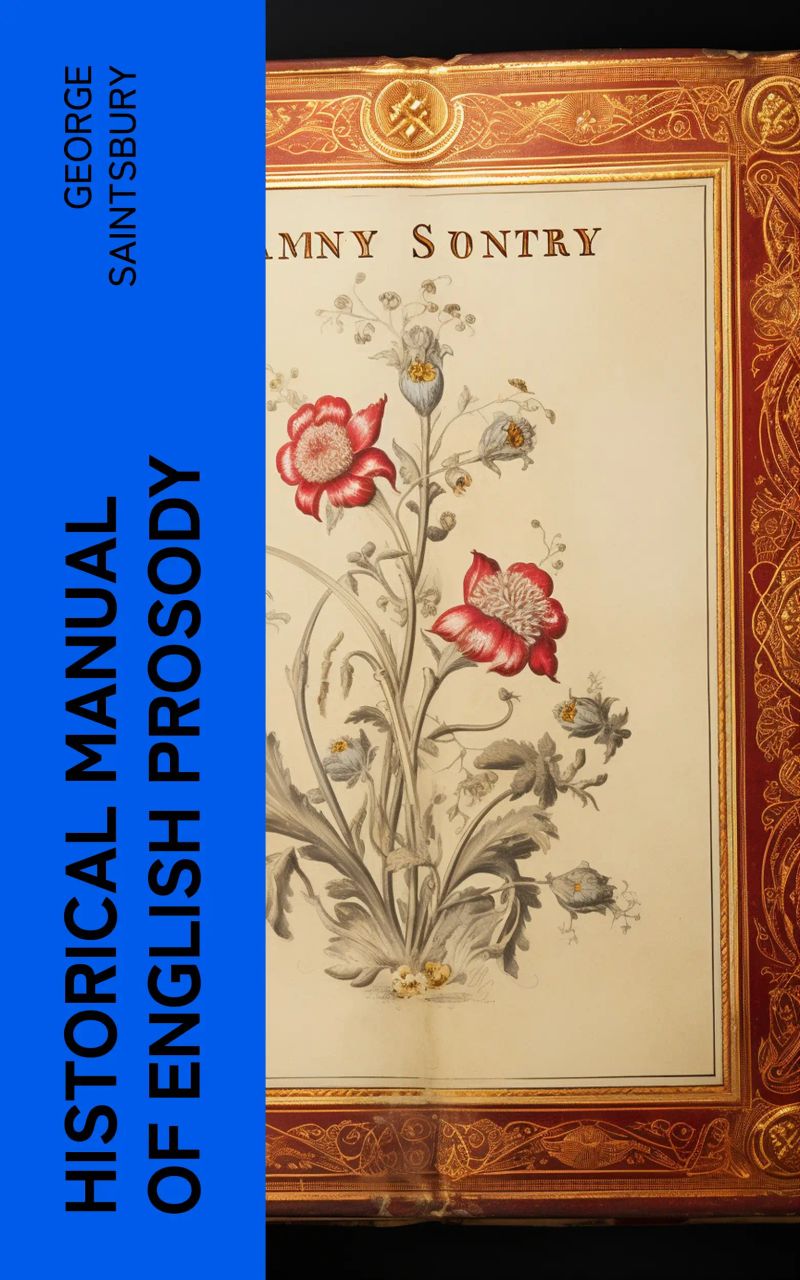
Historical Manual of English Prosody
By George Saintsbury


Length9h 13m
About this audiobook
Historical Manual of English Prosody is a work on prosody by George Saintsbury. Prosody — the rhythm, stress, and intonation of speech is expertly covered in this indispensable work for students of poetry.
Audiobook details
GenreLiterary Classics
Length9 hrs 13 mins
Narrated byListen with 1,000+ voices
FormateBook with Audio
Publish dateNov 24, 2023
LanguageEnglish
Table of contents
1FOOTNOTES:
48XXXVII. The Revived Ballad (Percy to Coleridge)
2FOOTNOTES:
49Note on the Application of the "Christabel" System to Nineteenth-Century Lyric generally.
3FOOTNOTES:
50XXXIX. Nineteenth-Century Couplet (Leigh Hunt to Mr. Swinburne)
4§ A. Feet
51XL. Nineteenth-Century Blank Verse (Wordsworth to Mr. Swinburne)
5§ B. Constitution of Feet
52XLI. The Non-Equivalenced Octosyllable of Keats and Morris
Show all chaptersShow less
6§ C. Equivalence and Substitution
53XLII. The Continuous Alexandrine (Drayton and Browning)
7§ D. Pause
54XLIII
8§ E. Line-Combination
55XLIV. The Stages of the Metre of "Dolores" and the Dedication of "Poems and Ballads"
9§ F. Rhyme
56XLV. Long Metres of Tennyson, Browning, Morris, and Swinburne
10§ G. Miscellaneous
57XLVI. The Later Sonnet
11FOOTNOTES:
58XLVII. The Various Attempts at "Hexameters" in English
12I. Old English Period Scansion only dimly visible.
59XLVIII. Minor Imitations of Classical Metres
13II. Late Old English with Nisus towards Metre ("Grave" Poem. Guest's text, spelling, and accentuation; the usual marks for the latter being substituted for his dividing bars, and foot division added in dots.)
60XLIX. Imitations of Artificial French Forms
14III. Transition Period Metre struggling to assert itself in a New Way. Part of the verses of St. Godric.
61L. Later Rhymelessness
15IV. Early Middle English Period Attempt at merely Syllabic Uniformity with Unbroken Iambic Run and no Rhyme. Orm.
62LI. Some "Unusual" Metres and Disputed Scansions
16V. Early Middle English Period Conflict or Indecision between Accentual Rhythm and Metrical Scheme. Layamon.
63FOOTNOTES:
17VI. Early Middle English Period The Appearance and Development of the "Fourteener."
64BOOK II HISTORICAL SKETCH OF ENGLISH PROSODY
18VII. Early Middle English Period The Plain and Equivalenced Octosyllable.
65FOOTNOTES:
19VIII. Early Middle English Period The Romance-Six or "Rime Couée."
66FOOTNOTES:
20IX. Early Middle English Period Miscellaneous Stanzas.
67FOOTNOTES:
21X. Early Middle English Period Appearance of the Decasyllable.
68FOOTNOTES:
22XI. Later Middle English Period The Alliterative Revival—Pure.
69FOOTNOTES:
23XII. Later Middle English Period The Alliterative Revival—Mixed.
70FOOTNOTES:
24XIII. Later Middle English Period Potentially Metrical Lines in Langland (see Book II).
71I. Old English Period
25XIV. Later Middle English Period Scansions from Chaucer.
72II. Before or very soon after 1200 Earliest Middle English Period.
26XV. Later Middle English Period Variations from Strict Iambic Norm in Gower.
73III. Middle and Later Thirteenth Century Second Early Middle English Period.
27XVI. Transition Period Examples of Break-down in Literary Verse.
74IV. Earlier Fourteenth Century Central Period of Middle English.
28XVII. Transition Period Examples of True Prosody in Ballad, Carols, etc.
75V. Later Fourteenth Century Crowning Period of Middle English.
29XVIII. Transition Period Examples of Skeltonic and other Doggerel.
76VI. Fifteenth and Early Sixteenth Centuries The Decadence of Middle English Prosody.
30XIX. Transition Period Examples from the Scottish Poets.
77VII. Mid-Sixteenth Century The Recovery of Rhythm.
31XX. Early Elizabethan Period Examples of Reformed Metre from Wyatt, Surrey, and other Poets before Spenser.
78VIII. Late Sixteenth Century The Perfecting of Metre and of Poetical Diction.
32XXI. Spenser[37] at Different Periods
79IX. Early Seventeenth Century The further Development of Lyric, Stanza, and Blank Verse. Insurgence and Division of the Couplet.
33XXII. Examples of the Development of Blank Verse
80X. Mid-Seventeenth Century Milton.
34XXIII. Examples of Elizabethan Lyric
81XI. The Later Seventeenth Century Dryden.
35XXIV. Early Continuous Anapæsts
82XII. The Eighteenth Century
36XXV. The Enjambed Heroic Couplet (1580-1660)
83XIII. The Early Nineteenth Century and the Romantic Revival
37XXVI. The Stopped Heroic Couplet (1580-1660)
84XIV. The Later Nineteenth Century
38XXVII. Various Forms of Octosyllable-Heptasyllable (late Sixteenth and Seventeenth Century)
85BOOK III HISTORICAL SURVEY OF VIEWS ON PROSODY
39XXVIII. "Common," "Long," and "In Memoriam" Measure (Seventeenth Century)
86FOOTNOTES:
40XXIX. Improved Anapæstic Measures (Dryden, Anon., Prior)
87FOOTNOTES:
41XXX. "Pindarics" (Seventeenth Century)
88FOOTNOTES:
42XXXI. The Heroic Couplet from Dryden to Crabbe
89BOOK IV AUXILIARY APPARATUS
43XXXII. Eighteenth-Century Blank Verse
90TABLE OF FEET
44XXXIII. The Regularised Pindaric Ode
91FOOTNOTES:
45XXXIV. Lighter Eighteenth-Century Lyric
92CHAPTER II REASONED LIST OF POETS WITH SPECIAL REGARD TO THEIR PROSODIC QUALITY AND INFLUENCE
46XXXV. The Revival of Equivalence (Chatterton and Blake)
93A. Lines
47XXXVI. Rhymeless Attempts (Collins to Shelley)
94B. Stanzas, etc.
More from George Saintsbury
The English NovelGeorge Saintsbury7h 46m$1 · $0.00
Introduction and brief biography of Honore de BalzacGeorge Saintsbury2h 3m$1 · $0.00
The English NovelGeorge Saintsbury11h 41m$1 · $0.00
A History of the French NovelGeorge Saintsbury45h 22m$1 · $0.00
Introduction and brief biography of Honore de BalzacGeorge Saintsbury2h$1 · $0.00
Essays in English Literature, 1780-1860George Saintsbury8h 4m$2 · $0.00
History of the French NovelGeorge Saintsbury46h 9m$1 · $0.00
C. S. LewisC. S. Lewis38h 55m$30
The Jeeves and Wooster Stories: The Complete Collection (33 Books)P. G. Wodehouse21h 57m$15 · $0.00
The Gulag Archipelago Volume 3Aleksandr I. Solzhenitsyn21h 56m$46 · $0.00
Charles Dickens: Complete WorksCharles Dickens814h 50m$2 · $0.00
Sherlock Holmes: The Ultimate CollectionArthur Conan Doyle59h 49m$5 · $0.00
The Complete Works of Fyodor Dostoyevsky: Novels, Short Stories and Autobiographical WritingsFyodor Dostoyevsky270h 59m$2 · $0.00
The Complete Works: Charlotte, Emily, Anne, Patrick & Branwell BrontëCharlotte Brontë, Anne Brontë, Emily Brontë138h 12m$1 · $0.00
L. M. Montgomery – Premium Collection: Novels, Short Stories, Poetry & MemoirsLucy Maud Montgomery155h 55m$2 · $0.00
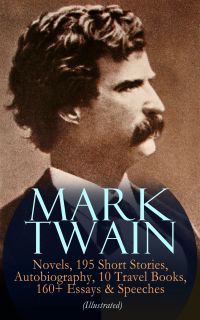
MARK TWAIN: 12 Novels, 195 Short Stories, Autobiography, 10 Travel Books, 160+ Essays & Speeches (Illustrated)Mark Twain415h 9m5 (2)$2 · $0.00
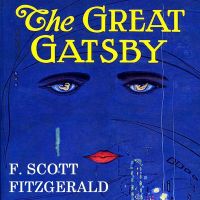
The Great Gatsby: Original 1925 Edition (An F. Scott Fitzgerald Classic NovelFrancis Scott Fitzgerald4h 45m$18 · $0.00
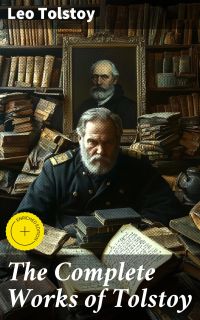
The Complete Works of TolstoyLeo Tolstoy412h 44m$1 · $0.00
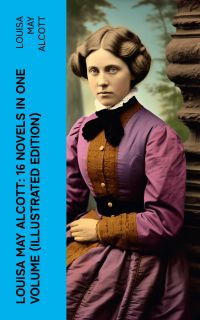
Louisa May Alcott: 16 Novels in One Volume (Illustrated Edition)Louisa May Alcott141h 35m$2 · $0.00
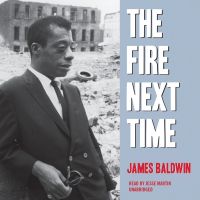
The Fire Next TimeJames Baldwin2h 25m$15
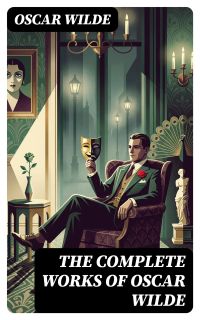
The Complete Works of Oscar WildeOscar Wilde80h 38m$1 · $0.00
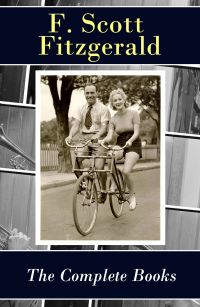
The Complete Books of F. Scott Fitzgerald (all his 5 novels + all 4 short story collections published during his lifetime)F. Scott Fitzgerald86h 48m$2 · $0.00
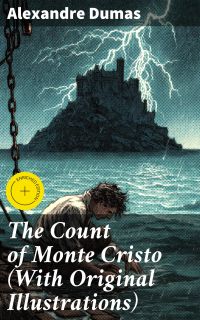
The Count of Monte Cristo (With Original Illustrations)Alexandre Dumas54h 7m$1 · $0.00
Braving the TruthRachel Held Evans11h 31m$29 · $0.00
Richard Wagamese SelectedRichard Wagamese3h 14m$15
Henry V (The Play, Historical Background and Analysis of the Character in the Play)William Shakespeare, William Hazlitt8h 40m$1 · $0.00
Pathways to LightPrakash Amte7h 6m$8
You may also like
Clair De LuneBill Brown Jr.2h 25m$10
Bell's Cathedrals: The Cathedral Church of Saint AlbansThomas Rev. Perkins2h 15m$2 · $0.00
Music Notation and TerminologyKarl Wilson Gehrkens3h 25m$1 · $0.00
Sonatina in C (Latour)Bill Brown Jr.1h 39m$10
THE COMPLETE WORKS OF LORD BYRON, Vol 1Lord Byron12h 56m$2.30
A First Book in Writing EnglishEdwin Herbert Lewis5h 56m$2 · $0.00
On the Art of WritingArthur Quiller-Couch7h 51m$1 · $0.00
Engagement PartyBill Brown Jr.44m$4
Anthology of Massachusetts PoetsVarious2h 16m$2 · $0.00
Why Do We Sing?Sam Tsui, Casey Breves5m$4 · $0.00
Essays of Robert Louis StevensonRobert Louis Stevenson0m$1 · $0.00
Cyclopedia of illustrations for public speakersRobert Scott, William Curtis Stiles61h$2 · $0.00
China and the ChineseHerbert Allen Giles4h 28m$6 · $0.00
Lectures on English poetsJames Russell Lowell4h 31m$2 · $0.00
LondonG. K. Chesterton12m$2.30
The Theory of Relativity and Its Influence on Scientific ThoughtArthur Eddington2h 19m$1 · $0.00
All Religions Are One & There Is No Natural Religion (Illuminated Manuscript with the Original Illustrations of William Blake)William Blake5m$2 · $0.00
The Rubaiyat of Omar KhayyamOmar Khayyam2h 22m$1 · $0.00
Nikki Giovanni: Love Poems & A Good CryNikki Giovanni2h 44m$18 · $0.00
Tender ButtonsGertrude Stein2h 3m$6 · $0.00