
Historical Manual of English Prosody (Annotated)
Enriched Edition. A Historical Guide to English Metre, Rhythm, Rhyme, Stanza, and the Evolution of VerseBy George Saintsbury


Length9h 35m
About this audiobook
George Saintsbury's Historical Manual of English Prosody offers a compact yet learned account of English verse form, tracing the evolution of metre, rhythm, rhyme, stanza, and accent from early alliterative poetry through the major achievements of Chaucer, Spenser, Shakespeare, Milton, Dryden, Pope, and the Romantics. Written in a lucid but densely allusive scholarly style, the book belongs to the great late-Victorian and Edwardian effort to make English literary history systematic, while resisting purely mechanical theories of versification. Saintsbury was one of the foremost literary historians and critics of his age, a professor of rhetoric and English literature at the University of Edinburgh, and the author of influential studies on criticism, French literature, and English prose and verse. His lifelong immersion in comparative literary traditions helped shape his conviction that English prosody must be understood historically, as a living practice rather than a rigid set of abstract rules. This manual is recommended for readers who want more than a technical handbook: it is a guide to hearing English poetry across centuries. Students, poets, and scholars will find in it a bracing introduction to the craft, historical development, and critical interpretation of English verse.
This enriched edition has been carefully crafted to add value to your reading experience.
- A succinct Introduction situates the work's timeless appeal and themes.
- The Synopsis outlines the central plot, highlighting key developments without spoiling critical twists.
- A detailed Historical Context immerses you in the era's events and influences that shaped the writing.
- A thorough Analysis dissects symbols, motifs, and character arcs to unearth underlying meanings.
- Reflection questions prompt you to engage personally with the work's messages, connecting them to modern life.
- Hand‐picked Memorable Quotes shine a spotlight on moments of literary brilliance.
- Interactive footnotes clarify unusual references, historical allusions, and archaic phrases for an effortless, more informed read.
Audiobook details
GenreLiterary Classics
Length9 hrs 35 mins
Narrated byListen with 1,000+ voices
FormateBook with Audio
Publish dateNov 24, 2023
LanguageEnglish
Table of contents
1Historical Manual of English Prosody (Annotated)
2Introduction
3Synopsis
4Historical Context
5PREFACE
Show all chaptersShow less
6BOOK I INTRODUCTORY AND DOGMATIC
7CHAPTER I INTRODUCTORY
8CHAPTER II SYSTEMS OF ENGLISH PROSODY—THE ACCENTUAL OR STRESS
9CHAPTER III SYSTEMS OF ENGLISH PROSODY—THE SYLLABIC
10CHAPTER IV SYSTEMS OF ENGLISH PROSODY—THE FOOT
11CHAPTER V RULES OF THE FOOT SYSTEM
12§ A. Feet
13§ B. Constitution of Feet
14§ C. Equivalence and Substitution
15§ D. Pause
16§ E. Line-Combination
17§ F. Rhyme
18§ G. Miscellaneous
19CHAPTER VI CONTINUOUS ILLUSTRATIONS OF ENGLISH SCANSION ACCORDING TO THE FOOT SYSTEM
20I. Old English Period Scansion only dimly visible.
21II. Late Old English with Nisus towards Metre ("Grave" Poem. Guest's text, spelling, and accentuation; the usual marks for the latter being substituted for his dividing bars, and foot division added in dots.)
22III. Transition Period Metre struggling to assert itself in a New Way. Part of the verses of St. Godric.
23IV. Early Middle English Period Attempt at merely Syllabic Uniformity with Unbroken Iambic Run and no Rhyme. Orm.
24V. Early Middle English Period Conflict or Indecision between Accentual Rhythm and Metrical Scheme. Layamon.
25VI. Early Middle English Period The Appearance and Development of the "Fourteener."
26VII. Early Middle English Period The Plain and Equivalenced Octosyllable.
27VIII. Early Middle English Period The Romance-Six or "Rime Couée."
28IX. Early Middle English Period Miscellaneous Stanzas.
29X. Early Middle English Period Appearance of the Decasyllable.
30XI. Later Middle English Period The Alliterative Revival—Pure.
31XII. Later Middle English Period The Alliterative Revival—Mixed.
32XIII. Later Middle English Period Potentially Metrical Lines in Langland (see) .
33XIV. Later Middle English Period Scansions from Chaucer.
34XV. Later Middle English Period Variations from Strict Iambic Norm in Gower.
35XVI. Transition Period Examples of Break-down in Literary Verse.
36XVII. Transition Period Examples of True Prosody in Ballad, Carols, etc.
37XVIII. Transition Period Examples of Skeltonic and other Doggerel.
38XIX. Transition Period Examples from the Scottish Poets.
39XX. Early Elizabethan Period Examples of Reformed Metre from Wyatt, Surrey, and other Poets before Spenser.
40XXI. Spenser at Different Periods
41XXII. Examples of the Development of Blank Verse
42XXIII. Examples of Elizabethan Lyric
43XXIV. Early Continuous Anapæsts
44XXV. The Enjambed Heroic Couplet (1580-1660)
45XXVI. The Stopped Heroic Couplet (1580-1660)
46XXVII. Various Forms of Octosyllable-Heptasyllable (late Sixteenth and Seventeenth Century)
47XXVIII. "Common," "Long," and "In Memoriam" Measure (Seventeenth Century)
48XXIX. Improved Anapæstic Measures (Dryden, Anon., Prior)
49XXX. " Pindarics " (Seventeenth Century)
50XXXI. The Heroic Couplet from Dryden to Crabbe
More from George Saintsbury
A History of the French Novel (Vol. 1&2) (Annotated)George Saintsbury46h 16m$2 · $0.00
The English NovelGeorge Saintsbury7h 46m$1 · $0.00
Introduction and brief biography of Honore de BalzacGeorge Saintsbury2h 3m$1 · $0.00
The English NovelGeorge Saintsbury11h 41m$1 · $0.00
A History of the French NovelGeorge Saintsbury45h 22m$1 · $0.00
Introduction and brief biography of Honore de BalzacGeorge Saintsbury2h$1 · $0.00
Essays in English Literature, 1780-1860George Saintsbury8h 4m$2 · $0.00
History of the French NovelGeorge Saintsbury41h 6m3.7 (22)$1.99 · $0.00

To Kill a MockingbirdHarper Lee12h 18m4.5 (7.4M)$29 · $0.00

These Precious DaysAnn Patchett11h 14m4.5 (45.2K)$29 · $0.00
Braving the TruthRachel Held Evans11h 31m4.7 (359)$29 · $0.00

The Old Man and the Sea (Annotated)Ernest Hemingway4h 27m4.6 (1.4K)$2 · $0.00
Henry V (The Play, Historical Background and Analysis of the Character in the Play)William Shakespeare, William Hazlitt8h 50m4.6 (1.3K)$1.99 · $0.00
H. P. LOVECRAFT Ultimate Collection: Novellas, Short Stories, Poetry & Essays (Annotated)H. P. Lovecraft12h 28m4.6 (2.3K)$2 · $0.00
Time RegainedMarcel Proust16h 8m4.5 (10.6K)$1.99 · $0.00
The Mis-Education of the NegroCarter Goodwin Woodson4h 32m4.5 (28.4K)$10 · $0.00
TORAH - Bilingual Edition: English/Hebrew (Annotated)Max Margolis, JPS28h 26m4.6 (1K)$2 · $0.00

Betty Crocker picture cooky bookBetty Crocker, Inc. General Mills2h 13m4.5 (6.5K)$1 · $0.00
The Complete Tales of Beatrix PotterBeatrix Potter3h 36m4.5 (75K)$3 · $0.00
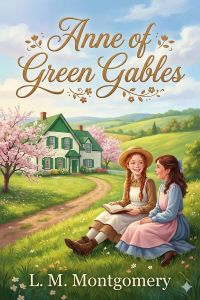
Anne of Green GablesL. M. Montgomery11h 1m4.5 (1.2M)$2.30 · $0.00
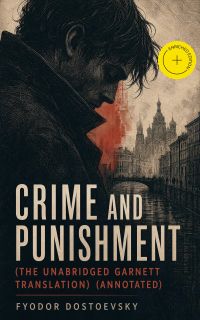
Crime and Punishment (The Unabridged Garnett Translation) (Annotated)Fyodor Dostoevsky24h 25m4.5 (15.4K)$0.99 · $0.00

The North American IndianEdward S. Curtis, Frederick Webb Hodge6h4.5 (1.2K)$2 · $0.00
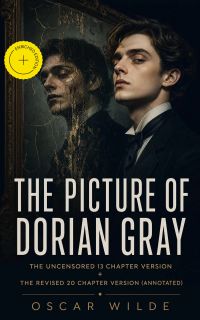
The Picture of Dorian Gray: The Uncensored 13 Chapter Version + The Revised 20 Chapter Version (Annotated)Oscar Wilde16h 12m4.5 (2.8K)$0.99 · $0.00
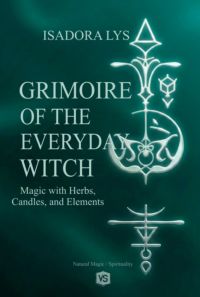
Grimoire Of The Everyday WitchIsadora Lys / Virginia Santos5h 35m4.5 (3.9K)$9 · $0.00
Winnie-the-PoohAlan Alexander Milne2h 52m4.5 (401.1K)$3 · $0.00

Sitting PrettyRebekah Taussig7h 33m4.5 (18.9K)$26 · $0.00
The Poetic Edda & The Prose EddaSnorri Sturluson, Saemund Sigfusson9h 34m4.5 (4K)$1 · $0.00
The Complete Satires & Essays of Mark Twain (Annotated)Mark Twain23h 21m4.5 (1.1K)$2 · $0.00
You may also like
Reading the OEDAmmon Shea5h 9m3.8 (2.7K)$24 · $0.00

Mexico City BluesJack Kerouac2h 48m3.9 (4.7K)$15
Essays by Ralph Waldo EmersonRalph Waldo Emerson7h 37m4.3 (6.3K)$2.30

Mexico City BluesJack Kerouac2h 48m4.1 (11.8K)$15
Essays: First Series. FriendshipRalph Waldo Emerson39m4.2 (1.4K)$2 · $0.00
Lyrical Ballads and other Poems by Samuel Taylor Coleridge and William WordsworthWilliam Wordsworth, Samuel Taylor Coleridge21h 8m4.1 (16.3K)$2 · $0.00
Scripture Made PlainCaleb Whitmore21h 17m$6.90
THE LAND OF THE BLESSED VIRGINWilliam Somerset Maugham12h3.4 (64)$1.99 · $0.00

A Taste of the EastNaumann & Göbel Verlag3h 29m4.3 (11)$5 · $0.00

Largo from XerxesBill Brown Jr.52m$5
Four Masters of EtchingFrederick Sir Wedmore1h 54m$2 · $0.00
The Masters and Their MusicW. S. B. Mathews6h 22m$2 · $0.00
Bible Words UnlockedCaleb Whitmore18h 56m$6.90
Lectures on English poetsJames Russell Lowell4h 31m$2 · $0.00
Cosmic Symphony 2Socialuser3m$7 · $0.00
Kuala Lumpur Travel Guide for Solo WomenAtlas Travel4h 21m$6.20 · $0.00
From the Oak to the Olive: A Plain record of a Pleasant JourneyJulia Ward Howe8h 53m$2 · $0.00
Twilight in ItalyD. H. Lawrence6h 16m3.8 (512)$2.30
An Essay Toward a History of Shakespeare in NorwayMartin B. Ruud4h 10m$2 · $0.00
The Land of The Blessed VirginSomerset Maugham5h 33m3.4 (92)$2.30